Solutions
Your first hunt, live this afternoon.
Free to start · No download for participants
Discover 35 outdoor team building activities by group size, goal, and energy level, with practical setup tips, weather backups, and inclusive options.
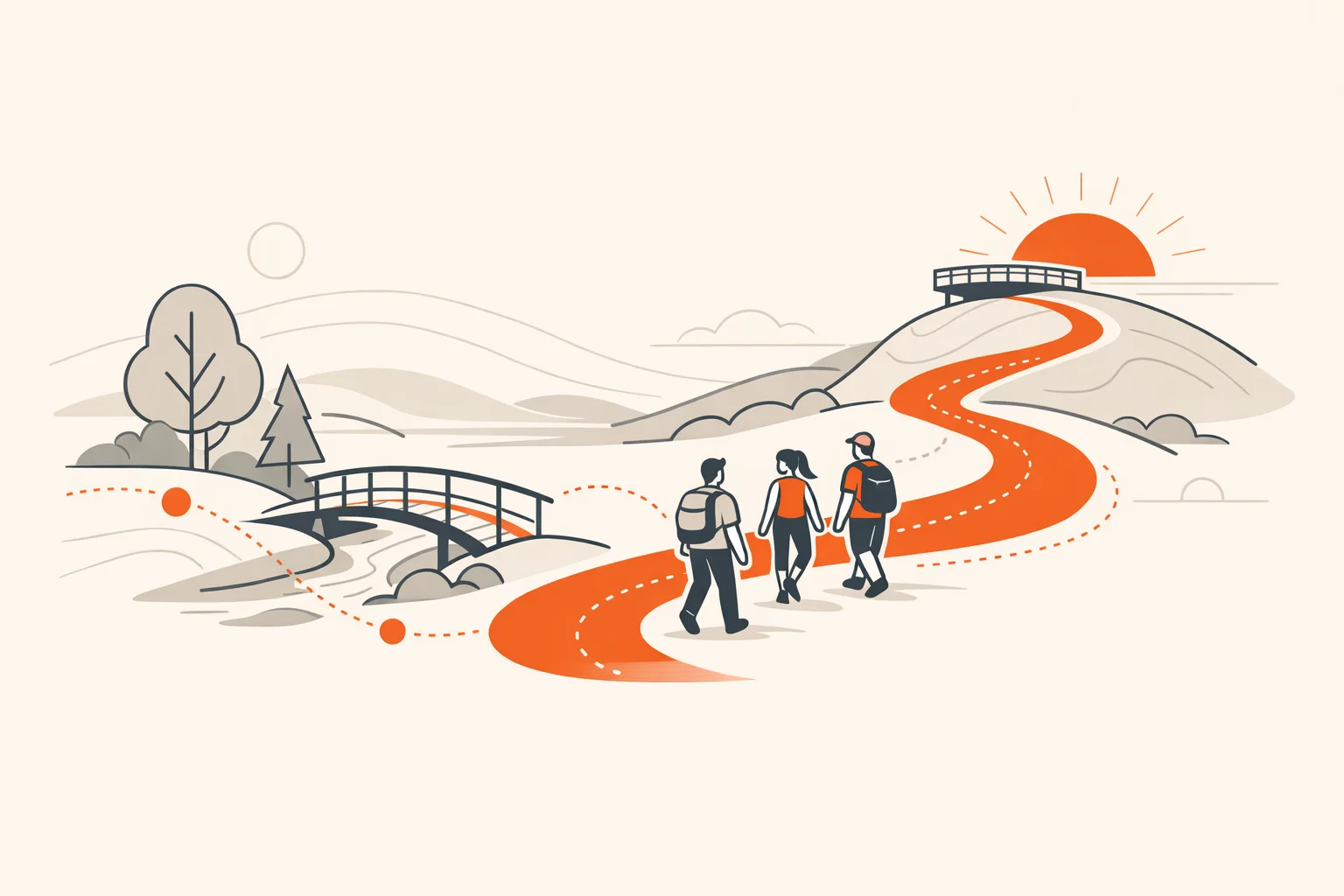
Fresh air changes the social math. Outside, people move more, talk more, and settle into a rhythm that makes collaboration feel less forced. In our experience, the best outdoor team building activities are simple to start, easy to scale, and flexible enough to include everyone without slowing the whole group down.
This list gives you 35 outdoor team building ideas organized by real‑world constraints: group size, energy level, time, and weather. You’ll see quick setup notes, inclusive twists, and easy weather backups so you can get out of planning mode and into the sunshine.
A little forethought keeps the day fun. For heat, follow practical guidance from the CDC and NIOSH: prioritize shade, schedule breaks, and hydrate before you’re thirsty (NIOSH overview, CDC heat and outdoor workers). For storms, the National Weather Service’s plain‑English rule is reliable: “When thunder roars, go indoors” (NWS lightning safety). For inclusive access, many parks publish detailed accessibility info including mobility device options and trail grades (NPS physical mobility). And wherever you play, follow the Leave No Trace Seven Principles.
Design for motion, not meetings. The outdoors rewards momentum.
Best for: trust, communication, shared wins.
Energy: medium to high. Group size: small groups rotating through.
Why it works: ropes elements make interdependence obvious. People literally can’t progress without spotting, coaching, and sequencing together.
Variation: choose low‑ropes for a wider comfort range; add a fast debrief after each element to capture learning while adrenaline is high.
Best for: cross‑team mixing, friendly competition, onboarding, city or campus exploration.
Energy: scalable. Group size: any. Setup: quick with the right tool.
Why it works: a hunt turns static space into a live game with puzzles, photos, GPS check‑ins, and time‑boxed sprints. Browser or app play keeps it simple; automation handles points and leaderboards so you can focus on the moments.
Best for: decompression, one‑to‑one conversations, fresh perspective.
Energy: low to medium. Group size: flexible in pods.
Why it works: moving side‑by‑side lowers social friction and sparks better conversations. Research links time in nature with reduced rumination and improved mood regulation (PNAS nature & rumination study).
Inclusive twist: choose routes with posted accessibility notes and clear turn‑arounds (NPS physical mobility).
Best for: playful competition and mixing departments.
Energy: medium. Group size: medium to large.
How to run: short innings, rotate positions often, and keep scoring light.
Best for: community impact plus laughs.
Energy: medium. Group size: medium to large.
How to run: pick a cause together and set up roles for all mobility levels: signage, payments, sprayers, dryers. Use a simple script to engage customers.
Best for: wellness goals, charity tie‑ins.
Energy: scalable. Group size: any.
How to run: offer 1‑, 3‑, and 5‑mile options. Stagger starts to reduce bunching. For heat, follow CDC/NIOSH hydration and rest guidance (workplace recommendations).
Best for: friendly rivalry, milestone celebrations.
Energy: medium. Group size: small to medium in heats.
How to run: rotate drivers in short heats, add a team‑pit challenge between races, and celebrate the cleanest pass award, not just fastest lap.
Best for: calm connection and cross‑team mingling.
Energy: low. Group size: any.
How to run: assign themed tables, seed each with conversation cards, and drop in two light activities like giant Jenga and a photo prompt.
Best for: high novelty, small‑group bonding.
Energy: medium. Group size: small, coached lanes.
How to run: partner with a certified venue, rotate spotters and cheer captains, and run a playful bracket.
Best for: service, reflection, patient collaboration.
Energy: low to medium. Group size: small teams on stations.
How to run: split into planting, weeding, building beds, or compost crews. End with a circle share of one observation and one thanks.
Best for: creative reset and quiet conversation.
Energy: low. Group size: small to medium.
How to run: guided mini‑tours with a sketch‑or‑snap prompt. Bonus: pair with a short creativity exercise; walking boosts idea generation (Stanford walking & creativity).
Best for: trust, clear communication under pressure.
Energy: medium to high. Group size: small boats working as a flotilla.
How to run: choose beginner routes and pro guides. Assign rotating roles: front spotter, cadence caller, safety lead.
Best for: problem‑solving and calm leadership.
Energy: medium. Group size: small teams.
How to run: teach a 5‑minute compass primer, hand out maps, and set 3–5 checkpoints with optional detours for ambition.
Best for: high‑five energy without heavy contact.
Energy: medium. Group size: small to medium.
How to run: call “everybody serves” and rotate after each point so no one camps in the back row.
Best for: flow, communication, and quick pivots.
Energy: medium to high. Group size: small to medium.
How to run: shorten the field and play to quick caps. Self‑officiate, discuss one thing each team did well after each round.
Best for: wellness and neighborly exploration.
Energy: medium. Group size: string of small pods.
How to run: stick to protected lanes, assign sweep riders, and schedule a midpoint café regroup.
Best for: decompressing together.
Energy: low. Group size: any.
How to run: pair people who rarely work together and give them a prompt to trade stories for 10 minutes, then rotate.
Best for: high‑tempo fun.
Energy: high. Group size: medium.
How to run: small‑sided matches with frequent subs and a “two‑touch” rule to keep the ball moving.
Best for: patient collaboration and sensory fun.
Energy: low to medium. Group size: small stations.
How to run: rotate roles: prep, grill, plating, tasting notes. Finish with a family‑style meal and shout‑outs.
Best for: deeper connection and unplugging.
Energy: low to medium. Group size: small to medium.
How to run: keep the agenda light, add evening micro‑games, and a short morning reflection.
Best for: puzzle lovers and GPS curious.
Energy: medium. Group size: small teams.
How to run: seed 6–8 caches around a park with simple riddles and enforce a strict time cap. Debrief navigation choices.
Best for: quick wins and laughs.
Energy: medium to high. Group size: medium to large.
How to run: set up five 5‑minute stations: three‑legged dash, water cup relay, hula‑hoop pass, beanbag toss, and a blindfolded cone weave with guides.
Best for: low‑impact play with gentle competition.
Energy: low to medium. Group size: small groups in staggered starts.
How to run: pick a short course, issue two discs per team, and score best‑throw format.
Best for: inclusive, light‑hearted play.
Energy: medium. Group size: small to medium.
How to run: short games, rotate partners every round, and keep a social ladder rather than hard brackets.
Best for: variety and team roles.
Energy: mixed. Group size: medium to large.
How to run: create four events that use different skills: sand build, bocce or washers, shuttle sprint, and a team puzzle. Award points across all events.
Best for: balance and trying something new.
Energy: medium. Group size: small.
How to run: partner with an outfitter, start on knees, and set a buoy loop for friendly laps.
Best for: rhythm and role clarity.
Energy: high. Group size: small crews.
How to run: assign caller, stroke leader, and safety. Run short heats with clear, escalating goals.
Best for: trust and personal challenge.
Energy: medium to high. Group size: small with certified facilitators.
How to run: choose routes with multiple difficulty options and celebrate attempts, not just sends.
Best for: inclusive fun with minimal sweat.
Energy: low to medium. Group size: any.
How to run: rotate through cornhole, ladder toss, bocce, and kubb. Keep each station to 7 minutes.
Best for: creative teams and onboarding to a neighborhood.
Energy: low to medium. Group size: small teams.
How to run: set a route of murals or sculptures and prompt teams to capture patterns, reflections, or “found letters.” Bonus: compile a shared gallery.
Best for: purpose and impact.
Energy: medium. Group size: medium to large.
How to run: coordinate with park staff for cleanup or light habitat restoration. Follow Leave No Trace and celebrate collected bags or finished sections.
Best for: creative collaboration.
Energy: low to medium. Group size: small teams.
How to run: give each team a budget and a required ingredient. Plate picnic‑style and do quick peer awards: Most Inventive, Best Plating, Crowd Favorite.
Best for: reset, breathing, and balance.
Energy: low. Group size: any.
How to run: bring an instructor, offer chair‑based options, and place mats in shade when possible.
Best for: mentoring and gratitude.
Energy: low. Group size: pairs rotating.
How to run: seed prompts: “A recent small win,” “Something I’m learning,” “One thing I appreciate about this team.”
Best for: fast‑paced teamwork.
Energy: high. Group size: small squads.
How to run: build a 60‑minute loop with 6–8 checkpoints, QR‑coded clues, and a skills mix: short run, riddle, quick build, and a location photo. Use an app to auto‑score and keep the leaderboard live.
Rotate people through short stations and keep any single activity under about 10 minutes. Circuits with mixed skills (movement, puzzle, creative) prevent bottlenecks and let more people feel useful.
Offer alternate roles at every station and choose routes with posted accessibility info. Many parks publish mobility details and even loan all‑terrain chairs; check the park’s accessibility page in advance.
Pick a site with adjacent shelter or an indoor room on standby and pre‑convert 2–3 activities to tabletop versions. For lightning, follow the NWS rule: if you hear thunder, move indoors immediately.
Seven minutes is usually enough. Ask: What worked, what changed mid‑activity, and what we’d repeat next time. Debriefs measurably improve future performance in varied settings (meta‑analysis on debriefs, AAR effectiveness).
Alternate high‑movement and low‑movement blocks, schedule a snack break in shade, and add one surprise bonus round mid‑way. Small resets keep participation steady.
Shift timing to cooler hours, provide shade and water, and shorten active segments. Follow NIOSH guidance on rest and hydration to reduce heat risk (NIOSH recommendations).
Plenty of options are DIY with a coordinator and clear rules. When tech helps, tools like Scavify automate scoring, check‑ins, and media capture in a browser or app so your team can play instead of babysitting clipboards.
Outdoor team building works when it feels like play with a point. Start small, keep the rules crisp, watch the weather, and close the loop with a quick debrief. The outdoors will do a lot of the heavy lifting; your job is to create the conditions where people naturally lean in and participate together.