Solutions
Your first hunt, live this afternoon.
Free to start · No download for participants
Use team building activities for remote teams to create real participation, with instructions, timing, group-size guidance, low-prep options. Plan smarter.
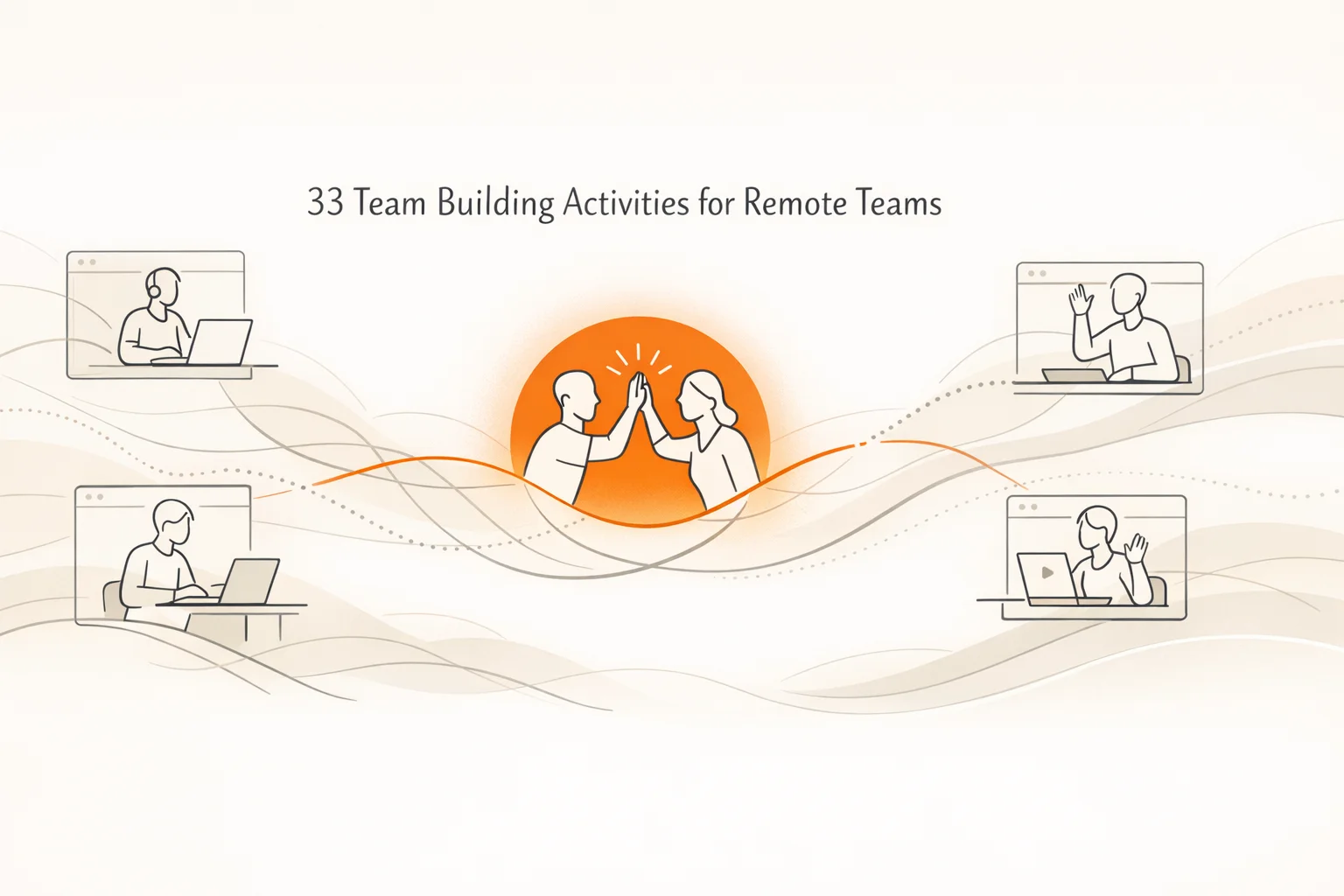
Working remotely doesn’t have to flatten energy. The right activity turns a quiet grid of faces into a room with momentum. Not by forcing extroversion, but by giving people something specific to do together and a clear reason to talk.
We’ve expanded our original list to 33 activities that consistently work for distributed teams. Each one includes what it’s good for and how to run it with low prep. Use this like a menu: mix quick icebreakers with deeper collaboration sprints, and rotate formats so nobody dreads yet another quiz.
Design matters more than novelty. Short wins early. Small groups often. Clear time boxes. And a host who knows when to move on. Those patterns show up across remote teams of every shape.
Short activities reduce calendar pain, but depth still matters. A steady rhythm of quick icebreakers paired with monthly, purposeful sessions builds real connection, a point echoed in Microsoft’s Work Trend Index findings on intentional collaboration and meeting load. For the human side, guidance on psychological safety in virtual meetings remains a useful north star when you’re asking people to take risks on camera. (microsoft.com)
Start with your intent. Do you want light connection, cross‑team exposure, or practice on a specific working skill like prioritization or feedback? Then pick an activity whose mechanics nudge that behavior.
Most teams benefit from a rotation: quick openers in weekly rituals, plus one slightly longer, purpose‑built session each month. Engagement correlates with clarity and follow‑through, not gimmicks, a theme visible in Gallup’s reporting on engagement drivers and in APA summaries of what makes teams work. (gallup.com)
Why it works: Food stories are quick identity windows without forcing vulnerability. Sharing a favorite dish creates natural follow‑ups for future one‑on‑ones.
Run it: Collect recipes in a shared doc in advance and post a few photos. On the call, invite 30‑second highlights and a rapid‑fire Q&A.
Good for: Light connection; short segment in a regular meeting.
Why it works: Controlled peek behind the curtain. People show their space, a hobby corner, or just their desk setup. It humanizes the grid fast.
Run it: One person per meeting gets 2 minutes. Rotate weekly. Offer opt‑outs and alternatives like “workspace object of the week.”
Good for: Ongoing rituals; small groups or all‑hands openers.
Why it works: It transforms passive watching into doing. Short, varied challenges give everyone a way to contribute.
Run it: Build a themed set of bite‑size challenges with auto‑scoring and a live feed. A purpose‑built scavenger hunt app reduces admin and keeps the pace crisp for larger groups.
Good for: Cross‑team mixing; energizing offsites; onboarding.
Purpose‑built tools help you scale without manual scoring and spreadsheet herding. That tends to preserve energy for interaction, not logistics. (scavify.com)
Why it works: Low‑stakes conversation with a prop in hand. Warm beverages are social glue.
Run it: Open a 15‑minute video room before a meeting. Provide a prompt: “What’s a small upgrade you made this month?”
Good for: Informal bonding; recurring cadence.
Why it works: People talk more in pairs. Randomized matches cross silos without piling on awkward group dynamics.
Run it: Auto‑assign 5–8 minute rounds. Seed each round with one crisp question.
Good for: Large, distributed orgs; onboarding across locations.
Why it works: Values and storytelling in one go. Quick pitches trigger persuasion muscles you actually use at work.
Run it: Volunteers prepare 30‑second pitches for a cause. Peers vote, and leadership matches donations or time.
Good for: Culture building; all‑hands energy.
Why it works: Shared vocabulary. When teams read together, their debates improve in regular meetings.
Run it: Quarterly pick. Rotate facilitators. Use 3 anchor questions and end with “one change we’ll try for 2 weeks.”
Good for: Professional development; longer‑form connection.
Why it works: Fast personal trivia that doesn’t veer too deep. Works well with new hires.
Run it: Collect statements in advance. On the call, quick guessing then a 30‑second reveal.
Good for: Icebreakers; new team kickoffs.
Why it works: Body language breaks the verbal‑only rut and nudges laughter.
Run it: DM prompts to the actor. Keep rounds short and rotate teams quickly.
Good for: Mid‑meeting reset; cross‑functional groups.
Why it works: Objects make stories concrete. You learn things you can’t from a “fun fact” slide.
Run it: Theme it: “object you’ve kept for 10+ years” or “most‑used tool.” Rapid shares, then one follow‑up question each.
Good for: Team rituals; onboarding weeks.
Why it works: People show something they use daily. Colleagues adopt it the same afternoon.
Run it: 3 minutes per person to screen‑share a tool, shortcut, or template. Cap at five demos.
Good for: Knowledge transfer; process improvements.
Why it works: Time‑boxed collaboration under light pressure. Roles emerge naturally.
Run it: Use a reputable vendor or a well‑rated puzzle site. Debrief: who led, who organized, who communicated.
Good for: Practice on coordination and decision‑making.
Why it works: Problem‑solving with incomplete information mirrors real projects.
Run it: Send a short dossier in advance. Small groups build a hypothesis, then defend it in 90 seconds.
Good for: Critical thinking; cross‑team interplay.
Why it works: Participation without scheduling pain. People contribute when they can.
Run it: Start a thread with one photo and a one‑sentence story. Each reply adds a photo and continues the story.
Good for: Global teams; asynchronous culture.
Why it works: Curiosity and quick debate. Players infer from tiny details and persuade teammates fast.
Run it: Small teams share screens. One captain clicks; the rest advise, then swap.
Good for: Lively, short competitions.
Why it works: Clarity on preferences reduces friction. Fewer Slack misunderstandings later.
Run it: Everyone fills a one‑pager: best feedback style, deep‑work hours, quirks. Share two highlights each.
Good for: New teams; manager changes.
Why it works: Regular, predictable micro‑connection. Low pressure to participate.
Run it: Post a single prompt in chat every Monday. Read a few aloud in the next stand‑up.
Good for: Ongoing culture; async participation.
Why it works: Practical tips beat platitudes. People steal what works.
Run it: Each person brings one 60‑second work or life hack. Compile into a doc after.
Good for: Fast, useful energy.
Why it works: Music creates instant common ground. It also becomes the soundtrack for future sprints.
Run it: Add 2–3 tracks per person to a shared playlist. Play 10‑second snippets during a break.
Good for: Light connection; recurring series.
Why it works: Visualizing rhythms exposes handoff issues across time zones.
Run it: Everyone sketches a typical day and highlights overlap windows. Adjust norms based on patterns.
Good for: Distributed teams; coordination tune‑ups.
Why it works: Parallel action on camera feels surprisingly collaborative.
Run it: Pick a simple dish with easy substitutions. Ship a short ingredient list or expense basics.
Good for: Social bonding; longer slot.
Why it works: Joy on demand. Even non‑pet owners enjoy hosting a houseplant or favorite mug instead.
Run it: One segment per month. Quick intros, two fun facts.
Good for: Morale boosts; low‑prep levity.
Why it works: Quick read of sentiment, then productive disagreement.
Run it: On a proposal, hold up 0–5 fingers. Have two people from the extremes explain in 30 seconds each.
Good for: Decision hygiene; meeting warm‑ups.
Why it works: Reduces “mystery work” between functions. Relationships start before you need them.
Run it: One team hosts. Pre‑collect questions. Rotate monthly.
Good for: Breaking silos; visibility.
Why it works: Micro‑learning lands because it’s immediately useful.
Run it: Five volunteers teach a five‑minute skill each. Record and catalog.
Good for: Professional growth without a big program.
Why it works: Introverts contribute at the same pace as talkers. Better spread of ideas.
Run it: Quietly add stickies for 5 minutes in a shared board, then cluster and vote.
Good for: Idea generation; problem‑solving.
Why it works: Turns company values into observable behavior, not wall art.
Run it: In a given week, capture examples of a value in action. Share photos or short notes and discuss.
Good for: Culture reinforcement; async participation.
Why it works: Empathy anchor. Hearing the field changes roadmap debates.
Run it: Invite a customer‑facing teammate to share a recent story. Ask: what would we change next sprint based on this?
Good for: Product‑market focus; cross‑functional empathy.
Why it works: Advice flows quickly when you time‑box it.
Run it: Rotate pairs through three short prompts: “What I’m stuck on,” “What I tried,” “One idea to test.”
Good for: Growth; peer coaching.
Why it works: Playful competition using common household items. Laughter, then Slack gifs.
Run it: Stack paper towers, quickest cord untangle, or precision paper‑toss. Keep it safe and brief.
Good for: Friday energy; larger groups.
Why it works: Shared discovery creates conversation fuel for weeks.
Run it: Tour a museum gallery, factory video, or lab livestream, then debrief with three “what surprised you” shares.
Good for: Curiosity; cross‑team bonding.
Why it works: Storytelling with stakes. People bid with fake budgets on mystery items and argue value.
Run it: Each person brings a curious household item. One‑minute pitches before the auction.
Good for: Communication practice; creative thinking.
Why it works: Humor that’s specific to your team’s reality builds in‑group warmth without forced fun.
Run it: Post a theme (“release week,” “meeting bingo”), create PG‑rated memes, and vote with reactions.
Good for: Stress release; end‑of‑sprint wrap.
Nobody quits a game they’re winning. Start with a guaranteed win.
A final note on safety: people speak up when norms are clear and stakes feel fair. That’s the crux of psychological safety, explored in HBR’s overview of the concept, and it applies as much to games as to retrospectives. (hbr.org)
| What changes | Scavify | Typical video activity |
|---|---|---|
| Variety of challenge types | All five | Limited |
| Live leaderboard & activity feed | Yes | No |
| Admin effort at scale | Low | High |
| Asynchronous participation | Built in | Hard to manage |
| Onboarding use cases | Checklists, tours, quizzes | Manual |
Tools don’t fix bad design, but the right container removes friction. If you need to involve hundreds of people across time zones, automation and feed‑based interaction make a visible difference. (scavify.com)
Look for formats that finish in under about 15 minutes and create small wins fast: random 1:1 chats, show and tell, meme jams, and five‑person lightning demos. Keep turn‑taking brisk and end while energy is still rising.
Use a steady rhythm rather than a one‑off blast. A short opener in weekly rituals plus one purpose‑built session each month keeps engagement healthier than sporadic marathons, a pattern consistent with Work Trend Index insights on meeting load and intentional collaboration. (microsoft.com)
Activities are not magic, but well‑designed ones can support coordination, learning, and trust over time. Meta‑analyses have linked team development interventions to improved processes and outcomes, which is the foundation we build on with practical formats like these. See this research synthesis on team building and performance and related APA summaries. (journals.sagepub.com)
Favor asynchronous or flexible‑window formats like the photo story chain, question of the week, or app‑based challenges that accept submissions anytime within a window. When you do meet live, overlap only the critical slice.
Don’t fight it with pep talks. Shift to pair work, silent brainstorms, or game mechanics that reward contributions without spotlighting anyone. Safety first, then variety, then speed.
Keep it small when the goal is connection or debate. Pairs and trios beat large rooms until trust and rhythm improve. For large‑scale events, use breakout rooms and time‑boxed rounds so everyone participates.
Remote teams respond to formats that respect attention and treat participation as a design problem, not a personality test. Pick activities that serve real teamwork skills and rotate them with intent. Over time, the grid starts to feel less like a meeting and more like a team.