Solutions
Your first hunt, live this afternoon.
Free to start · No download for participants
Use 25 welcome back to office ideas to ease the transition, rebuild team connection, and give employees meaningful reasons to gather in person again.
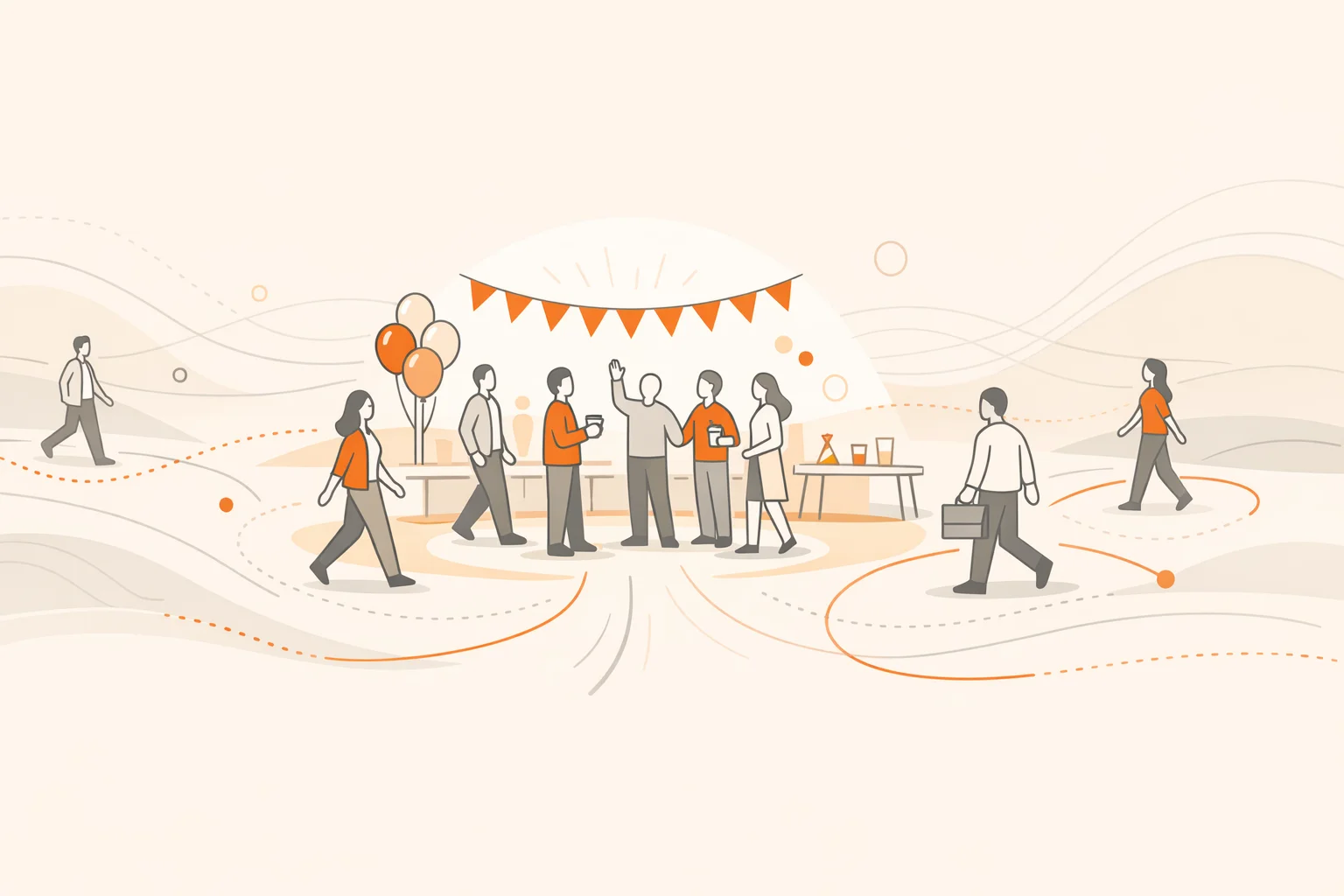
The return-to-office moment isn’t a policy memo. It’s a stage. People step back into a space that used to run on muscle memory and now feels a little unfamiliar. The job is to make day one feel worth the trip and day thirty feel even better. That means fewer pep talks and more thoughtful touchpoints that create genuine reasons to gather.
A pattern we keep seeing: welcome-back days work when they offer useful collisions, not just croissants. The best ones blend small personal gestures with group experiences, then extend the momentum beyond a single morning. Do that, and the office earns its place again.
In-person time is valuable when it’s intentional. Guidance on when and why to come in is one of the top hybrid challenges, so treat the welcome-back as a clear signal of what the office is for: teaming, trust, learning, and speed. Microsoft’s research offers a practical frame for making in‑person time count, from rebuilding weak ties to investing in 1:1s. Make in‑person time count. (assets.ctfassets.net)
Flexible work isn’t disappearing, which means the office needs a compelling role. Recent analysis shows office attendance has stabilized below pre‑2020 levels, and flexibility remains a major draw for talent. Design days that earn commutes with connection and progress, not presence. Flexible work’s enduring appeal. (mckinsey.com)
Nobody quits a game they are winning. Make the first challenge a guaranteed win.
A clean, reset environment signals care. Clear surfaces. Tune lighting. Add simple wayfinding so day one doesn’t start with a scavenger hunt for meeting rooms. A subtle scent and a fresh playlist quietly change the temperature of the room.
Skip the swag bag everyone recycles. Leave a short handwritten note, a favorite snack, and one useful item for the season. If you do gift cards, pair them with a small invite: “Use this to grab coffee with someone you haven’t worked with yet.”
Make it easy to mingle. Think portable, not plated. Breakfast tacos, yogurt jars, and fruit on sticks keep people moving and talking. Put name cards with prompts near the coffee line to jumpstart light conversation.
Announce a 20‑minute “roam and say hi” window. No agenda, no guilt. People will use it. Social connection is still a top reason employees value in‑person time, so give it air. Flexible work’s enduring appeal. (mckinsey.com)
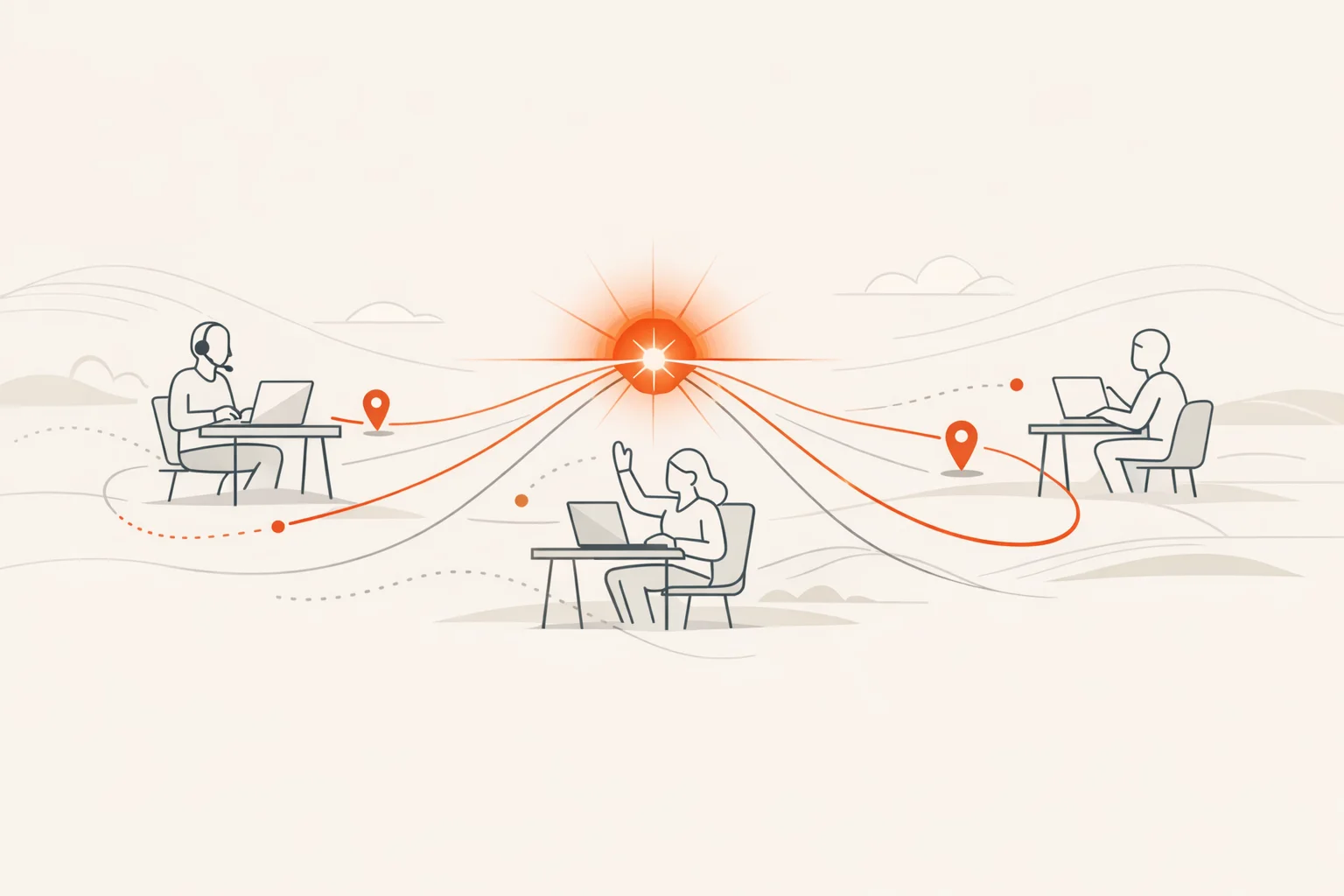
Use an app-based format like Scavify to turn the office into a discovery game. Mix quick wins with location check‑ins and small creative prompts so every person contributes. Browser play or mobile app keeps setup light while automating scoring and the live leaderboard.
In our experience, the right mix is half discovery, half creativity. That blend surfaces new connections and inside knowledge without putting anyone on the spot.
Keep momentum with one five‑minute challenge per day the first week back. Examples: “Grab coffee with someone you rarely work with,” or “Find the fastest route from desk to IT without using the main hall.”
Have managers book short, in‑person check‑ins that cover priorities, roadblocks, and support. Microsoft’s research shows 1:1s are one of the best uses of office time when handled intentionally. Make in‑person time count. (assets.ctfassets.net)
Create a 5x5 board with squares like “met someone new,” “used the focus room,” or “learned a keyboard shortcut.” Small weekly prizes keep it playful without turning work into a circus.
Block a path indoors or outside. Short, agenda‑light walks reduce stiffness and spark faster decisions. End with a two‑minute recap in chat so decisions don’t evaporate.
Print a simple card with stations: IT help bar, library shelf, prototype wall, wellness room. A stamp at each spot equals an entry in a small drawing. Discovery without herding.
Pair people across functions for 45‑minute lunches. Provide a few conversation cards that speed past small talk and into useful context.
Offer 10‑minute micro‑sessions every hour: “Pro tips in our CRM,” “One automation you can set up today,” “Security habits that actually matter.” Keep it opt‑in and strict on time.
Small things carry weight: stretching bands, a meditation corner, or a breathing timer. Clear the norm: it’s okay to take 10 minutes to reset.
Turn a visible wall into a living record of progress. Add quick snapshots of shipped features, customer quotes, or before‑after visuals. Let teams update it weekly.
Invite people to add one track each week. Rotate “guest DJs” by team. Keep volume human.
Make the commute feel respected. Offer transit credits, parking vouchers, or staggered core hours during the first week. Research consistently shows flexibility is sticky for talent; treat it like a feature, not a concession. Flexible work’s enduring appeal. (mckinsey.com)
Set up a quick station: assemble care kits, write cards for a partner nonprofit, or sort donated supplies. Shared purpose builds fast cohesion.
Bring in a barista cart for a morning. Or drop “coffee tokens” managers can hand out for on‑the‑spot appreciation that turns into a 10‑minute chat.
Place QR codes around the office linking to short videos, fun facts about the space, or mini how‑tos. People explore at their own pace.
Set a day-one cadence that respects commutes and family rhythms. The office earns trust when it makes real life simpler, not harder. Pair this with one shared team block for in‑person collaboration.
Think 60–90 minutes on a relevant skill: storytelling with data, customer interviews, or whiteboard facilitation. Aim for high utility and immediate application.
Green the office and give people a small stake in the space. Plants become quiet social anchors near which conversations start themselves.
Make it open, honest, and time‑boxed. Questions collected in advance keep it flowing. End with two commitments leadership will review in 30 days.
Late‑afternoon snacks, low and no‑alcohol options, and an opt‑in activity corner beat a forced happy hour. Keep it under an hour.
Don’t let the energy fade. Publish a simple arc: micro‑missions week one, cross‑team lunches week two, mini workshop week three, ritual day in week four. Rituals, done well, boost belonging and help teams navigate change. The surprising power of team rituals. (hbr.org)
Aim for mid‑week. Tuesday or Wednesday concentrates attendance and avoids Monday catch‑up and Friday fade. Keep the core block inside common hours to respect commutes.
Mirror every in‑office touchpoint with a parallel action: digital scavenger steps, a shipped snack kit for the desk drop, and a video‑based learning bar. Log progress in one shared thread to keep the story unified.
Offer choices, not mandates. Let people opt into micro‑sessions and balance social with useful. Research suggests employees need clarity on why in‑person time matters; design for that. Make in‑person time count. (assets.ctfassets.net)
Handwritten notes, office “passport” stamps, wall‑of‑wins, playlist crowdsourcing, and mystery lunches cost little and land well. The trick is specificity, not spend.
Track: attendance, cross‑team conversations started, and a before‑after pulse on energy. For ongoing programs, light gamification can help sustain participation by tapping intrinsic motivation. Gamified HR and engagement. (frontiersin.org)
Scavify helps organizations turn welcome‑back days into interactive experiences with automated scoring, live feeds, and flexible browser or app play. If you want one place to run photo, video, QR, GPS, and trivia challenges without spreadsheets, it’s purpose‑built for exactly this kind of moment.