Solutions
Your first hunt, live this afternoon.
Free to start · No download for participants
Plan an Amazing Race team building event with 30 epic challenges, team roles, checkpoints, fair scoring, and facilitation tips for groups of any size.
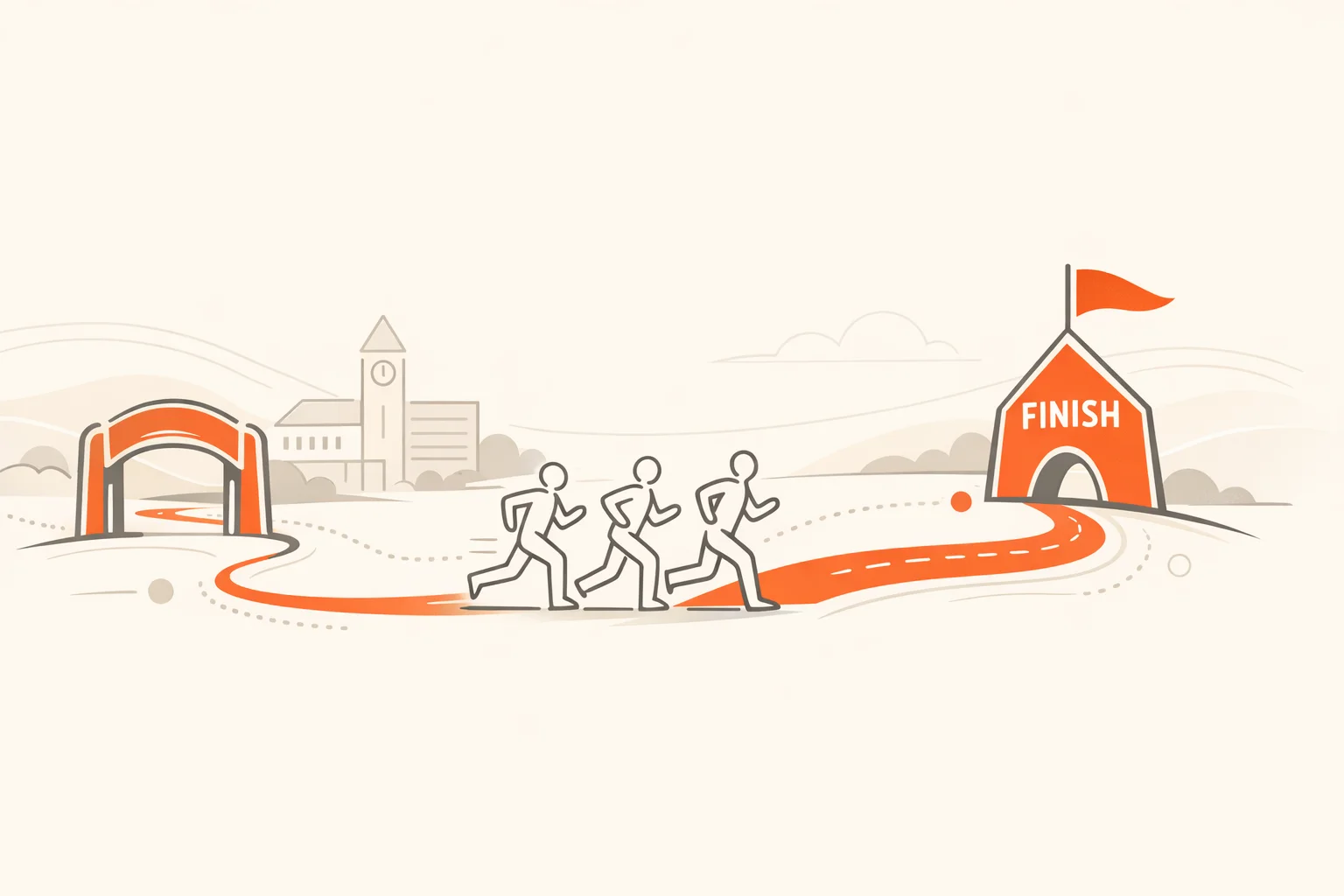
Most team activities live or die on participation. The Amazing Race format solves that by turning your space into a fast, high‑energy sequence of checkpoints and decisions where contribution is obvious, progress is visible, and momentum does most of the facilitation for you.
This guide shows you exactly how to run an Amazing Race team building event people actually want to play. You’ll get a complete planning framework and 30 copy‑ready challenges you can drop into any office, campus, conference, or city route.
We’ve borrowed the best mechanics from the TV show and trimmed the rest. No airports. No charter buses. Just a well‑designed loop of checkpoints, smart scoring, and a finale that lands on time.
Three forces do the heavy lifting.
First, visible progress. When people can see they’re closer to the finish, they speed up. This isn’t just a feeling; the goal‑gradient effect is well documented in consumer behavior research showing effort accelerates as people approach a goal, especially with progress markers like stamps or points. See the classic work on loyalty programs and progress framing in the Journal of Marketing Research.
Second, social energy. High‑performing teams share strong interaction patterns: frequent turn‑taking, high engagement, and side‑channel coordination. Alex Pentland’s analysis in Harvard Business Review maps closely to what we see on the ground during hunts.
Third, safety to try. Google’s Project Aristotle found psychological safety to be the most important dynamic of effective teams. Timed challenges with low‑stakes experimentation reward attempts, not perfection, which helps create that safety. Google’s own write‑up is a useful reference: Understand team effectiveness.
Nobody quits a game they’re winning. Make the first challenge winnable.
Great races happen in planning, not luck. Focus on seven decisions that shape the experience.
Most teams default to a navigator doing everything. Don’t let that happen.
Borrow familiar show mechanics and translate them to your venue.
For context on the show’s format, the official Amazing Race site outlines how legs, detours, roadblocks, and pit stops work on TV.
Route design decides whether the day feels smooth or chaotic.
Good scoring rewards smart choices and steady execution.
Design for the widest range of participants and you’ll get better teamwork.
These challenges build confidence and get cameras rolling in the first leg.
Layer puzzles, observation, and quick collaboration. Keep individual steps under five minutes.
Short movement beats long distance. Add values and culture without turning it into homework.
The format adapts well.
In‑person routes favor GPS and QR checkpoints. Hybrid events let distributed players solve trivia, review photos, and handle clue decoding. Fully remote versions use location‑based prompts tied to each player’s surroundings and time‑boxed video tasks.
Here’s a pattern we keep seeing work.
Paper works until it doesn’t. Once you have more than a handful of teams, automation keeps the day moving.
Scavify supports photo, video, GPS, QR, and trivia challenges in one place, with auto‑scoring, approvals, and a live leaderboard. It runs in a mobile app or modern browser, which makes setup fast and scale flexible for offices, campuses, conferences, and city routes.
If you want more inspiration from the source material, the CBS press site summarizes the show’s core mechanics and why the format endures.
How long should an Amazing Race team building event run?
Most groups hit a sweet spot around ninety minutes of active play plus a short awards close. Shorter events can work if you cut legs, not checkpoints.
What team size works best?
Trios or quads create enough roles for everyone without sidelining quieter teammates. Larger teams slow decisions and hide passengers.
How do we keep it fair across different abilities?
Offer non‑impact alternatives for any physical task and use detours to let teams self‑select difficulty. Score creativity and teamwork, not just speed.
Do we need a huge venue?
No. A single building, campus quad, or compact downtown core is plenty. Route density matters more than distance.
How many checkpoints or legs should we plan?
Think in legs, each with two to four tasks and one check‑in. Fewer legs with clearer beats usually feel better than a long list.
How do we prevent bottlenecks?
Duplicate popular stations, time‑box tasks, and avoid single‑threaded puzzles. A live leaderboard reduces crowding by spreading teams out.
Any evidence this actually helps teamwork?
Research on interaction patterns and psychological safety correlates with better team outcomes, and these races encourage both. See HBR’s analysis of interaction patterns and Google’s Project Aristotle summary for approachable overviews.
An Amazing Race team building event works because it makes participation obvious, progress visible, and success shared. Mix challenge types, rotate roles, and control the flow. The 30 challenges above will get you started; your venue and culture will do the rest.
If you’re ready to run it with less herding and more play, Scavify can help you spin up a route in minutes and keep the whole thing moving with auto‑scoring and a live leaderboard.