Solutions
Your first hunt, live this afternoon.
Free to start · No download for participants
Explore college event ideas with standout examples, selection guidance, setup steps, mistakes to avoid, and ideas you can adapt quickly. Choose confidently.
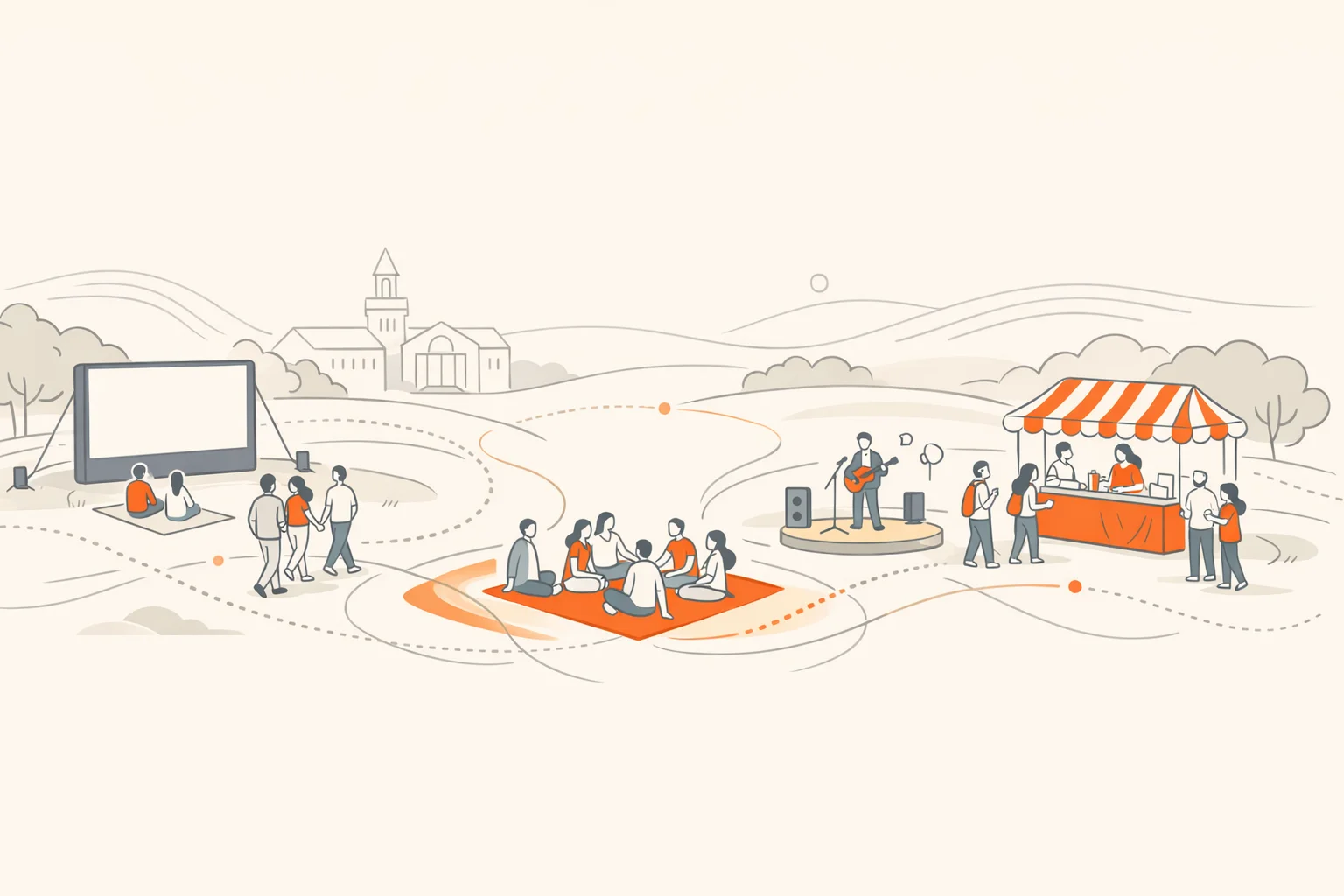
College events rise or fall on one thing: whether students can see, in seconds, why it’s worth showing up. Fancy themes help, but the engines of turnout are clarity, convenience, and a real reason to be there. In our work building interactive campus experiences, the events that win tend to trade spectacle for momentum and belonging. They start strong, reduce friction, and give people something to do the moment they arrive.
Use this list to choose ideas that fit your context, then borrow the setup notes to make them work on your turf. You’ll also find selection guidance, a simple build process, and common mistakes to avoid. Pick two or three you can run well this term instead of twelve you’ll run thin.
Most of these formats work outdoors or indoors, analog or hybrid. You’ll see where to add light competition, how to keep it inclusive, and how to measure if it did what you needed.
Start by choosing the outcome you want. Aim for one primary goal per event, not five. Common campus outcomes: belonging for new students, wayfinding across campus, awareness of student services, stress relief during peak weeks, or career exploration. Build every element to serve that one outcome.
Anchor on constraints. What spaces and time slots are easy to fill on your campus. Which student leaders or departments want in. Which compliance or accessibility requirements you must meet. When in doubt, design shorter and more modular.
Use real constraints to make the experience better. If your auditorium is booked, that’s a license to create a roaming event. If your student center is noisy, plan formats where noise helps. If you need to ensure access, start with a university checklist like USC’s practical accessible event checklist or similar campus guidance, and design from there rather than bolting it on later.
A campus hunt converts awkward hellos into shared wins. It’s fast to launch, easy to theme for orientation or finals, and scales from 20 to 2,000 students. Keep tasks short, mix formats, and score in real time. If you’re using a scavenger hunt app, automate check-ins, photo uploads, GPS stops, and live leaderboards so your staff can host instead of herd.
What usually shifts the dynamic is a guaranteed first win in the opening minute. That single early success keeps teams in the game and moving.
Nobody quits a game they are winning. Start with an easy win.
When it helps: orientation, welcome weeks, campus tours, homecoming, donor days.
Serve real food when students are actually hungry. A simple 9:30 p.m. to midnight menu with pancakes or breakfast tacos during midterms or finals will spike turnout without a big program. Keep lines moving with two griddle stations, prefilled toppings, and table games while folks eat.
Add a five‑minute study hack demo every half hour. It creates flow and gives late arrivals something to join midstream.
Turn sustainability into a hangout. Students bring clothes or small items to swap, plus there’s a mending table and a simple electronics repair bench staffed by a campus makerspace partner. Cap it with a “best upcycle” mini‑showcase.
Post clear donation criteria and a simple sizing system. Make sure the space is wheelchair accessible and aisles are wide enough for browsing.
Screen a student‑voted film on the quad, then run a 15‑minute conversation with a professor whose research lightly connects. Bring wireless mics, visible captions, and blankets instead of chairs to reduce setup friction. If weather turns, move to a ballroom.
If your campus prefers hybrid touches, EDUCAUSE’s Students and Technology Report points to flexible experiences and well‑being features as ongoing student expectations. Design accordingly with captions, alternative seating, and a recording of the Q&A.
Think 3v3 basketball, futsal, or spikeball packed into a two‑hour bracket. Quick games mean fast cycles and constant energy. Prioritize drop‑in signups and mixed‑ability teams.
As a bonus, short bouts of movement support mental health. The CDC’s guidance for adults recommends about 150 minutes of moderate‑intensity activity per week, and campus rec programs help students get there in social ways according to CDC basics.
Noise‑cancelling headphones, three DJ channels, and a snack table. It’s accessibility‑friendly because volume is student‑controlled. Offer a quiet zone nearby for folks who want the vibe without the volume.
Rotate in 10‑minute stretch breaks each hour led by a student wellness group.
Partner with cultural orgs to host tasting tables across a student union. Attendees collect stamps and short stories about each dish’s origin. Keep lines short by asking each org to serve one item only.
Ensure allergen labeling is clear. Provide halal, vegetarian, vegan, and gluten‑free options. Add a simple audio description of each table for blind and low‑vision attendees.
Keep it short and repeatable. Fifteen minutes of guided mindfulness plus ten minutes of chair yoga will reliably fill between classes. Research with undergraduates suggests mindfulness programs can support resilience and well‑being, which is exactly what many students need during peak stress weeks in randomized trials and pragmatic campus studies. ACHA’s recent reports continue to show elevated stress and anxiety on campuses, making preventative formats like this practical, not trendy per ACHA NCHA highlights.
Make it drop‑in friendly. No mats required. Always include a trauma‑informed opt‑out note.
Speed‑style mentoring in 12‑minute rounds. Students rotate among alumni from varied paths, then end with open networking. A one‑page conversation guide prevents stalls and helps introverts.
Give attending alumni a short thank‑you briefing and a quiet space to debrief after. Capture opt‑in interest for follow‑ups.
Move office hours to where students already are. One table per department in the union for two hours, with name placards and a bowl of conversation starters. This lowers intimidation and opens doors for first‑gen students.
Offer printed large‑type schedules and ensure tables have wheelchair‑accessible sides.
Two hours, three options, no buses. Examples: campus cleanup with a sustainability partner, card‑writing for local hospitals, or kit‑packing for a pantry. Small, visible impact works best for weekday sprints. Post before‑and‑after counts to close the loop.
Have a rolling start so late classes can still join.
Run a short open bracket in the main room while a retro lounge offers casual play for walk‑ups. Student volunteers can ref matches, and a live bracket on a projector keeps the crowd oriented.
Add structured “teach a game” sessions for those new to the scene.
Fast projects with a visible takeaway. Options: laser‑cut key tags, seed‑bombs for pollinator plots, button‑making, or a zine sprint. Prioritize processes where staff can reset stations in under a minute.
End with a two‑minute share to create momentum and social proof.
Turn wayfinding into a game. Students collect stamps or scans at tutoring, counseling, financial aid, accessibility services, and the library. Include short scripts at each stop so staff can deliver the one thing every student should know.
Keep routes level and provide alternatives to stairs. For planning, start with a campus accessibility checklist like UChicago’s accessible event guide to make the route welcoming.
A drop‑in clinic with career advisors and peer coaches for quick edits, plus a simple lighting kit for free headshots. Print a two‑sided resume cheat sheet at 14‑point font.
This works as a pre‑career‑fair primer and pairs well with LinkedIn clinics.
Teach the life stuff nobody wants to Google at 2 a.m. Rotate stations on budgeting, credit scores, salary negotiation, and simple tax basics. Keep sessions to 12 minutes each with a clear next action.
Provide printed resources and QR codes to campus support like emergency grants.
Let students peek behind the curtain. Coordinate short lab demos across departments during a two‑hour window. Mark accessible entrances and any PPE requirements on the map. Encourage labs to design one hands‑on micro‑demo.
Capture interest for future RA positions or independent studies.
Pair native or advanced speakers with learners for time‑boxed conversation rounds. Provide prompts and an opt‑in WhatsApp or GroupMe for ongoing practice. Keep the space quiet and well lit.
Invite international student services to cohost and advise on cultural considerations.
Offer beginner‑friendly introductions to the climbing wall, kayaking on the campus lake, or a guided nature walk. Small skills plus social time beats long instruction here. Movement supports well‑being and complements counseling resources per CDC guidance and campus recreation research connecting activity with social connection and academic outcomes in recent reviews.
Make sure adaptive options and equipment are available and advertised.
Think speed‑friending with purpose. Students rotate in short conversations based on course or interest tags, then form small groups and set one shared accountability plan for the week. Follow with a low‑stakes social to cement new connections.
Offer printed cards with group meeting tips and campus tutoring hours.
Blend student orgs, facilities, and local partners. Include a fix‑it table for bikes, clothing repairs, and small appliances, plus demos on composting and energy‑saving tips in dorms. Offer a “bring one broken thing” invitation to drive curiosity.
Make table heights and aisle widths inclusive. Use clear, high‑contrast signage.
Students and employers still value in‑person fairs, but the formats work best when they are human and focused. NACE reporting shows continued preference for in‑person engagement, with many campuses also hosting virtual components to expand access per NACE insights and 2024–25 benchmarks on fair modalities from NACE.
Shift booths from swag tables to problem tables. Ask employers to bring a small challenge or case prompt students can discuss. Cap time to 8 minutes. Add a resume studio two days beforehand and a debrief workshop after.
Students present fast three‑minute ideas for campus or community impact. Recruit local nonprofits and civic partners as judges and mentors. Provide a simple rubric and a follow‑up clinic for promising projects.
Keep staging inclusive for mobility devices. Provide live captions and ASL if requested.
Music, poetry, and short sets. Keep the mic moving with a sign‑up board, a two‑song limit, and a house rhythm section for musicians who want to try something new. Offer warm lighting and an A‑frame sign on the walkway to pull in passersby.
Include quiet seating for folks who want to be present but not front‑row.
How do I pick ideas that fit our campus culture
Start small with one outcome and a 90‑minute window. Borrow from formats your students already enjoy and place them where students already pass through. Use inclusive planning checklists from your accessibility office to set a high baseline for access from day one.
What is the simplest way to measure if an event worked
Pick two signals you can collect without friction. Examples: number of new‑to‑campus attendees, percentage who discovered a resource they will use, or number of mentor matches made. For movement or well‑being events, align with CDC‑framed goals like increasing light activity minutes using CDC guidance.
How can I make hybrid elements useful instead of clunky
Use hybrid touches to extend access, not to recreate the whole event online. Offer captions for short talks, a recording of a panel, or a downloadable campus resource map. EDUCAUSE finds students value flexibility and well‑being features when tech supports real needs in its report.
When should I run career events
Time them after resume studios and before major career fairs so students can apply new assets quickly. NACE’s reporting shows continued value in in‑person options with virtual components that remove barriers for some students as summarized by NACE.
How can we reduce stress without adding another meeting to attend
Short, repeatable formats work. Fifteen minutes of guided mindfulness plus a brief stretch can fit between classes. Trials with undergraduates show mindfulness can support resilience and well‑being in controlled studies. ACHA continues to report high stress and anxiety among students, which underscores the need for preventative events in NCHA highlights.
What if space is tight or noise is an issue
Choose roaming or station‑based formats where noise becomes part of the experience. For quieter needs, create side rooms and provide visual wayfinding. Post accessible routes and seating on every event page.
A final word. The best campus events respect students’ time and give them something to do, not just to watch. Start with one crisp promise, make the first minute matter, and finish with a next step students can take before they leave the room.