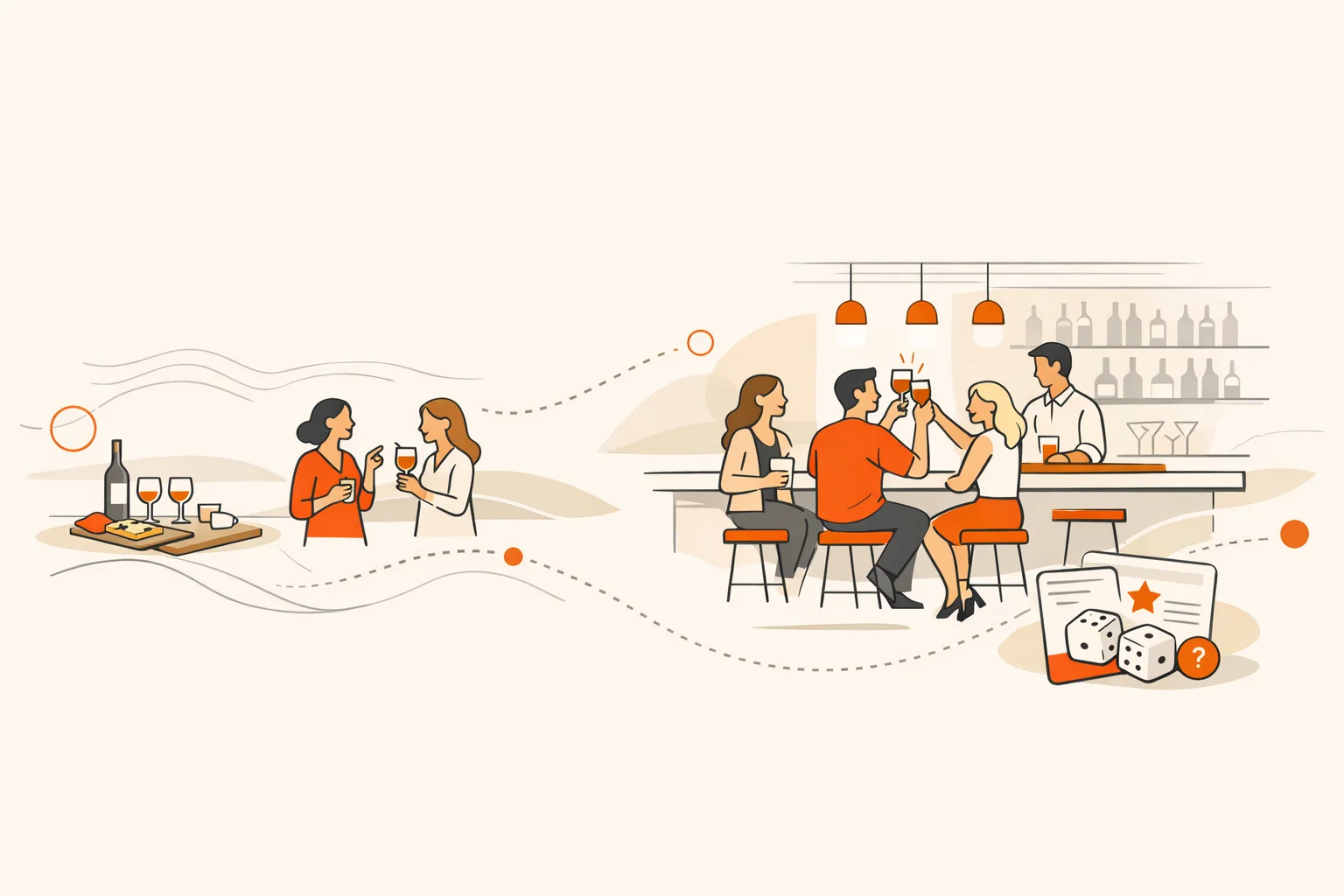
Happy hours still work when they’re more than drinks. What moves the needle is a clear structure, inclusive options, and small moments where people feel seen. The drink is an accessory, not the point. Design for interaction and the room takes care of itself.
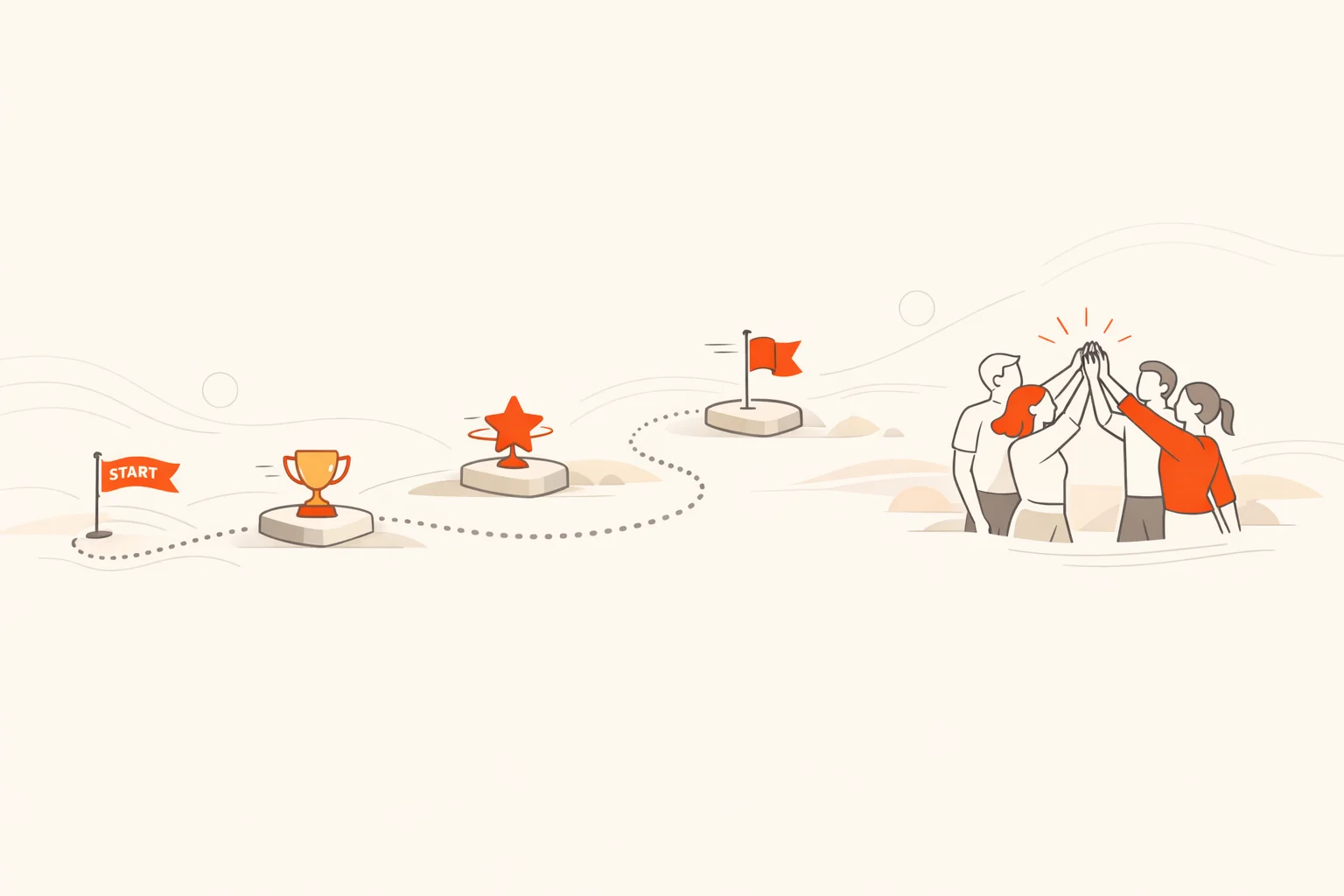
A pattern we keep seeing: teams don’t need bigger budgets; they need better prompts. Give people something specific to do, with a finish line that arrives fast. Momentum beats spectacle.
Connection is not fluff. The U.S. Surgeon General’s advisory frames social connection as a public health necessity, not a nice‑to‑have. That context applies at work too: structured social time helps people feel like they belong, which is a precursor to real collaboration (Surgeon General social connection advisory). Pair that with psychological safety and your happy hour becomes more than a calendar invite (Google’s Project Aristotle on team effectiveness).
- Lead with a simple structure so people know what to do next.
- Mix social prompts with fast wins to unlock momentum.
- Offer inclusive food and zero‑proof options without fanfare.
- Measure participation and 1–2 connection signals, then adjust.
- Thirty focused minutes often beats a meandering hour.
Most of the ideas below scale up or down easily. Use them for in‑office gatherings, all‑hands receptions, offsites, or even a night‑in among friends. Several also double as low‑effort night‑in bachelorette party ideas without changing a thing. The through‑line: short, clear activities that create shared stories.
Why happy hours work when they’re designed well
- Clarity beats charisma. People relax faster when they know how to participate. A 30–60 minute flow with two or three micro‑activities usually outperforms unstructured mingling.
- Psychological safety makes participation normal. Small, low‑stakes prompts increase the odds people speak up later in real work. That’s consistent with research showing psychological safety is a top predictor of effective teams (re:Work).
- Inclusive by default scales attendance. Zero‑proof drinks are rising for a reason; many guests want to connect without alcohol (IWSR no/low growth insight). If alcohol is present, follow evidence‑based guidance and make moderation effortless (CDC guidance on moderate use).
Nobody quits a game they are winning. Design the first five minutes to be a win.
Pro tip
Announce the simple structure up front: “Three quick rounds: a 3‑minute icebreaker, a 12‑minute game, and open mingle.” Certainty calms everyone down.
The bottom line
You don’t need a band or a photobooth truck. You need 1) a clear opener, 2) one shared activity with fast feedback, and 3) a closing moment people can reference tomorrow. Here are twenty field‑tested ideas that check those boxes without swallowing your afternoon.
1. Progressive venue crawl, one block at a time
Rotate through two or three nearby spots with one micro‑activity at each. Keep moves short to retain the full group.
- Why it works: Movement creates fresh conversation pairs without forced rotation mechanics.
- How to run it: Start closest to the office. Pre‑set a standing area and a single featured snack/drink at each stop. At stop two, run a 5‑minute icebreaker: “Find someone who once lived within 100 miles of you.”
- Remote/hybrid twist: Mirror the crawl with breakout rooms named after each venue. Drop a different prompt in each room’s chat.
2. Micro‑scavenger hunt with instant wins
Turn the space into a 20‑minute adventure with photo, video, GPS check‑ins, QR codes, and quick trivia. App‑based hunts automate scoring, so you can focus on the energy.
- Why it works: Short, varied challenges mean everyone finds something they’re good at. Fast points hook even the skeptics.
- How to run it: Seed 5–10 challenges across your floor or venue. Keep everything completable in under two minutes.
- Tooling: A flexible scavenger hunt app lets people play via app or browser and gives you a live feed and leaderboard.
- Re‑create a coworker’s Slack emoji in real life
- Scan the code under the potted plant by the exit
- Check in at the lobby art that spins
- Which year did our company ship v1?
- Film a 10‑second slow‑motion high five chain
3. Zero‑proof tasting bar and mix‑along
Celebrate the rise of no‑ and low‑alcohol with a tasting flight and a short mix‑along. Include one simple syrup, citrus, and a bitter or tea concentrate. Label clearly and let people build their own.
- Why it works: It signals belonging for non‑drinkers and moderates, which increases turnout. The category has seen sustained global growth in recent years (IWSR).
- Watch‑out: If you serve alcohol, align with evidence‑based consumption guidance and offer appealing zero‑proof alternatives in the same glassware (CDC).
Watch out
Post clear labels for all drinks. Quietly default to full‑flavor zero‑proof choices first; alcohol should never be the only path to feeling included.
4. Lightning trivia league in three rounds
Three tight rounds, five questions each, mixed difficulty. Use your industry, pop culture, and “two truths and a lie” about the org. Keep scoring visual and snappy.
- Why it works: Fast feedback loops build momentum and create natural cheering moments.
- How to run it: Appoint a scorekeeper. Use a buzzer app or color cards. Rotate captains each round to spread the spotlight.
5. Snack lab with make‑your‑own stations
Build‑your‑own nachos, bao, or parfaits. The station is the icebreaker. People chat while they assemble.
- Why it works: Hands busy, conversation easy. Label allergens, offer vegetarian/vegan options, and keep lines moving with two mirrored stations.
- Remote/hybrid twist: Send a simple ingredient list in advance. People build on camera in two minutes, then compare.
6. Speed‑meet bingo that actually connects people
Print or project a 5×5 grid with prompts that spark real stories: “Met a childhood hero,” “Knows a plant’s Latin name,” “Speaks three languages.” First to a line wins.
- Why it works: It legitimizes walking up to strangers with purpose. Even shy folks have an opening line.
- Pro move: Seed a few hyper‑specific squares related to your culture or city to trigger laughs and local pride.
7. Maker hour: tiny builds, big pride
Set out mini kits: tiny terrariums, origami, or pocket‑size LEGO sets. Showcase finished pieces on a “gallery table” before people head out.
- Why it works: Creating something tangible together hits different than talking. People take photos, which extends the afterglow into Slack and beyond.
- Budget tip: One small, good‑looking option beats four flimsy ones.
8. Roast & toast: two‑minute appreciation circle
Form groups of 5–7. Each person gets 90 seconds to appreciate a teammate’s recent effort, then one light joke if appropriate. Close with snaps.
- Why it works: Public gratitude boosts belonging and normalizes recognition. Keep it tight so it stays buoyant, not saccharine.
- Facilitation tip: Leaders go first and model specificity.
9. Mystery basket mini‑cookoff (no heat)
Hand teams a basket with three surprise ingredients and a pantry table of add‑ons. Most creative cold snack wins. Judges award points for taste, presentation, and pitch.
- Why it works: Collaboration under time pressure is fun when the stakes are snacks.
- Accessibility: Include gluten‑free and vegan versions so every table can participate.
10. Around‑the‑world tasting passports
Create three small “stops” inspired by different regions. Stamp a simple paper passport at each.
- Why it works: Micro‑journeys structure movement and conversation. Simple decor cues do more than large props.
- Remote twist: Mail mini snack kits and a printable passport. Share stamps as emojis in chat.
11. Photo booth + caption contest
Set up a phone on a tripod with a good background and a ring light. People snap photos, then submit one‑line captions. Display finalists and let the room vote.
- Why it works: Visual artifacts make the event feel bigger than it is. The caption layer adds playful writing for the non‑camera crowd.
12. Playlist swap with a quiet headphone zone
Ask a few volunteers to share a favorite 3‑song set. Create a quiet zone with headphones and splitters. People sample sets, then tag tracks they loved.
- Why it works: It serves introverts without isolating them and creates post‑event chatter: “Who added that track?”
- Note: Keep volume and space considerate of coworkers not attending.
13. Five‑minute improv for non‑actors
Run three ultra‑safe games: “Yes, And…,” “Word at a Time,” and “Experts Interview.” No acting skill required; facilitators model first.
- Why it works: Short‑form improv builds confidence and listening. It’s backed by practical management thinking on how improv tools strengthen teams (HBR on using improv to unite teams).
- Guardrail: Keep content PG and optional.
14. Board‑game café pop‑up
Curate three quick‑play games that seat 4–6 and finish in under 15 minutes. Add easy signage: “Sit here to join the next game.”
- Why it works: Games remove social calculus. Simple rules, visible timers, and quick resets keep energy high.
- Choices that work: Codenames Duet, Sushi Go, Skull. Avoid 2‑hour epics.
15. Karaoke roulette with lifelines
Spin a wheel for song categories. If you’re picked, you can choose a duet partner or “call a lifeline” to sing the chorus.
- Why it works: Surprise plus safety net. People volunteer because the risk is shared.
- Remote twist: Use shared lyrics on screen and a low‑latency voice channel.
16. Micro‑volunteer project + toast
Assemble hygiene kits, write cards for hospitalized kids, or sort donated school supplies for 15 minutes, then toast the impact.
- Why it works: Doing good together creates a stronger shared story than small talk alone.
- Tip: Pre‑stage everything so time goes to action, not explanation.
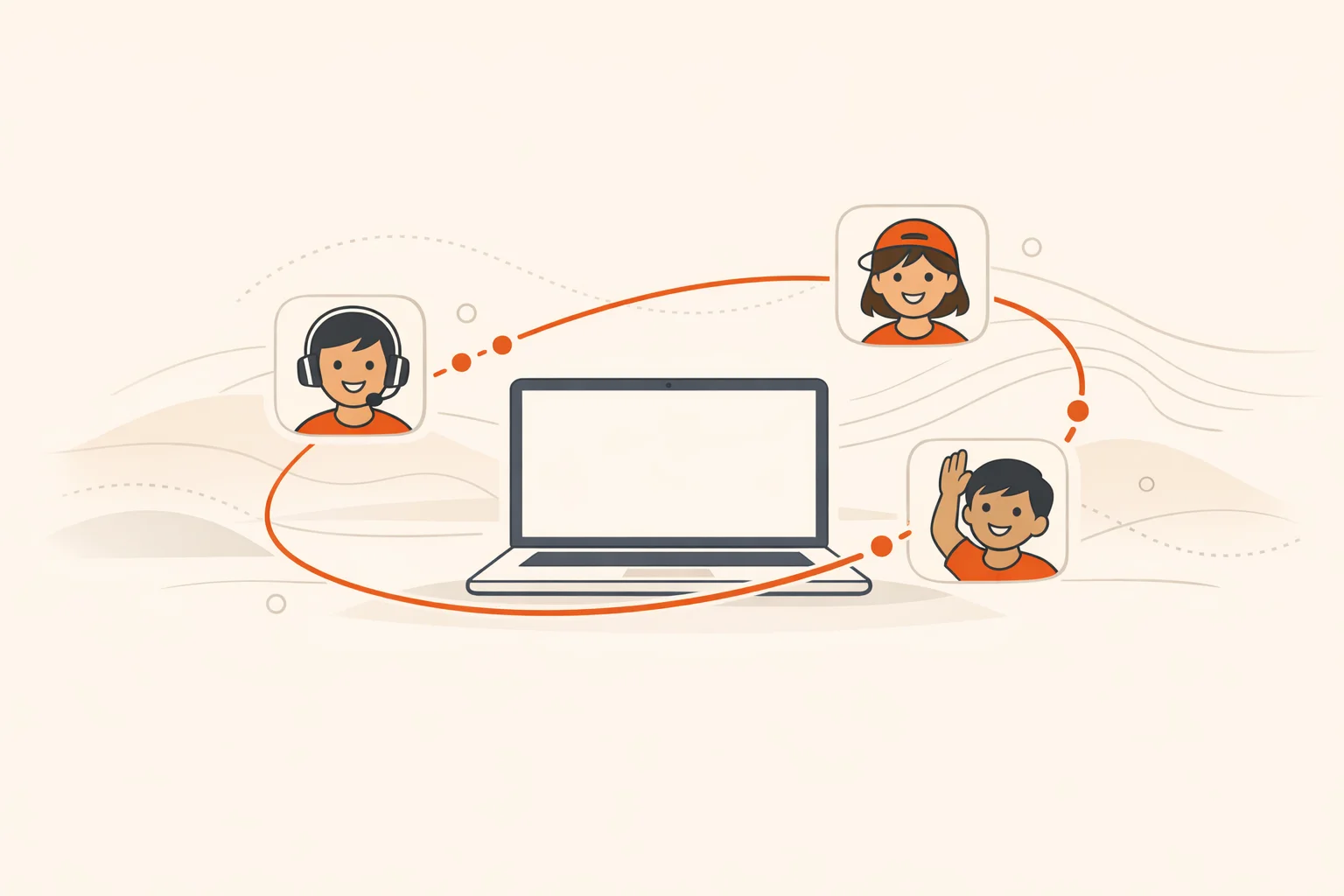
17. Remote happy hour kit in a box
Ship a small kit: a zero‑proof mixer, a snack, and a tiny activity. Open together on video and run two quick rounds of show‑and‑tell.
- Why it works: It reduces “Zoom fatigue” by creating something tactile. Remote workers repeatedly cite connection as a challenge, making structured rituals valuable (Buffer State of Remote Work).
- Time‑zone play: Offer two sessions or a rolling 24‑hour photo thread.
18. Hybrid watch party with hot takes
Pick a short live moment: product keynote, sports finish, game show final. Watch together, then host a 10‑minute “Hot Takes” round with 20‑second turns.
- Why it works: Shared attention, quick opinions, and a hard stop. Hybrid groups can join from a projector room or at home.
- Data point: Hybrid work continues to reshape how teams stay connected; leaders are building rituals to bridge distance (Microsoft Work Trend Index hub).
19. Escape‑room‑in‑a‑bag
Drop a sealed bag of puzzles, codes, and a simple story on each table. Teams have 20 minutes to “crack the safe.”
- Why it works: Cooperative problem‑solving that’s time‑boxed and satisfying. Keep puzzles parallel so everyone has a job.
- Debrief: Two minutes on “who noticed what” plants seeds for better project work.
20. Potluck story swap + recipe zine
Invite people to bring a snack with a short origin story. Capture the stories and recipes into a simple digital zine the next day.
- Why it works: Food as biography. People connect quickly when they share where something came from.
- Organizer tip: Provide a strong base in case folks can’t bring food: bread, spreads, fruit, and tea.
How to plan in 30 minutes or less
- Pick the core mechanic. Choose one idea above as the spine. Don’t stack more than two activities.
- Write the run‑of‑show on a sticky note. Example: 0–3 Icebreaker, 3–18 Game, 18–25 Awards, 25–30 Open mingle.
- Assign two helpers. One runs the timer, one runs music and visuals.
- Set the room. Three clear zones: arrivals, activity, and quiet corner.
- Make participation obvious. A printed one‑pager or a welcome slide with the three beats.
What to measure (so this isn’t just “drinks and vibes”)
- Attendance vs. RSVP. Signals basic interest and whether the time works.
- First‑time joiners. Shows reach beyond the usual crowd.
- Interaction density. A quick post‑event pulse: “Met someone new?” or “Had a meaningful chat?” The social connection frame is legitimate and measurable (HHS connection framework).
- Psych safety micro‑signal. Try a one‑line pulse like “I felt comfortable speaking up.” You’re practicing the same muscle that drives effective teams (Google re:Work).
Common mistakes to avoid
- Unclear start. If nobody knows how to begin, energy leaks fast.
- All alcohol, no alternative. Attendance drops and people check out. The no/low category’s growth shows preferences are changing; meet them where they are (IWSR trend analysis).
- Too much talking from the organizer. Keep instructions under 60 seconds per segment.
- One long line. Split stations to kill queue time.
- Assuming moderation. Quietly set the tone and offer appealing zero‑proof options; if you do serve alcohol, reflect official guidance without moralizing (CDC).
FAQ: How long should a team happy hour run
Thirty to sixty minutes of structured time usually beats a loose two hours. Plan one opener, one shared activity, and a short close. Leave optional mingle time after.
FAQ: How do we include non‑drinkers
Lead with inclusive defaults: great zero‑proof choices, fun activities that don’t depend on alcohol, and clear labeling. The growth of no/low options makes this easier than ever (IWSR). If you serve alcohol, pair it with factual guidance and equivalent zero‑proof offerings (CDC).
FAQ: What if people are shy or new
Design the first three minutes to guarantee a win: a photo they can take, a sticker to grab, a trivial point to score. Psychological safety grows when early participation is painless and rewarded (Google re:Work).
FAQ: What works for remote or mixed‑time‑zone teams
Ship a tiny kit or run a micro‑scavenger hunt that people complete within a 24‑hour window, then meet for 15 minutes to share highlights. Remote workers consistently report connection as a key challenge, so build simple rituals that repeat (Buffer State of Remote Work).
FAQ: How do we manage costs without killing the energy
Choose one thing to do well and remove the rest. A single structured activity plus one good snack beats four under‑resourced ideas. Reuse prompts, printables, and run‑of‑show slides. Momentum is the real budget multiplier.
FAQ: How often should we do these
Enough to create a rhythm, not so often it becomes noise. Monthly or tied to key milestones works for many teams. Track participation and two connection signals, then tune the cadence. Hybrid work patterns keep shifting, so treat this like product iteration (Work Trend Index).
Planning a university orientation, conference welcome, or city activation instead of a team mixer? Same rules apply: clear structure, quick wins, and inclusive design. When you want the whole thing built and automated, Scavify makes it easy to run fast, high‑participation experiences at any scale.