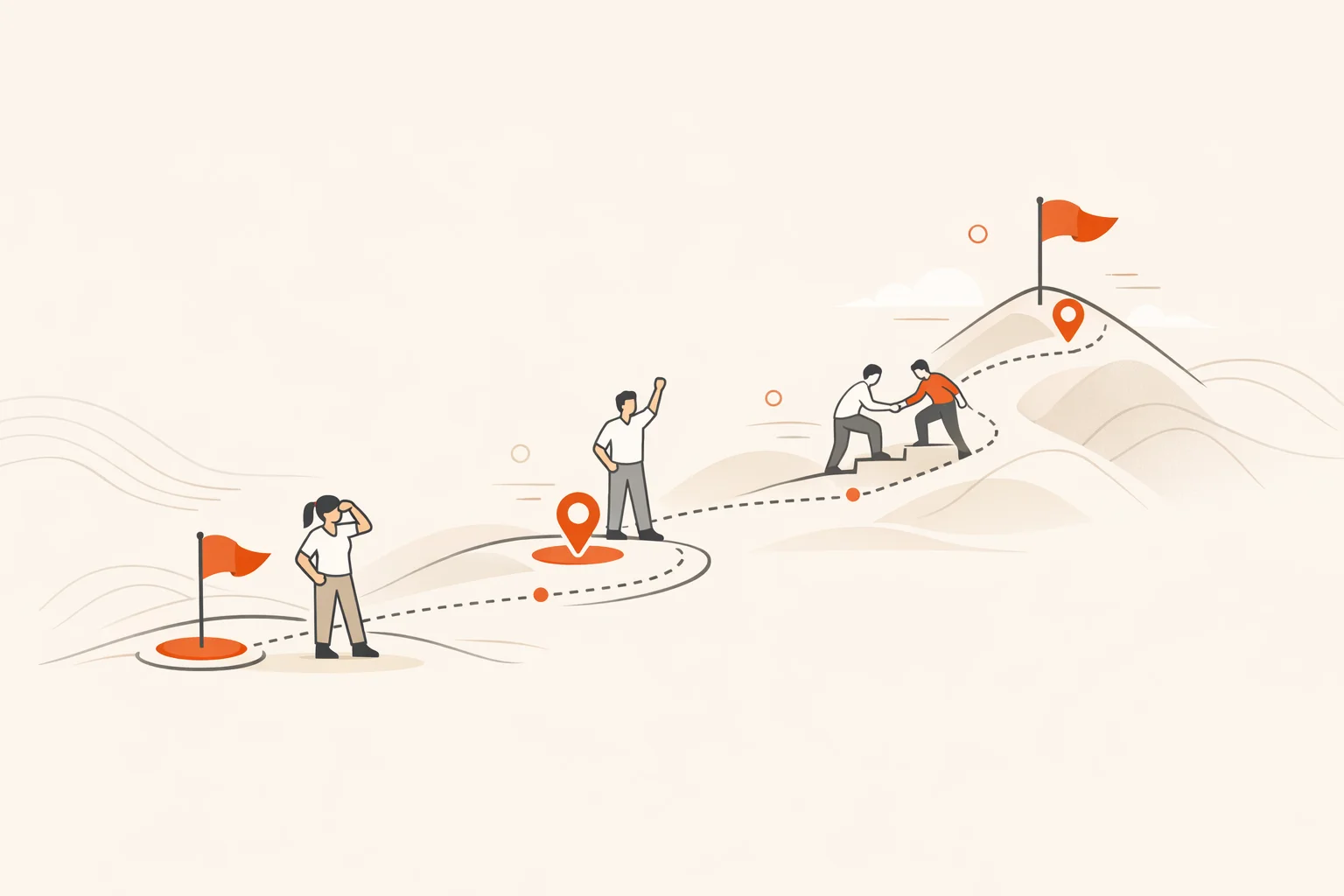
Most teams don’t need more rah‑rah. They need a system that makes progress visible, rewards the right behaviors, and keeps attention on the work that matters. That’s the real promise of gamification in employee engagement when it’s done well: fewer nudges, more pull.
In our experience designing programs for onboarding, training, events, and day‑to‑day engagement, gamification works best when it’s treated as an operating system for participation, not a coat of paint. It aligns clear outcomes with mechanics that employees actually enjoy and gives managers practical levers they can run without a production crew.
This guide cuts through the noise. You’ll get a research‑grounded perspective, concrete mechanics, an implementation playbook, measurement ideas, and examples you can adapt tomorrow.
- Use gamification to make progress visible and meaningful, not to add noise.
- Design around autonomy, competence, and relatedness to sustain engagement.
- Pick mechanics that fit the task; points and badges alone rarely move behavior.
- Instrument the program from day one so you can tune or kill what doesn’t work.
Why gamification for employee engagement deserves a clear, research‑based take
Global engagement remains stubbornly low, which is why every “fun” initiative gets asked the same question: does it move anything that matters? Gallup’s 2026 report continues to show that most employees are not engaged, reinforcing the need for interventions that create real progress and belonging rather than performative activity. (gallup.com)
The short answer from the evidence: gamification can lift motivation and downstream outcomes when you match the mechanic to the behavior, respect human motivation, and keep feedback tight. The long answer is the rest of this article. (journals.plos.org)
A concrete definition of gamification at work
Gamification applies selected game mechanics to non‑game work so people are more motivated to start, stick with, and complete specific behaviors. In practice: points, progress bars, challenges, levels, social recognition, and time‑boxed competitions used with intent to drive learning, quality, speed, or participation.
Think of it as a behavior design layer on top of your existing workflows. When it’s aligned to clear outcomes and grounded in how people actually stay motivated, engagement rises. When it’s bolt‑on points for everything, it fizzles.
What the research actually says
- Meta‑analyses find generally positive effects on motivation, participation, and learning outcomes, with results moderated by context and design choices. Effects are stronger when mechanics support clear goals and meaningful feedback. (doi.org)
- Reviews of digital programs show gamification can increase engagement and improve related outcomes when mechanics are well applied. Translation: design still matters more than decoration. (journals.plos.org)
- Be mindful of the dark side. Poorly designed, compulsory, or purely competitive systems can backfire on engagement and well‑being. Voluntary participation and thoughtful mechanics mitigate the risk. (sciencedirect.com)
- Progress is a powerful motivator. When people can see meaningful progress, they stay engaged longer and perform better. That’s why simple progress bars, streaks, and milestones punch above their weight. (hbr.org)
- Programs that satisfy basic psychological needs for autonomy, competence, and relatedness sustain engagement better than those that don’t. (selfdeterminationtheory.org)
First‑principle design that sustains engagement
Good gamification isn’t about “more game.” It’s about aligning mechanics with three durable drivers of motivation:
- Autonomy: Offer real choices. Let people pick paths, challenges, or timings within guardrails. (selfdeterminationtheory.org)
- Competence: Calibrate difficulty, give fast feedback, and mark progress so people feel capable and see improvement. (hbr.org)
- Relatedness: Build light social proof, shared goals, and authentic recognition so people feel connected to others while doing the work. (selfdeterminationtheory.org)
Engagement lasts when mechanics respect human motivation, not override it.
Mechanics that tend to work
Patterns we keep seeing hold up across teams, functions, and industries:
- Progress bars and milestones: The visual of “you’re here” beats any memo. Use percent complete, streaks, and level‑ups that map to actual skill or task progression. (hbr.org)
- Challenge menus: A mix of quick wins and deeper missions lets different people contribute without one skill deciding the whole game. This also supports autonomy. (selfdeterminationtheory.org)
- Time‑boxed sprints: Small, themed windows concentrate attention and create social momentum without burning people out. (journals.plos.org)
- Recognition that travels: Shoutouts, badges, and highlights only work if they’re seen by the right people at the right time. Favor in‑flow recognition over end‑of‑quarter ceremonies. (doi.org)
- Balanced competition: Team‑based goals or combined team/individual ladders prevent the same three people from owning the board. Include caps and catch‑up mechanics. (sciencedirect.com)
Pro tip
Treat points, badges, and leaderboards as seasoning. The main course is well‑scoped challenges, fast feedback, and visible progress.
Where gamification fits across the employee journey
- Onboarding: Turn paperwork, systems access, and culture learning into a guided series of quick missions with day‑one wins and manager touchpoints.
- Compliance and safety: Swap long modules for short cycles with retrieval checks, photo or video proof, and practical field challenges.
- Skills and product knowledge: Drip challenges that blend trivia, micro‑lessons, and on‑the‑job application so knowledge moves from recall to use. (doi.org)
- Sales and CX: Use rolling targets, micro‑competitions, and scenario challenges that reward quality behaviors, not just volume. Add fairness controls to limit gaming. (sciencedirect.com)
- Wellness and inclusion: Opt‑in challenges that encourage participation without public shaming. Team goals beat individual step‑wars for long‑term participation. (sciencedirect.com)
An implementation playbook that actually runs
- Define the behavior, then the mechanic. Write the one‑line behavior change you want, then pick mechanics that make that behavior easier, faster, or more rewarding.
- Map to motivation. For each mechanic, note which need it supports: autonomy, competence, or relatedness. If it supports none, kill it. (selfdeterminationtheory.org)
- Design the first 10 minutes. The opening experience decides participation rates. Make the first challenge a guaranteed win that teaches how to play.
- Set time horizons. Blend short sprints with longer arcs so people get regular dopamine without fatigue.
- Instrument everything. Track attempts, completions, time‑to‑complete, peer recognition, and downstream outcomes so you can tune quickly. (journals.plos.org)
- Pilot with a diverse slice. Include skeptics and power users; watch for loopholes and unintended incentives.
- Decide your fairness rules. Anti‑grind caps, anti‑sandbagging windows, and quality checks prevent “gaming the game.” (sciencedirect.com)
Watch out
Mandatory, always‑on competition is a morale tax. Keep participation voluntary, rotate formats, and use team goals to reduce pressure. ([sciencedirect.com](https://www.sciencedirect.com/science/article/pii/S0148296320305415?utm_source=openai))
Measuring what matters
Treat your program like a product with a small metrics stack:
- Activity: enrollments, DAU/WAU, starts per challenge, completion rate, time‑to‑first‑win.
- Quality: peer recognition density, manager validation rate, rework rate, knowledge check accuracy.
- Outcome: onboarding speed, ticket resolution time, first‑call resolution, sales cycle time, NPS/CSAT deltas, safety incidents.
Tie each outcome to the specific behaviors your mechanics target. If there’s no plausible path from mechanic to metric, you’re measuring theater.
Twelve evidence‑aligned examples you can adapt
Use these as starting points and tailor to your culture, tools, and constraints.
- New‑hire “level 1” path with five 5‑minute wins that unlocks day‑one access to people and systems.
- Safety selfie missions where teams document hazards fixed, with manager validation to avoid quantity spam. (journals.plos.org)
- Weekly challenge menu: three quick tasks, one deep task, and one social task; complete any three to “level up.” (selfdeterminationtheory.org)
- Rolling “teach back” trivia where subject‑matter experts seed questions after launches or policy changes. (doi.org)
- Progress bars for certifications that show percent complete and next best action, plus a monthly reset for streaks. (hbr.org)
- Team‑first leaderboards that rank squads by composite score, not just raw counts, to avoid lone‑wolf wins. (sciencedirect.com)
- Recognition that travels: public shoutouts auto‑posted in your chat tool when peers award a badge.
- Time‑boxed sprints for backlog clean‑up with caps on daily points and QA checks for quality. (sciencedirect.com)
- Opt‑in wellness quests that aggregate at team level and include non‑step activities to widen inclusion. (sciencedirect.com)
- Customer story hunts: collect evidence of impact from the field with photo/video and a monthly highlight reel.
- Micro‑coaching quests where managers issue situational challenges tied to real work and award instant feedback. (journals.plos.org)
- Inclusion of “assist points” when someone helps another teammate complete a task, rewarding collaboration as much as speed. (selfdeterminationtheory.org)

Pitfalls to avoid
- Solely extrinsic rewards. If badges are the only reason to play, enthusiasm decays fast. Tie mechanics to mastery, choice, and connection. (selfdeterminationtheory.org)
- One leaderboard to rule them all. Single, perpetual boards entrench winners and disengage the middle. Rotate time frames and formats. (sciencedirect.com)
- Compulsory competition. Opt‑in beats mandate; team modes beat winner‑take‑all for sustained engagement. (sciencedirect.com)
- No quality gate. If volume alone earns points, you’ll get volume. Add validation, spot checks, and anti‑spam rules. (sciencedirect.com)
- Measuring smiles, not outcomes. Track the behaviors and results you actually care about, not just likes.
In‑app challenges that energize daily work
When a challenge format fits the task, engagement stops being a pep talk and starts being the default. If you’re using a platform like Scavify, you can mix challenge types so every team member finds a way in. A modern scavenger hunt app format also makes it trivial to run programs in a browser or app across offices and time zones.
- Show a safe‑fix before/after at your station
- Scan the code at the help desk after shadowing
- Check in at three cross‑functional partner areas
- Which policy changed last week and why
- Demo a customer objection and a strong response

Tools and rollout options
There are two practical paths:
- Native tools plus manual orchestration. You can run simple mechanics with existing systems: chat apps for shoutouts, forms for submissions, spreadsheets for scoring, and intranet pages for progress. It works for small pilots; it gets fragile at scale.
- Purpose‑built platforms. Platforms designed for challenges, automation, and reporting compress the operational burden so programs actually sustain. Evidence is clearer when you can isolate behaviors, instrument milestones, and compare cohorts over time. Reviews and meta‑analyses emphasize that tight feedback loops and meaningful progress tracking are the ingredients behind durable outcomes. (journals.plos.org)
FAQs
What is the difference between gamification and game‑based learning
Game‑based learning teaches through a game. Gamification layers selected game mechanics onto non‑game tasks to drive specific behaviors like completing onboarding steps or practicing skills. The latter should feel like work that happens to be satisfying.
Does gamification work for remote or hybrid teams
Yes, if mechanics fit the work and feedback loops are short. Remote teams especially benefit from visible progress and lightweight social recognition that would otherwise happen in hallways. Meta‑analyses show engagement and learning gains when programs are well designed. (journals.plos.org)
How do we avoid unhealthy competition
Favor team goals, rotate formats, and cap daily points to prevent grind. Recognize assists and collaboration, not just speed. Keep participation opt‑in and time‑box intense periods. Research shows compulsory, always‑on competition can harm well‑being. (sciencedirect.com)
Which metrics prove it’s working
Pair leading indicators (starts, completion rates, time‑to‑first‑win) with outcomes tied to the behavior you’re targeting (onboarding time, accuracy, resolution speed, sales quality). If a mechanic can’t influence the outcome, it doesn’t belong in the program.
What rewards are best
Small, immediate, and meaningful beats big, rare, and generic. Public recognition plus tangible micro‑rewards work well. Just don’t let rewards become the only reason to play; anchor mechanics to mastery and momentum. (selfdeterminationtheory.org)
How long should a program run
Short sprints of 1–2 weeks nested inside quarterly arcs keep energy without fatigue. The exact cadence depends on the work and outcomes; rotate mechanics to keep things fresh.
Is there a right number of mechanics to use
Enough to give different people a way in, not so many that rules become the job. Most effective programs rely on three to five core mechanics applied consistently.
Are there risks we should tell leaders about
Yes. Poorly designed systems can create pressure, invite gaming, or distract from real work. Mitigate with opt‑in participation, fairness rules, quality validation, and clear links to meaningful outcomes. (sciencedirect.com)
Closing thoughts
Gamification isn’t a magic trick. It’s a pragmatic way to make progress visible, make practice feel worthwhile, and make recognition timely. When you design for autonomy, competence, and relatedness, the mechanics stop feeling like a game and start feeling like how work should work. That’s when participation turns active and outcomes follow. (selfdeterminationtheory.org)