Solutions
Your first hunt, live this afternoon.
Free to start · No download for participants
Spot the gamification trends shaping 2026, from AI personalization to immersive play. See which ideas are worth testing now and which are fading fast.

The year didn’t make engagement easier. Attention is fragmented, expectations are higher, and people have zero patience for gimmicks. The good news: the teams getting consistent participation have shifted how they design play. Below are the nine gamification trends we keep seeing actually move needles in 2026.
Personalization is no longer “show beginners one tutorial.” Advanced programs use lightweight models to shape difficulty, pacing, and challenge type by reading real behavior: session timing, preferred modalities, streak reliability, and social tendencies. In practice, that means the same questline quietly branches for two people who look “similar” on paper.
A 2024 review of tailored gamification approaches mapped how systems use user modeling to adapt mechanics and content. The pattern: personalization, adaptation, and recommendation each improved fit when they reflected real user traits, not just demographics. (sciencedirect.com)
Health and learning tech arrive at similar conclusions: personalization works best when it’s computationally grounded and scoped to the decisions that matter for the task at hand. Over‑fitting (“personalized everything”) adds noise. Keep the models where they have leverage: difficulty, cadence, feedback, and social framing. (pmc.ncbi.nlm.nih.gov)
Operationally useful rules we see hold up: - Start coarse, then tighten. Begin with 2–3 profiles (e.g., explorer, sprinter, steady) and let the system learn into finer segmentation. - Personalize the friction, not just the reward. Timed hints, optional scaffolds, and adaptive checkpoints keep competence intact without feeling remedial. - Fail gracefully. If confidence drops, auto‑pivot to collaborative quests and mastery streaks instead of throwing more points at the problem. - Document decisions. If you’re in the EU or work with EU users, AI transparency and governance obligations begin phasing in across 2025–2027, with broad operative provisions from August 2, 2026. Keep a design log of what adapts, why, and how it’s tested. (digital-strategy.ec.europa.eu)
AR wasn’t a gimmick; it was early. In 2026, the practical wins are training walkthroughs, safety audits, city activations, and orientation paths where the physical context matters. Enterprise teams are the heaviest adopters, using spatial computing for collaboration, guided work, and immersive training. (apple.com)
Hardware is finally trending in the right direction. IDC’s tracker shows a meaningful rebound and growth outlook for AR/VR shipments into 2025, which correlates with more companies piloting location‑aware play rather than budgeting for headsets that gather dust. Translation: build for phones first, with optional headset upgrades. (telecomtv.com)
When AR belongs, the prompts must earn their place. Five field‑tested examples:
Build as if no one will use a headset and everyone will use a phone in bright daylight on spotty LTE. If the AR moment fails under those conditions, rework it.
The industry’s cookie drama settled into a stalemate: Chrome backed off a full third‑party cookie kill and leaned into user choice, while Privacy Sandbox features marched on. The implication for gamification is simple: stop renting engagement from adtech and earn it with value people opt into. (axios.com)
Regulators are also circling manipulative interfaces. Global enforcement coalitions and the U.S. FTC highlighted how common dark patterns are in subscription flows and privacy prompts. Gamification that relies on pressure tactics or obscured choices will create legal and trust debt. Build consent like a feature, not a modal. (ftc.gov)
Practical shifts we see sticking: - Zero‑party prompts: Ask tiny, contextual questions that improve the next challenge immediately. - Value‑forward onboarding: Show outcomes unlocked by data sharing before asking for it. - “Easy out” norms: Make leaving a challenge, muting nudges, or changing teams as obvious as joining.
Leaderboards spike attention; they also quietly lose people. Multiple recent studies across education and training contexts report mixed or negative effects when public rankings dominate, while team‑based structures preserve motivation and broaden participation. The pattern we see: switch the unit of success from “me” to “us,” and more people keep playing. (sciencedirect.com)
Translate that into design: - Team goals with individual agency. Personal tasks roll up to a shared bar that only moves when different roles contribute. - Rotating “spotlight” quests. Let quieter contributors win points for reflection, QA, or documentation. - Seasonal resets. Wipe the slate often enough that early lag doesn’t become permanent status.
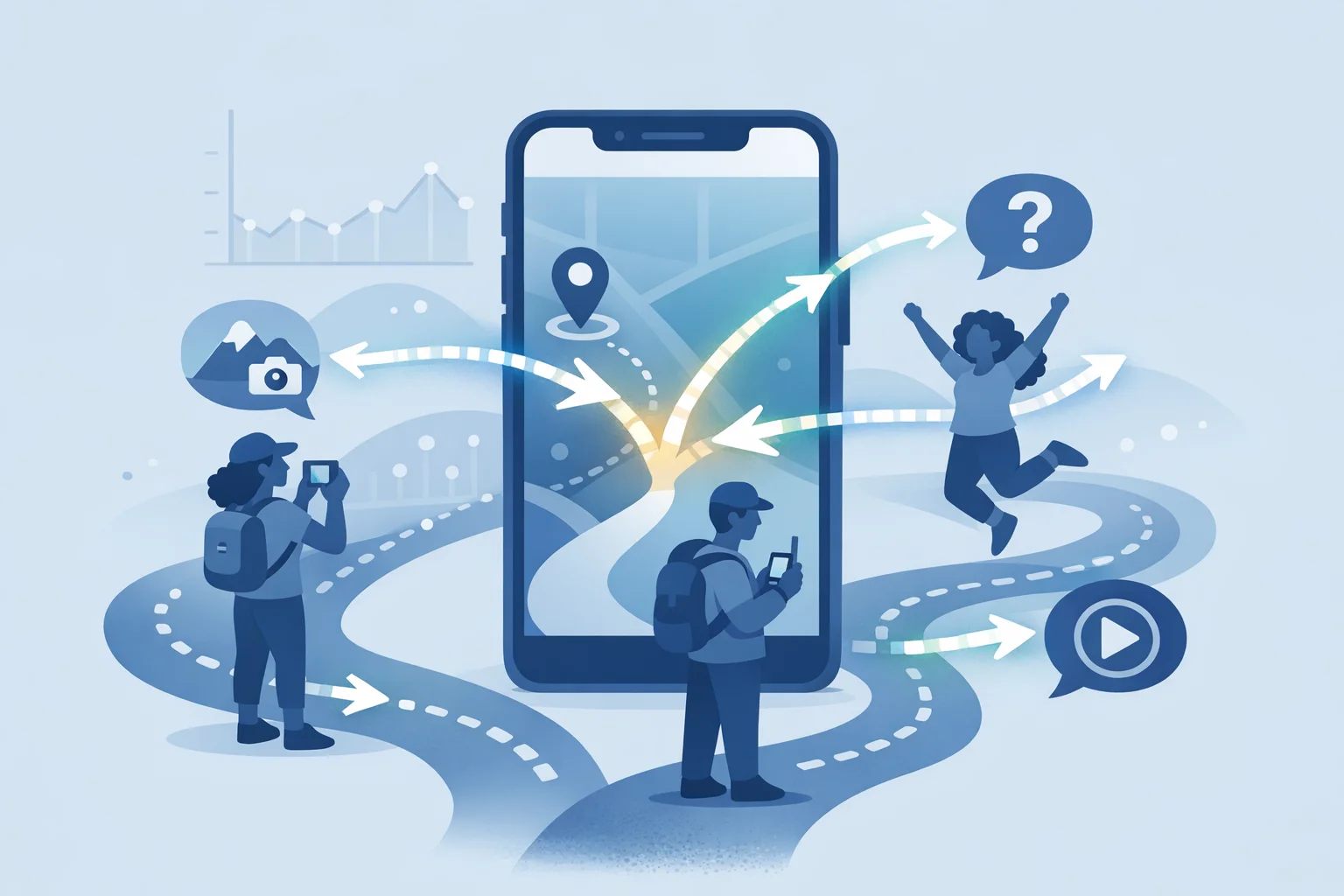
A simple co‑op mission pack that sustains energy: - [Photo | 25 pts]: Capture a teammate enabling someone else to succeed. - [Q&A | 30 pts]: What did another team teach you this week? Name the team. - [Video | 50 pts]: Demo a tip your group discovered that others can reuse. - [Multiple Choice | 20 pts]: Which team’s approach solved a blocker faster? - [GPS Check‑in | 40 pts]: Meet at the midway “handoff” point to unlock bonus clues.
Most teams don’t have time for a two‑hour game loop. Short, embedded challenges threaded through normal routines outperform big events for durable behavior change. It’s not new; it’s finally implemented well. Research syntheses on distributed and retrieval practice reinforce why smaller, spaced tasks beat massed effort for retention. Build your mechanics around that cognitive reality. (link.springer.com)
Design moves that work: - 90‑second ceiling. If a task can’t be completed between meetings, it won’t survive the week. - Predictable windows. Drop windows when people naturally pause: mornings, shift changes, post‑training. - Tiny proofs. Micro‑videos, one‑tap polls, and QR unlocks beat long free‑text.
Example micro‑set you can ship tomorrow: - [QR Code | 15 pts]: Scan the process step most likely to be skipped. - [Photo | 20 pts]: Show the fastest compliant version of today’s task. - [Multiple Choice | 15 pts]: Which option saves 10 minutes without sacrificing quality? - [Q&A | 25 pts]: What did we stop doing this week that helped? - [Video | 40 pts]: Record a 15‑second before/after of a small improvement.
If achievements live and die inside one platform, they’re stickers. Open, verifiable badges turn participation into shareable currency across HR systems, LMSs, and even public profiles. The Open Badges 3.0 spec aligns with W3C Verifiable Credentials, which means a completed quest can become a signed, machine‑verifiable claim about a real skill. That portability matters for recruiting, compliance, and alumni value. (imsglobal.org)
Implementation notes we’ve seen work: - Badge taxonomy before design. Define 6–10 reusable badges tied to explicit skills or behaviors. Don’t mint hundreds. - One issuer of record. Centralize signing to keep trust clear, even if many teams run programs. - Verification moments. Build “present your badge” steps into onboarding, access requests, or internal marketplaces.
Nudges aren’t magic. Meta‑analyses show modest but real effects, with large variability across contexts. The durable pattern: pair clear, timely feedback with visible progress and social proof that doesn’t shame. Then validate results in the wild before scaling. (pmc.ncbi.nlm.nih.gov)
In practice: - Trigger design matters. Time nudges to natural decision points (about to skip a step, end a shift) rather than arbitrary intervals. - Make inferences obvious. Briefly state why a suggestion appears to avoid uncanny‑valley creep. - Test, don’t trust. Lab‑cute ideas die on contact with real schedules and constraints. Field trials beat slideware. (anderson-review.ucla.edu)
There’s also growing evidence that “inference nudges” that prompt people to reason about goals can outperform generic reminders. Use that pattern for quality and safety work where understanding beats compliance. (nature.com)
Accessibility isn’t an audit at the end; it’s a design constraint at the start. WCAG 2.2 became a W3C standard in October 2023, adding criteria that directly affect common game mechanics and UI patterns, including target sizing, focus not obscured, alternatives to drag interactions, and consistent help. If your challenges use tiny tap targets, hidden focus, or drag‑only gestures, they will exclude people. Fix it upstream. (w3.org)
A concise field guide for interaction design: - Targets: Minimum 24×24 px interactive areas. (fdotwww.blob.core.windows.net) - Focus: Ensure focused elements can’t be hidden by sticky headers. (fdotwww.blob.core.windows.net) - Dragging: Always provide an alternative to drag‑and‑drop for completing challenges. (fdotwww.blob.core.windows.net) - Status messages: Announce dynamic feedback to assistive tech; visuals alone don’t cut it. (w3.org)
More than half of customer journeys now start on third‑party platforms like Google, YouTube, or AI assistants. That changes where and how you seed challenges. Instead of forcing everything inside your owned app, publish entry points where people already look for help: search‑optimized tasks, short “learn‑and‑do” clips, and AI‑readable instructions. Meet the behavior, then invite the deeper loop. (gartner.com)
Tactics that travel: - Search‑first prompts: Write challenges that answer high‑intent queries and reward completion with a portable badge. - Public proof: Curate a gallery of validated solutions people can copy and adapt. - API‑friendly content: Structure challenge metadata so AI and help bots can route people into the right quest instantly.
A note on tools: a platform like Scavify naturally shows up in several of these trends because it’s built for challenge variety, automation, and scale across phone and browser. Use whatever stack you prefer. The point is to make participation active, measurable, and respectful of the person doing the work.
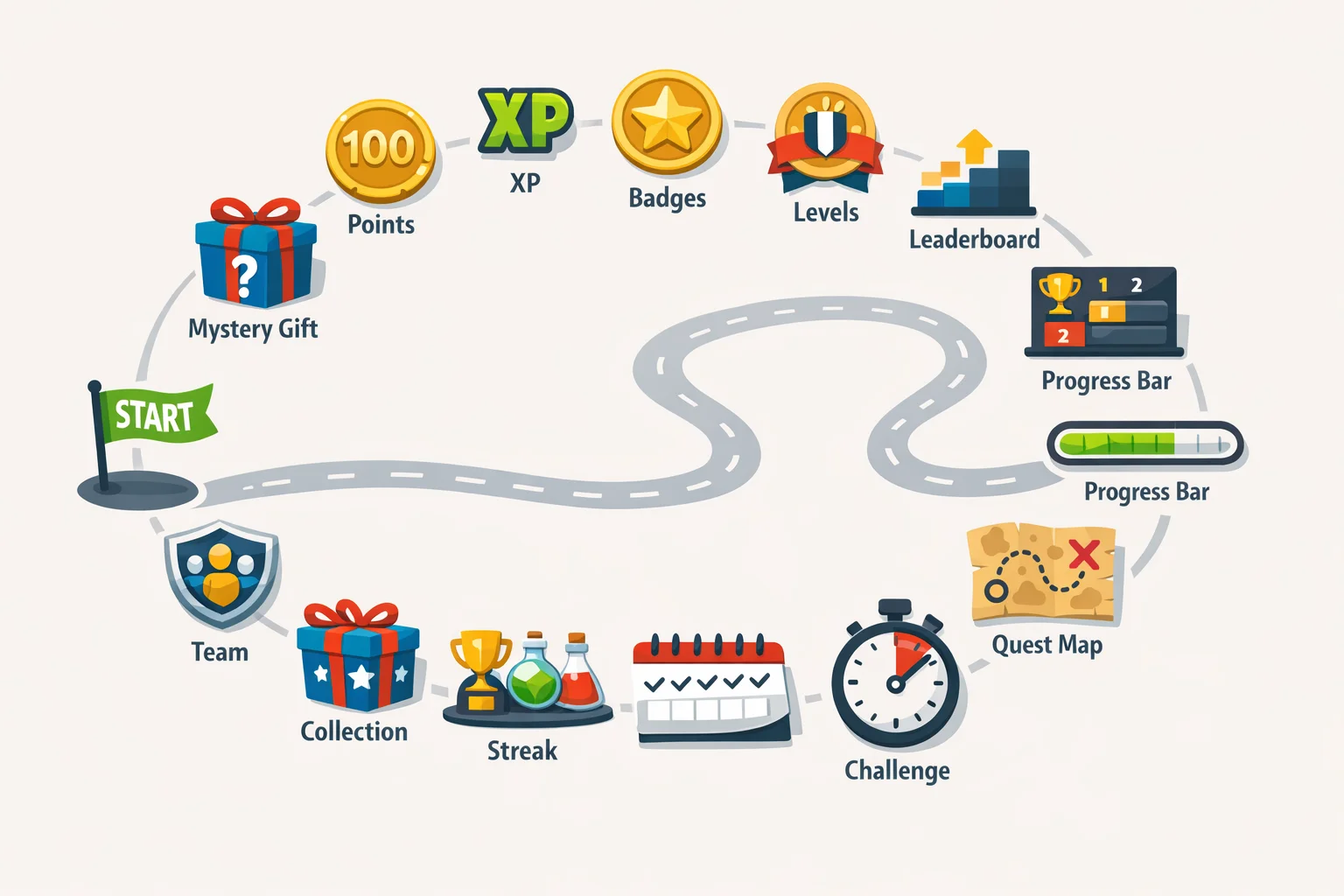
The most durable shifts: AI‑personalized mechanics, co‑op over solo leaderboards, short asynchronous loops, portable badges using open standards, privacy‑safe consent patterns, WCAG‑aware interaction design, and pragmatic AR where the physical context matters. These patterns reflect what actually sustains engagement, not what demos well.
Across domains, results vary by design quality. Recent reviews show positive impacts on motivation and participation, with mixed effects on performance when mechanics are shallow. Tailored systems and well‑structured feedback loops consistently perform better than one‑size‑fits‑all points and badges. (mdpi.com)
Sometimes. Use them as a short‑term spark or inside opt‑in ladders, not the backbone of your program. Studies have documented neutral or negative effects on motivation when public ranking dominates. Team goals and rotating roles tend to keep more people engaged over time. (sciencedirect.com)
No. Build for phones first. Use spatial or AR moments when the physical context matters (navigation, inspections, place‑based storytelling). Enterprise adoption is rising for practical jobs‑to‑be‑done; consumer spectacle is optional. (apple.com)
Make consent a feature. Give clear choices, easy exits, and value‑first prompts. Regulators have focused on manipulative flows in recent reviews. Design for dignity and you’ll usually design for effectiveness. (ftc.gov)
If you’re adapting experiences with AI and touching EU users, track the EU AI Act timelines. Broad operative provisions begin August 2, 2026, with additional phases through 2027. Keep records of what adapts, what data you use, and how you test for bias or harm. (digital-strategy.ec.europa.eu)
Shift from raw participation to behavior change: completion latency, re‑engagement after failure, transfer to real tasks, and cross‑team spillover. If the behavior outside the game isn’t changing, the points don’t matter.
Pilot one micro‑loop for one behavior with one team for two weeks. Make it co‑op, time‑boxed, and accessible by design. Issue one portable badge for completion. Measure what changes outside the app, then iterate.