Solutions
Your first hunt, live this afternoon.
Free to start · No download for participants
See 10 gamification marketing examples that turn passive visitors into active participants. Learn the mechanics, channels, and outcomes behind each one.
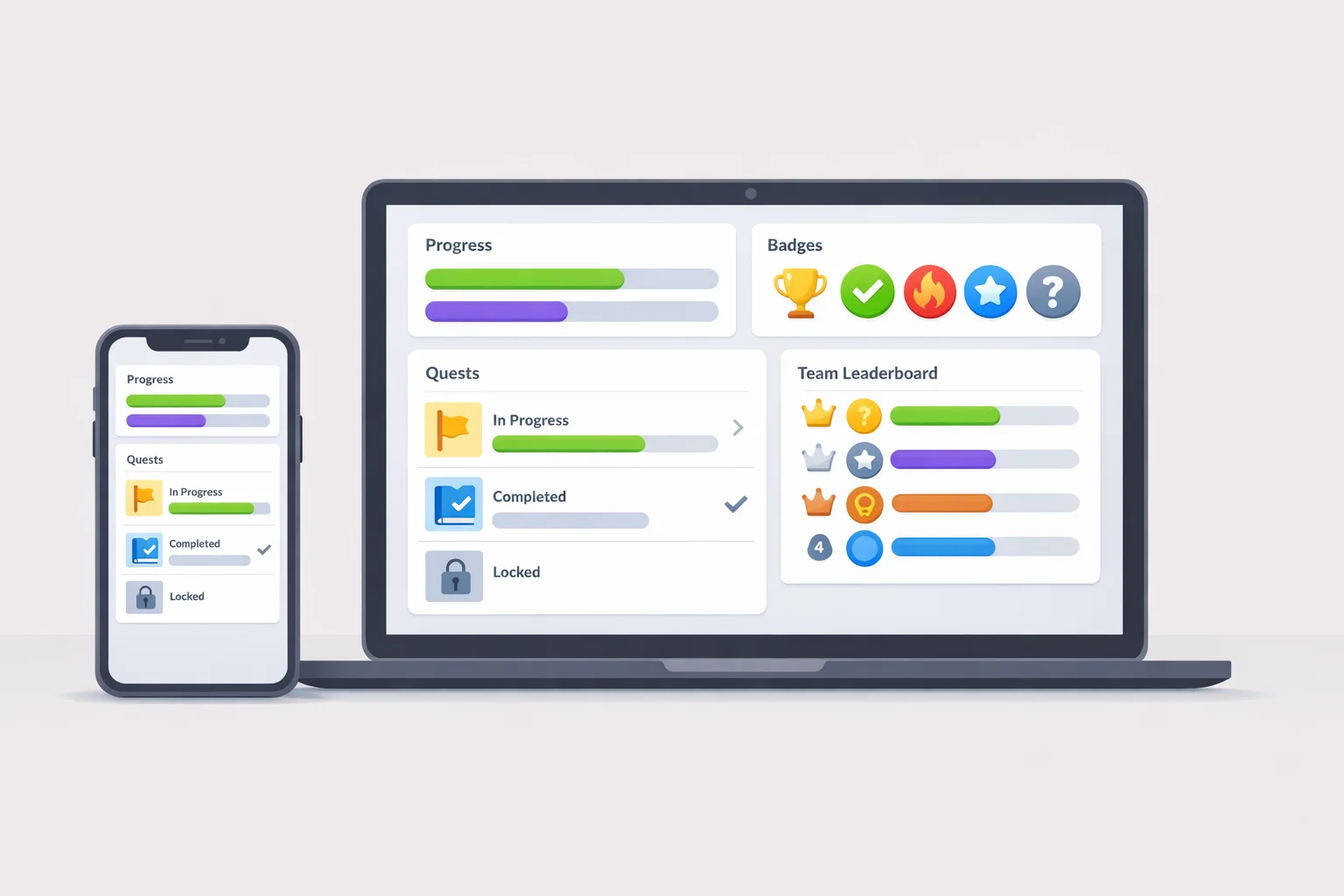
Marketers don’t need more ideas. They need ideas that get people to actually do something: sign up, show up, share, buy, learn, return. That’s why gamification sticks around. When it’s designed well, it turns passive browsing into deliberate action loops.
What follows isn’t a Pinterest board of clever stunts. It’s ten field-tested examples, with mechanics you can adapt and metrics you can move. And a few quiet warnings from things we’ve seen flop.
Well-built game mechanics create feedback loops: do the thing, see progress, feel momentum, repeat. Meta-analyses find gamification can improve engagement and learning outcomes, but effects vary by design. Badges on top of boring tasks rarely move behavior. Mechanics tuned to intrinsic motivations do. (link.springer.com)
A pattern we keep seeing: the winners make the desired action obvious, the first win easy, and the next step tempting.
How to read the examples below: - Mechanic is the primary game element. - Channel is where it lives. - Core loop is the repeating behavior. - Why it works explains the psychology. - Implementation notes are the operational details that separate smooth from sticky. - Mind the pitfalls flags where these usually go wrong. - Measure it lists the metrics that matter.
Mechanic: Points-to-rewards with tiered status and time-bound perks.
Channel: Mobile app and in-store.
Core loop: Buy, earn Stars, unlock redemptions faster at higher tiers, watch progress to the next level.
Why it works: Status tiers and near-term redemptions make the next purchase feel like obvious progress, not just another coffee.
Implementation notes: Starbucks’ 2026 refresh clarified Green/Gold/Reserve levels, added a 60-Star $2-off tier, and tweaked expiration windows to keep momentum without punishing casual buyers. If you’re building similar, set early redemptions so a new member can win quickly. (about.starbucks.com)
Mind the pitfalls: Opaque rules and surprise expirations kill trust. Publish terms clearly and simplify redemption math. Starbucks spells out levels and rules publicly for exactly this reason. (starbucks.com)
Measure it: Redemptions per active member, days-to-first-reward, tier progression velocity, breakage rate, and lapsed-to-reactivated.
Mechanic: Daily streaks, shareable milestones, light league competition.
Channel: Mobile app and social share cards.
Core loop: Complete one lesson, keep your streak, celebrate visible milestones, share progress.
Why it works: Streaks make the minimum behavior explicit and rewarding. Social proof and small celebrations keep the loop emotional instead of mechanical.
Implementation notes: Duolingo openly iterates its streak system (e.g., explaining changes, adding shareable milestone cards, and testing “streak wagers”) to reduce confusion and increase habit formation. If you use streaks, provide forgiveness and education. (blog.duolingo.com)
Mind the pitfalls: Pure fear-of-loss designs cause anxiety and churn. Build in streak freezes or catch-up windows.
Measure it: 1-, 7-, 30-day retention; percent of users with a streak >7 days; lesson completions per active day; share rate of milestones.
Mechanic: Location-based challenge to unlock a deal.
Channel: Mobile app + real-world geofences.
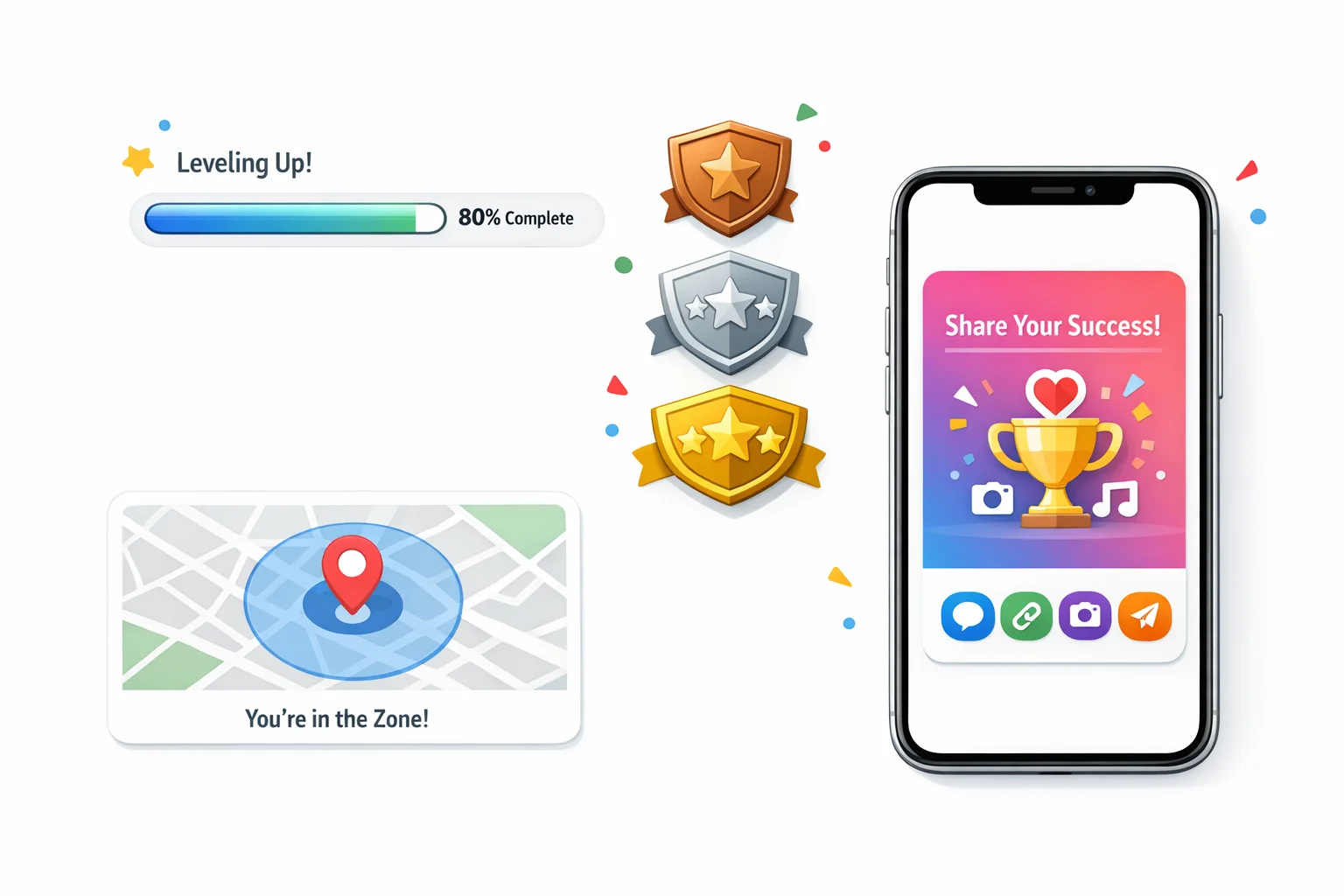
Core loop: Go within a set radius of McDonald’s, unlock a 1-cent Whopper in the BK app, get routed to BK for pickup.
Why it works: The stunt is a quest with a punchline. The “detour” reframes an errand as a win and tightly couples digital unlocks to foot traffic.
Implementation notes: The campaign geofenced thousands of competitor locations and converted the unlock into navigated pickup, helping drive 1.5 million app downloads and a Cannes Grand Prix. The operational bar is high but the principle scales: make the journey part of the reward. (adweek.com)
Mind the pitfalls: Deals that are too generous without a follow-on loop train people to chase discounts, not build habits. Plan the post-quest experience.
Measure it: App installs, unlock-to-pickup rate, incremental visits vs. baseline, and 30-day order frequency of new installers.
Mechanic: Time-bound challenges, leaderboards, and badges.
Channel: Mobile app.
Core loop: Join a challenge, stack runs toward a target, earn badges, compare with friends.
Why it works: Public commitments and bite-sized milestones shorten the gap between “I should run” and “I ran today.”
Implementation notes: Nike documents how to join/create challenges and integrates social structures by default. Don’t overcomplicate. One target, one badge, one shareable finish is plenty. (nike.com)
Mind the pitfalls: Endless overlapping challenges create fatigue. Offer seasonal cycles and rest periods.
Measure it: Challenge joins, completion rate, miles per week during challenges vs. baseline, and return rate for the next challenge.
Mechanic: Piece collection with instant wins and bigger set-completion prizes.
Channel: Packaging + mobile app.
Core loop: Peel or scan, collect properties, trade or try again, redeem.
Why it works: Variable rewards keep attention, while set completion gives a clear long-term goal. Moving pieces into the app adds persistence and reminders.
Implementation notes: The UK rules spell out piece types, eligibility, and digital redemption windows. In recent U.S. runs, pieces could be scanned into the app, blending physical and digital play. Clarity matters with prize mechanics at scale. (mcdonalds.com)
Mind the pitfalls: Opaque odds and redemption friction frustrate people. Publish timelines, odds, and claim flows.
Measure it: Game plays per buyer, app opt-ins from the game, property completion attempts, prize redemption rate, and return visits.
Mechanic: Earn storage for each successful referral; invitee gets rewarded too.
Channel: In-product prompts and email.
Core loop: Invite a friend, they sign up and install, both accounts get more space, repeat.
Why it works: Two-sided value turns users into motivated recruiters. Storage is native value, not a coupon.
Implementation notes: Dropbox’s CEO reported a permanent 60 percent increase in signups after launching the program, with 35 percent of daily signups coming from referrals during the period. Keep reward visibility obvious and cap abuse cleanly. (andrewchen.com)
Mind the pitfalls: If the reward isn’t core value, people won’t bother inviting friends. Avoid cash-like payouts that attract fraud.
Measure it: Referral invites per user, invite-to-install rate, K‑factor, and retention of referred users vs. paid acquisition.
Mechanic: Free-to-join loyalty with points, status tiers, and limited-time multiplier events.
Channel: App, web, and stores.
Core loop: Buy, earn points, redeem in the Rewards Bazaar, climb tiers for perks and bonus-point events.
Why it works: Beauty buyers like to experiment. Points and member-only events give them structured reasons to do it with you.
Implementation notes: Terms outline point rules, tier benefits, and redemption conditions, which reduces confusion. Build simple calculators so members can see “how many points to X.” (sephora.com)
Mind the pitfalls: Hoarded points that suddenly expire breed resentment. Set clear expirations and send gentle, timely nudges.
Measure it: Active members, redemption frequency, tier movement, multiplier-event lift, and points liability over time.
Mechanic: Modular lessons with points, badges, ranks, and periodic quests.
Channel: Web platform tied to a public profile.
Core loop: Complete a module, earn points and a badge, advance ranks, join quests for extra rewards, display progress publicly.
Why it works: The badge portfolio is a visible, verifiable resume. Public identity plus incremental wins keeps learners advancing.
Implementation notes: Salesforce reports millions of learners and tens of millions of badges earned; guides explain ranks and quests so expectations stay clear. Treat your badges like real credentials with consistent criteria. (salesforce.com)
Mind the pitfalls: If badges don’t map to real skills, the system turns into a collectathon. Make assessments meaningful.
Measure it: Module starts vs. completions, time-to-first-badge, rank attainment, credential attempts after specific badge paths.
Mechanic: Annual, time-bound reveal with personalized stats and highly shareable visuals.
Channel: In-app stories and social.
Core loop: Open the app at launch, explore your year, post your cards, compare with friends.
Why it works: It’s a one-tap identity performance: “This is who I am (through music).” The format begs to be shared, creating massive earned reach.
Implementation notes: Spotify documents new elements each year (e.g., listening characters, Blend with friends, AI DJ tie-ins). Keep the ritual predictable but the contents fresh. (newsroom.spotify.com)
Mind the pitfalls: If the data feels wrong or the visuals feel tired, the magic fades. QA the numbers and evolve the frames annually.
Measure it: Daily active users during launch week, share rate of cards, social mentions, reactivation of dormant users, and downstream subscription upgrades.
Mechanic: Points for contributions, levels with badges, and occasional perks.
Channel: Google Maps.
Core loop: Contribute reviews, photos, and edits; earn points; level up; get recognized with a badge.
Why it works: It rewards helpfulness with visible status right where opinions influence decisions.
Implementation notes: Google publishes a clear points table and level thresholds with the Level 4 badge as a notable first milestone. If you run UGC, make first recognition fast and spam controls clear. (support.google.com)
Mind the pitfalls: If moderation lags, top contributors burn out. Invest in feedback and flagging tools.
Measure it: New contributors per month, contributions per contributor, helpful-vote rate, and content survival rate post-moderation.
If a scavenger hunt or quest format fits your launch, event, or destination marketing, keep challenges concrete and delightful. In our experience, a short list of photo, GPS, and quiz tasks outperforms long checklists.
Here are example prompts that work in a brand quest:
Scavify runs these patterns all the time, so if a quest mechanic is right for your campaign, a browser-plus-app setup can make launch day painless.
Read these in context. A 50 percent completion rate might be great for a multi-stop quest and terrible for a single-step progress bar.
It’s the use of game mechanics like points, progress, streaks, quests, leaderboards, and unlocks to encourage specific customer actions in products, campaigns, and experiences.
Yes, when mechanics fit the behavior and the channel. Research shows positive effects on engagement and learning, but results vary by design quality and context. (link.springer.com)
Offer streak freezes or grace periods, celebrate milestones beyond day count, and make “catching up” possible so people don’t abandon after one miss. Duolingo’s public iterations are a good study. (blog.duolingo.com)
If you’re running sweepstakes or instant-win games, publish official rules and eligibility, and comply with regional laws. Look at how McDonald’s and Starbucks document terms publicly. (mcdonalds.com)
Focus on mastery and proof. Badges that map to skills (think Trailhead) and progress bars that help teams finish onboarding are effective and credible. (salesforce.com)
Run a 3–5 challenge quest with a guaranteed first reward and a bigger prize drawing for completions. Use GPS check-ins, QR codes, and a single photo task. Keep rules on one screen and automate scoring.
You’ll see signals within days: starts, completions, time-to-first-win. Retention and revenue effects show up over weeks as loops repeat.