Solutions
Your first hunt, live this afternoon.
Free to start · No download for participants
Discover 30 virtual team building activities for large groups with scalable formats, breakout guidance, inclusive facilitation, and zero awkwardness.
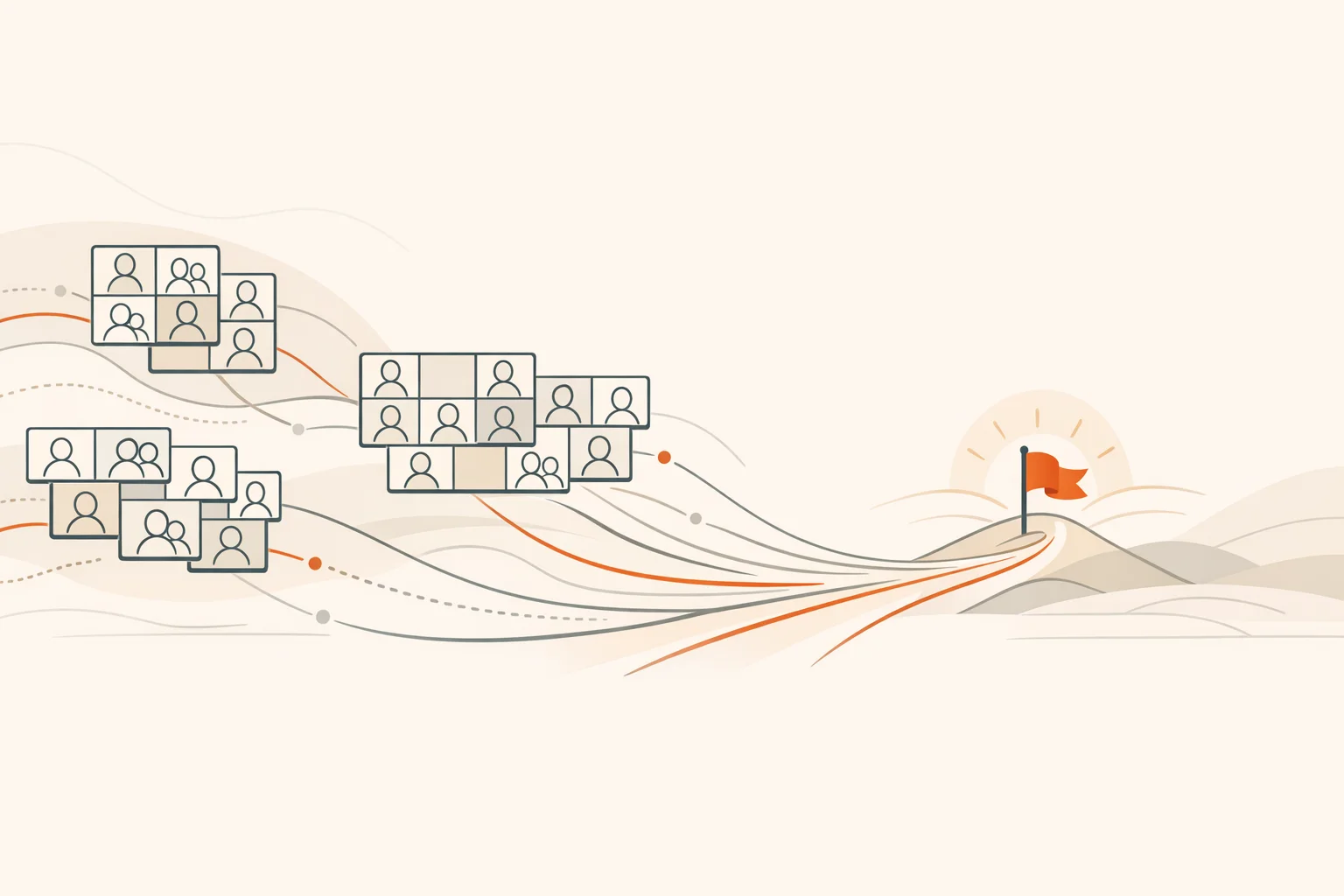
You can run high‑energy, zero‑awkwardness team building with 30 people or 3,000 if you design for scale from the start. The trick isn’t more spectacle. It’s tighter facilitation, smarter formats, and activities that split a crowd into small, active groups, then bring the room back together with momentum.
This list is built from patterns we see work week after week for large companies, universities, and conferences. Everything below scales cleanly, avoids dead air, and gives every person a real role instead of “watching the extroverts perform.”
Bookmark it, cherry‑pick it, or run it end‑to‑end. It’s the playbook we wish more virtual events used.
Large rooms don’t fail from lack of ideas. They fail from lack of structure. A few choices change everything.
A few data‑backed anchors help. Video fatigue is real, with Stanford researchers identifying four drivers and simple mitigations like hiding self‑view and adding movement breaks. See the overview in Stanford’s research on Zoom fatigue.
Plan your room math. Most major platforms handle large‑scale breakouts with auto‑assignment. For example, Zoom supports creating up to 100 breakout rooms and pre‑assigning up to 1,000 participants, which removes the manual shuffling headache. Details live in Zoom’s own guide: managing meeting breakout rooms.
Protect psychological safety. Icebreakers and games work because people feel safe enough to speak up and take small risks. That’s not fluffy. It’s one of the strongest predictors of team performance according to Google’s Project Aristotle coverage in HBR.
Be ruthless about meetings that meander. Research from Microsoft’s Work Trend Index shows inefficient meetings are a top productivity drag, which is why crisp goals and timeboxes matter in team activities too. See the synthesis in Microsoft’s WorkLab analysis.
Nothing moves a big group like a well‑built hunt. People complete bite‑size challenges from anywhere, post photos and videos, answer trivia, rack up points, and watch a live feed and leaderboard pull the room together. Platforms like Scavify make it easy to play in a browser or the app and automate the heavy lifting.
How to scale: Auto‑create many small teams, run timed challenge bursts, then showcase top entries and unexpected wins in the main room.
Plot everyone’s birthplace on a shared map and add one sentence about that place. Patterns emerge fast and conversations spark immediately.
How to scale: Pre‑share the link, then debrief with fast prompts like “What surprised you?” and “Who grew up closest to you?”
Spin up randomized 1:1 or trio chats for 7–10 minutes across the org. Light, human, no agenda besides connecting.
How to scale: Use auto‑assignment, rotate twice, and drop two get‑to‑know prompts into chat.
A social standup with eggs instead of slides. People bring whatever they’re eating and answer one playful question.
How to scale: Break out by time zone or cuisine. Spotlight one dish per group on return.
Arcade‑simple games lower the barrier to play. Think party‑style trivia, drawing, deduction, or word games over screen share.
How to scale: Round‑robin brackets in breakouts with a finals match in the main room.
Teams solve story‑based puzzles against a clock. The time pressure is the point: it unlocks quick collaboration.
How to scale: Run multiple rooms in parallel, then crown the fastest solve and best teamwork moment.
Short, lightweight assessments can spark good conversations about working styles when used thoughtfully.
How to scale: Break into groups to discuss “What helps me do my best work” through the lens of results.
Invite brief photo or 20‑second video peeks into work setups, commutes‑to‑the‑kitchen, or local neighborhoods. Keep it human, not produced.
How to scale: Collect asynchronously, then show a rapid montage and quick reactions live.
Two prompts, tiny rooms, three minutes. People learn one true thing and one unexpected thing about each other.
How to scale: Use auto‑shuffle for two quick rounds so everyone meets more faces.
A proudly unserious contest. Who has the chaos crown today? Bonus points for creative clutter.
How to scale: Submit photos asynchronously, reveal finalists live, and let reactions decide.
Classic trivia never dies. Mix company lore, pop culture, and visual rounds. Keep questions quick and accessible.
How to scale: Breakout team sheets, auto‑score simple rounds, leaderboard reveal between sets.
Volunteer speakers get five minutes to teach something they love. The range is the fun.
How to scale: Track time strictly, run parallel stages in breakouts, then reconvene for two standout talks.
Momentum beats novelty. Keep the energy moving and even simple games feel electric.
Low‑stakes topics. Clear roles. Timed arguments. The point isn’t winning—it’s laughing and thinking together.
How to scale: Seed both sides with sample points and rotate speakers quickly.
A rapid show‑and‑tell of small upgrades that made remote work better. Cheap, useful, replicable.
How to scale: Ask each room to nominate one hack worth adopting.
Choose a simple dish with options for dietary needs. Cook together on camera, eat together off camera.
How to scale: Mail ingredient lists early. Pair newbies with confident cooks in each room.
A light, inclusive streak game: hydration, steps, stretches, sleep. Celebrate consistency over intensity.
How to scale: Track progress in a channel and showcase creative streak savers weekly.
Create a card of fun prompts. People post proof pics: “a view from your window,” “pet cameo,” “favorite mug.”
How to scale: Auto‑generate unique cards and run a 20‑minute sprint with one highlight share.
Guess the teammate from a three‑song set. Music says more than bios ever do.
How to scale: Submit songs ahead, run in small rooms, and reveal identities together.
Shared canvases, simple prompts, and a countdown. Doodles beat lectures.
How to scale: Assign each room a frame to fill and present a gallery walk at the end.
Match baby or kid photos to today’s teammates. It’s wild how many people keep the same smile.
How to scale: Collect pics securely, run timed rounds, and spotlight the most surprising matches.
Short, structured confessions. Keeps the pace high and the stories memorable.
How to scale: 3–4 people per room, one minute each, rotate once.
Logic puzzles plus light story equals deep focus without heavy prep. Great for mixed groups.
How to scale: Give each team a different path so solutions don’t leak across rooms.
Do good together in bite‑size ways: review resumes, translate a paragraph, map trails, mentor for 20 minutes.
How to scale: Offer a menu and let each room pick. Close with a quick “what we did” share.
Artifacts, snacks, phrases, or legends from where people live. Culture beats corporate small talk every time.
How to scale: Theme by region or topic. Keep shares under a minute each.
Silly mini‑events: paper‑airplane accuracy, desk‑item Jenga, reaction‑emoji speed test.
How to scale: Run three events max, score simply, and highlight the most creative technique.
Micro‑lessons with a quick challenge. People apply the idea immediately and earn points for proof.
How to scale: Pair subject‑matter hosts with facilitators who watch the clock.
A curated article or podcast chapter, silent reading or listening, then a focused discussion.
How to scale: Small rooms answer one prompt each and report back in a sentence.
Invite someone unexpected: a customer, alum, partner, or exec. Keep it unscripted and short.
How to scale: Collect questions in advance and upvote live for a fast flow.
People list something they can teach in 15 minutes and something they want to learn. Matches are made.
How to scale: Use a simple signup board and two rounds of trades.
Visit a museum, factory, farm, or lab via live or recorded tours. Add a scavenger‑style checklist to keep it active.
How to scale: Break into tour guides and note‑takers, then share one unexpected fact each.
What if we only have 45 minutes?
Pick one anchor activity, add a 3‑minute opener and a 3‑minute closer, and run one tight breakout round.
How big should breakout groups be?
Small enough that everyone speaks within the first minute. Err smaller when energy is low.
What if people don’t want to be on camera?
Allow it. Favor formats where chat, reactions, and shared docs count as full participation.
How do we avoid “same five people talk” syndrome?
Assign rotating roles and use prompts that require quick, round‑robin answers.
Can these work across time zones?
Yes. Mix async submissions with a shorter live reveal to include more people.
What platform features matter most?
Reliable breakout rooms, broadcast messages, easy screen share, and a simple way to collect artifacts.
Where does Scavify fit?
When you want variety, automation, points, leaderboards, and instant photo/video proof without juggling tools, Scavify is a natural fit.
Strong virtual team building isn’t about louder gimmicks. It’s about designing moments where everyone has a reason to act, a way to contribute, and something to celebrate together. Start with two or three ideas above, keep the beats tight, and build from there.