Blog » The Best Team Building Experiences In Thailand For Corporate Retreats

The Best Team Building Experiences in Thailand for Corporate Retreats

Updated: June 11, 2026

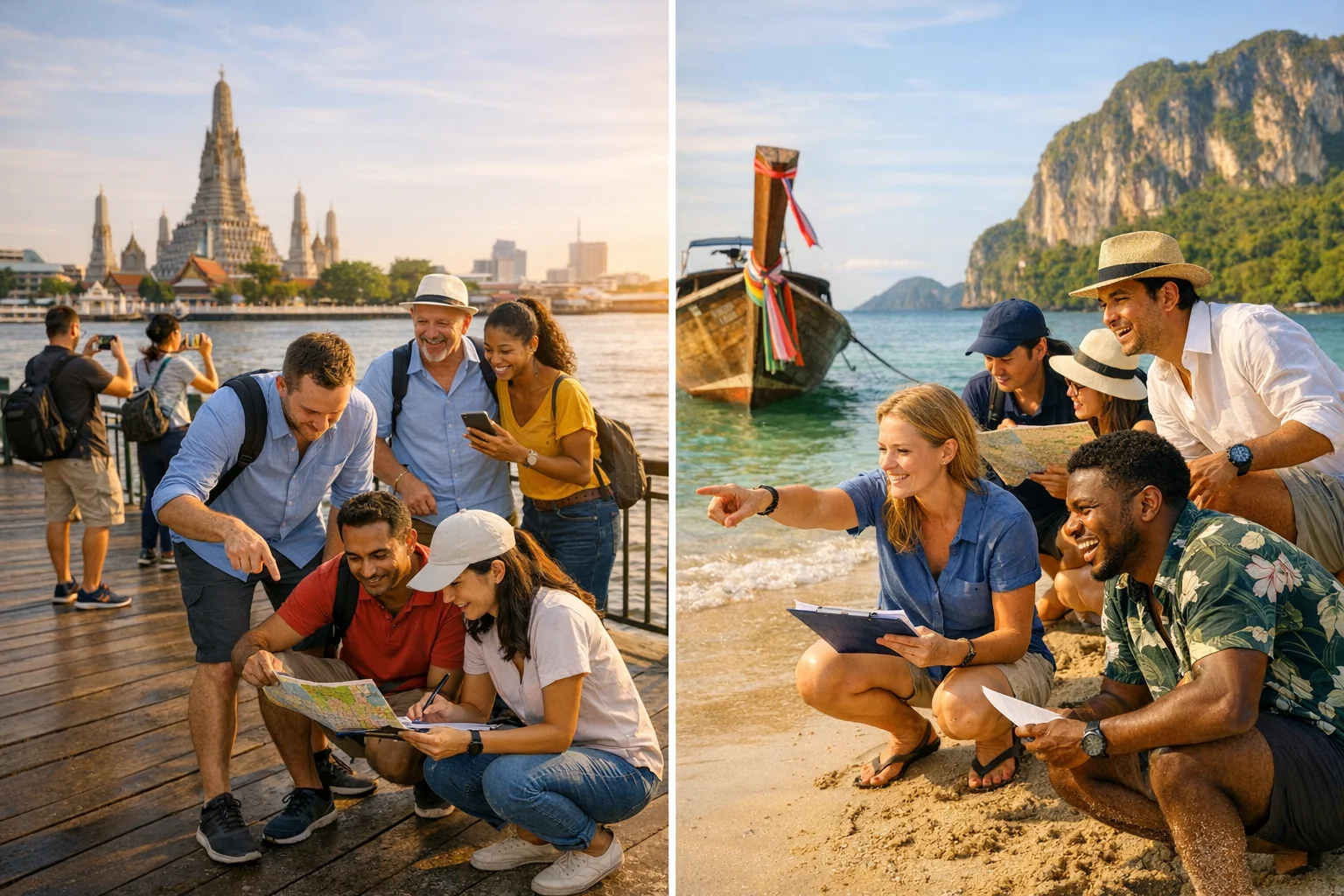
Thailand rewards teams that like momentum. You can move from a rooftop kickoff to a canal-side challenge to a night-market debrief without losing the thread or the room.

Done well, a retreat here creates real connection, not forced enthusiasm.

At a Glance

  • Pick destinations by monsoon pattern, not by postcard. The coasts run on different calendars.
  • Blend outdoor anchors with low‑lift indoor backups. The weather will test your plan.
  • Use culture as a mechanic: food, temples, markets, Muay Thai. Not as a backdrop.
  • Measure outcomes with a simple scorecard: participation, cross‑team mix, and decisions made.

Choose your base: match season, flight time, and objectives

Thailand has two dominant monsoon patterns. The southwest monsoon shapes most of the country from roughly mid‑May to mid‑October. The northeast monsoon follows from mid‑October to mid‑February. That split is the planning hinge. See the Thai government’s overview of monsoon patterns for context. (thailand.go.th)

On the Gulf coast (Koh Samui, Koh Phangan, Koh Tao), the rainy season tends to arrive later in the year, typically October to December. This is the opposite of the Andaman side (Phuket, Krabi), which is wetter May to October, as outlined in Rough Guides’ regional breakdown. (roughguides.com)

Use this short‑hand when aligning place to purpose:

  • Need short transfers and city energy: choose Bangkok.
  • Want calmer pace, craft, and mountains: choose Chiang Mai.
  • Want blue‑water adventure between Nov–Apr: choose Phuket/Krabi.
  • Want a beach base that’s friendlier in Jun–Aug: choose Koh Samui.
  • Need beach with minimal bus time: choose Pattaya/Hua Hin.
  • Want cooler air and vineyards: choose Khao Yai.

Bangkok: high‑energy urban challenges with minimal transit

Bangkok works because everything is close enough. Most teams can stack three distinct experiences in a day without frying attention.

What consistently lands:

  • City hunts across neighborhoods. Build routes that hop between riverside lanes, creative districts, and green pockets. Transit becomes part of the game.
  • Canal (khlong) micro‑missions. Use long‑tail boats for small teams with photo prompts at piers and temple courtyards.
  • Thai cooking sprints. Give squads 30 minutes in a market to source ingredients, then a pro‑led cook‑off.
  • Rooftop retrospectives. Short, focused debriefs at sunset. Keep speeches under six minutes.

Operational note: heat and traffic are real. Start early, lock in shade breaks, and keep legs‑to‑table transitions under 20 minutes.

Chiang Mai: mountain culture, craft, and calm focus

Chiang Mai is where teams exhale and do deeper work without losing the fun. The Old City, nearby forests, and maker culture give you range without long drives.

What usually works:

  • Handicraft circuits. Paper making, silver‑stamping, coffee roasting. Small wins add up.
  • Muay Thai fundamentals. Technique, respect, and a trainer‑guided pad session. Zero bravado required.
  • Doi Suthep sunrise frameworks. Short temple visit, then a values workshop while the city wakes up.
  • Night bazaar hunts. Quick-fire challenges with color and movement before an early wrap.

Keep animal experiences observation‑only and welfare‑led. Avoid riding or direct contact venues and follow elephant‑friendly guidelines from World Animal Protection. (worldanimalprotection.org.nz)

Phuket & Krabi (Andaman coast): water‑forward adventure with solid resorts

From November to April, the Andaman side clicks for water days with calm seas and reliable sunsets. May to October is wetter and choppier. Plan accordingly. (roughguides.com)

What plays well:

  • Island micro‑regattas. Teams navigate by clue to waypoints, photograph proof, and time‑box swims.
  • Sea‑to‑table cookouts. Market buys in the morning, resort grills in the afternoon.
  • Karst quest. Kayak routes through sea caves with problem‑solving checkpoints.

Safety first: move boats early, use conservative weather windows, and set a strong heat/hydration protocol.

Koh Samui (Gulf coast): summer‑friendly beach base with later rains

Samui shines for June–August offsites when much of the west coast is stormier. Its heavier rains tend to arrive later in the year (often October to December), so you can run beach‑forward programs in the northern summer with better odds. Validate month‑by‑month with Gulf‑specific guidance before you lock in. (roughguides.com)

What works smoothly:

  • Coastal wellness + light competition. Sunrise stretch, reef‑safe snorkel, short beach challenges.
  • Sail rock scouting. Boat‑based clue hunts with weather‑safe alternative routes.
  • Market‑to‑kitchen Thai feasts. Fisherman’s Village supply missions followed by a chef showdown.

Pattaya & Hua Hin: fast transfers, easy beachfront formats

If flight arrivals are fragmented or time is tight, these two win on simplicity. You can be on the sand in a couple of hours from Bangkok.

Patterns we see:

  • Boardwalk hunts. Short walking loops, food stalls as challenge anchors, fast scoring.
  • Resort Olympics that don’t drag. Four stations, 12–15 minutes each, strong facilitation.
  • Golf‑adjacent programs. Morning tee‑times for a subset, parallel creative builds for others.

Khao Yai: cooler air, vines, and national park adjacency

Khao Yai gives you space to think. Vineyards, rolling hills, and cooler evenings support strategy blocks between light field challenges.

Good mixes:

  • Trail‑light missions. Wayfinding, photography, and ecology prompts on short loops.
  • Vineyard blend‑offs. Sensory games that become metaphors for product choices.
  • Night safari observation. Quiet, ethical wildlife watching with a scientist Q&A.

Low‑lift indoor programs that still feel alive

Rain shows up. Energy shouldn’t drop when it does. These formats stay sharp indoors:

  • Decision games. Cross‑functional teams make timed calls with incomplete data, then reveal outcomes.
  • Thai snack R&D. Iterate a snack, brand it, pitch it. Judges score taste, story, and teamwork.
  • Micro‑talks. Five speakers, four minutes each, one slide. Tight, human, memorable.
  • Photo storytelling. Curate the best images from the hunt, add captions, and vote live.

CSR that actually helps, not performs

Impact projects can build pride or cynicism. The difference is fit and follow‑through.

Skip animal contact experiences and steer teams to observation‑only, welfare‑led venues. Use clear criteria from World Animal Protection to vet operators and set expectations. If elephants are involved, it’s watch, learn, and support care, never rides, bathing, or tricks. (worldanimalprotection.org.nz)

Community projects land best when they’re requested locally, finishable in hours, and maintained afterward. Think mangrove seedling support via coastal groups, school garden builds requested by educators, or waste‑sorting pilots run with facility managers.

Operations that make or break ROI in Thailand

A pattern we keep seeing: logistics decide whether the content shines.

  • Season fit. Align coast to monsoon. Andaman leans drier Nov–Apr; Gulf gets later rains Oct–Dec. Make your Plan B as real as Plan A. (roughguides.com)
  • Transfers. Cap single bus legs. Stack activities so each jump feels purposeful.
  • Permits. National parks, drones, and certain waterfronts need advance clearance. Assign an owner.
  • Holidays. Songkran (mid‑April) and peak festival windows change traffic and availability. Build around them.
  • Safety. Heat protocols, marine briefings, footwear notes. Announce early and repeat.
  • Measurement. Track participation rate, cross‑team interactions, and decisions made. Debrief while memories are fresh.

If you’re bringing a large regional group, Thailand’s national MICE bureau provides event‑support services and sustainability frameworks that are worth a look during planning. Their service catalog outlines what’s available for meetings and incentives nationwide. (businesseventsthailand.com)

Sample 1–2 day retreat agendas

These are field‑tested skeletons. Swap in equivalents for your venue and weather.

Bangkok, 1.5 days

  • Day 1 AM: Welcome, intent setting, and city hunt launch across two zones.
  • Day 1 PM: Cooking sprint and rooftop retrospective with awards.
  • Day 2 AM: Focus blocks (strategy, customer insight), closing commitments, optional canal micro‑missions.

Phuket, 2 days

  • Day 1 AM: Beach warm‑ups, island clue‑hunt with safety stops.
  • Day 1 PM: Sea‑to‑table cookout, sunset share‑outs.
  • Day 2 AM: Decision game indoors, then paired mentoring walks.
  • Day 2 PM: Free time or spa; closing circle before departures.

Chiang Mai, 1.5 days

  • Day 1 AM: Handicraft circuit teams, quick showcases.
  • Day 1 PM: Muay Thai fundamentals and night bazaar mini‑hunt.
  • Day 2 AM: Values workshop with temple‑view finish; closing commitments.

Scavenger hunt challenge examples tailored to Thailand

  • [Photo | 30 pts]: Trade a useful Thai phrase with a market vendor and capture the moment.
  • [GPS Check‑in | 40 pts]: Find the quiet green walkway suspended above Bangkok traffic.
  • [Video | 50 pts]: Recreate a respectful wai greeting tutorial in under 10 seconds.
  • [Q&A | 20 pts]: Which monsoon brings Thailand’s rains from mid‑May? Name it.
  • [Multiple Choice | 30 pts]: Pick the island group visible from this Krabi lookout.

When Scavify fits naturally

If your plan includes hunts through Bangkok neighborhoods, resort‑based missions, or conference‑floor engagement, an app keeps the pace up. Scavify’s mix of challenge types, automatic scoring, media capture, and offline‑friendly mode reduces facilitation overhead while making participation visible. That helps you keep energy up and measure what mattered.

FAQs

What’s the best time of year for a Thailand team retreat?

Match coast to monsoon. Andaman side (Phuket/Krabi) is typically driest November to April, while the Gulf side (Samui) often sees its heavier rains October to December. Inland cities like Bangkok and Chiang Mai have more classic May–October rainy patterns. Validate your dates before booking. (thailand.go.th)

We only have two full days. Which destination keeps transfers light?

Bangkok for urban formats, or Pattaya/Hua Hin for beach within a short road transfer. Both let you stack multiple experiences without long drives.

How do we handle rain without killing momentum?

Design a real Plan B. Pair each outdoor anchor with an indoor equivalent in the same neighborhood or resort. Keep setup needs tiny and transitions under 20 minutes.

Are elephant sanctuaries appropriate for team building?

Only if they’re observation‑only and welfare‑led. No rides, no bathing, no performances. Use independent guidelines to vet venues and set participant expectations in advance. (worldanimalprotection.org.nz)

Any Thailand‑specific compliance or permits to consider?

Yes. National parks, certain beaches, drones, and amplified sound may require permits. Your DMC or venue can advise, but assign a single owner to chase approvals and keep documents on‑hand.

How should we think about Thai public holidays and festivals?

Expect peak travel around Songkran (Thai New Year, mid‑April) and major Buddhist holidays. Venues book out early, traffic patterns change, and some services pause. Plan buffers and confirm operating hours.

What group size works best for hunts and challenges?

Keep teams small enough that everyone contributes. Then scale by running parallel routes or staggered starts. The absolute number matters less than clear facilitation and short, varied tasks.

How do we measure whether the retreat worked?

Decide success up front. Use a simple scorecard: participation rate, cross‑team mix, 1–3 concrete decisions, and a 30‑day follow‑up pulse to check behavioral carry‑through.


Planning note: Always align your coast choice to monsoon timing, validate your month with a Gulf vs Andaman view, and lean on Thailand’s MICE bureau for venue intel and sustainability frameworks when helpful. For monsoon patterns and Gulf‑specific timing, see government guidance and regional travel breakdowns. (thailand.go.th)


Building a Scavenger Hunt?

Scavify is the world's most interactive and trusted scavenger hunt app. Contact us today for a demo, free trial, and pricing.

YOU MAY ALSO LIKE

19 Team Building Activities in Colorado Springs Teams Love

21 Thoughtful Team Building Gifts That Don’t Cost Much