Colorado Springs is built for team building. Red rock drama. Skyline trails minutes from downtown. Inventive indoor spots when the forecast pivots. This guide curates 19 locally grounded ideas with practical tips, so you can choose quickly, avoid tired formats, and actually get people engaged.
At a Glance
- Mix outdoor icons with low‑lift indoor options to match weather and energy.
- Anchor each activity to a clear team outcome: trust, problem solving, cross‑functional mixing, or morale.
- Plan for altitude, sun, and afternoon thunderstorms; always hold a backup indoor track.
- Use lightweight challenges or a scavenger hunt layer to turn “nice” outings into real collaboration.
Why Colorado Springs works for team building (and how to pick fast)
Colorado Springs compresses world‑class scenery, approachable logistics, and a playful spread of venues into one compact footprint. You can get from a downtown meeting to a trailhead or a modern indoor venue in under 20 minutes on a normal day.
Choose by constraint first, then by vibe:
- Timebox: If you have 2–3 hours, pick an in‑town trail loop, an escape room block, or an indoor tournament format. Half day or more opens the door to Cog Railway, zoo programs, or multi‑neighborhood scavenger hunts.
- Mobility & comfort: Layer in altitude awareness and shade. Stairs at Seven Falls are a commitment; Garden of the Gods has flatter loops with big payoff.
- Outcome target: Trust and communication favor climbing belays or problem‑solving rooms. Celebration works best with easy wins like Topgolf‑style games or a tasting crawl.
19 team building activities in Colorado Springs
These are field‑tested concepts with operator notes, grouped for variety. Pick three: one anchor, one quick challenge, and one social finish.
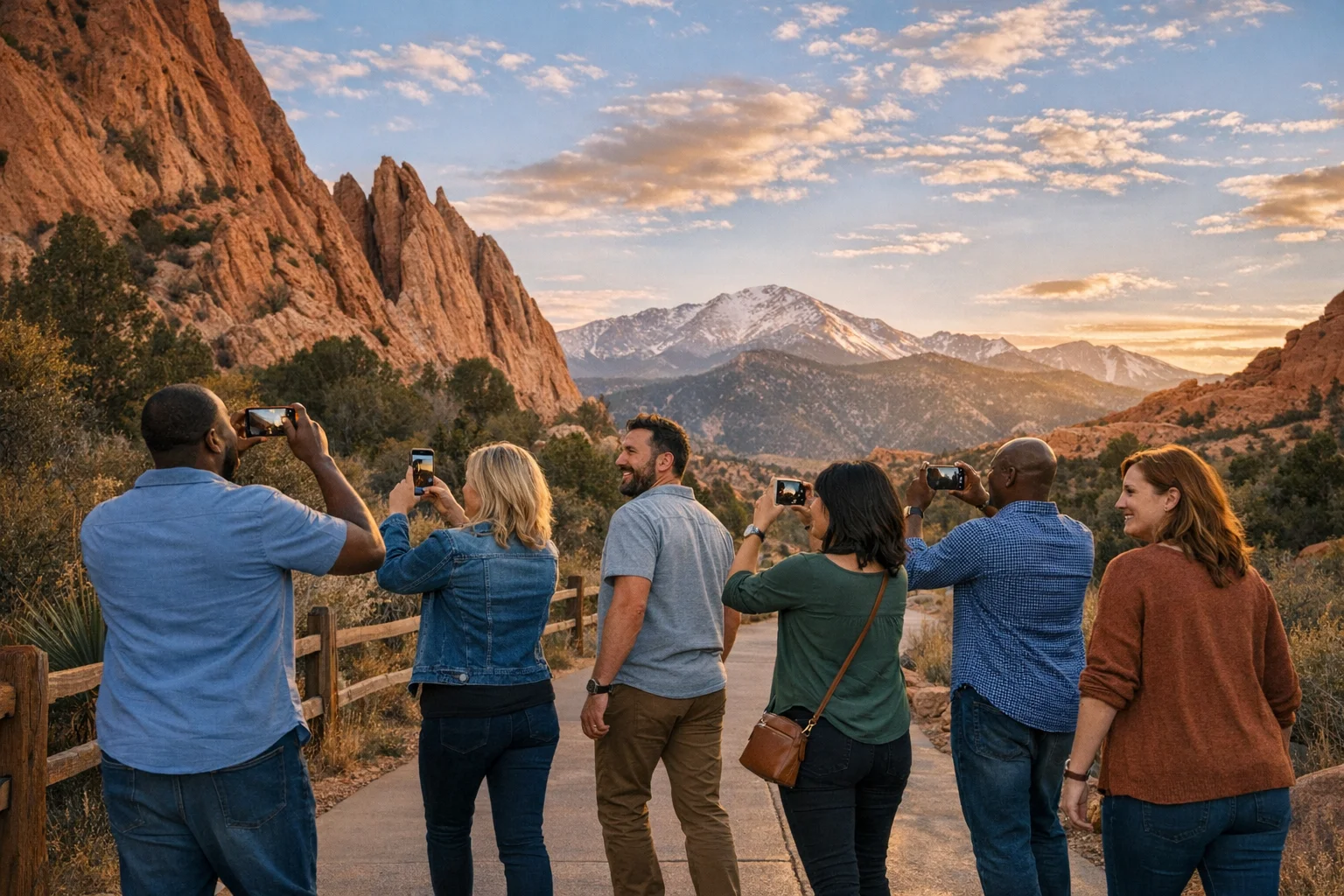
1) Garden of the Gods photo mission walk
Use the paved Central Garden trails for a low‑effort, high‑wow loop through the red sandstone formations. Add a light photo challenge to keep focus and mixing.
- Why it works: Big scenery without big exertion. Easy to keep the whole group together.
- Best for: Mixed‑ability groups; conference breaks.
- Logistics tips: Parking fills late morning. Start early or mid‑afternoon and keep water handy. Consider a ranger‑led talk if available. Pair with a short social at Rock Ledge Ranch lawn if you want a finish line feel. Include a simple Leave No Trace brief.
Link a short fact or map in pre‑event comms using the official Garden of the Gods Visitor & Nature Center. (gardenofgods.com)
2) U.S. Olympic & Paralympic Museum challenge trail
Give small teams a prompt list inside the museum: find an innovation, an underdog story, and a training detail you’d adopt as a team. Share debriefs outside with views of Pikes Peak.
- Why it works: The exhibits are naturally interactive and accessible; the stories spark honest conversation about resilience and standards.
- Best for: New teams, values refresh, or leadership cohorts.
- Logistics tips: Rotate teams through exhibits to avoid bunching. Build a 15‑minute reflection using three prompts: What surprised you, what standard would you raise, what habit would you borrow.
Set context with the museum’s site: U.S. Olympic & Paralympic Museum. (usopm.org)
3) Cave of the Winds adventure sampler
Combine a cave tour with the above‑ground ropes course or zip elements for a choose‑your‑own‑challenge afternoon.
- Why it works: Shared novelty without forcing anyone beyond their edge. Spectators still feel included.
- Best for: Cross‑functional groups that don’t know each other well.
- Logistics tips: Slot the cave tour first, then move to ropes/zip for those who want it. Bring layers; temps shift between sun and cave.
Confirm options and height requirements at Cave of the Winds Mountain Park. (caveofthewinds.com)
4) Pikes Peak Cog Railway summit session
Ride the historic cog to 14,115 feet, then run a tight stand‑up on focus and priorities with the horizon as your backdrop. Keep it brief at altitude.
- Why it works: Memorable setting that marks a milestone quarter or kickoff.
- Best for: Executive teams, sales clubs, or milestone celebrations.
- Logistics tips: Hydrate, bring layers, and time snacks post‑summit. Avoid long speeches at elevation.
Planning details live on the official Broadmoor Manitou & Pikes Peak Cog Railway site. (cograilway.com)
5) Broadmoor Seven Falls stair teams
Split into pods and take the canyon walk to the base, then optional stairs for those who want them. Cap with a short reflection near the water.
- Why it works: Natural progression lets everyone opt into intensity.
- Best for: Intact teams that want a shared win, not a race.
- Logistics tips: Manage the shuttle timing and group photos at the base so you don’t clog the stairs. Use radios or a group thread.
Preview the route and shuttle setup at The Broadmoor Seven Falls. (sevenfalls.com)
6) Cheyenne Mountain Zoo behind‑the‑scenes + mission
Pair an animal care briefing with a light mission: teams capture three behaviors they observed and connect each to a team norm.
- Why it works: Novelty breaks down formality; the reflection brings it back to work.
- Best for: Culture work and morale boosts.
- Logistics tips: Shade and water matter on sunny days. Keep the mission simple and humane: no “stunts,” just observation and connection.
Check programs and timing at Cheyenne Mountain Zoo. (cmzoo.org)
7) Red Rock Canyon Open Space micro‑navigation course
Set waypoints on mellow trails with scenic overlooks. Each team navigates to three points, solving a quick prompt at each.
- Why it works: Mild adventure, high collaboration, beautiful vistas.
- Best for: All‑hands days where you want motion without intimidation.
- Logistics tips: Keep waypoints close to trailheads. Build a rain plan.
8) Palmer Park “10‑shot” creativity sprint
Hand each team a theme (perspective, symmetry, pattern). They have 45 minutes to capture 10 creative photos that fit their theme.
- Why it works: Forces exploration and co‑creation without athletic barriers.
- Best for: Hybrid teams meeting in person; marketing and product groups.
- Logistics tips: End with a rapid gallery on a TV or projector.
9) Indoor climbing trust lab
At a downtown climbing gym, start with ground belay practice and spotting basics. Move to beginner routes where partner communication is the whole point.
- Why it works: Immediate trust loop. Clear roles. Visible progress.
- Best for: Teams that talk past each other on projects.
- Logistics tips: Keep groups small with plenty of staff belayers. Celebrate attempts, not just sends.
10) Escape room trilogy
Book three rooms at once and rotate squads through in back‑to‑back blocks. Track time‑to‑first‑breakthrough and communication quality, not just escapes.
- Why it works: Time pressure exposes patterns; shared debrief fixes them.
- Best for: New pods and cross‑functional mixers.
- Logistics tips: Leave 10 minutes between rooms for resets and quick lessons learned.
11) Topgolf‑style bracket night
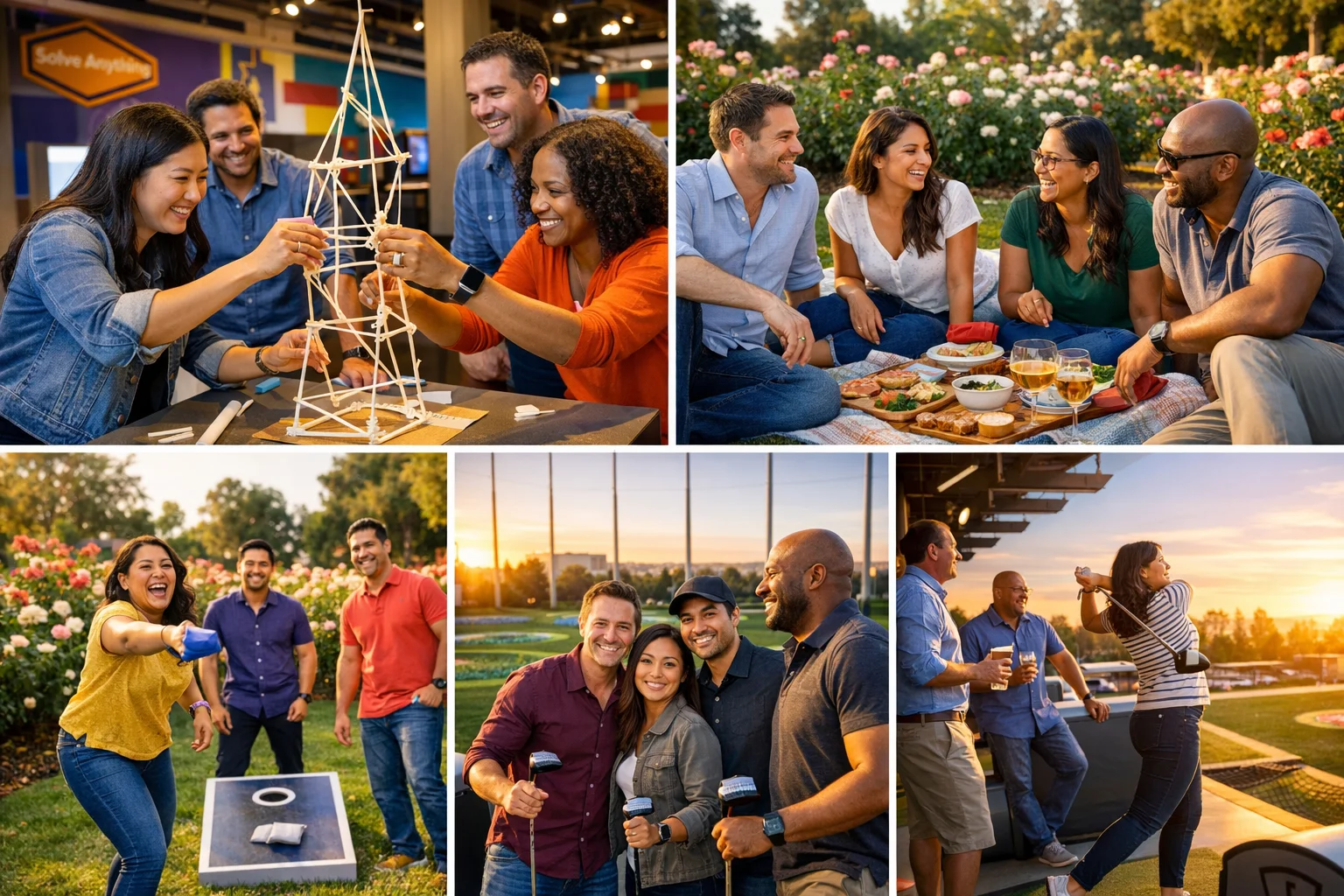
Even if half your team has never swung a club, the scoring system keeps everyone in play. Run a bracket with short, noisy rounds and a silly team trophy.
- Why it works: Low skill floor, high social energy, built‑in food and weather cover.
- Best for: Celebration days and mixed departments.
- Logistics tips: Pre‑order food, cap rounds, and rotate lanes by project or office location.
12) Chef‑led cook‑off
A local cooking studio divides your group into teams with a shared pantry, time limit, and judging rubric. Twist: “Pitch your dish like a product launch.”
- Why it works: Creativity under constraint, real collaboration, tasty payoff.
- Best for: Product, marketing, and sales teams; onboarding cohorts.
- Logistics tips: Clarify dietary needs. Appoint a cleanup crew before you start.
13) Brewery collaboration crawl
Pick three nearby breweries within walking or short‑drive distance. Each stop has a quick prompt: name a team ritual, retire a habit, celebrate a quiet win.
- Why it works: Social glue with structured conversation beats another aimless happy hour.
- Best for: Distributed teams meeting in person.
- Logistics tips: Provide rideshares. Offer great NA options.
14) Museum‑to‑mural downtown walk
Plot a downtown loop connecting a gallery or small museum with a handful of murals. Layer a creative prompt and finish with a 10‑slide photo share.
- Why it works: Light movement and local color spark fresh conversation.
- Best for: Teams that need low‑intensity connection.
- Logistics tips: Keep crossings safe and stops close.
15) Service sprint: trail cleanup + picnic
Coordinate with local stewards for a tidy, high‑impact cleanup window on a busy trail segment, then picnic and share “one commitment I’m taking back to work.”
- Why it works: Shared purpose bonds people fast.
- Best for: Any team that values community connection.
- Logistics tips: Gloves, bags, shade, permissions, and a simple safety brief.
16) Resort‑hosted field skills sampler
Tap a resort partner for a mix of archery, falconry demos, orienteering, or fly‑casting basics. Rotate small groups through stations, then debrief.
- Why it works: Hands‑on novelty with pro instruction.
- Best for: Leadership offsites or client programs.
- Logistics tips: Keep groups moving on a bell schedule to avoid bottlenecks.
17) Indoor arena games night
Think multi‑activity complexes: bowling, arcade challenges, short VR sessions, and a lighthearted medals ceremony.
- Why it works: Varied difficulty and lots of small wins.
- Best for: Larger teams and departments.
- Logistics tips: Use wristbands or lanyards to mark pods and scores.
18) Neighborhood micro‑quests (Old Colorado City or Manitou)
Seed small quests around local shops, historic plaques, and street art. Keep teams on foot with timeboxed missions.
- Why it works: Discovery plus conversation. Locals often learn something, too.
- Best for: Visiting teams or new‑to‑town employees.
- Logistics tips: Alert a few businesses in advance if you’ll drop by in waves.
19) Citywide scavenger hunt powered by Scavify
Spin up a hunt that hops between Downtown, Old Colorado City, and Manitou Springs. Mix photo, video, GPS check‑ins, and fast puzzles inside a single app, track progress live, and crown champions without spreadsheets.
- Why it works: Structured play that pushes collaboration, creativity, and exploration.
- Best for: Offsites, onboarding classes, conference groups.
- Logistics tips: Keep challenges short, varied, and location‑aware. Always include one “team choice” wildcard.
Sample challenge prompts:
- [Photo | 30 pts]: Recreate an Olympic podium moment with improvised medals
- [GPS Check‑in | 40 pts]: Stand where red rock frames Pikes Peak perfectly
- [Q&A | 20 pts]: Which trail name here sounds like a superpower?
- [Video | 50 pts]: Teach a 10‑second altitude breathing tip on‑camera
- [Multiple Choice | 25 pts]: Which local animal is a pro climber by default?
Logistics cheat sheet for Colorado Springs team events
- Altitude: The city sits over 6,000 feet; many venues climb from there. Hydration, pacing, and shorter speeches help.
- Weather: Mornings are your friend. Summer afternoons often host pop‑up thunderstorms. Always have a same‑day indoor pivot.
- Permits & permissions: Parks vary. For larger groups or commercial activity, check in advance and keep group sizes trail‑friendly.
- Transport: Build 10–15 minutes of slack for shuttles, rideshares, or parking at popular trailheads.
- Accessibility: Favor loops with paved sections for mixed mobility. Museums and the Cog offer strong accessibility options.
Turn activities into outcomes: make the fun do real work
Most teams don’t need “more fun.” They need small, repeated reps of collaboration and communication under light pressure. A few patterns that consistently work:
- Name the skill. Open by naming the one behavior you’re practicing: listening under time pressure, clean handoffs, or honest peer feedback.
- Design for interaction, not instruction. Short prompts, small groups, and visible progress beat long briefings.
- Close the loop. End with a 10‑minute reflection: what helped, what hindered, what to bring back to work this week.
- Make it repeatable. Reuse the same prompts quarterly in new settings so the skills compound.
A simple half‑day agenda you can actually run
- 0:00–0:10 | Arrival & context. Name the behavior you’re practicing and how you’ll debrief.
- 0:10–1:25 | Anchor activity. Pick one of the 19 above. Keep instructions tight and visible.
- 1:25–1:40 | Micro‑break. Water, shade, regroup.
- 1:40–2:10 | Quick challenge. A 30‑minute scavenger sprint or mini‑puzzle circuit.
- 2:10–2:40 | Social finish. Snacks, light awards, and three‑question reflection.
FAQs: planning team building in Colorado Springs
What are some low‑effort, high‑impact activities near downtown?
Garden of the Gods’ Central Garden loop, a compact museum mission at the U.S. Olympic & Paralympic Museum, and a structured murals walk all deliver payoff without long travel or heavy exertion. The official sites for Garden of the Gods and the U.S. Olympic & Paralympic Museum have easy planning info. (gardenofgods.com)
What’s the best backup if weather turns in the afternoon?
Keep an indoor bracket format ready: escape rooms, an indoor climbing introduction, or a Topgolf‑style tournament. You can also switch to a museum mission or a compact indoor scavenger hunt with location‑agnostic prompts.
How do we plan for altitude on activities like the Cog or Seven Falls?
Hydrate before arrival, keep speeches short at the summit, and build in recovery time. Offer opt‑in intensity on stair sections at Seven Falls and give everyone permission to skip. Check timing and access via the Pikes Peak Cog Railway and The Broadmoor Seven Falls before you finalize. (cograilway.com)
Can we do meaningful team building at the zoo without it feeling like a field trip?
Yes. Pair a short behind‑the‑scenes briefing with a simple observation‑to‑team‑norm mission, then a 10‑minute reflection. Check current programming at Cheyenne Mountain Zoo. (cmzoo.org)
What’s a good activity for mixed ages and abilities?
The Garden of the Gods photo mission walk, a museum challenge trail, or a light brewery‑adjacent scavenger hunt. These keep the group together and let everyone contribute.
How big can our group be before we need permits or special coordination?
For larger groups in popular parks or any guided/commercial activity, coordinate in advance and split into smaller pods on the trail. Museums, the zoo, and the Cog handle groups well with some notice.
We’re short on time. What’s a great 90‑minute option?
A downtown murals mission, a single escape room block across multiple rooms, or a mini scavenger hunt with 8–10 quick challenges. Keep a social finish within walking distance to avoid travel time.
If you want an easy, scalable way to add structure, scoring, and variety to almost any idea on this list, an app‑based scavenger hunt layer is a strong move. Scavify was built for exactly this: quick launch, flexible challenge types, live progress, and seamless wrap‑ups your team will actually enjoy.