If a kit can’t turn passive participants into active collaborators in under an hour, it doesn’t belong on this list. The good ones create just enough shared pressure, curiosity, and feedback to pull people in. The rest are novelties that eat budget and goodwill.
The Bottom Line
- Buy for outcomes, not props. Favor kits that force interdependence, quick iteration, and visible team progress.
- Minimize video fatigue. Pick experiences that don’t rely on endless live Zoom time; use asynchronous prep and short syncs.
- Prefer kits with built‑in debriefs. The learning sticks when reflection is guided and concrete.
- Test for inclusivity. Food, physical ability, tech access, and neurodiversity all matter in kit selection.
What counts as a team building kit today
A team building kit is a ready-to-run activity package that gives you materials, structure, and facilitation guidance to create a shared experience. Broadly, you’ll see four flavors:
- Hands‑on build kits. Physical materials for structured making or problem solving.
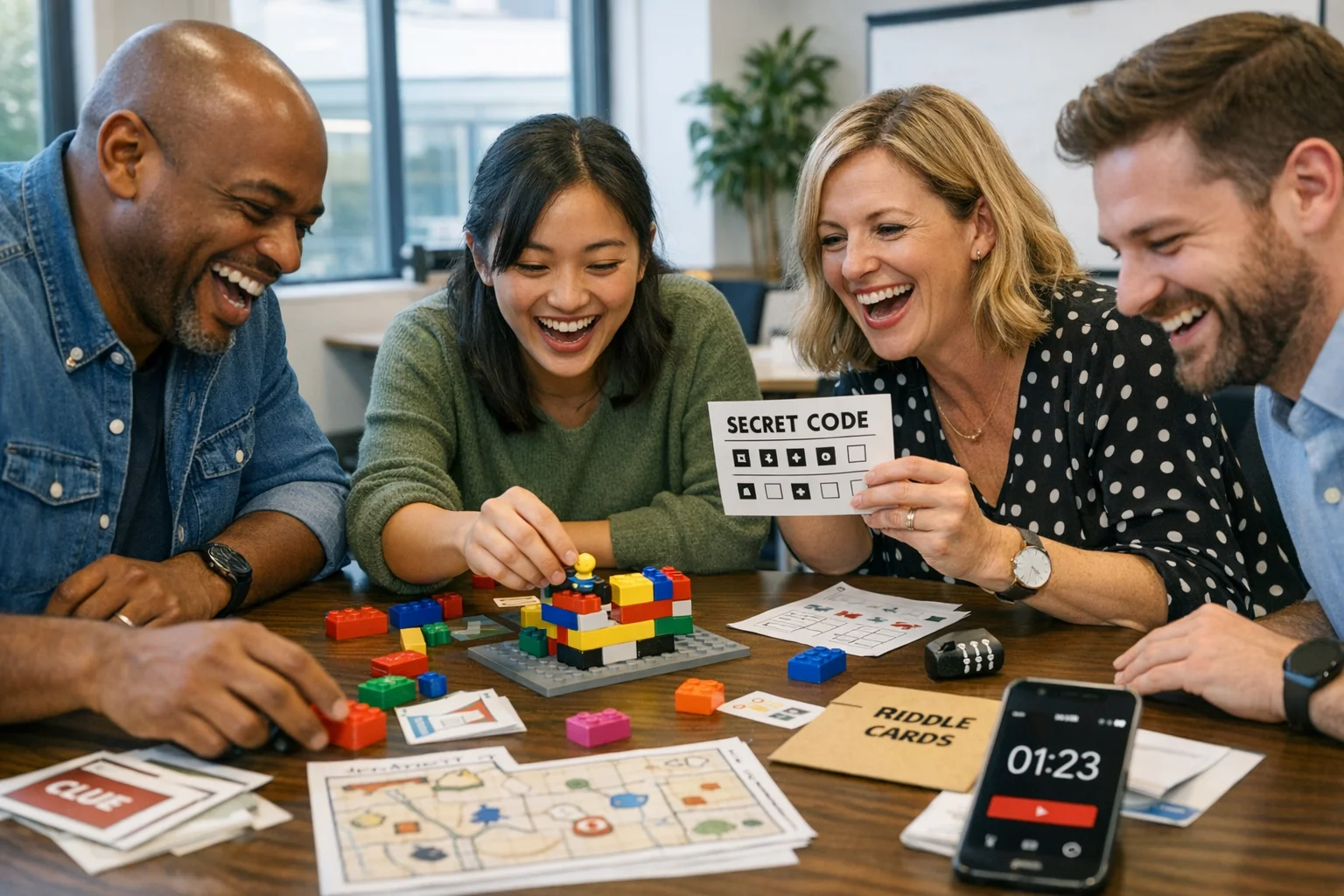
- Game kits. Escape rooms, mysteries, or challenge sets where teams progress together.
- Social tasting kits. Curated snacks, beverages, or tasting tasks with guided prompts.
- Digital or hybrid kits. App-led hunts, missions, or micro-challenges that work across locations.
The goal is the same: compress months of polite distance into a few hours of real collaboration.
What actually makes a kit build bonds faster
Patterns we keep seeing across thousands of events:
Interdependence beats parallel play. Kits that require contribution from every role create more bonding than activities people can do side-by-side. A 2009 meta-analysis found team-building interventions improve both affective outcomes and performance when the activity design aligns with real team processes. (journals.sagepub.com)
Practice, not talk, changes behavior. Teamwork training that has people do the skills together, then debrief them, produces meaningful gains in teamwork behaviors and performance. (pmc.ncbi.nlm.nih.gov)
Psychological safety is the unlock. Experiences that reduce fear of judgment and make contribution feel safe correlate with stronger team outcomes, a pattern highlighted in peer‑reviewed summaries of Google’s Project Aristotle findings. Design for low-stakes experimentation and visible wins. (pmc.ncbi.nlm.nih.gov)
Avoid fatigue traps. Long, synchronous video sessions drain energy. Stanford’s validated Zoom Exhaustion & Fatigue Scale points to mechanisms like constant self‑view and intense eye contact. Favor kits that mix short syncs with offline action. (lemanncenter.stanford.edu)
Shared sensory experiences help. Eating together can nudge cooperation. Experiments show that sharing from a common plate increases cooperative behavior in negotiations. Translate that idea into thoughtful tasting formats. (journals.sagepub.com)
Kits worth buying by scenario
You’ll find no gimmicks here. Just categories that consistently work, with how to use them well and what to watch.
Hands‑on build kits (LEGO Serious Play and kin)
- Why it works: Making ideas tangible evens the floor. People point at models, not each other, which lowers heat and invites quieter voices.
- Use for: Kickoffs, strategy alignment, retrospectives with cross‑functional groups.
- Watch for: Skilled facilitation matters. The method is widely used, and recent mapping of LEGO Serious Play research shows growing but still maturing evidence. Treat it as a structured conversation tool, not a silver bullet. (ijlter.org)
Escape room in a box (or onsite facilitation)
- Why it works: Tight timeboxes, interlocking clues, and visible progress create natural coordination and shared wins.
- Use for: New teams breaking the ice, intact teams practicing role clarity.
- Watch for: Debrief explicitly on who took which roles and how information flowed. A scoping review of escape rooms used in acute care training underscores effects on teamwork when design mirrors real coordination demands. (bmcmededuc.biomedcentral.com)
Scavenger hunt challenge kits (digital or hybrid)
- Why it works: Fast, varied missions mix collaboration, creativity, and movement. Teams see progress in real time. Hybrid‑friendly.
- Use for: Distributed teams, offsites with limited time, conference energy boosts.
- Watch for: Variety and automation save you. Kits that handle scoring, submissions, and leaderboards reduce admin friction and keep focus on people.
Here’s how a compact hunt might look when it’s built for quick bonding. Five challenges, mixed modes, short and punchy:
- [Photo | 40 pts]: Recreate a classic album cover using only office supplies.
- [Video | 60 pts]: In 10 seconds, pass a high five across your team’s screens left to right.
- [GPS Check‑in | 30 pts]: Check in at the spot in your building where the best idea happened.
- [Q&A | 25 pts]: Who originally named our product, and what was the runner‑up name?
- [Multiple Choice | 45 pts]: Which customer request changed our roadmap most last quarter?
Social tasting kits (snack, chocolate, coffee, tea)
- Why it works: Light novelty plus shared sensory focus gets conversation going without forcing it. If you can serve family‑style samplers safely, cooperation tends to increase. If not, mirror the effect with paired tastings and shared rating cards. (journals.sagepub.com)
- Use for: Cross‑team mingles, low‑stakes culture rituals, welcome weeks.
- Watch for: Dietary needs, cultural preferences, and shipping constraints. Plan clear labeling.
Conversation and reflection decks
- Why it works: Structured prompts beat “go around the room.” Use timed rounds, rotate facilitators, and mix work‑light with work‑real prompts.
- Use for: Distributed teams, leader roundtables, mentoring circles.
- Watch for: Keep prompts concrete. Invite pass cards. Close with a team‑authored “we heard” list.
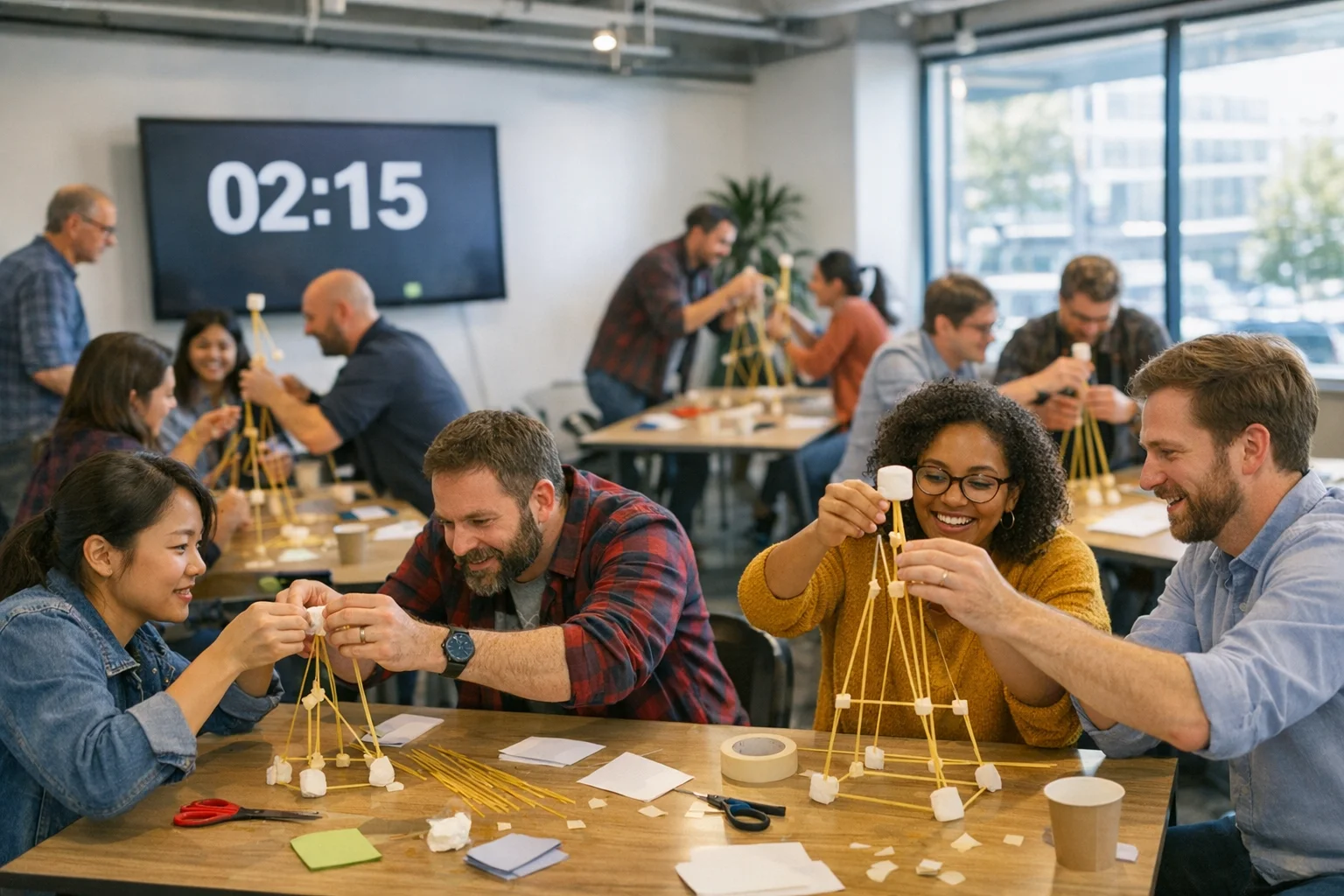
Classic rapid‑prototype kits (the marshmallow challenge)
- Why it works: It rewards iteration, not talk. Teams that test early and often win, which is the lesson you actually want to surface.
- Use for: Kickoffs, innovation sprints, student programs.
- Watch for: Don’t mythologize who “always wins.” Use the exercise to surface how teams plan, test, and adapt. The Stanford d.school’s guide and the original TED talk outline a simple, effective run‑of‑show. (dschool.stanford.edu)
How to choose the right kit: a quick scorecard
Give each item a light 1–5 rating for your context. High totals win.
- Outcome fit: Does the kit exercise the behaviors you actually need right now?
- Synchronous load: Can most activity happen offline or in short bursts to limit video fatigue? (lemanncenter.stanford.edu)
- Interdependence: Do people need each other to succeed, or can one person carry it?
- Debrief quality: Are there built‑in questions and evidence‑based prompts?
- Inclusivity: Can everyone participate fully given ability, culture, and diet?
- Logistics: Shipping, setup, cleanup, reusability.
- Measurement: Is there a clear way to capture participation and outcomes?
A simple rollout plan you can run in 10 days or less
- Day 1: Pick the outcome and choose the kit that best trains it.
- Day 2: Identify a facilitator and a backup. Skim the guide and calendar the debrief.
- Day 3–4: Order materials. Set participation windows and timeboxes.
- Day 5: Send a short primer video or one‑pager so people arrive ready.
- Day 6–7: Dry run with 3–4 volunteers. Tighten rules and timing.
- Day 8: Go live. Keep energy tight, instructions simple, and wins visible.
- Day 9: Run a 15–25 minute debrief with 3 prompts: What helped us move faster? Where did we stall? What will we steal for real work?
- Day 10: Share a 1‑page recap with photos, quotes, and two commitments the team chooses.
How to measure whether the kit actually worked
Measure what moved in hours and what should compound over weeks.
- Immediate signals (day of): Participation rate, number of teams that finished, average time to first win, visible cross‑talk between roles.
- Short‑term (within 14–30 days): Fewer handoff delays, faster decision cycles in related work, peer‑reported clarity on who does what. Systematic reviews of teamwork training show improvements in teamwork behaviors and performance when practice and reflection are paired, so you should see changes in how the team coordinates, not just how it feels. (pmc.ncbi.nlm.nih.gov)
If you don’t see movement, revisit the outcome fit or deepen the debrief next round.
Common pitfalls to avoid
- Buying novelty instead of outcomes. A kit can be fun and still miss the point.
- Running too long. Energy decays after 60–90 minutes unless there’s meaningful progression.
- Over‑relying on live video. Use offline missions and short syncs to preserve focus. (lemanncenter.stanford.edu)
- Skipping the debrief. Without reflection, the benefit is mostly vibes.
- Forgetting access. Dietary, physical, and tech constraints will make or break inclusion.
Where Scavify fits naturally
Scavify is built for interactive, challenge‑based kits. When teams need movement, variety, and automatic scoring without a lot of setup, an app‑led hunt checks the boxes. It works in one office, across time zones, or at a conference. The format’s strength is simple: short, mixed‑mode challenges that spark contribution from everyone, with instant feedback and a clean debrief trail.
FAQs
Are team building kits actually effective?
They can be, when the activity matches your goal and includes practice plus debrief. A meta‑analysis in Small Group Research reported positive effects on affective outcomes and performance for well‑designed interventions. (journals.sagepub.com)
What’s the best kit for a new team that barely knows each other?
Use something with fast, shared wins and low social risk. Scavenger hunt kits and escape‑room‑in‑a‑box formats work because they force information sharing without singling people out. A scoping review of escape‑room‑style training highlights gains when puzzles mirror real coordination. (bmcmededuc.biomedcentral.com)
How do I avoid Zoom fatigue with remote kits?
Plan short syncs around offline action. Hide self‑view, encourage standing cameras, and keep sessions under an hour. The Stanford Zoom Exhaustion & Fatigue Scale research points to nonverbal overload as a key driver, so design around it. (lemanncenter.stanford.edu)
We’re hybrid. Can one kit work for in‑person and remote people together?
Yes. Digital hunt kits and modular game kits let co‑located members tackle physical tasks while remote teammates solve clues or capture evidence. Keep rules simple and ensure remote roles are essential, not spectator slots.
Are food‑based kits inclusive?
They can be, with planning. Offer clear ingredient lists, multiple options, and non‑food alternatives. If you can safely share plates or create paired tastings, you’ll often see smoother cooperation, as experimental research on shared plates suggests. (journals.sagepub.com)
What’s a low‑prep classic that still works?
The marshmallow challenge. It’s quick, cheap, and reliably surfaces how teams plan versus prototype. Use the Stanford d.school guide and cap the debrief to 10 minutes. (dschool.stanford.edu)
How do I know if the kit changed real work, not just morale for a day?
Track a handful of near‑term workflow signals: handoff lag, decision cycle time, and cross‑team reply times. Teamwork training evidence suggests you should notice coordination behavior changes within weeks when practice and reflection are present. (pmc.ncbi.nlm.nih.gov)
Do we need a facilitator?
A light‑touch facilitator improves outcomes for most kits. They keep timing tight, prompt quieter voices, and land the debrief. For complex methods like LEGO Serious Play, experienced facilitation is worth it given the structure of the method and the growing but uneven research base. (ijlter.org)
If you want a kit that compels action, not attendance, start with your outcome, pick a format that forces interdependence, and keep the clock tight. Everything else is props.