Solutions
Your first hunt, live this afternoon.
Free to start · No download for participants
Plan a scavenger hunt nyc with clever prompts, ready-to-use examples, setup steps, group variations, scoring ideas, and planning tips. Choose confidently.
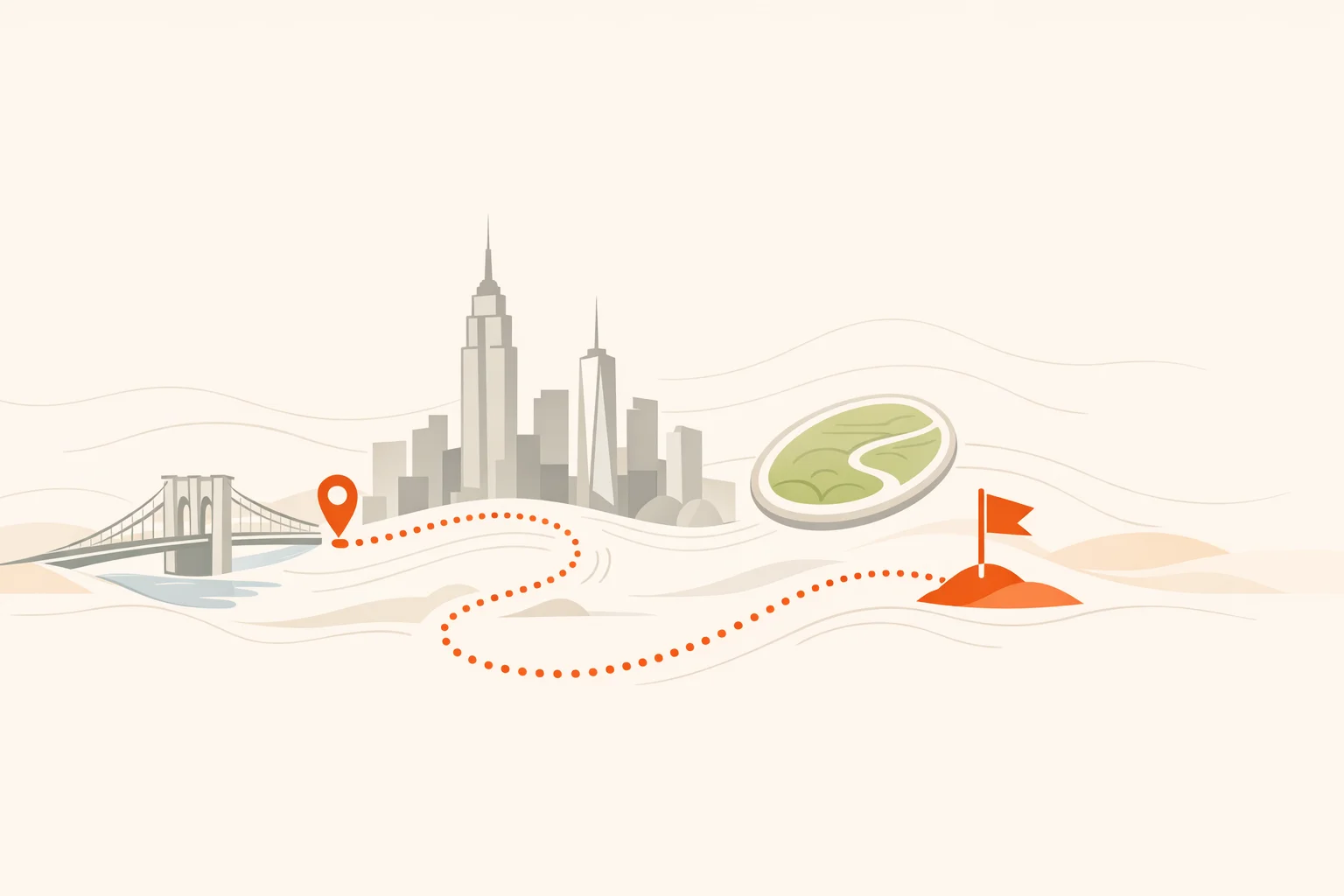
New York rewards movement. A good scavenger hunt turns that movement into discovery. Landmarks stop being postcard scenery and start becoming targets, puzzles, and shared jokes the team made up together on the fly. That’s the difference between “we saw” and “we did.”
Below is a field-tested guide to planning a smart, high-energy NYC scavenger hunt. You’ll find the best route options, group variations, scoring models, and plug-and-play challenges. Use what fits, ignore what doesn’t, and make the city do the heavy lifting.
Central Park gives you scale without gridlock. Keep the loop tight: Bethesda Terrace, Bow Bridge, the Mall, Sheep Meadow edge, and Strawberry Fields. You get iconic backdrops, open space for quick videos, and clear meet-up points that don’t require shouting over traffic.
People explore more when you give them a reason to notice.
Why it works
Times Square, Rockefeller Center, Radio City, and the New York Public Library create a high-impact, short-distance circuit. Use short timed challenges to avoid getting swallowed by foot traffic. Set a hard boundary so teams don’t drift into subway rabbit holes.
Smart tip
Start at the Charging Bull and Stone Street, swing by Trinity Churchyard, cut to Federal Hall, and finish at Battery Park with harbor views. It’s a compact civics lesson that never feels like homework.
What to emphasize
Run a triangle from Brooklyn Bridge Park to the Washington Street Manhattan Bridge view and up to the Time Out Market terrace. Add one detour to a mural or coffee spot for a social reset.
Why groups love it
The High Line’s linear path removes navigation stress. Pair it with Chelsea Market as a central start/finish or mid-hunt checkpoint. Keep challenges sensory: textures, patterns, and unusual angles teams can spot from the walkway.
Operational notes
Instead of a single museum marathon, stage micro-missions across the 5th Avenue stretch. Use exterior art, plaques, and nearby pocket parks so you don’t depend on ticketing or bag checks. If you do go inside, respect photography rules and group etiquette.
Corporate team building. Favor mixed-format challenges so problem-solvers, extroverts, introverts, and navigators all meaningfully contribute. A balanced hunt tends to surface quiet leaders and reduce the “one person carries us” dynamic.
Employee onboarding. Use GPS check-ins at office landmarks, quick trivia for values and rituals, and five-minute photo prompts with real coworkers. It’s a faster way to absorb the map and the culture.
Conferences and events. Run a hub-and-spoke design: a central expo or venue hub with short spokes into the surrounding neighborhood. Push updates and bonus challenges to control flow during session breaks.
Campus orientation. Blend campus anchors with nearby city cues so students build a mental model beyond the quad. Aim for confidence-building first, complexity second.
Tourism activations. Think “highlight reel you can touch.” Prioritize tactile, social moments over long-distance travel. Shorter loops, bigger smiles.
| How to run it | Scavify | DIY spreadsheet | Guided local operator |
|---|---|---|---|
| Play in a mobile browser or app | Yes | No | Usually app-optional |
| Live leaderboard & photo/video feed | Yes | Manual | Varies |
| Automated GPS & QR verification | Yes | No | Varies |
| Time to launch a hunt | Minutes | Hours | Days |
| Scale to hundreds across multiple neighborhoods | Yes | Difficult | Limited |
If you prefer software support, a modern scavenger hunt app handles scoring, GPS/QR validation, media capture, and leaderboards without turning you into a full-time referee.
How many challenges should a New York City hunt include?
For a 60–90 minute event, 15–25 well-balanced challenges inside a compact loop is the sweet spot. More tasks shrink creativity; fewer can make the hunt feel sparse.
Do I need a permit for Central Park or other NYC parks?
If your event involves 20 or more people, NYC Parks typically requires a Special Event permit. Smaller groups may still need permits for equipment or amplified sound. Always check the latest city guidance before locking dates. NYC Parks Special Events. (nyceventpermits.nyc.gov)
What’s the best time of day to run a Midtown hunt?
Aim for mornings before 10 a.m. or early evenings after the commuter crush. The visual payoff is the same, and sidewalks are less chaotic.
How should we move teams around?
Design so most travel is on foot. When you do need a hop, OMNY tap-to-pay is now the standard across MTA subways and buses, so there’s no need to preload fare cards. OMNY details. (omny.info)
Can we include museums without slowing down?
Yes. Keep interior tasks optional and design exterior micro-missions around plaques, courtyards, and nearby parks. It keeps flow while still hitting cultural notes.
What’s a good team size?
Small pods of 4–6 keep everyone engaged and moving. Larger groups can feel like spectators unless you split roles and run sub-teams.
How do we keep things safe and respectful?
Keep challenges people-first, not property-first. Avoid blocking paths, climbing structures, or filming where prohibited. If in doubt, skip it.
What about street performers and filming?
In general, casual filming and street performance viewing are fine, but amplified sound and set equipment change the rules. When in parks, the 20+ attendee rule and equipment limits still apply. Check city policy rather than guessing. Performer guidelines. (portal.311.nyc.gov)
The best NYC scavenger hunts feel like a highlight reel you authored together. Pick a tight zone, mix challenge types, respect the city’s rhythms, and give everyone an early win. Do that, and you’ll watch engagement climb on its own.