Solutions
Your first hunt, live this afternoon.
Free to start · No download for participants
Explore orientation events with standout examples, selection guidance, setup steps, mistakes to avoid, and ideas you can adapt quickly. Choose confidently.
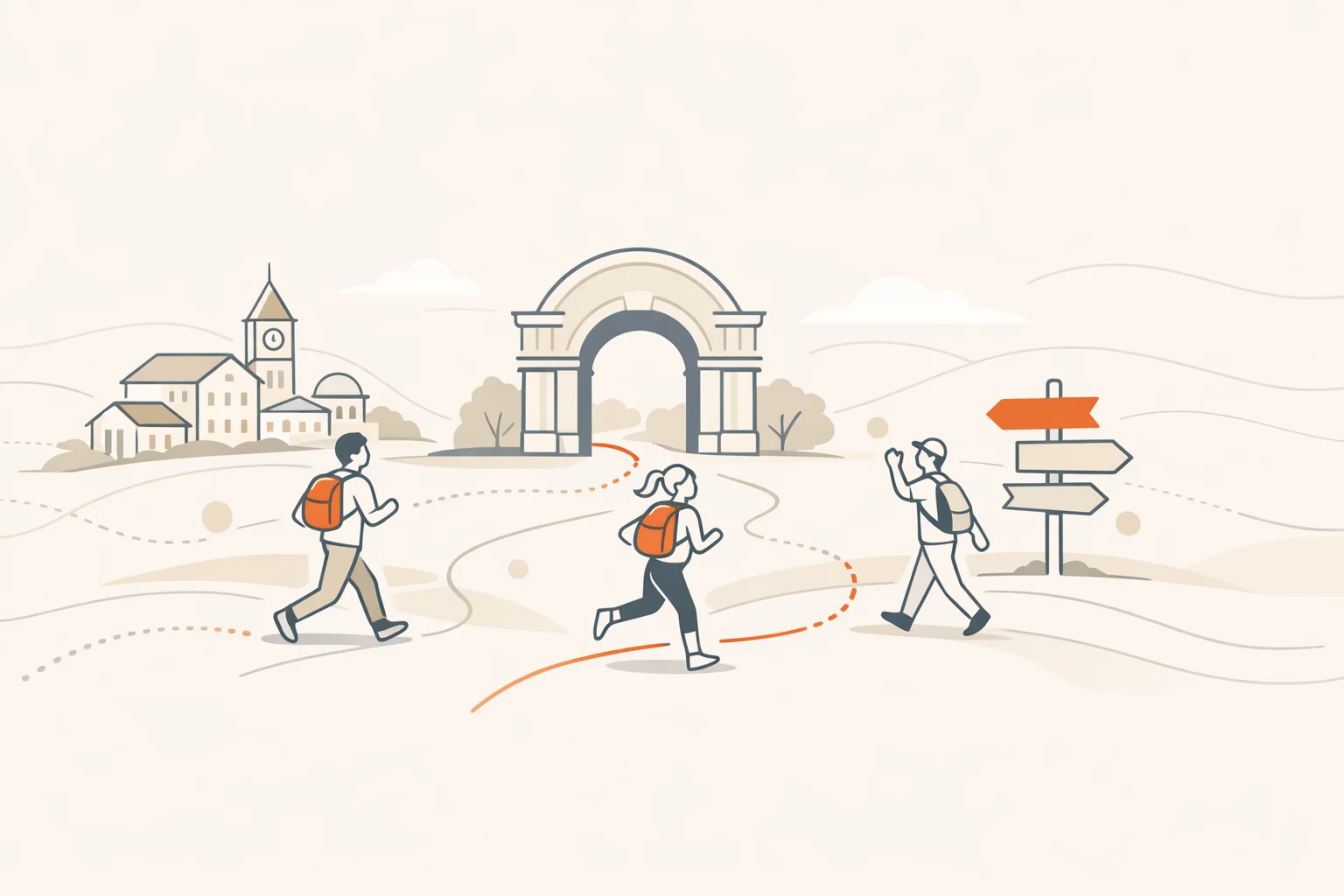
New-student orientation is more than a welcome party. It’s the first chance to translate campus maps and promise into lived momentum. In our experience, the programs that stick help students meet real people, navigate their new world without friction, and leave day one feeling like they’re already winning. This guide focuses on activities that create that effect and a planning approach that keeps energy high while quietly delivering the essentials.
The ideas below are built for O‑Week and transfer just as well to midyear starts, adult learners, and commuter-heavy cohorts. Use them as a menu. Mix formats. Keep the first challenge quick and winnable. Then layer in exploration, connection, and just enough information to matter.
Strong programs aim at a few durable outcomes: early peer connections, campus fluency, resource awareness, and confident next steps. Years of work from the National Survey of Student Engagement link active involvement to higher grades and persistence, which is a useful directional check when choosing formats. See the NSSE conceptual framework and early evidence connecting engagement to persistence for more context. NSSE’s primer on student engagement; analysis of engagement and persistence. (nsse.indiana.edu)
Belonging matters, too. Large-scale findings continue to show relationships between strengths-based, connection-forward practices and student retention, and national health surveys keep reminding us that stress and well-being shape the first-year experience. See Gallup’s meta-analysis on strengths-based interventions, the ACHA National College Health Assessment, and the CDC’s recent youth mental health summaries for context you can share with stakeholders. CDC YRBS 2023 data. (gallup.com)
| Outcome | Interactive, challenge-based | Lecture-style kickoff |
|---|---|---|
| Peer connections formed | Many in small groups | Few, passive seating |
| Campus familiarity | Exploration in real locations | Maps on slides |
| Attention over time | Varied modes keep energy up | Declines after 12–15 minutes |
| Accessibility & inclusion | Multiple ways to participate | One dominant mode |
| Evidence & follow-up | Artifacts and check-ins captured | Hard to verify impact |
Nobody quits a game they’re winning. Make that first win obvious and shared.
The classic for a reason. A campus hunt turns passive tours into discovery. Teams complete creative prompts, capture proof, and unlock the spaces they’ll use most. If you want fewer logistics and automatic scoring, run it in a scavenger hunt app so you can mix media, time-release tasks, and track completion.
A simple version works on paper. A robust one layers photo, video, GPS, QR, and trivia to make every student a guide.
Turn key locations into optional waypoints. Students self-navigate to the health center, advising, financial aid, and the late-night study building. Lightweight prompts at each stop anchor what matters where. EDUCAUSE case work shows mobile-first orientation tools can support success behaviors when they’re tied to real student tasks. EDUCAUSE case study on student-driven app design. (er.educause.edu)
Give newcomers a primer on chants, hand signs, and unspoken rules. Pair each tradition with a quick story about why it exists. End with a small-team challenge that rewards the best rendition.
Crowdsource short clips from returning students: game-day moments, late-night rehearsals, quiet sunrise study spots. Stitch them into a two-minute reel that closes with “Your turn.” It’s marketing, but honest.
Instead of generic squares, use prompts that surface useful future allies: “Knows a quiet study space near labs,” “Can explain course waitlists,” “Worked a campus job.” First to bingo teaches the group one thing they learned.
Short, rotating panels beat one long Q&A. Mix commuters, transfers, first-gen, athletes, and international students. Seed two pointed topics, then step out of the way. Capture top answers and publish them where students actually look.
Skip platitudes. Run a 20‑minute workshop in which students build a first-week plan: office hours on the calendar, one study-block appointment, and a two-sentence script for emailing a professor. It’s small, but it moves the needle.
Make calendar sync, Wi‑Fi, MFA, LMS logins, and printing real, not theoretical. Stations, helpers, and a short completion checklist. Fewer first-week help-desk lines, more confidence.
Micro-stations for sleep, nutrition, movement, and counseling. Students leave with two actions and the location of the building that supports each. The ACHA’s ongoing National College Health Assessment highlights how stress and well-being trend on campus, which is exactly why this station earns time. ACHA NCHA overview. (acha.org)
Teach safety with choices, not lectures. Set up short scenarios: late-night walk options, party exit plans, bystander steps. Facilitators coach, don’t preach. Pair with a resource quick-ref card.
One-hour micro-projects with community partners. Students meet each other, meet the town, and see that “service” doesn’t require a free Saturday. Consider recurring “blitz” slots throughout fall.
Department lounges or advising spaces host quick passes. Students collect a stamp when they locate the spot and introduce themselves to a human who can help in week three.
Invite three faculty who can make five minutes feel electric. One story about how they got hooked on their field. One invitation to drop by office hours. Then a meet-and-greet line.
A creative sprint that turns floors into galleries. Set a light theme and a hard stop, then do micro-tours so neighbors actually meet.
Not just a list. Students pin three campus goals on a large map, then tag a partner who will check in by week four. It’s half intention, half accountability.
Write it now; open it at graduation. Offer prompts: what you’re excited about, what you’ll try when nervous, and the person you’ll ask for help.
Group by themes like health, creative, data, policy, and outdoors rather than declared major. First-years meet sophomores who survived the same decision points.
A low-pressure passport to meet cultural, identity, and language orgs. Two-minute intros, a warm invitation to a first event, and a stamp for saying hello. Belonging scales in little rooms.
Music, spoken word, comedy, speed sketching. Cap sets at 90 seconds. Short is welcoming.
A positive, opt-in prompt: highlight a campus resource or moment that made day one easier. Use a common tag so your team can reshare the best.
Coffee plus real answers. Make common confusions visible on a board and cross them off together. Students leave with two actions and a name they can email.
Headphones on. Anxiety down. End with something purely joyful. Students who don’t dance still feel included because they can dip in and out of the moment.
A pattern we keep seeing: mornings are for high-energy discovery, early afternoons for info-in-disguise, late afternoons for choice-based sessions, evenings for one playful anchor. Keep moves frequent. Shift modes every 20–30 minutes. Use campus geography as a co-facilitator so students learn while walking.
If you’re building this in a digital layer, the orientation world is full of student-designed tools and campus apps that support onboarding tasks and wayfinding. The EDUCAUSE community has chronicled multiple approaches to building mobile-first student success tools that tie orientation to everyday persistence behaviors. Mobile blueprint for improving engagement; mobile-first success stories. (events.educause.edu)
Track the simple signals that predict momentum. Did students meet three new people they can name? Do they know where to go for advising, health, and tech help? Can they find their next class without a map? Orientation that turns students into active participants tends to create better recall and confidence than orientation done to them. You can borrow ideas from research comparing playful formats like scavenger hunts and alternate reality games for library orientation; both were fun and educational, with the more immersive model driving stronger responses. Orientation study comparing scavenger hunts and ARGs. (press4.etc.cmu.edu)
For standards context, NODA’s competencies offer a shared language for planning and assessing orientation, transition, and retention work. Use them to backstop your design decisions. NODA core competencies. (nodaweb.org)
What makes an orientation activity “work” beyond being fun? Activities that create early wins, spark small‑group interaction, and anchor key locations tend to produce better recall and confidence. The engagement–persistence link in higher education provides a useful north star for design.
How long should a campus scavenger hunt run? Long enough to touch core locations without turning into a marathon. Most campuses find a compact set of waypoints and time‑released prompts keep energy high without fatigue.
How do we make safety programming effective without fear tactics? Use coached scenarios with real choices and clear resources. Students remember what they practiced, not what they were told.
What about commuter and transfer students who can’t stay all day? Use modular stations, drop‑in windows, and digital follow-ups. Small-group formats make it easier for late arrivals to plug in quickly.
How can we keep information sessions from sinking energy? Pair every info block with a short action. If it doesn’t require action, make it a handout or short video instead.
Is there research we can share with leadership on why we’re shifting formats? Point to NSSE’s engagement work and Gallup’s retention findings, and note that national health surveys keep underlining the importance of well-being supports early on. Link each program element to one of these goals when you pitch it.