Solutions
Your first hunt, live this afternoon.
Free to start · No download for participants
Plan smarter team experiences with ideas that improve alignment, trust, communication, and collaboration.
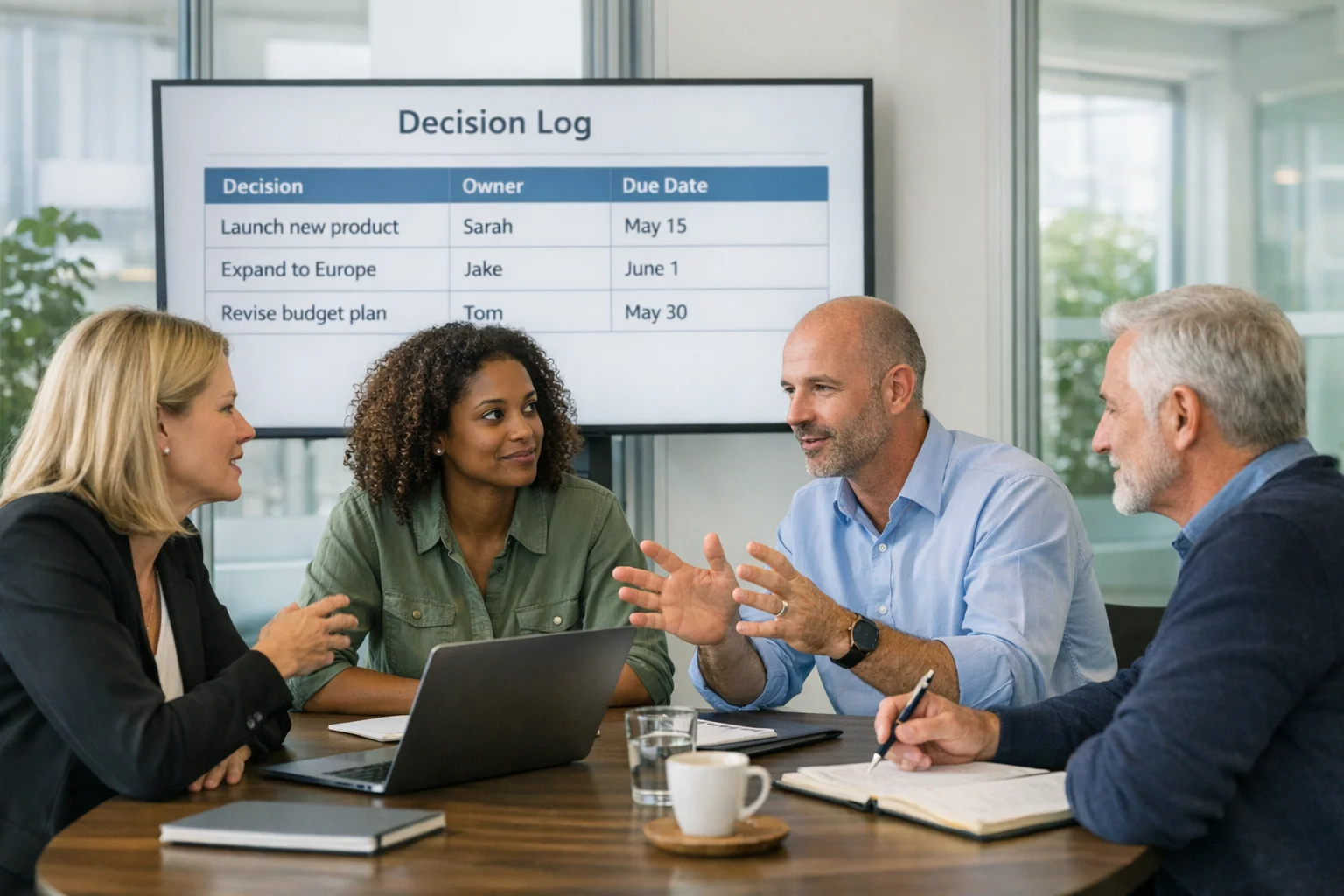
Executives don’t need another pleasant offsite. They need a short window where hard problems get simpler, priorities get sharper, and the team leaves with shared conviction and named commitments. That’s what an executive team building retreat is for. Alignment first. Trust deepened by doing real work together. Then connection.
An executive retreat is a high-intensity work session that temporarily removes calendar noise so senior leaders can make consequential decisions, reconcile tradeoffs, and strengthen working relationships. The output isn’t “had a great time together.” It’s fewer priorities, clearer accountability, and a team that trusts how it will decide the next thing.
A pattern we keep seeing: the best retreats mix real strategic work with short, well-chosen connection moments. They avoid the opposite sequence where teams burn hours on icebreakers, then try to sprint through decisions half-awake after lunch. Morning is for the knotty stuff.
If you want external confirmation, there’s plenty. Guidance on offsites from Harvard Business Review and McKinsey’s top-team research both emphasize real decisions, clarity of direction, and explicit operating norms. Google’s Project Aristotle work on team effectiveness underlines psychological safety as the condition where useful conflict happens without posturing. (hbr.org)
1) Start with the decision backlog. Make a list of the 3 to 5 choices the team must exit with. Examples: which bets to fund, how to sequence a transformation, what you’ll stop doing, which metrics actually matter this half. Build the agenda around those choices, not slides.
2) Pre-work that matters. Replace 60-page decks with 1- to 2-page decision briefs: the question, options, tradeoffs, risks, and a straw recommendation. Require quiet reading before discussion. Most teams suddenly talk about the actual choice, not the theatrics around it.
3) Psychological safety by design. Safety isn’t sentiment. It’s mechanics. Use structured dissent rounds, anonymous first-vote tools, and explicit permission to challenge assumptions. Google’s synthesis on team effectiveness ties psychological safety to better outcomes; offsites are where you can model it and make it normal. Link the behavior to team rituals you’ll keep after the retreat. See Google’s manager and teams guidance for simple prompts. (rework.withgoogle.com)
4) Decide the operating system, not just the strategy. Alignment frays when decision rights and cadences are fuzzy. Codify who decides what (RACI or DACI), how priorities change, and what gets escalated. McKinsey’s work on high-performing top teams repeatedly spotlights alignment on direction and decision discipline as differentiators. (mckinsey.com)
5) Write decisions in the room. Real-time capture forces specificity. Owners, dates, and “how we’ll know” criteria go in a visible log. HBR’s guidance on effective offsites is blunt: retreats that fail to translate discussion into commitments don’t stick. (hbr.org)
Use this as a working template, not a script. Tighten or expand based on scope.
Day 0 (pre-work) - Decision briefs delivered 5 to 7 days ahead, capped at 2 pages. - Pulse survey: top misalignments, biggest risks, what to stop doing.
Day 1 - 08:30 — Welcome, goals, and rules of engagement. Model candor. Short check-in: “What I need from this team to do my best work.” - 09:00 — Decision Block 1. Silent read, clarifying questions, structured debate, first-vote, converge, decide, log. - 11:00 — Decision Block 2. Same mechanics. - 12:30 — Working lunch. Informal pairing: “What tradeoff I keep avoiding.” - 13:30 — Operating system workshop. Decision rights, escalation paths, planning cadence, KPI sanity check. - 15:00 — Connection burst. See activity ideas below. Keep it active, short, and inclusive. - 16:00 — Decision Block 3. Finish or park to Day 2. - 17:30 — Close. Summarize commitments; preview tomorrow.
Day 2 - 09:00 — Decision Block 4. Finish open choices. - 10:30 — Risk pre-mortem. Name the failure modes of your plan and pre-solutions. - 11:30 — Resourcing and sequencing. If everything is a priority, nothing is. - 13:00 — Working lunch. Cross-functional “asks and offers.” - 14:00 — Operating rituals lock-in. Cadences, dashboards, review formats. - 15:00 — Relationship clarity. Expectations, feedback preferences, “working with me” exchanges. - 16:00 — Communication plan. Who hears what, when, and from whom. - 16:45 — Final pass on the decision log. Owners restate commitments. - 17:15 — Close. Announce first follow-up checkpoint.
This flow mirrors what strong sources recommend: anchor big choices early, formalize operating norms, and leave with visible commitments. See HBR’s offsite planning advice and McKinsey’s top-team effectiveness guidance for parallel patterns. (hbr.org)
Executives don’t need trust falls. They need short moments that surface how people think and decide.
Use activities that create useful friction, not forced fun: - Red-team the strategy. Assign a subgroup to argue the strongest bear case. Time-box, then extract changes to the plan. - Silent brainstorm, loud debate. Quiet idea generation first to avoid anchoring, then structured rounds. - Pre-mortem. Imagine the plan failed in 6 months. List reasons, design safeguards. - Working-with-me swaps. One-page sheets on how each leader communicates, decides, and prefers feedback.
To reset energy mid-afternoon, an interactive challenge block works if it earns its place. This is where Scavify’s app format is often handy: short, mixed-media prompts that get people moving while reinforcing strategy themes. Examples sized for a 20–30 minute burst:
Short, pointed, and tied to the work. That’s the bar.
Most teams underestimate the value of a neutral facilitator. Someone has to protect the process while the leaders wrestle the content.
Use mechanics that create pace without steamrolling: - Rounds beat free-for-alls. Everyone speaks before anyone speaks twice. - Time boxes with visible timers. Decision blocks beat meandering dialogue. - Parking lot with intent. Capture tangents and assign where they’ll get resolved. - Decision log on screen. If it isn’t written, it isn’t real. - Named roles. Facilitator, scribe, timekeeper. Rotate if needed.
Frameworks like DACI or RACI help, but only if you decide them in the room and use them next week. Atlassian’s practical how-tos, like their “GSD Session” play, are a good model of structured focus without ceremony. (atlassian.com)
Proximity beats prestige. A convenient venue with natural light, writable walls, and reliable AV usually outperforms the destination resort that burns half a day on travel.
Room setup changes behavior. U-shape or hollow square keeps sightlines and makes decision logging easy. Theater setups make people present instead of decide.
Meals are for connection, not content. Use them to decompress, pair leaders who rarely talk, and let side conversations do their job.
Protect the edges. Start on time. End on time. Be ruthless about devices during decision blocks. Nothing kills momentum like a half-present C-suite.
A retreat that can’t be measured can’t be managed. Keep it simple.
McKinsey’s guidance on top teams highlights sustained operating discipline as the bridge between a good offsite and actual performance lift. Don’t treat the retreat as the product. Treat it as a reset that makes the next 90 days better. (mckinsey.com)
Alignment theater. Lots of nodding, no commitments. Fix: decision log on screen, owners restate in their own words.
Over-programming. Wall-to-wall activities, little work. Fix: two decision blocks per morning, max one connection burst per afternoon.
Avoidant facilitation. Conflict gets smoothed instead of surfaced. Fix: dissent rounds where the facilitator explicitly invites the toughest countercase.
Deck parades. Presenter ego trips. Fix: pre-reads, 10-minute clarifying questions, then discussion.
No aftercare. Monday happens and everything fades. Fix: a T+2-week checkpoint on decisions and rituals.
Use these as starting points.
Decision brief (2 pages max) - Question. What choice must we make now? - Context. What’s changed, what’s at stake. - Options. 2–4 real alternatives with tradeoffs. - Risks. What could bite us and how we’d mitigate. - Straw recommendation. Plain, specific, time-bound.
Decision log (live doc displayed in-room) - Decision. Clear verb + noun. - Owner. Single name. - By when. Real date. - Success signal. What “done” looks like. - Dependencies. Who/what could block it.
Operating system snapshot - Cadences. Weekly exec, monthly business review, quarterly reset. - Decision rights. What the team decides vs. what functions own. - Escalation path. How stuck items move. - KPI set. The 5 metrics that actually matter this half.
Scavify exists to turn passive participation into active engagement. On executive retreats, that means a short, pointed challenge burst that resets energy and reinforces the work you’re doing: stress-testing priorities, spotlighting risks, and letting quieter voices contribute through creative prompts. Because setup is quick and the challenges are customizable, you can slot a 20–30 minute session between decision blocks without derailing focus. Use it if it serves the goal. Skip it if it doesn’t.
Most are 1.5 to 2 days. Long enough to make 3 to 5 consequential decisions and reset operating norms, short enough to keep energy high. The key is concentrated morning decision blocks and ruthless focus on what actually needs deciding.
The core executive team plus the few leaders essential to the decisions at hand. Observers bloat the room and change the tone. If someone’s role isn’t tied to the decision backlog, invite them to specific segments or pre-reads instead.
Often, yes. Someone has to protect the process while the team does the content work. Internal facilitation can work if the facilitator has the authority to interrupt, time-box, and push for specifics without political fallout.
Establish rules of engagement, use rounds so all voices surface, and separate idea generation from decision-making. Psychological safety isn’t about being nice; it’s about making it safe to disagree. Google’s Project Aristotle synthesis is a practical primer. (rework.withgoogle.com)
Two morning decision blocks per day, one short afternoon connection burst, and one session to lock in operating norms. Protect meals for informal connection. HBR’s offsite guidance aligns with this rhythm. (hbr.org)
Publish the decision log, schedule a T+2-week checkpoint, and audit your operating cadences after 30 days. Keep a visible scorecard of delivered vs. stuck commitments. If a ritual isn’t happening, fix one thing rather than declare retreat failure.
Quarterly is common for fast-changing contexts; semiannually for steadier environments. Frequency should follow the pace of critical decisions, not tradition.
Do the real work first. Then add short, purposeful activities that reveal how people think and decide. Overly elaborate bonding exercises tend to backfire with senior groups.
Done right, executive team building retreats don’t feel like “team building.” They feel like progress you can see. And the team leaves with the confidence that the next hard decision will be easier than the last. For further structure, HBR’s “What Makes a Great Executive Retreat” provides a useful lens on purpose and outcomes for senior groups. (hbr.org)