Solutions
Your first hunt, live this afternoon.
Free to start · No download for participants
Plan a more engaging group experience with crowd-pleasing ideas, practical tips, and options for different budgets.
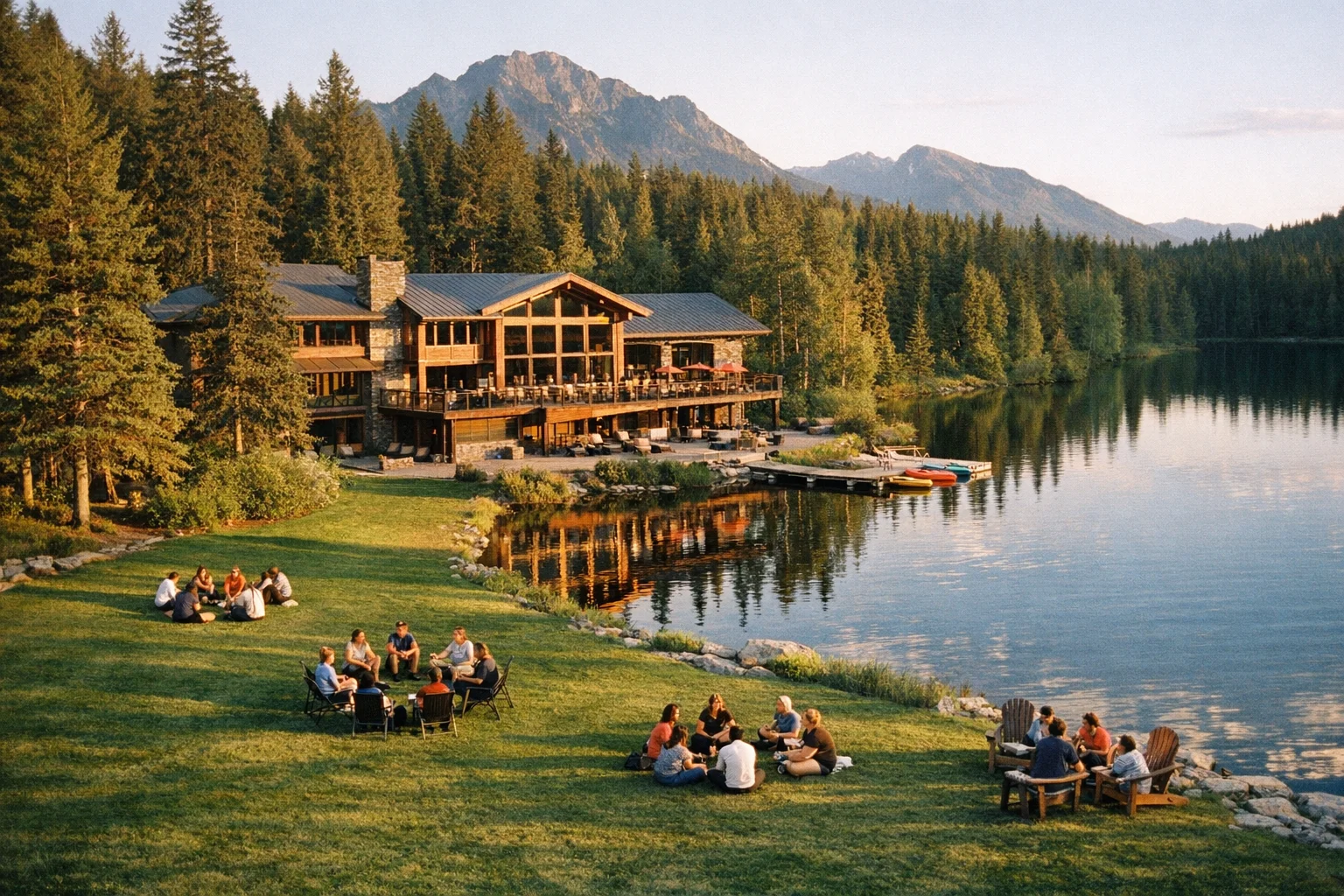
Plan a retreat around a place that does half the work for you. The right location lowers friction, opens people up, and gives your agenda more oxygen. The wrong one turns into a slightly nicer meeting that could’ve been an email.
A pattern we keep seeing: the best retreats are built backward from the work you want to move. Pick a place that supports that work with effortless spaces to meet, ways to break into small groups, and low-lift shared experiences that don’t require a 90-minute bus ride.
Offsites work best when they strengthen the collaborative networks you need back on the job, not just “team spirit.” That’s why an agenda that mixes focused problem-solving with informal time tends to outperform wall-to-wall activities. Research on effective offsites points to collaboration gains when gatherings are designed with intention rather than novelty. See the practical framing in Harvard Business Review’s guidance on offsites that work. (hbr.org)
Two more anchors help: - Psychological safety. Teams do better when people feel safe to speak up, ask questions, and risk being wrong. Google’s Project Aristotle documented this clearly and offers manager-friendly tools to build it. The re:Work guide on team effectiveness is a useful primer. (rework.withgoogle.com) - Nature exposure. Even light contact with greenspace can reduce stress and boost attention, which helps real work land better. The APA rounds up the evidence in a readable overview on how nature supports mood, focus, and cooperation. (apa.org)
Short, honest takes. No brochure gloss.
1) Asheville, North Carolina
Why it works: Blue Ridge calm plus a legit food scene.
Best window: Spring and fall.
Do this: Small-group hikes on the Parkway; maker workshops; riverside walk-and-talks.
2) Sedona, Arizona
Why it works: Red rock focus. Great for reflective strategy blocks.
Best window: Late fall to early spring.
Do this: Sunrise trail pairs; stargazing debriefs.
3) Park City, Utah
Why it works: Easy from SLC, year-round mountain town infrastructure.
Best window: Late summer or winter if you’re skiing.
Do this: Lift-access scenic sessions; historic Main Street food crawl.
4) Lake Tahoe (CA/NV)
Why it works: Big lake energy; plenty of venues on both shores.
Best window: Sept–Oct for calmer vibe.
Do this: Shoreline standups; boats for small-group retros.
5) Napa Valley, California
Why it works: Polished hospitality; indoor-outdoor spaces that make work feel civilized.
Best window: Late winter or early spring midweek.
Do this: Vineyard walks with agenda prompts; chef-led collaboration labs.
6) Santa Fe, New Mexico
Why it works: Distinct culture and pace; art and desert quiet.
Best window: Late spring or early fall.
Do this: Gallery cluster circuit; courtyard working lunches.
7) Jackson Hole, Wyoming
Why it works: Big nature creates big perspective.
Best window: June or Sept.
Do this: Wildlife talks; float trips as moving breakout rooms.
8) Big Sky, Montana
Why it works: Space to think; newer venues built for groups.
Best window: Summer for trails; winter for snow.
Do this: Chairlift “one topic up, decide by the top.”
9) Sunriver/Bend, Oregon
Why it works: Activity variety without long drives.
Best window: Shoulder seasons.
Do this: River trail pair walks; craft brewery debates.
10) Ojai, California
Why it works: Quiet valley feel two hours from LA.
Best window: Spring.
Do this: Orchard strategy strolls; sunset recap circles.
11) San Diego, California
Why it works: Weather insurance; big-airport convenience.
Best window: Year-round, avoid peak summer if crowds drain you.
Do this: Bayfront walking workshops; neighborhood food clusters.
12) Charleston, South Carolina
Why it works: Walkable historic core with strong hospitality.
Best window: Spring or late fall.
Do this: Courtyard salons; harbor micro-offsites by water taxi.
13) Austin Hill Country, Texas
Why it works: Ranch-style venues, outdoor evenings.
Best window: March–April, Oct–Nov.
Do this: Live-fire dinners with rotating cross-team seating.
14) New Orleans, Louisiana
Why it works: Culture does the icebreaking for you.
Best window: Shoulder seasons outside Mardi Gras/peak heat.
Do this: Music walkabouts; courtyard “idea tastings.”
15) Minnesota’s North Shore (Duluth to Lutsen)
Why it works: Lake Superior focus, cabin-conference mashup.
Best window: Summer, early fall.
Do this: Pebble beach retros; lighthouse problem-solving sprints.
16) Door County, Wisconsin
Why it works: Peninsula villages with simple logistics once there.
Best window: Late spring to early fall.
Do this: Shoreline bike splits; fish boil finale.
17) Hudson Valley, New York
Why it works: Easy from NYC without feeling “NYC.”
Best window: Midweek spring/fall.
Do this: Farm campus workshops; gallery town walks.
18) Catskills, New York
Why it works: Lodge clusters, camp vibes for grown-ups.
Best window: Spring–fall.
Do this: Campfire AMAs; creekside one-on-ones.
19) Maine Coast (Portland/Kennebunkport)
Why it works: Salt air resets attention.
Best window: May–June, Sept.
Do this: Harbor loops; working breakfasts with ocean light.
20) Vancouver, British Columbia
Why it works: World-class walkability plus nature at your doorstep.
Best window: Late spring to early fall.
Do this: Seawall strategy walks; Stanley Park breakout loops.
21) Whistler, British Columbia
Why it works: Purpose-built for groups, not just skiers.
Best window: Summer for alpine hikes, winter for ski agendas.
22) Banff/Lake Louise, Alberta
Why it works: Iconic scenery that actually supports focus.
Best window: June, Sept.
Do this: Lakeshore ideation; gondola debrief pairs.
23) Puerto Rico (San Juan & rainforest)
Why it works: No passports for U.S. teams, tropical change of pace.
Best window: Winter.
Do this: Old San Juan walking sessions; rainforest micro-adventures.
24) Riviera Maya, Mexico (Tulum/Playa del Carmen)
Why it works: Resort infrastructure; offsite-friendly layouts.
Best window: Winter shoulder.
Do this: Cenote reflection sessions; beach whiteboard walks.
25) Lisbon, Portugal
Why it works: Compact, affordable compared to other EU hubs; inspiring old-meets-new.
Best window: Spring, fall.
Do this: Alfama alleys challenge; riverside sunset recaps.
26) Reykjavik, Iceland
Why it works: Surreal landscapes, strong safety and infrastructure.
Best window: Summer for light; winter if you’ll embrace cold.
Do this: Geothermal “deep work” mornings; evening Northern Lights watch.
27) Scottish Highlands (Inverness/Glencoe)
Why it works: Grand landscapes that quiet the noise; stellar walking.
Best window: Late spring or early fall.
Do this: Glen-side strategy marches; fireside storytelling wrap-ups.
Lightly competitive, fast, and flexible. This is where Scavify often shows up because it makes passive participants active in minutes, with automation and easy setup across browser or app. Use a 45–60 minute block between work sessions and let the city do the heavy lifting.
Long enough to move real work and short enough to keep energy. Most agendas benefit from a travel-light arrival day, a full working day with social blocks, and a half day of synthesis. Err on the side of focus over filler.
Choose based on the work. If you need cross-team mixing and variety, a compact city core makes rotation easy. If you need deep focus and perspective, quiet mountain or coastal towns help people settle.
Most picks have sweet spots in spring and fall for weather, price, and crowds. Desert locations shine in winter; alpine towns in summer and mid-winter. Always build a weather Plan B.
As early as practical. Locations with short transfer times or peak-season appeal fill first. If you want boutique or lodge-style properties with lots of breakout rooms, move sooner.
Routes between sleeping rooms, meeting spaces, and activities; stage access; and alternatives for physically demanding blocks. Align to the ADA Standards and share specifics during registration so people can plan. (ada.gov)
Often yes for organized group events. Check the destination park’s special use page early to confirm scope, fees, and timelines. The NPS examples for Olympic and Great Sand Dunes show what to expect. (nps.gov)
Tie each block to an outcome. Use short, near-venue experiences with clear prompts and debriefs. Light competition helps, but reflection and synthesis are where value locks in.
Define two or three observable outcomes up front, like a specific decision, a draft plan with owners, or a set of cross-team commitments. Capture these visibly, assign next steps, and follow up within two weeks.
If you want a fast way to activate a new city or campus without bloat, Scavify’s browser-plus-app format, auto-scoring, and flexible challenge types make it simple to launch an experience that supports your agenda instead of stealing the show. And that’s the point.