Lunch is either the mid-day reset that brings a group to life or a polite pause before people drift back to email. The difference is rarely the menu alone. It is the format, the flow, the signaling around inclusion, and the small operational choices that keep energy up and lines down. Here is a complete playbook of office lunch ideas for a group, built from what consistently works.
At a Glance
- Format beats flavor. Buffets, bars, and boxed sets reduce line friction and make dietary choices obvious.
- Signal inclusion up front. Plant-based, gluten-free, halal, kosher, and allergy-safe options should be labeled clearly.
- Protect the room. Keep hot foods hot and cold foods cold; plan for safe holding and quick service.
- Add a light activity. Five-minute table prompts or app-based micro-challenges turn passive eating into easy connection.
Why shared office lunches matter
Groups that eat together tend to work together better. A Cornell field study with firefighter platoons found that teams who regularly shared meals received higher performance ratings than those who ate separately. The point is not cuisine; it is commensality and the easy social glue of a shared table. Build formats that make conversation effortless. Research summary from Cornell. (news.cornell.edu)
Plan first: headcount, flow, timing, and dietary signals
Most teams underestimate how much flow matters. The menu can be great and the experience still drags if 60 people converge on one chafing dish.
- Headcount and distribution. Break the room into 2–3 service zones. Mirror the popular items in each zone to prevent bottlenecks.
- Service time. Stagger start times by a few minutes per department or table. Announce this in the invite so it feels organized, not policed.
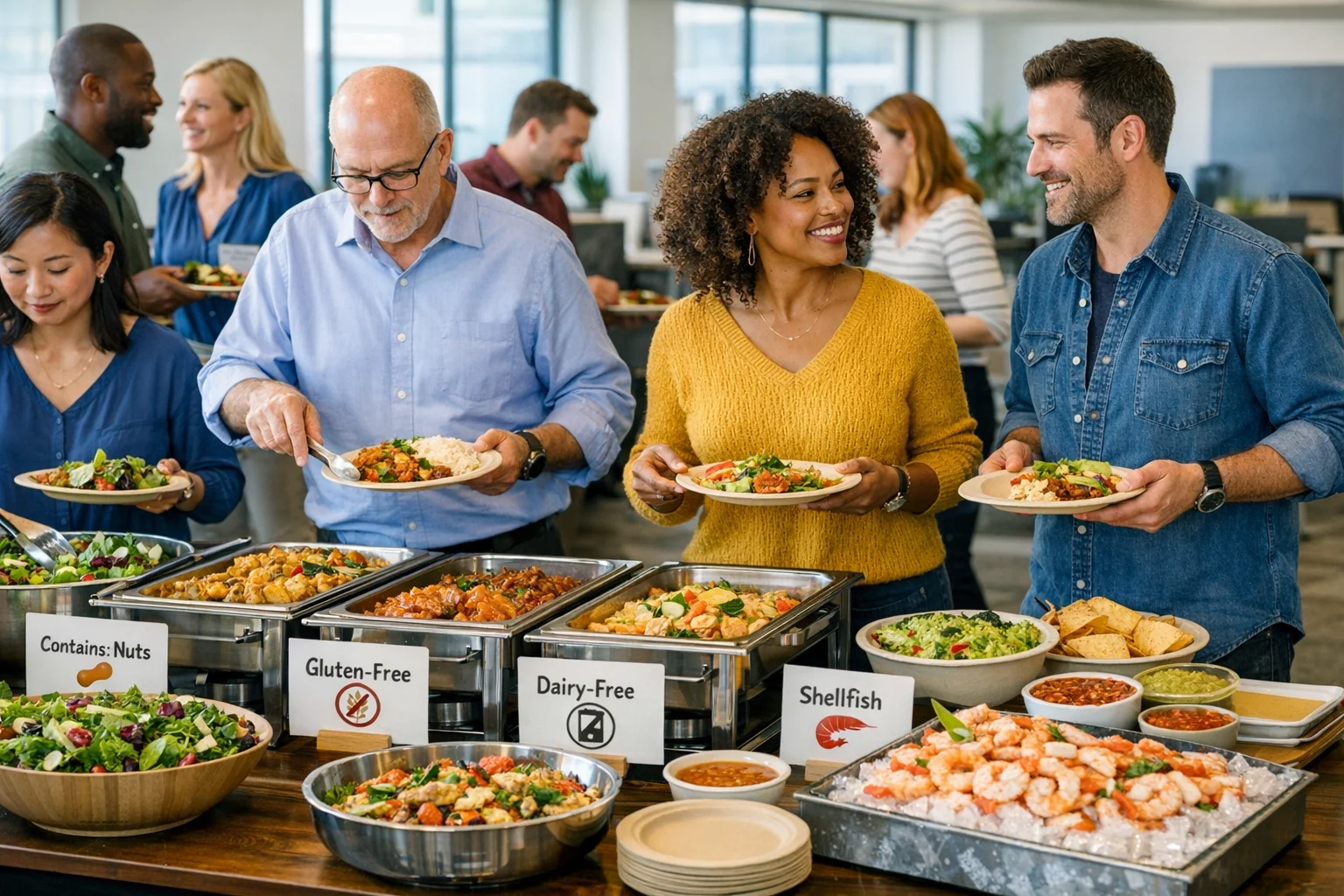
- Dietary matrix. Before calling vendors, map your must-haves: plant-based, gluten-free, dairy-free, nut-free, halal, kosher, pork-free, shellfish-free. Label these visibly on the table and on any menu cards.
- Line of sight. Put beverages and cutlery after the food, not before. People will pick them up once, not twice.
- Trash and compost. Stage bins close to exits so the last thing people do is cleanly drop waste and head to the next session.
Food safety and allergen labeling that protects your people
Two non-negotiables: temperature control and clear allergen signals.
Build signage once and reuse it. A small menu card that lists the dish name on the first line and clearly calls out allergens and dietary fit on the second line prevents 30 separate “what’s in this?” questions.
24 office lunch ideas for any group
Each idea includes a quick note on why it works, inclusion signals to hit, and a small operational tip to keep the line moving.
1) Build-your-own taco bar
- Why it works: Familiar, customizable, fast.
- Inclusion signals: Offer corn and flour tortillas, beans cooked without lard, grilled veggies, a fish or chicken option, and a plant protein.
- Ops tip: Duplicate the salsa and toppings at both ends of the table so people do not backtrack.
2) Mediterranean mezze spread
- Why it works: Naturally covers plant-based and omnivore with hummus, falafel, grilled chicken, tabbouleh, and roasted veg.
- Inclusion signals: Clearly mark sesame in tahini-based items.
- Ops tip: Pre-portion pita in sleeves to reduce handling and speed pickup.
3) Grain bowl station
- Why it works: Bowls travel well to desks or breakout rooms.
- Inclusion signals: Offer at least one gluten-free grain and a dairy-free dressing.
- Ops tip: Put proteins in small pans and refresh often so they stay hot.
4) Sandwich and wrap assortments done right
- Why it works: Easy variety in a compact footprint.
- Inclusion signals: Pre-label each half with a color dot system for vegan, vegetarian, gluten-free, and halal-friendly.
- Ops tip: Place condiments on the side in squeeze bottles to avoid soggy bread.
5) Soup, salad, and bread
- Why it works: Comfortable, seasonal, and lighter.
- Inclusion signals: One broth-based and one creamy soup; at least one is dairy-free.
- Ops tip: Use smaller cups to reduce line time and allow sampling of both soups.
6) Pizza with intention
- Why it works: Predictable crowd-pleaser.
- Inclusion signals: Add vegan cheese pies, gluten-free crusts, and veggie-heavy options.
- Ops tip: Slice pies smaller than usual. People graze and return, which evens demand.
7) Indian curry duo
- Why it works: Rich flavors at scale; easy to keep hot.
- Inclusion signals: Pair one meat curry with a plant-based option like chana masala; mark any nuts and dairy.
- Ops tip: Serve rice from multiple small rice cookers placed along the line to prevent a single choke point.
8) Thai curry and noodle combo
- Why it works: Satisfying and fast to portion.
- Inclusion signals: Offer tofu and chicken; mark fish sauce and shellfish content.
- Ops tip: Keep noodles lightly oiled to prevent clumping during service.
9) Baked potato bar
- Why it works: Budget-friendly, filling, naturally gluten-free.
- Inclusion signals: Include vegan chili and dairy-free toppings alongside cheese and sour cream.
- Ops tip: Pre-split potatoes so toppings melt quickly and lines move.
10) Pasta duo with big salad
- Why it works: Efficient for large headcounts.
- Inclusion signals: One red sauce with no hidden dairy and one creamy option; gluten-free pasta pan on its own line.
- Ops tip: Toss pasta with sauce in smaller batches to keep texture right.
11) BBQ plates and slaws
- Why it works: Comfort food that scales.
- Inclusion signals: Add a jackfruit or smoked mushroom option; mark wheat in buns.
- Ops tip: Keep buns covered and stack pickles high to speed assembly.
12) Dumpling, samosa, and empanada party
- Why it works: Small bites, big variety.
- Inclusion signals: Offer veggie fillings and a gluten-free side like rice or slaw.
- Ops tip: Serve with squeeze bottles of dipping sauces to prevent slow ladles.
13) Breakfast-for-lunch
- Why it works: Unexpected in a good way; energizes a sleepy afternoon.
- Inclusion signals: Frittatas alongside tofu scramble; turkey and vegan sausages.
- Ops tip: Put fruit front and center so plates start balanced.
14) Shawarma and falafel pitas
- Why it works: Fast handhelds, strong flavors.
- Inclusion signals: Separate tongs for meat and falafel; call out sesame.
- Ops tip: Pre-open pitas and stage parchment sleeves for clean eating.
15) Chili bar with cornbread
- Why it works: Cold-weather winner, simple line.
- Inclusion signals: Offer beef or turkey chili and a vegan bean chili; mark dairy in toppings.
- Ops tip: Keep cornbread cut small and wrapped to hold moisture.
16) Sushi and plenty of veggie rolls
- Why it works: Feels like a treat.
- Inclusion signals: Emphasize cooked rolls and heavy veggie options; soy sauce and tamari both.
- Ops tip: Stagger delivery so rice stays fresh during the service window.
17) Rotisserie chicken with roasted vegetables
- Why it works: Protein-forward without sauce fatigue.
- Inclusion signals: Grain side and a hearty salad for gluten-free eaters.
- Ops tip: Ask the vendor to quarter the chickens for faster plating.
18) Loaded salad shop experience
- Why it works: People build exactly what they want.
- Inclusion signals: Multiple dressings, clear allergen tags, proteins across diets.
- Ops tip: Two sets of tongs per topping pan to speed the line.
19) Bento-style boxes
- Why it works: Portion control, quick distribution, minimal mess.
- Inclusion signals: Color-code the stickers for diet types and allergens.
- Ops tip: Stage boxes by section and release in waves to avoid pileups.
20) Street taco trucks or food truck row
- Why it works: Fresh-cooked, high energy.
- Inclusion signals: Coordinate menus so at least one truck is fully vegetarian-friendly and gluten-aware.
- Ops tip: Pre-issue tokens per person so service stays within your headcount.
21) Poke-style bowls with cooked proteins
- Why it works: Fresh, customizable.
- Inclusion signals: Offer cooked shrimp, tofu, or chicken for those avoiding raw fish; mark sesame.
- Ops tip: Keep crunchy toppings sealed until the moment of service.
22) Mediterranean kebabs and roasted veg
- Why it works: Simple format, wide appeal.
- Inclusion signals: Chicken, beef, and veggie skewers; dairy-free dips alongside tzatziki.
- Ops tip: Pre-skewer mixed-veg for faster plating and fewer tongs in the line.
23) Potluck with a plan
- Why it works: Culture-builder when done thoughtfully.
- Inclusion signals: Central sign-up sheet with categories and allergen callouts; provide store-bought, sealed options for those who do not cook.
- Ops tip: Assign serving tools and labels; provide coolers and warmers to keep foods at safe temperatures. For buffets, refresh small quantities often and watch the time window. FDA buffet safety tips. (fda.gov)
24) Global tasting by employee resource groups
- Why it works: Story-first format that creates conversation.
- Inclusion signals: Label clearly and include simple sides for cautious eaters.
- Ops tip: Serve bites, not full plates, so people can try multiple stations without long lines.
Make lunch an engagement moment (optional, quick + fun)
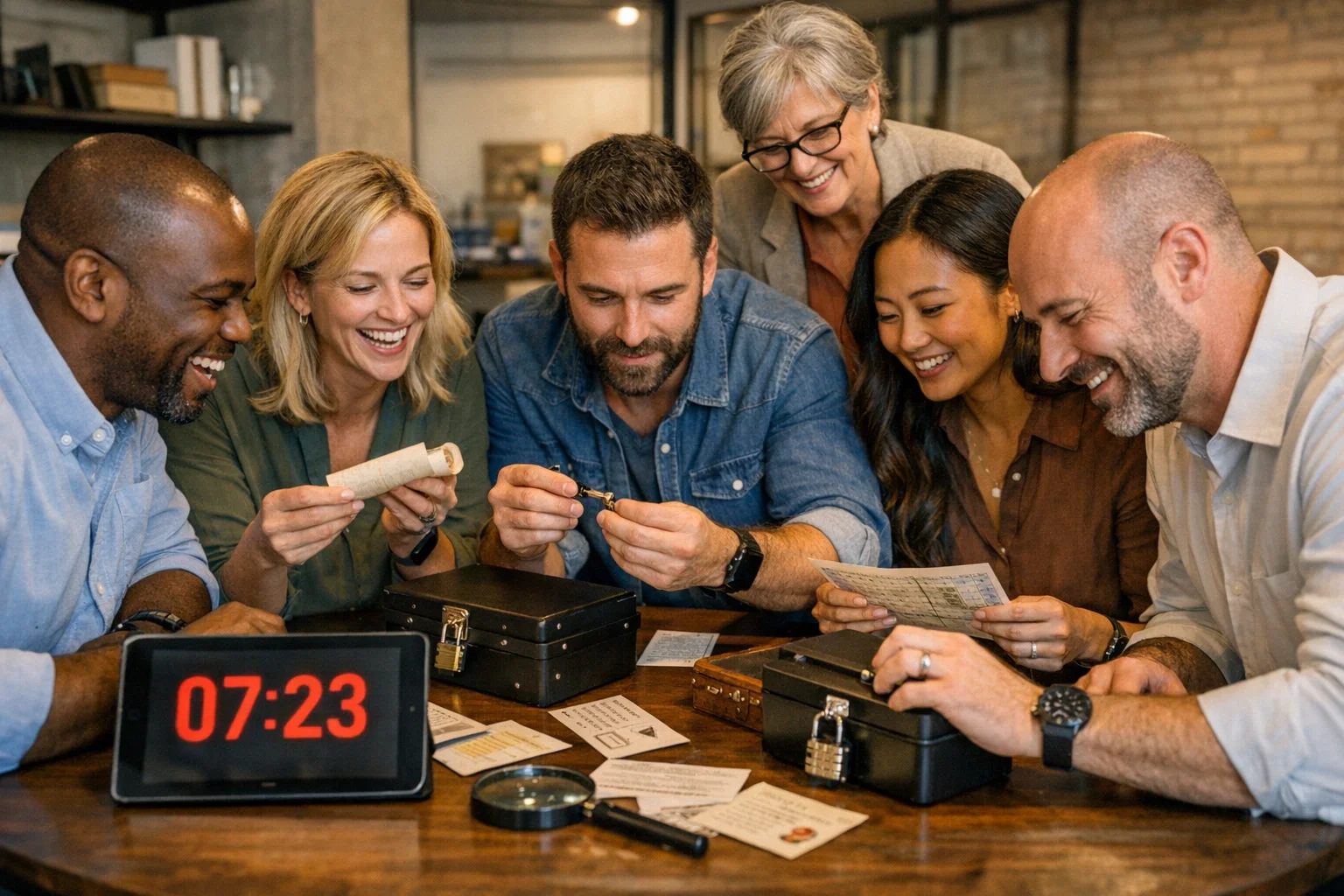
If the goal is connection, give people a tiny nudge. Five minutes is enough. We’ve seen micro-activities lift the room without hijacking lunch. Scavify runs mobile, app-based challenges that turn passive time into light interaction. If you want to try it, here are examples you can drop in between bites:
- [Photo | 25 pts]: Recreate a famous album cover with your table.
- [Video | 50 pts]: Teach a 5-second team handshake and film it.
- [Q&A | 20 pts]: Who at your table once worked the strangest job? Name it.
- [Multiple Choice | 15 pts]: Guess the number of sesame seeds on a bagel. Closest wins.
- [GPS Check-in | 30 pts]: Check in at the “secret” lunch station labeled with a star.
The trick is simple prompts, fast submissions, and visible points. People opt in because it is light, not loud.
Execution tips the pros actually use
- Stage and restock in halves. Keep a mirror set of popular items behind the line. Swap pans quickly rather than scraping and refilling in place.
- Mark allergens in plain language. List “contains: sesame, dairy, wheat” instead of burying them in ingredient text. As of 2023, sesame is a major allergen in the U.S., so label it explicitly. FDA allergen update. (fda.gov)
- Protect temperature. Small pans refreshed often hold heat better than one large pan. Hot stays at or above 140 F and cold at or below 40 F. USDA temperature guidance. (usda.gov)
- Balance the map. Place the most popular protein at both ends of the table. Put salads and chips in the middle to split the flow.
- Make beverages self-explanatory. Clear labels on still, sparkling, diet, and caffeine-free drinks reduce questions by half.
- End with delight. A small dessert bite near the exit changes the last impression of the experience.
FAQs
How do I choose the right mix of office lunch ideas for a group with diverse diets?
Start with a simple matrix: at least one plant-based entree, one gluten-free starch, and one familiar protein. Then label clearly. Small signs and color dots do more work than pre-meal announcements.
What is the safest way to run a buffet-style lunch in a conference room?
Refresh small batches often, swap entire pans rather than topping off, and watch the clock. Follow the two-hour rule for room temperature foods and shorten the window if the space is hot. Keep hot foods at or above 140 F and cold foods at or below 40 F. Use chafers, ice baths, and insulated carriers. FDA buffet tips and USDA temperature basics. (fda.gov)
How much variety do I need for a large team lunch without blowing the budget?
Two strong entree lanes, one flexible starch, and one big salad usually beat four middling options. Depth over breadth keeps costs predictable and lines shorter.
How should I handle allergens like sesame, nuts, and dairy when labeling food?
Use plain-language labels and list the Big 9 explicitly. Avoid vague “may contain” unless it is accurate and necessary. If there is sesame in a dish, call it out; sesame is a major allergen in the U.S. as of January 1, 2023. FDA allergen overview. (fda.gov)
What is the best way to keep things inclusive without overcomplicating the menu?
Anchor the menu in formats that scale across diets: tacos, bowls, mezze, and salad bars. Add one comfort classic and one adventurous option. Put the labeling work up front and the rest gets easier.
Do shared lunches actually help team performance?
There is evidence that teams who regularly eat together tend to perform better, likely because shared meals build social connection. The Cornell firefighter study is a useful signal for any team environment. Study background from Cornell. (news.cornell.edu)
How can I reduce long lines without adding more staff?
Mirror the most popular items at both ends of the table, portion high-demand foods smaller, and pre-open breads, pitas, and packaging. Stagger start times by a few minutes per group.
Can I make lunch interactive without disrupting schedules?
Yes. Keep it optional and short. A 5-minute prompt or an app-based micro-challenge people can do from their seat is enough to create connection without derailing timing.
If you want to turn lunch into a low-effort engagement moment at scale, Scavify’s challenge format is built for exactly this kind of quick, optional participation. The app handles prompts, submissions, and points while you run service.