Solutions
Your first hunt, live this afternoon.
Free to start · No download for participants
Discover practical team building ideas, examples, and activities that boost morale, communication, and collaboration.
Most corporate gifts gather dust. The useful ones start conversations, get used repeatedly, and make teams feel seen. This list is built from running thousands of activations and watching what people actually pick up, keep, and talk about weeks later.
Start with a tight rubric. Five quick filters save you from the swag graveyard.
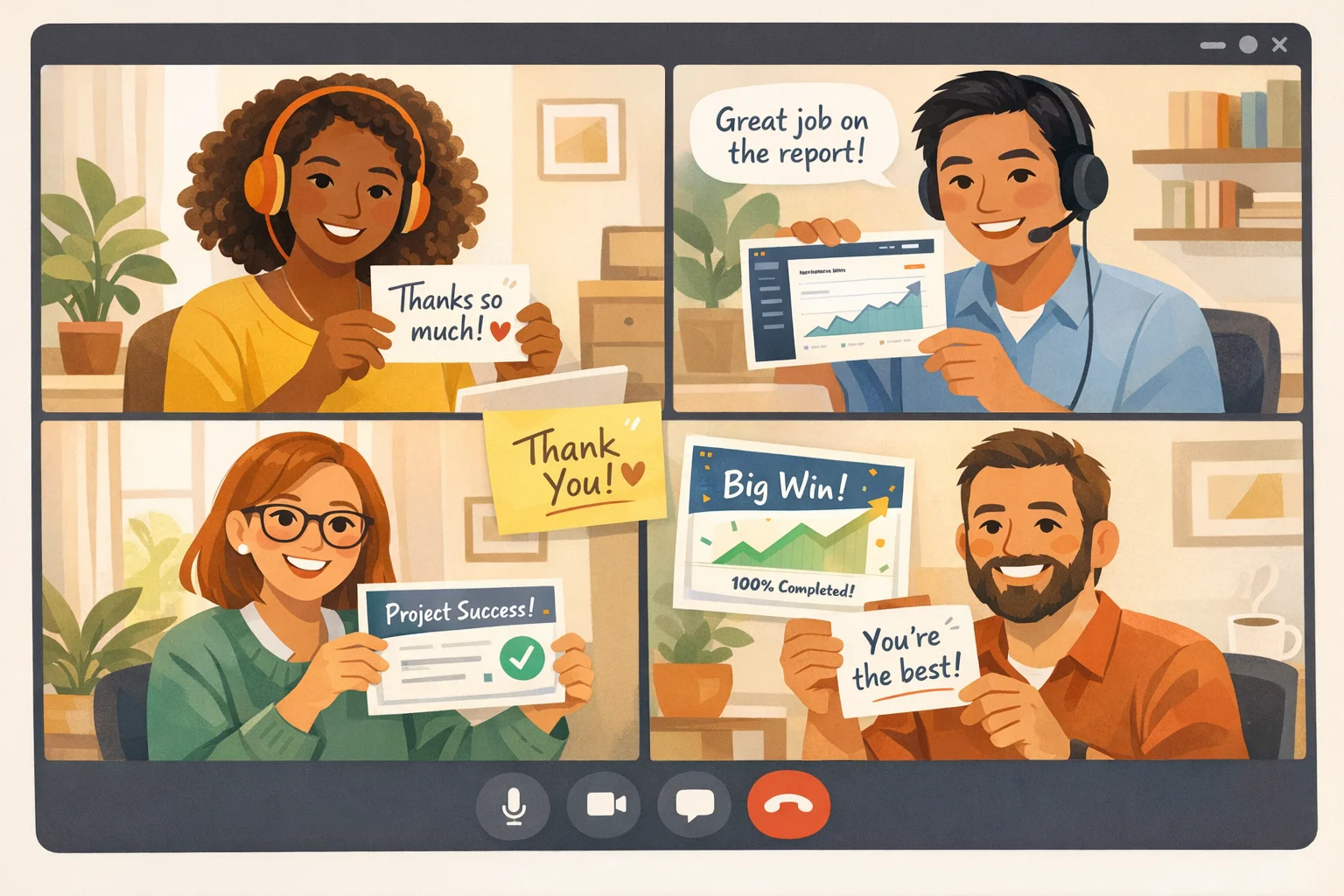
A pattern we keep seeing: gifts land better when recognition is personal. Gallup’s work on recognition and engagement points to individualized, authentic thanks as the real driver of impact. Their updated guidance highlights that frequent, meaningful recognition moves engagement, not generic perks. See Gallup’s synthesis on recognition as a low‑cost, high‑impact practice.
Example challenges your team might see:
Shared team meal drop A scheduled, well‑catered lunch that everyone eats together still does more for morale than a box nobody opens. Keep it inclusive with clear labeling and a seating shuffle.
Board game corner kit A compact set of quick, inclusive games for breaks or retros. Think Codenames, Sushi Go, and a cooperative title. Store it in a shared space with a visible “game in play” marker.
Workshop stipend the team uses together One session, one new skill. Cooking, improv, sketch‑noting, barista basics. Experiences like these reliably strengthen relationships, consistent with findings that experiential gifts deepen social bonds.
Transit or rideshare credits for team days Make offsites and late events simpler. Practical, inclusive, and a subtle nudge toward punctuality.
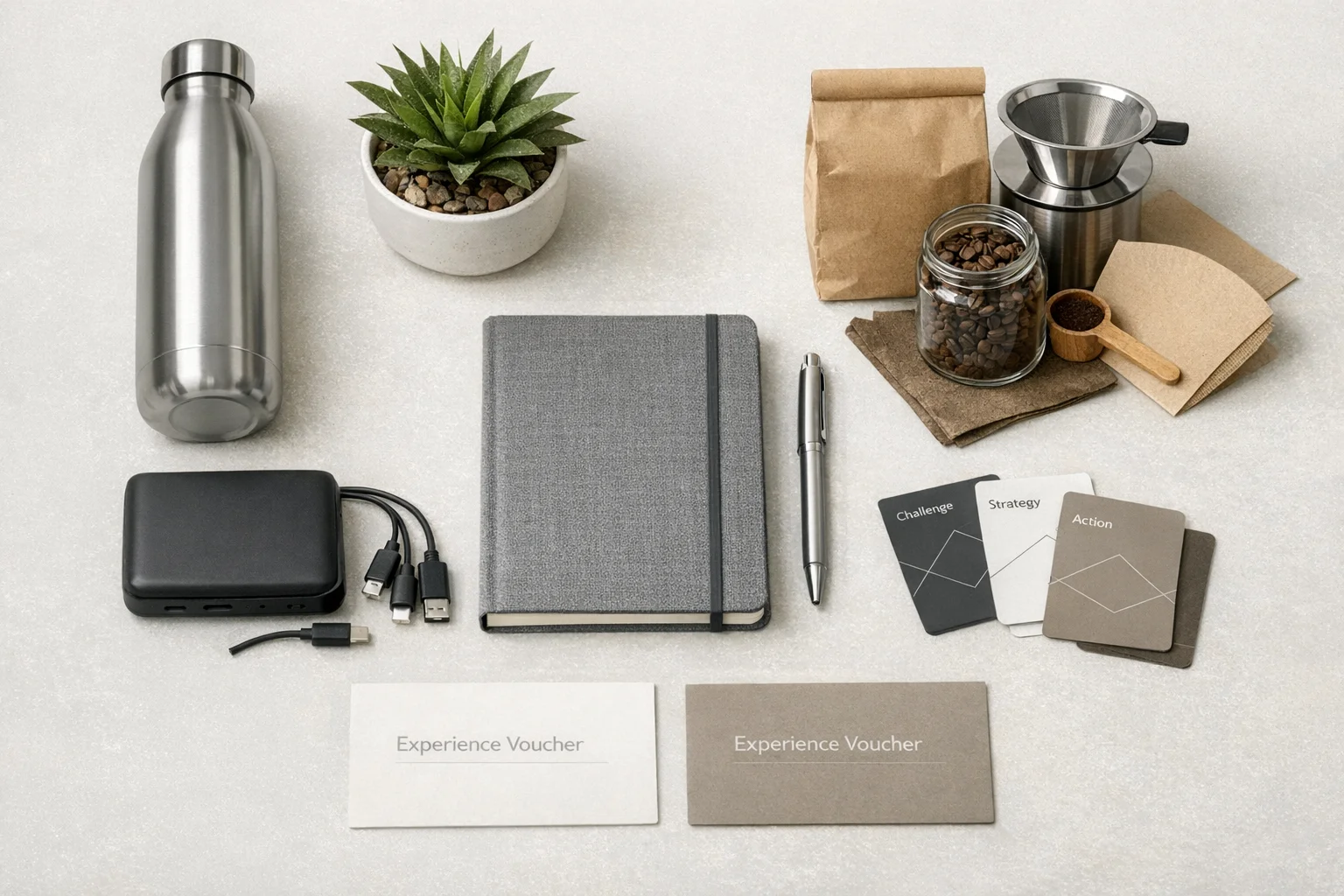
Portable power bank + multi‑cable The adult version of a pen everyone borrows. Choose a slim, airline‑safe unit with built‑in USB‑C and Lightning. Keep branding minimal.
Quality insulated bottle or travel mug Double‑wall stainless steel, leakproof lid, and neutral colors. Laser‑etch a small icon instead of a billboard logo.
Coffee and tea upgrade kit A burr grinder, pourover setup, and a rotating supply of coffee and tea. Post the brew schedule like a micro‑ritual people can join.
Desk plant with care card Low‑maintenance varieties with personality. Add a swap day later so people can trade if their light is wrong.
Learning credit everyone can apply Short courses, certifications, or a conference livestream. Link it to a show‑and‑tell slot so learning becomes social. Recognition lands harder when it’s personal, a pattern aligned with Gallup’s research on individualized recognition.
Home office comfort upgrade Choose‑your‑own from a small menu: laptop stand, ergonomic mouse, footrest, or task light. Remote employees feel the impact immediately.
Cause credit: employee‑directed donation Give a per‑person amount to direct to vetted nonprofits. Publish the collective impact later with a simple visual.
Snack rotation subscription Let small teams vote monthly. Label clearly. Make “new snack tryout” a five‑minute break on the calendar.
Durable backpack or tote with everyday pockets Neutral, sturdy, and logo‑light. The one they’ll actually carry on weekends.
Wellness credit with broad choice Let people pick from classes, mindfulness apps, or a massage. Focus on flexibility, not prescriptions.
Audiobook or reading credit One title per quarter, plus a 15‑minute optional “ideas from what I’m reading” share.
Time: early‑out or meeting‑free afternoon pass The rarest gift is time. Make it explicit and easy to use within a quarter.
Cable and desk organizer kit Velcro ties, a small tray, and a travel pouch. Quietly delightful and used daily.
Outdoor mini‑event kit Picnic blanket, compact lawn game, and a playlist. Teams take turns hosting a micro‑break outside when weather cooperates.
Micro‑mentoring tokens A set of “ask me for 30 minutes” tokens leaders commit to honor. Schedule them. Capture one actionable takeaway per token.
Designated‑use gift cards (with guidance) Grocery, transit, or book credits tend to beat generic logos because they intersect with real life. Preference studies consistently show gift cards ranking highly across age groups in incentive contexts, as summarized in the Incentive Research Foundation’s report on generational expectations of incentives.
Policy note for U.S. companies: most gift cards are treated like cash and are taxable wages under IRS rules. Confirm with payroll and see the current IRS fringe benefit guide.
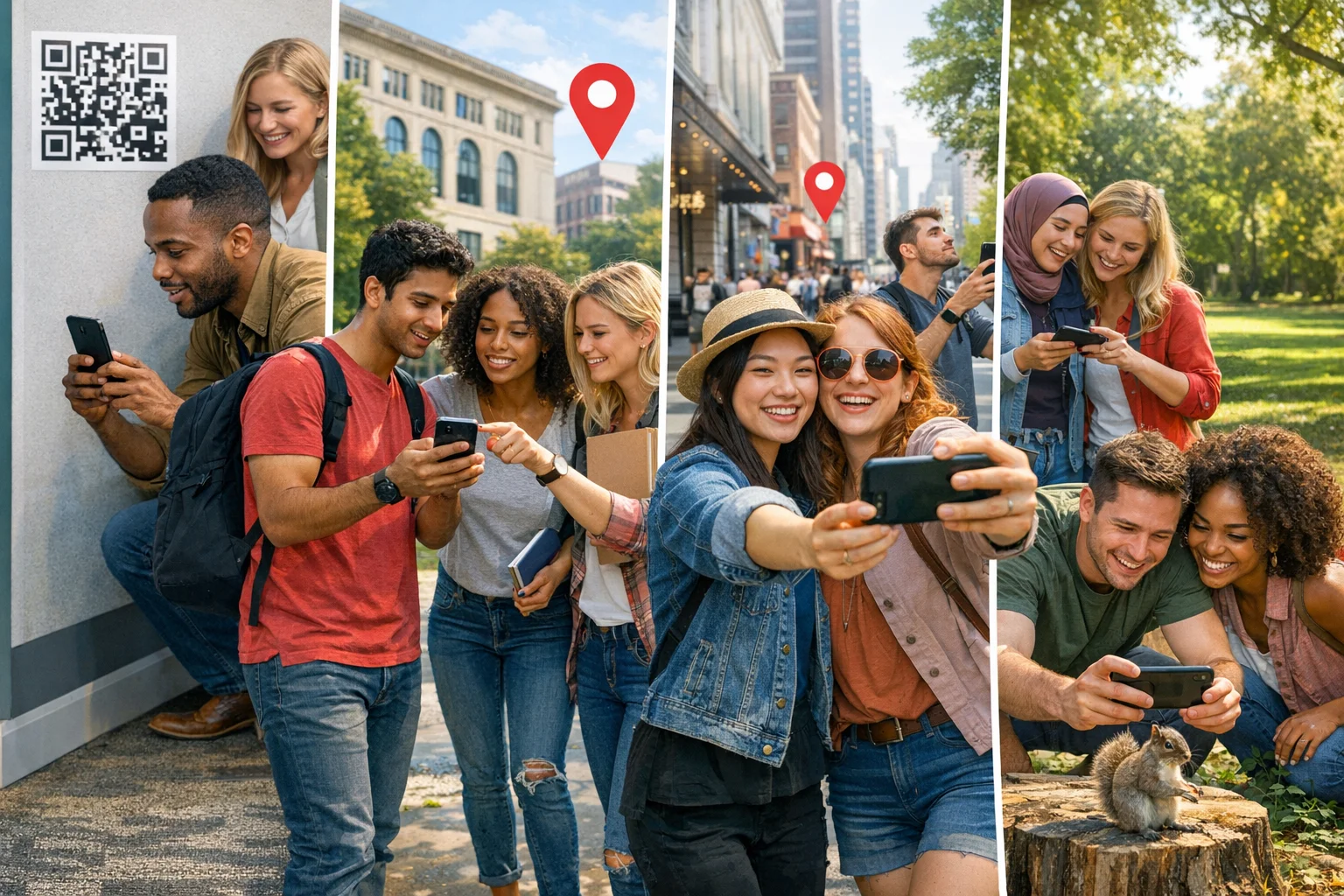
Experiences build micro‑stories teams retell. That’s not anecdote; it reflects evidence that experiential gifts strengthen relationships more effectively than material ones, per the Journal of Consumer Research study on experiential gifting. When you want a low‑lift, high‑energy jolt, an app‑based scavenger hunt is hard to beat. It’s quick to launch, works indoors or out, and scales from ten to hundreds without turning into chaos. That’s the kind of practical team building Scavify was built for.
Swag advertises. Gifts get used. Team building gifts either create a shared experience or make work and life easier in a way people feel. If it’s forgettable or purely decorative, it’s swag.
There’s no magic number. What matters is fit and clarity. A modest but thoughtful choice menu paired with authentic recognition beats a pricey object with no story. Pilot, then scale what lands.
They can be excellent when they map to real needs like groceries, transit, or books. Preference data shows strong interest in gift cards across demographics in incentive settings, as noted by the IRF’s generational expectations report. For U.S. payroll, remember most gift cards are taxable; coordinate with HR.
Large logos. People prefer subtle marks or none at all. A small icon or inside‑joke line travels further than a billboard.
Default to home delivery with an office pickup option. Give parity choices so on‑site perks have a remote‑friendly equivalent. Announce one shared “open together” moment on video for social glue.
Limit choices to a small, high‑quality set and let employees select. Pair distribution with a short, personal note from a manager. Gallup’s work on recognition impact points to specificity and authenticity over production value.
In the U.S., cash and most gift cards are taxable income to employees. Small, occasional items of minimal value may be excludable, but the details matter. Point your payroll lead to the current IRS Employer’s Tax Guide to Fringe Benefits, and verify rules in other countries before launching.
Often, yes. Controlled studies have found that experiential gifts produce greater improvements in relationship strength than material gifts, even when the giver doesn’t attend, as shown in the Journal of Consumer Research paper on experiential gifting. That’s why a well‑timed shared experience frequently outperforms another object on a shelf.
A final nudge: if you want a gift to build a team, make it something they’ll talk about later. Useful. Social. Easy to say yes to. That’s the bar worth clearing.