Solutions
Your first hunt, live this afternoon.
Free to start · No download for participants
Explore practical ideas, real examples, and simple tips to make your next group activity more engaging, useful, and fun.
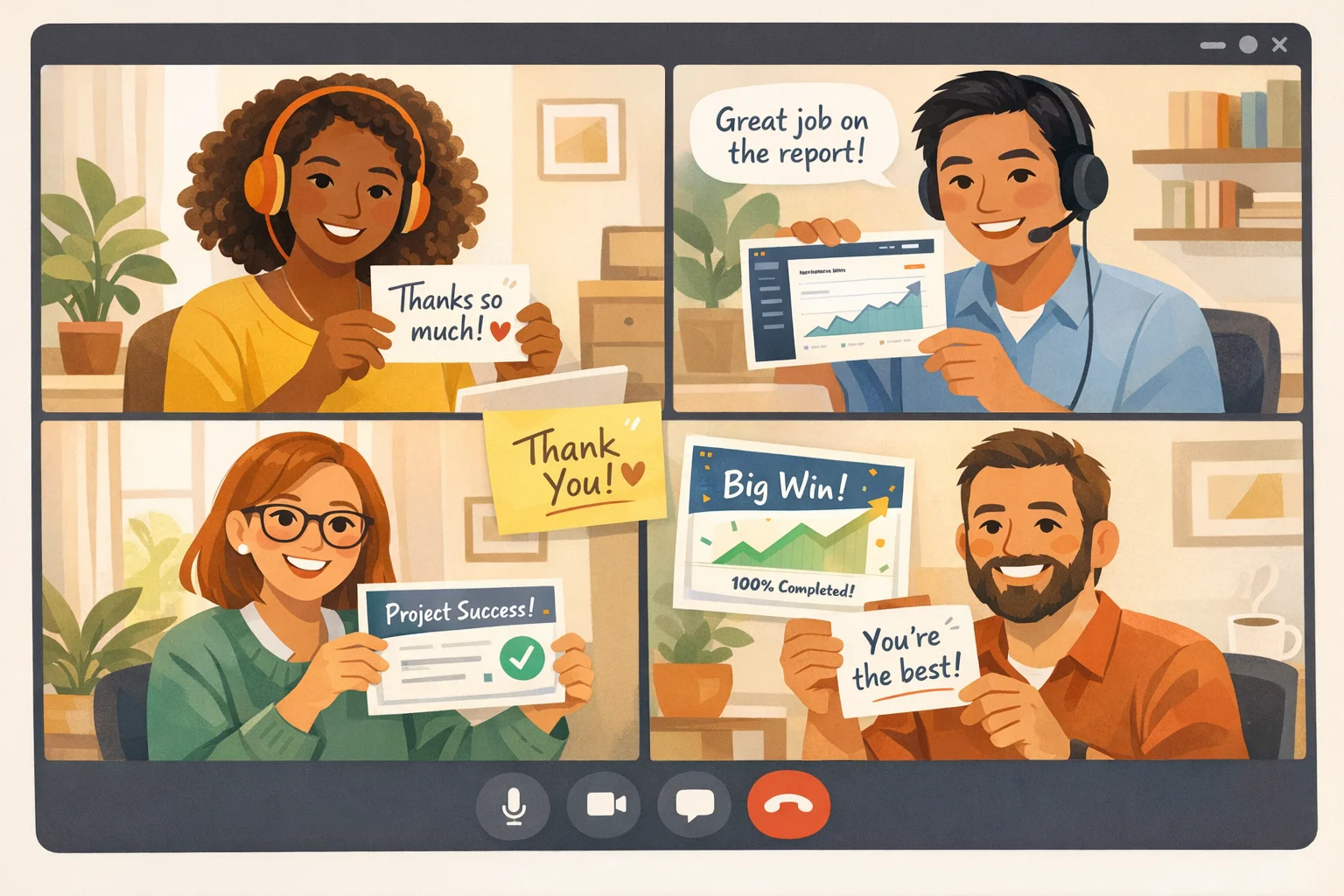
Gratitude builds the kind of trust remote teams trade on. But forced “shoutouts” and performative kudos drain energy fast. The difference is design. Make it specific, opt-in, and tied to real work, and people lean in. Make it vague or gamified for the wrong reasons, and it turns into corporate wallpaper.
A pattern we keep seeing: remote teams that build small, consistent thank-you rituals communicate faster, escalate less, and swap “nice work” for clear, behavior-based appreciation. That’s the good stuff.
There’s also data behind the intuition. Decades of research show gratitude practices are linked to higher well-being and prosocial behavior. Classic randomized studies on gratitude journaling found meaningful boosts to mood and pro-social actions, a useful backdrop for any team habit you want to sustain. See the source experiments behind those findings in the original randomized gratitude journaling experiments. (emmons.faculty.ucdavis.edu)
Recognition also affects day-to-day engagement. Gallup and Workhuman’s ongoing program ties frequent, meaningful recognition to higher engagement and retention across industries. Useful reminder: frequency matters, but so does authenticity. Explore the synthesis on workplace recognition research. (gallup.com)
Finally, gratitude lands best inside psychologically safe environments where it doesn’t feel like a performance review in disguise. Amy Edmondson’s guidance on building safety is a helpful guardrail for any praise ritual — virtual or otherwise. Practical steps appear in HBR’s guidance on psychological safety. (hbr.org)
If you want more psychological and operational backing for cultivating gratitude in organizations, UC Berkeley’s Greater Good offers practical patterns grounded in research: ways to cultivate gratitude at work. (greatergood.berkeley.edu)
Each idea includes why it works, how to run it, and a small twist to keep it fresh. Use what fits. Leave the rest.
Why it works: Creates a predictable, low-friction place to spot specific help from the prior week. Repetition builds the habit; specificity builds trust.
How to run it: Open a standing thread in Slack/Teams every Monday morning with a short prompt: “Name one teammate, behavior, and impact.” Keep it to a sentence or two. Encourage tagging and emojis only after the original thanks. Rotate who posts the prompt.
Make it inclusive: Offer an anonymous form for those who prefer private appreciation. Summarize highlights later with consent.
Keep it fresh: Theme weeks: cross-team help, behind-the-scenes work, customer saves, documentation heroes.
Why it works: Private, two-way recognition removes performative pressure. People say the honest thing they might not share in a group.
How to run it: Randomly pair teammates each month. Each person sends the other three specifics: behavior, why it mattered, and how it changed their work. Optionally share one snippet publicly (with consent) in a team channel.
Make it inclusive: Give a simple template and examples so non-native speakers or newer teammates can participate comfortably.
Keep it fresh: Occasionally pair across departments to surface hidden dependencies.
Why it works: Threads gratitude into a ritual you already do. Reduces the “extra thing” tax.
How to run it: In one standup each week, after blockers, add a 60-second round: “Name one person who made your work easier.” Timebox it tightly so it never sprawls.
Make it inclusive: If people miss the live call, they add theirs async before end of day.
Keep it fresh: Rotate a tiny prompt: “Spot a doc,” “Spot a kindness,” “Spot a fix.”
Why it works: Evidence beats adjectives. A screenshot of the launched feature, fixed metric, or customer note paired with a thank-you makes the impact concrete.
How to run it: Create a channel for “proof + thanks.” Post screenshot, one sentence of context, and tag the helper. Limit commentary to encourage scanning.
Make it inclusive: Accept audio or short clips for those who prefer to speak rather than write.
Keep it fresh: Monthly collage of the best “proofs,” shared in all-hands.
Why it works: Social momentum. Each thank-you nominates the next person to appreciate someone else, spreading across silos.
How to run it: Kick off with a thoughtful thanks and tag your nominee. They have 48 working hours to pass it on. Keep messages brief and specific.
Make it inclusive: Allow people to opt out quietly. If someone doesn’t pass the baton, the chain routes around them.
Keep it fresh: Occasionally seed the chain with a prompt like “Thank someone you rarely talk to.”
Why it works: Lowers defensiveness before discussing misses. When teams start with concrete thanks, the rest of the retro is more candid.
How to run it: Open every retro with two minutes of appreciations. One line per person. Capture in the board along with action items.
Make it inclusive: Let quieter teammates post theirs ahead of time.
Keep it fresh: Once a quarter, do “appreciation postcards” instead of verbal callouts.
Why it works: Randomness prompts outreach beyond the inner circle.
How to run it: A bot or coordinator draws a handful of names weekly. Each selected person writes a short note to anyone on the team for a specific recent behavior. Notes can be private DMs or mailed postcards for a pleasant analog surprise.
Make it inclusive: Provide a template and translation help where needed.
Keep it fresh: Occasionally flip it to “cross-team lotto” to reach partners and vendors.
Why it works: Visualizes the often-invisible network of help. Teams see who’s quietly critical to flow.
How to run it: Use a shared whiteboard (Miro, FigJam) where each thanks becomes an arrow from giver to receiver with a short label: “Saved launch by jumping on logs.” Over time you’ll spot hubs.
Make it inclusive: Invite folks to add anonymously if preferred.
Keep it fresh: Quarterly, spotlight one hidden hub and ask them how the team can make their load sustainable.
Why it works: Recognizes talent beyond titles. People feel seen for the real range of contributions.
How to run it: Once a month, pick a theme like “teaching moments” or “debugging instincts.” Invite short stories that end with a thank-you to someone who showed that skill. Keep the bar to post low.
Make it inclusive: Include junior folks and contractors. Be explicit that learning-stage wins count.
Keep it fresh: Pair with a mini-lightning talk from a spotlighted person if they’re up for it.
Why it works: Turns passive appreciation into a week of small, joyful actions. The hunt gives structure, variety, and a reason to reach across the org chart.
How to run it: Set a short window. Offer a mix of quick challenges that reward evidence of real appreciation. Keep scoring simple so the focus stays on meaning. If you’re using an engagement platform, automate prompts and tallying. If you’re not, a shared doc works.
Challenge examples:
In our experience, teams remember these hunts not for the points but for the new connections they spark. If you want outside guidance on creating gratitude practices people opt into, UC Berkeley’s Greater Good has a practical primer on ways to cultivate gratitude at work. (greatergood.berkeley.edu)
For a baseline on psychological safety while you build these rituals, skim HBR’s guidance on psychological safety and adapt its simple leader behaviors to remote contexts. (hbr.org)
Track signals that actually reflect health, not just volume.
If you see vague messages, shrinking participation, or only managers doing the talking, it’s time to re-tune.
There’s also a broader business signal: frequent, meaningful recognition is correlated with better engagement and retention. Gallup and Workhuman summarize patterns and practices in their ongoing workplace recognition research. Use it as a north star, not a quota. (gallup.com)
Most of this runs fine with what you already have: Slack/Teams threads, a simple form for anonymous notes, a whiteboard for the gratitude map, and a calendar reminder for prompts.
Where structured prompts, variety, and light automation help — say, a multi-day virtual gratitude scavenger hunt or rotating peer nominations — a tool like Scavify can make it easier to:
The point isn’t the platform. It’s reducing friction so people spend energy on genuine appreciation, not wrestling a process.
Often enough to feel natural, not obligatory. Weekly micro-rituals inside existing workflows plus a monthly private exchange tends to create steady momentum without fatigue.
Specificity, consent, and proximity to the work. Name behaviors and impact, offer private-first options, and keep thanks close to when the help happened.
Respect it. Provide private channels for appreciation and ask for consent before public highlights. Over time, people may opt in once they trust the tone.
If their work affects yours, they’re in. Make participation voluntary, ensure access to the same channels, and spotlight cross-boundary help.
Track participation breadth, specificity, and cross-team mentions. Use light pulse checks on “feeling seen for my work.” Avoid vanity metrics like total emoji reactions.
Use recognition to build culture, not a currency. Small tokens can be fine, but the message matters more than the mechanism. If anything, keep rewards occasional and low-stakes.
Assign a rotating ritual-owner, refresh prompts, and review signals monthly. Keep it short, consistent, and genuinely optional. People return to rituals that respect their time.
Two quick anchors: randomized experiments on gratitude practices and well-being from UC Davis show durable benefits, and ongoing Gallup-Workhuman findings connect frequent, meaningful recognition with higher engagement and retention. See the randomized gratitude journaling experiments and the workplace recognition research. (emmons.faculty.ucdavis.edu)
Gratitude isn’t a campaign. It’s a quiet, repeatable habit that makes remote work feel more human. Design small rituals that respect people’s time and preference, give them tools that lower friction, and keep the focus on what actually moved the work forward. That’s how virtual thanks becomes real connection.
For extra context on the mechanics of workplace gratitude, UC Berkeley’s Greater Good has practical overviews of ways to cultivate gratitude at work that align neatly with everything above. (greatergood.berkeley.edu)