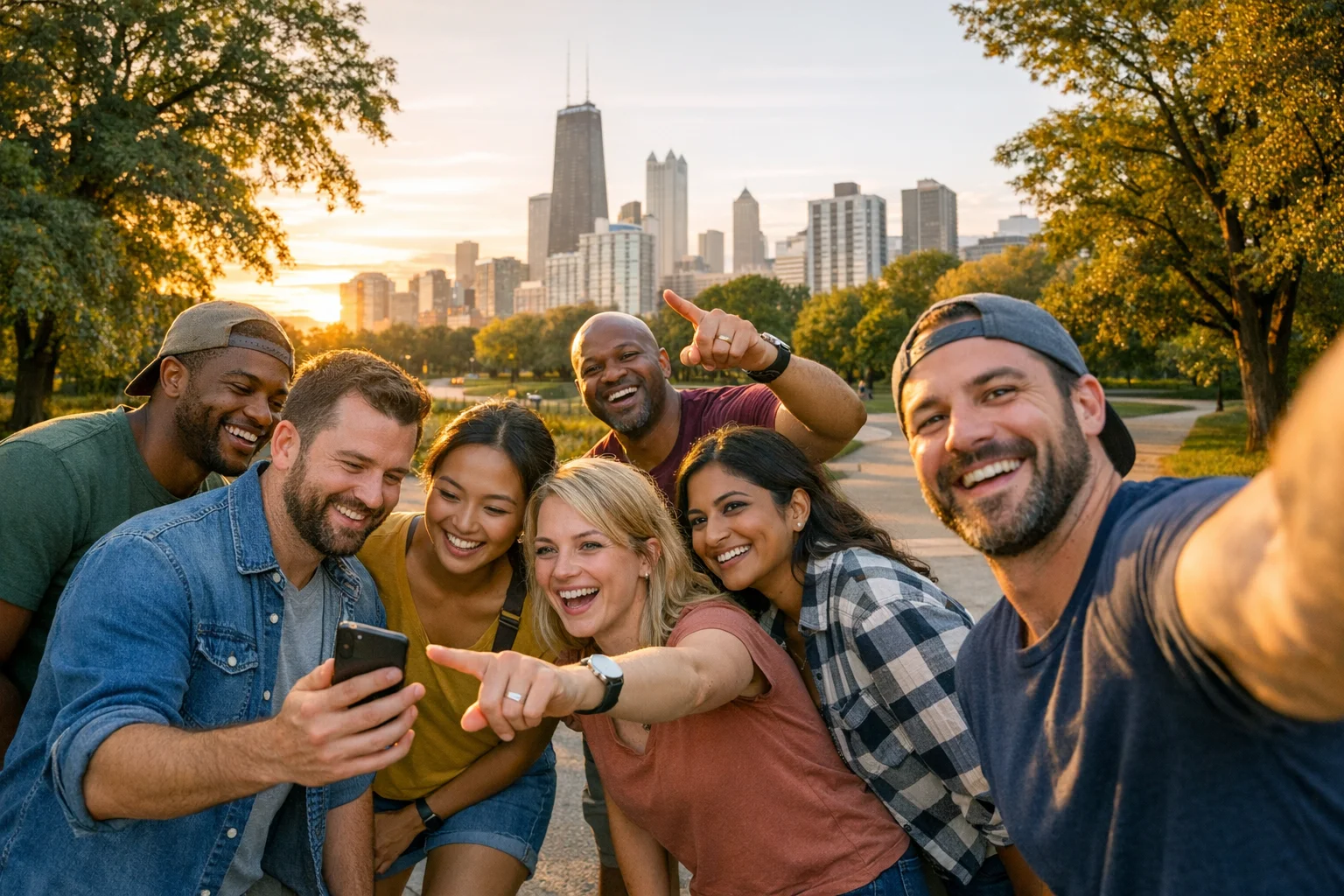
Outdoor team building works best when people forget it’s “team building” and simply get absorbed in doing something together. Outside helps. Movement helps. Clear goals help. The right constraint turns awkward into energizing.
We’ve run thousands of interactive experiences. Patterns pop. Below are 21 outdoor team building ideas that consistently spark participation, not performative smiles. Use the ones that fit your team, space, and time. Skip the rest.
At a Glance
- Outdoor activities that mix light movement and purpose beat sit-and-listen every time.
- Build in micro-reflection and scoring to keep energy high and learning real.
- Safety, shade, water, and permits aren’t “admin.” They’re participation enablers.
- Debriefs work when they’re short, structured, and future-focused.
How to choose outdoor team building ideas
Pick for outcomes, not novelty. Start with the behavior you want more of: faster cross-functional handoffs, cleaner communication under mild time pressure, or simply loosened social ties. Then filter by:
- Movement level: light walk, steady movement, or athletic bursts.
- Coordination demand: solo contributions vs tightly synced tasks.
- Cognitive load: mostly social, mostly problem-solving, or a blend.
- Space and constraints: park, campus, neighborhood blocks, waterfront, rooftop.
- Access and inclusion: routes for mobility aids, shade, seating, clear signage.
A pattern we keep seeing: outdoors plus light movement increases mood and idea flow. Even a short walk can boost divergent thinking. That’s not hype; it’s lab-verified. See the Stanford research on walking and creativity, and yes, the effect holds immediately after walking. Stanford’s report on walking and creativity. (news.stanford.edu)
Want an easy credibility bump with risk teams? Anchor your plan in well-established health and safety basics. The CDC and NIOSH link physical activity and outdoor time with near-term brain and mood gains, while OSHA’s water–rest–shade mantra prevents heat issues. CDC on physical activity benefits, NIOSH workplace heat recommendations, and OSHA heat prevention: water, rest, shade. (cdc.gov)
21 outdoor team building ideas people actually enjoy
1) Neighborhood Micro‑Missions
- Goal: Fast collaboration under light time pressure.
- How to run it: Give teams a map with 12 micro-missions spread across a 4–6 block radius. Each mission takes a couple minutes: capture, count, identify, or trade. Keep routes flexible.
- Why it works: Choice plus movement. People self-organize, then learn to re-route when a mission bogs down.
- Watch-outs: Design missions that any team can attempt regardless of mobility. Place a few low-mobility missions near home base.
2) Park Photo Hunt (app‑based)
- Goal: Spot details, tell quick stories, and celebrate wins in real time.
- How to run it: Build a short list of themed photo prompts and live-score submissions. If you use Scavify, automation handles points, leaderboards, and approvals while you facilitate.
- Why it works: Social proof. The feed of incoming photos lifts energy without forcing it.
Example challenge set:
- [Photo | 40 pts]: Capture three repeating shapes in the same frame.
- [Photo | 30 pts]: Team selfie with a public artwork older than your company.
- [Q&A | 25 pts]: What species is the tree with the peeling red bark?
- [GPS Check‑in | 50 pts]: At the highest point within two blocks.
- [Multiple Choice | 20 pts]: Which local organization maintains this park’s trails?
3) Orienteering Lite
- Goal: Shared navigation under mild ambiguity.
- How to run it: Plant 6–8 simple control points in a small green space. Provide a clear map, cardinal directions refresher, and optional compasses. Teams choose the route; you time-window the experience.
- Why it works: Everyone gets a role: navigator, spotter, timekeeper. Decision quality improves as people iterate.
- Helpful primer: A quick pre-brief with Orienteering USA’s beginner guidance or REI’s orienteering basics reduces friction for first-timers. (orienteeringusa.org)
4) Trail Clean‑Up With a Twist
- Goal: Do real good while coordinating tasks.
- How to run it: Pair gloves and bags with a “collection bingo” card (plastics, metals, micro-litter). Add a quick reflection prompt about what would reduce the top two litter sources.
- Why it works: Purpose plus visible progress. Comes with built-in storytelling.
- Watch-outs: Follow local disposal rules and Leave No Trace principles. A quick link or handout keeps everyone aligned. NPS summary of Leave No Trace. (nps.gov)
5) Walking Debate Circuits
- Goal: Psychological safety and candor without the conference-room stiffness.
- How to run it: Pose a thorny but safe topic (product tradeoffs, customer promise). Pairs walk a short loop, switch partners every few minutes, and rotate prompts.
- Why it works: Walking reduces social friction and supports idea generation. Stanford’s creativity‑while‑walking research backs the effect on divergent thinking. Pair this with norms that support open voice. HBS on psychological safety. (news.stanford.edu)
6) Micro‑Service Sprints
- Goal: Quick hit of community impact.
- How to run it: Partner with a local org for compact tasks outdoors: assembling hygiene kits, planting natives, painting stencils. Keep roles rotating.
- Why it works: Tangible outcomes, clear ownership, and easy photo moments.
7) Bridge‑Builder Challenge
- Goal: Low-cost prototyping and communication under constraint.
- How to run it: Provide tape, string, and recycled materials. Build a freestanding “bridge” that spans a marked gap and holds a specific light object.
- Why it works: Forces quick alignment on roles and simple tests.
8) Silent Line‑Up
- Goal: Nonverbal coordination and attention to cues.
- How to run it: Teams line up by birthday, years at company, or distance from office without speaking. Outdoors gives space to move.
- Why it works: Fast, funny, and revealing. Great opener.
9) Mystery Menu Cook‑Off (no‑heat edition)
- Goal: Resourcefulness and role clarity.
- How to run it: Provide coolers with picnic-safe ingredients and constraints (e.g., “three-ingredient main, two-ingredient side”). Judges award points for taste, presentation, and story.
- Why it works: Clear deliverable plus playful stakes.
- Watch-outs: Allergens and dietary needs first, always.
10) Micro‑Map the Campus
- Goal: Observation and shared vocabulary.
- How to run it: Teams create a quick sketch map of a small outdoor area, then swap maps and navigate to hidden marks.
- Why it works: Seeing how others encode information unlocks better handoffs back at work.
11) The Soundtrack Walk
- Goal: Lightweight connection.
- How to run it: Give a prompt (“song that got you through a tough stretch”) and a mapped loop. Pairs trade stories, then share one highlight back in the circle.
- Why it works: Personal without being prying.
12) Capture the Concept
- Goal: Translate strategy into something observable.
- How to run it: Give small teams a strategic theme and ask them to capture three photos outdoors that visually represent it. Share as a rapid gallery.
- Why it works: Forces specificity. Strategy stops being slogans.
13) Waypoint Relay
- Goal: Tight coordination and trust in handoffs.
- How to run it: Pre-place envelopes at waypoints. Each contains the next clue and a small team task. Runners and walkers alike contribute.
- Why it works: The baton is information, not speed.
14) Outdoor Escape Elements
- Goal: Problem-solving with distributed clues.
- How to run it: Hide simple ciphers, pattern locks, and QR codes around a courtyard or park. The final puzzle reveals a location for a group photo.
- Why it works: Combines brains and light movement.
15) Story Tiles on the Lawn
- Goal: Shared narrative of a project or customer journey.
- How to run it: Lay printed “tiles” (milestones, obstacles, customer quotes). Teams arrange them into a path across the lawn, narrating choices.
- Why it works: Surfaces assumptions fast.
16) Spikeball or Ladder Toss Tournament (keep it friendly)
- Goal: Playfulness and quick pair rotation.
- How to run it: Short sets, frequent partner swaps, wins matter less than conversations.
- Why it works: Low skill floor, high laughter.
17) Green Space Recharge Stations
18) Urban Landmark Quest (app‑based)
- Goal: Learn the local area while collaborating.
- How to run it: Create GPS check-ins at notable spots, mix in Q&A about local history, and add a couple of creative photo challenges for tie-breakers. Scavify’s automation handles scoring and routing while you roam to coach teams.
Example challenge set:
- [GPS Check‑in | 40 pts]: Stand where two neighborhoods meet.
- [Q&A | 30 pts]: Which architect designed the facade with the honeycomb pattern?
- [Photo | 35 pts]: Recreate the pose of the statue everyone copies.
- [QR Code | 25 pts]: Scan the code hidden near a mosaic.
- [Video | 50 pts]: 10-second clip teaching a local slang term respectfully.
19) Leave No Trace Scenarios
- Goal: Shared environmental norms for future outdoor events.
- How to run it: Place scenario cards around a green space (wildlife encounter, waste, trail etiquette). Teams decide the best action and justify it briefly.
- Why it works: Builds a common playbook. Reference a simple summary so no one has to guess. NPS: Leave No Trace principles. (nps.gov)
20) The Customer Walk
- Goal: Empathy with motion.
- How to run it: Each stop on a short loop represents a customer moment. At each, read a real quote and make a micro-decision. Capture the decision in a sentence.
- Why it works: Adds stakes without heaviness.
21) The 60‑Minute Sprint Lab
- Goal: Rapid experiment design.
- How to run it: Outdoors for fresh air. Teams pick a small customer or process friction, design a scrappy experiment, and define the success signal they’ll watch back at work.
- Why it works: Turns “good vibes” into the first step of behavior change.
Logistics that keep outdoor events smooth
- Permits and access: Public spaces often need reservations or special-use permits for larger setups, catering, or amplified sound. Check local park and National Park Service pages for specifics and lead times. Examples: NPS special-use permits and group picnic reservations guidance. (home.nps.gov)
- Safety basics: Plan for shade, hydration, and rest. OSHA and NIOSH both emphasize water–rest–shade and acclimatization for outdoor activity. If temperatures climb, shorten segments and add breaks. OSHA heat prevention and NIOSH recommendations. (osha.gov)
- Inclusion by design: Use routes that work for mobility aids, provide seating at touchpoints, and offer non-competitive roles.
- Wayfinding: Simple maps beat long briefings. Post QR codes with a shortlink to the day’s plan.
- Leave No Trace: Pack out, stick to durable surfaces, and respect wildlife. It’s easier to do the right thing when the expectation is clear. Leave No Trace principles overview. (nps.gov)
Facilitation moves that make activities land
- Name the norm, not the rule: “Move at a comfortable pace and keep an eye on shade and water.”
- Give roles: Navigator, scribe, timekeeper, photographer. Roles rotate.
- Use tight prompts: Specific beats vague. “Three repeating shapes in one photo” outperforms “Be creative.”
- Micro‑reflections: One question per stop: “What did we almost miss?” or “What changed our plan?”
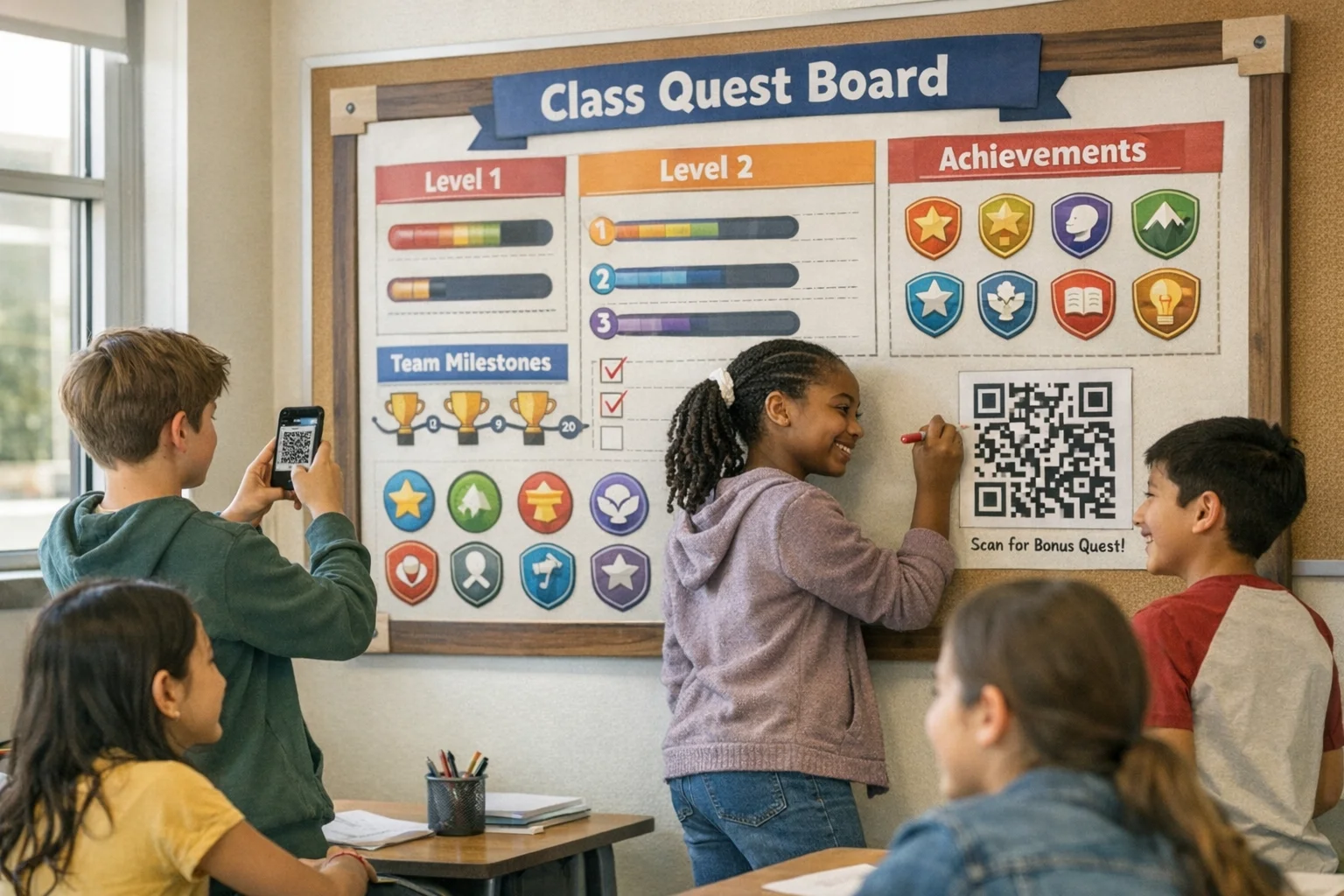
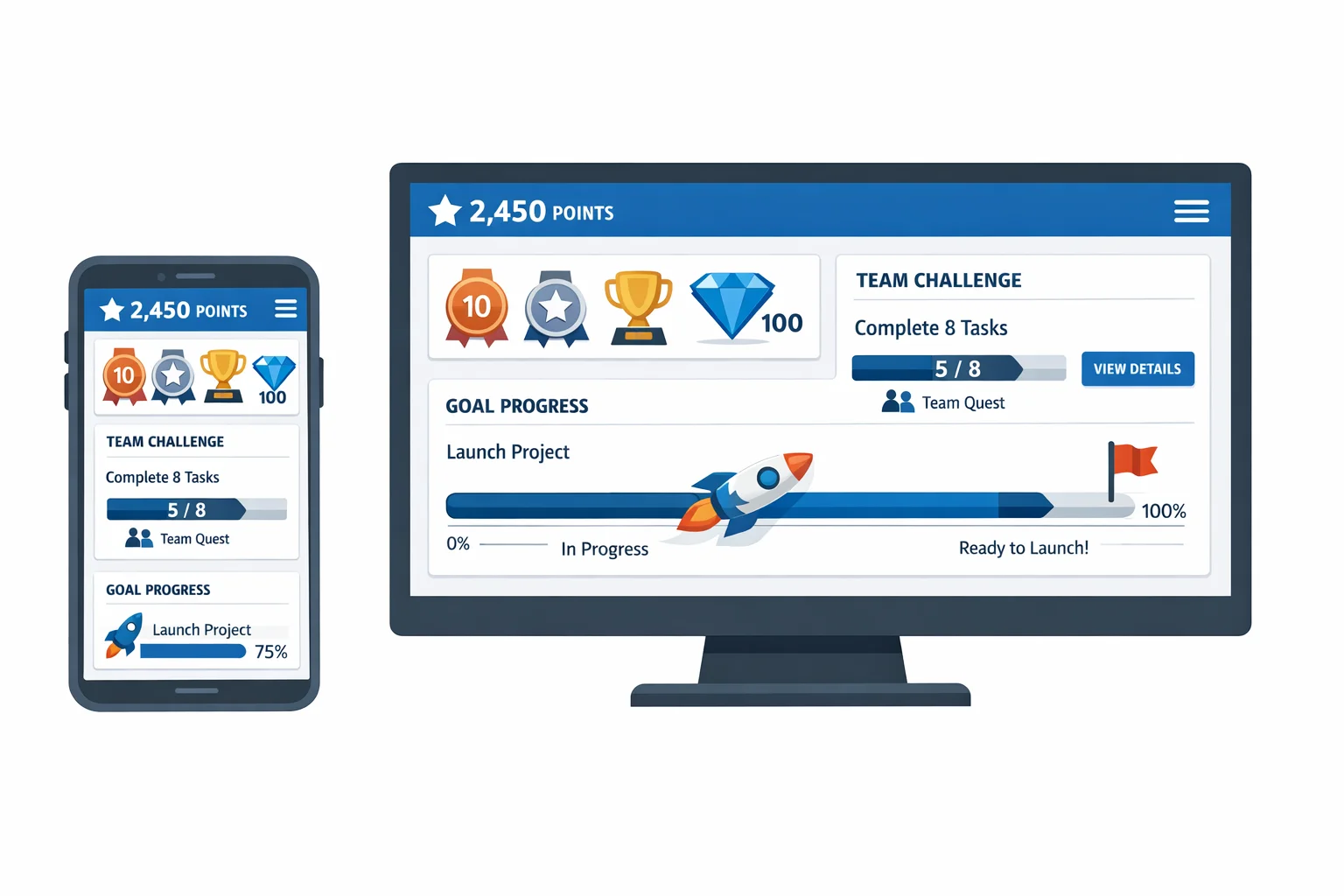
- Keep score lightly: Points nudge participation without turning everything into a contest.
Debrief and measurement without the eye-rolls
Treat the end like the start of the next better round. Short, structured, forward-leaning. The After Action Review format is reliable across fields: what did we intend, what happened, why, and what will we change next time. See practical takes from the National Policing Institute’s AAR guide and an HBR toolkit summary of AARs. HBR tools for AARs. (policinginstitute.org)
Anchor the conversation in an experiential learning loop so the “aha” turns into action: concrete experience, reflective observation, abstract conceptualization, active experimentation. It’s a simple cadence that keeps learning moving. A quick explainer on Kolb’s cycle can help facilitators keep it crisp. University of Florida overview of Kolb’s cycle. (citt.ufl.edu)
- Measure participation: Submissions, check-ins, and photo counts are stronger than self-reports.
- Tag what matters: If collaboration is the goal, tag challenges that required two or more roles and track completion.
- Pull one commitment: Each team writes one thing they’ll try this week based on what they noticed today.
Quick planner (use, adapt, ignore as needed)
- Outcome first: Name the behavior shift you want to encourage.
- Space and route: Shade, seating, accessible paths, and a simple home base.
- Safety kit: Water coolers, sunscreen, basic first aid, and a clear break plan.
- Permits and neighbors: Confirm what’s allowed, where, and when.
- Content: 8–12 well-written prompts beat 30 mediocre ones.
- Facilitation: One lead, one rover. Roles rotate within teams.
- Debrief: 10–15 minutes, AAR-style, with one concrete next step.
Where Scavify helps (when it naturally fits)
For hunt-style activities, automation changes the facilitation game. Real-time feeds keep energy up without cheerleading. Points and leaderboards run themselves. Browser and app access mean anyone can play from a phone. When scale grows, setup time doesn’t.
FAQs
What makes outdoor team building different from indoor activities?
Movement, fresh air, and novel context reduce stiffness and spur interaction. Research links short stints of physical activity and time in green spaces with better mood and attention, which supports participation and idea flow. See the CDC on activity and brain health and a review of nature exposure and health. (cdc.gov)
How long should an outdoor team activity run?
Short and focused tends to win. Design enough time to warm up, attempt several challenges, and close with a quick debrief. Attention and energy, not the clock, should drive the length.
How do we ensure activities are inclusive?
Offer choice. Pair any movement-heavy task with a nearby stationary option. Provide routes that work for mobility aids, seating at touchpoints, and roles beyond speed or agility.
How do we manage heat and weather risk without killing the vibe?
Name it up front and build it in: shade zones, frequent water, and planned pauses. Follow the water–rest–shade basics and adjust intensity when temperatures climb. OSHA on heat prevention and NIOSH recommendations. (osha.gov)
Do we need permits for public spaces?
Often for large groups, equipment, or catering. Check city parks and National Park Service guidance for your location and lead times. Examples: NPS special‑use permits and picnic reservation rules. (home.nps.gov)
How do we make sure the learning sticks after the fun part?
Run a compact AAR: intentions, observations, reasons, next actions. Tie one small change to a real upcoming moment. The format is widely used because it’s simple and works. National Policing Institute AAR guide. (policinginstitute.org)
Is there evidence that walking helps creativity during team activities?
Yes, for divergent thinking in particular. A well-cited Stanford study found creative output jumped while walking and shortly after. Use walking segments for idea generation, then pause to converge. Stanford creativity‑while‑walking. (news.stanford.edu)