Solutions
Your first hunt, live this afternoon.
Free to start · No download for participants
Learn how gamification works with clear examples, practical use cases, and tips for education, work, and engagement.
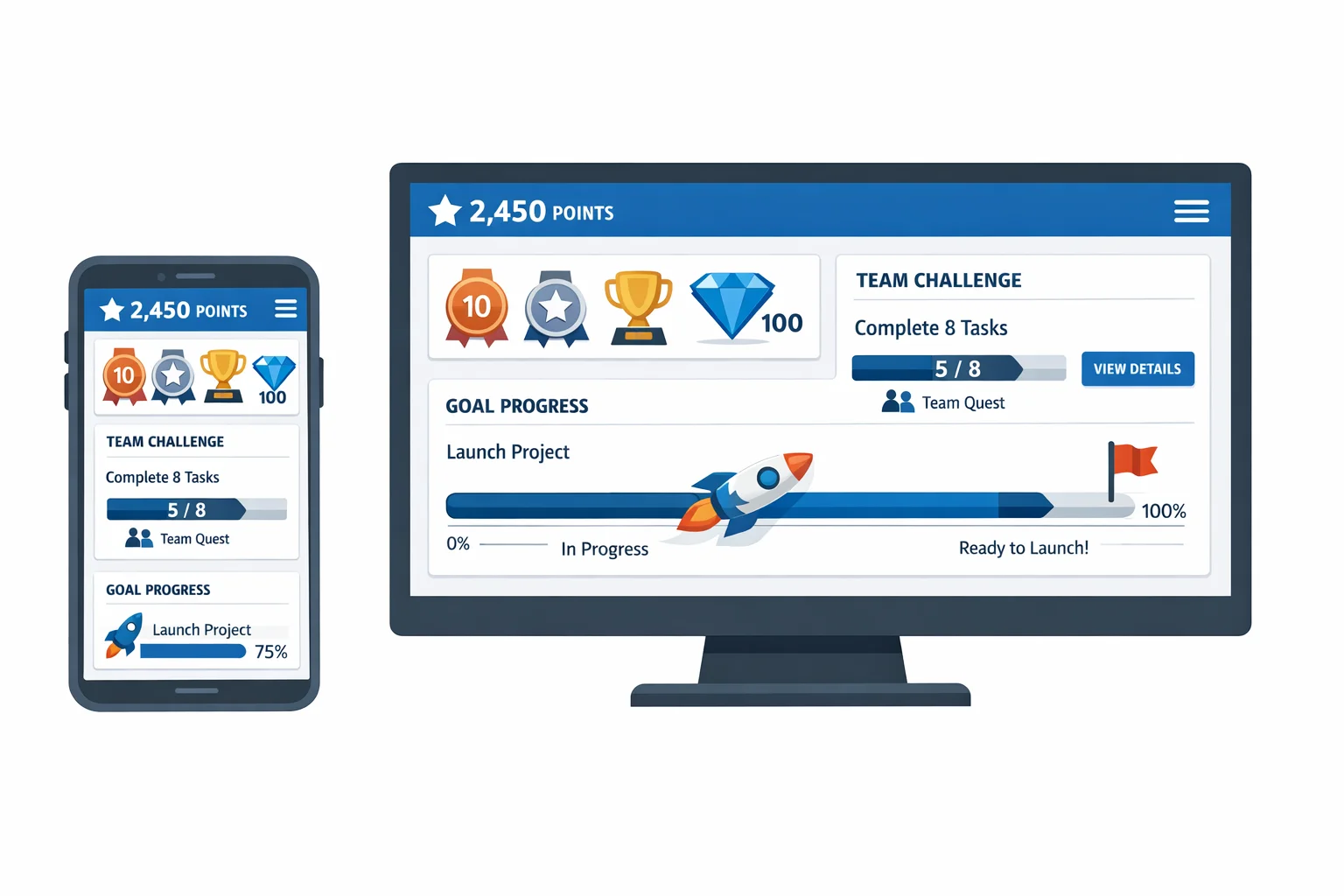
If you want the short answer first, here it is. Yes, gamification can be effective, and not just for a quick sugar rush. Across education, health, and behavior change, the average impact lands in the small to moderate range when the mechanics are well matched to the goal. The catch is design quality and fit. Slapdash points and badges create noise. Thoughtful mechanics that support autonomy, competence, and relatedness create durable shifts in participation and performance. (link.springer.com)
Education. A widely cited meta-analysis found significant positive average effects on cognitive outcomes around half a standard deviation, with smaller but still positive gains for motivation and behavior. Translation, students learned more, and they engaged more, when the mechanics were chosen and implemented with care. Another review focused narrowly on academic performance reported a medium average effect size near g 0.50 across 30 interventions, with shorter, tighter implementations often performing better. These papers also point out the obvious but often ignored detail, methods matter, and lower rigor makes effects look bigger than they likely are. (link.springer.com)
Health and daily behavior. On physical activity, a randomized controlled trials meta-analysis reported a significant average effect, with multiweek programs improving total activity in a way that survived sensitivity checks. A separate review of gamified smartphone apps also found small to moderate effects on activity across dozens of studies. These are not miracle jumps, they are dependable nudges that compound when the core habit delivers value. (jmir.org)
Cognitive training and engagement. A systematic review and meta-analysis on gamified computerized cognitive training found a moderate positive impact on motivation and engagement outcomes. That is the pattern you see a lot, stronger effects on doing the thing more often or for longer, then downstream improvements if the thing you are doing is itself effective. (games.jmir.org)
If you stop reading here, you already have a fair map. Gamification works often enough to be worth doing, but not so strongly that weak design can coast.
When mechanics mirror the real skill. Progress bars that track meaningful milestones beat streaks that just count days. If the behavior is skill building, the reward needs to reflect mastery, not attendance. This shows up in education meta-analyses that find stronger cognitive gains than raw behavior counts once design quality is controlled. (link.springer.com)
When social structure reduces friction. Competition paired with collaboration, for example teams chasing a shared target with intra team recognition, tends to outperform lone wolf leaderboards. The education meta-analysis above explicitly flagged combined competitive collaborative setups as more effective than competition alone for several outcomes. (link.springer.com)
When feedback is specific and timely. Mechanisms that tell people exactly what improved, and what to try next, consistently move the needle. In practice, personalized feedback inside a gamified app often beats generic scorekeeping for engagement and retention. (journals.sagepub.com)
When the intervention is time boxed, then evolved. Shorter initial programs tend to show larger effects, and long running programs need periodic content and mechanic refreshes or performance decays. Treat mechanics like code, ship, observe, iterate. (sciencedirect.com)
The novelty effect. You see the early spike, everyone logs in, and by week four the curve flattens. A longitudinal study in higher education documented exactly that pattern, impact decreased over time without mechanic evolution, while some familiarization benefits remained for those who settled into the system. If you do not plan refresh cycles, the system will run out of gas. (link.springer.com)
Points, badges, and leaderboards without purpose. Repeated experiments on common elements like points and leaderboards show they can lift output or feelings of competence in some contexts, yet they do not reliably boost intrinsic motivation by themselves. They help when they carry information about progress and quality. They backfire when they are a scoreboard for its own sake. (edoc.unibas.ch)
Overemphasis on competition. Pure race to the top leaderboards tend to help already confident performers and quietly discourage everyone else. Meta analytic work suggests that mixing competition with collaboration avoids some of that drop off. (link.springer.com)
Measuring the wrong thing. Logins are not learning, taps are not training, and QR scans are not skill. It is easy to show big uplifts in activity metrics that have no relationship to your goal. The fix is framing, define the target behavior up front and measure that behavior, not the decoration around it. (link.springer.com)
Start with the behavior, not the mechanic. Write the single sentence that describes the moment you want more of. For example, complete a peer review within 48 hours, or explore three safety scenarios before a shift. Only then choose mechanics that make that moment more likely. This mirrors how the strongest studies framed outcomes before choosing elements. (link.springer.com)
Design for autonomy, competence, relatedness. Self Determination Theory is not a buzzword here, it is the backbone. Mechanics should increase choice and meaningful decisions, create a believable path to mastery with visible progress, and connect people to peers or purpose. When you satisfy those needs, motivation tends to stick. Link a mechanic to each need, for example optional side quests for autonomy, tiered challenges for competence, and team missions for relatedness. (selfdeterminationtheory.org)
Combine competition with collaboration. Create teams, local rivalries, and shared bonus objectives. This structure keeps the energy of a race without the tail risk of demoralizing the middle of the pack. The combination shows up again and again in better outcomes. (link.springer.com)
Make feedback specific, and make progress visible. Replace a generic score with tiered progress that tracks real skills. Good mechanics double as a coaching script, here is what you did, here is what that unlocked, here is what to try next. That specificity is what drives persistence. (journals.sagepub.com)
Introduce narrative only when it helps behavior. Light fiction, context, or a theme can drive more behavioral participation, although narrative alone is not a magic multiplier for learning outcomes. Use it to clarify why the next action matters, not to decorate. (link.springer.com)
Expect heterogeneity. Not all users respond the same way to the same mechanic. Field work on badges and participation shows that some people steer strongly toward badge thresholds, others ignore them entirely. Design for segments, not a mythical average user. (archives.iw3c2.org)
Here is the pattern we keep seeing work across orientations, onboarding, training, conferences, and city activations. It is not fancy. It is reliable.
1) Define the measurable behavior. Write the outcome as a verb you can count, submit a safety observation, complete the onboarding tour, visit three local businesses.
2) Choose the smallest set of mechanics that reinforce that verb. Examples, GPS check ins for presence, photo or video for demonstration, short multiple choice for concept checks, progress bars tied to milestones, teams with shared goals.
3) Ship a pilot for 2 to 4 weeks. Keep the content tight and the rules clear. Shorter first runs tend to punch above their weight, and you will learn what sticks. (sciencedirect.com)
4) Instrument real outcomes. Pre define success metrics that match the verb. For learning, use a concept check that maps to the content. For activation, use verified check ins and mission completion. For training, use observed behaviors on the floor.
5) Run a fair test. Use A B or stepped wedge rollouts. Randomize if you can. Compare like with like. Logins and clicks are supporting actors, not the main plot. (jmir.org)
6) Plan the refresh. At week three or four, rotate in new missions, team twists, or unlockables that change the strategy, not just the skin. This is how you blunt novelty decay. (link.springer.com)
7) Retire mechanics that do not pull their weight. If a leaderboard is quietly freezing the middle, turn it off or team it up.
8) Guard against gaming the system. Define what counts as valid evidence, use spot checks, and audit unusual activity. Good gamification reduces loopholes instead of rewarding them.
A quick note of obvious alignment. If you are using Scavify to deliver an experience like this, the format does much of this work for you, challenge variety, automation, scoring, and reporting are built in, and you can run in the app or the browser for easy access at scale. That saves the energy for the part that moves outcomes, better missions and better feedback loops.
Pick the right metrics. - Behavioral outcomes. Completions of the target action, quality of submissions, time to competency. - Leading indicators. Session depth, repeat participation, team spread of participation. - Lagging outcomes. Test scores that map to content, error rates, retention after 30 to 90 days.
Use comparisons that mean something. If you can randomize, do it. If you cannot, use a stepped rollout with comparable cohorts. Run pre and post measures tied to the same tasks, not just a generic quiz.
Look at dose response. Do people who complete more missions show larger gains in the target outcome, and does the curve flatten as expected. This catches placebo effects quickly.
Quantify size, not just significance. Report standardized effects or percent improvements that a leadership team can understand. The education and health literatures routinely use standardized mean differences and Hedges g, which translate well across contexts when you explain them plainly. (link.springer.com)
Expect attrition, plan analysis accordingly. Many gamification studies overestimate effects by losing less engaged participants along the way. Audit drop off and report intent to treat where possible. (link.springer.com)
Here are five quick examples that illustrate mechanics that usually travel well across orientations, onboarding, and team events.
These are deliberately short, open enough to reward creativity, and tied to behaviors that matter, noticing, teaching, exploring, deciding.
Meta analyses show positive average effects on both learning and motivation, with stronger and more stable gains for cognitive outcomes when design quality is high. Motivation and behavioral outcomes benefit too, especially when competition includes collaboration. (link.springer.com)
Shorter programs often show bigger early effects. Without changes to content or structure, impacts tend to decay within weeks. Plan mechanic refreshes around the three to four week mark to maintain momentum. (sciencedirect.com)
They can steer behavior, especially near thresholds, but they do not reliably increase intrinsic motivation on their own. Use them as informative feedback on progress and quality, not as the goal itself. (archives.iw3c2.org)
Blended structures, teams plus light competition, shared bonus missions, and progress that requires coordination, tend to outperform solo leaderboards on engagement and equity. (link.springer.com)
Define the verb you want more of, measure that behavior directly, and use fair comparisons. Randomized or staggered rollouts and standardized effect sizes will keep you honest. (jmir.org)
Narrative or fiction can increase participation for behavioral outcomes when it clarifies why an action matters. It is not consistently linked to bigger learning gains by itself. Use sparingly and purposefully. (link.springer.com)
Physical activity is one of the clearest domains, with randomized trials and reviews showing small to moderate improvements over multiweek periods for well designed programs. (jmir.org)
The rule of thumb we trust is simple. If the mechanic helps people practice the right behavior with visible progress and social support, you will see gains. If it distracts from the behavior, you will see charts that look exciting for two weeks, then slide back to baseline. Make passive participation active, and make the active participation matter.