Solutions
Your first hunt, live this afternoon.
Free to start · No download for participants
Plan a more engaging group experience with crowd-pleasing ideas, practical tips, and options for different budgets.
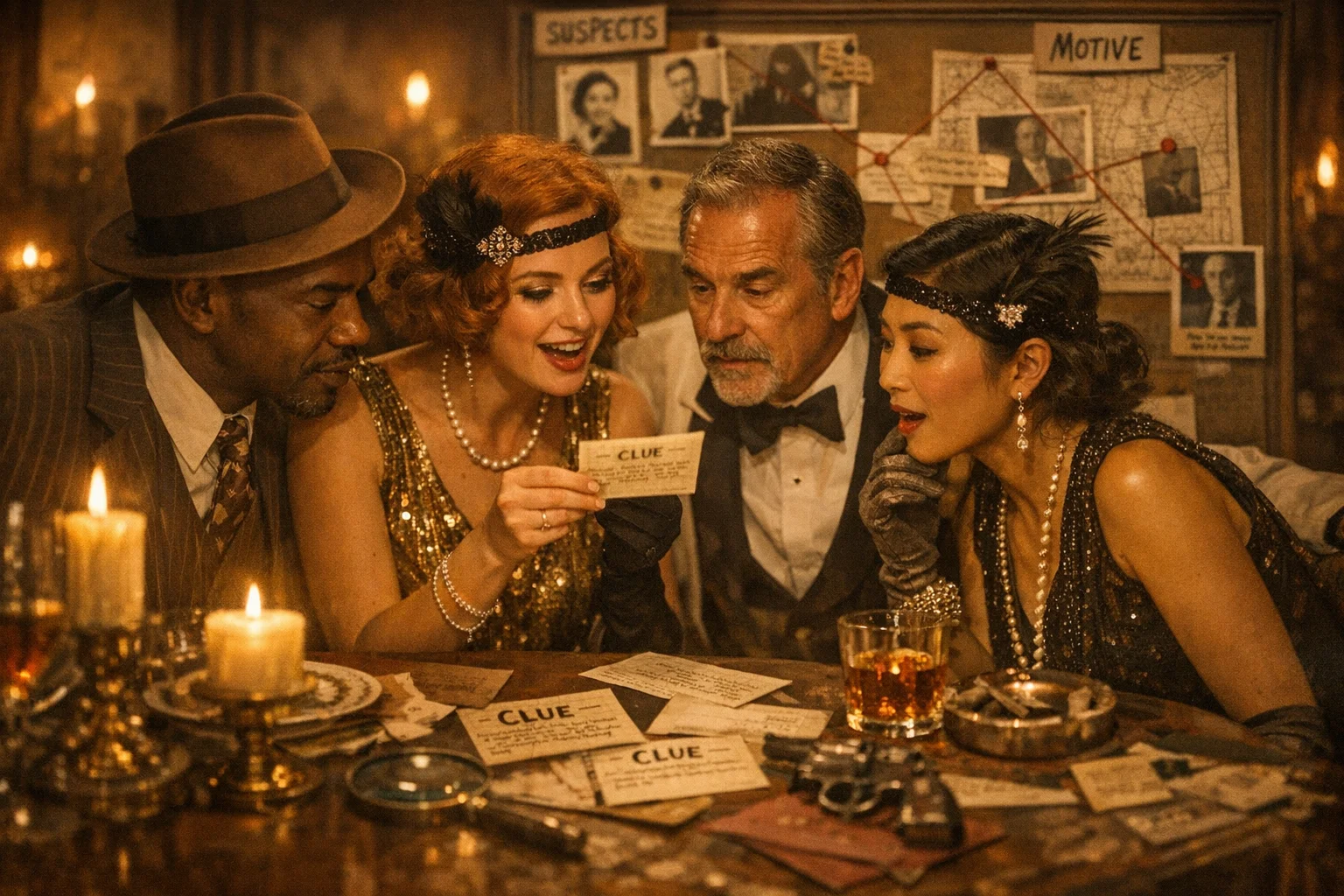
A well-run murder mystery dinner turns a regular meal into a shared story people can’t stop talking about. The trick isn’t costumes or fake blood. It’s designing an experience with momentum, moments, and just enough friction to make guests lean in.
A murder mystery dinner is a social game wrapped in a meal. Guests adopt roles, interrogate each other, examine evidence, and try to solve a whodunit before dessert. Formats range from fully scripted character packets to open-ended sleuthing with freeform clue discovery. The category has roots in role-play party kits and dinner theater-style experiences, with both home and venue-ready versions widely available. For a concise overview of formats and history, see this murder mystery game summary. (en.wikipedia.org)
A quick rule of thumb: the more open the format, the more facilitation you’ll need. Big groups with no structure quickly drift into side conversations where the mystery stalls. That’s not intrigue. That’s noise.
Most teams tend to overestimate how much improvisation their group wants. We see three reliable formats that scale from dinner-at-home to conference activation.
If you want a practical, step-by-step planning reference, the Eventbrite team has a straightforward murder mystery party guide with tips and checklists. Use it for logistics; then layer in the design moves below. (eventbrite.com)
After hundreds of team events and campus activations, a pattern keeps showing up: familiar worlds with built-in social cues make it easier for guests to role-play without feeling silly. Five that rarely miss:
Theming is scaffolding. It reduces the cognitive load so players focus on deduction, not backstory.
In our experience, strong mysteries use a mix of:
Most teams underbuild evidence density. Aim for multiple pathways to the same conclusion so casual players contribute without blocking sharp solvers.
Give each character a public trait (how to play them) and a private lever (what they stand to lose). Keep goals actionable: obtain an item, get a signature, plant a rumor, clear a debt. Passive secrets stall; active goals move the room.
Pro tip: when players help assemble props or clues, investment rises. Behavioral research labels this the IKEA effect: people value things they help create. Useful reading: the original Harvard Business School summary of the IKEA effect. (hbs.edu)
Keep utensils simple. Mystery stops when hands are full.
Loop short theme sets rather than a 5-hour grab bag. The repetition becomes part of the world and keeps energy familiar.
Here’s a practical arc we’ve used across living rooms and hotel ballrooms:
Note the short beats. Momentum survives the appetizer.
Most groups quietly underperform when individual effort disappears into the crowd. Social psychologists call this dynamic social loafing, especially on additive tasks where outputs are pooled. Keep teams small and give each role something only they can produce: a code, a confession, a map. For background, see the APA’s definition of an additive task, which highlights reduced effort when contributions blur. (dictionary.apa.org)
People remember experiences by their most intense moment and the ending more than the minutes in between. That’s the peak-end effect. In medical settings, the effect has been measured in real time and in memory, showing that peak intensity and end intensity dominate retrospective evaluations. Translate that to your mystery: stage one big “aha” and craft a satisfying, unhurried reveal. A plain-English research entry is here: Patients’ memories of painful procedures (PubMed). The lesson for game design: your reveal matters disproportionately. (pubmed.ncbi.nlm.nih.gov)
Design for all guests from the start. Ensure aisle widths, seating options, legible printed clues, and a way to participate without constant standing. If you’re working in public venues, align with the ADA Standards for Accessible Design, and share any available accommodations in advance. It helps everyone plan well. (ada.gov)
Paper clues and physical props are great. Digital layers can quietly remove friction:
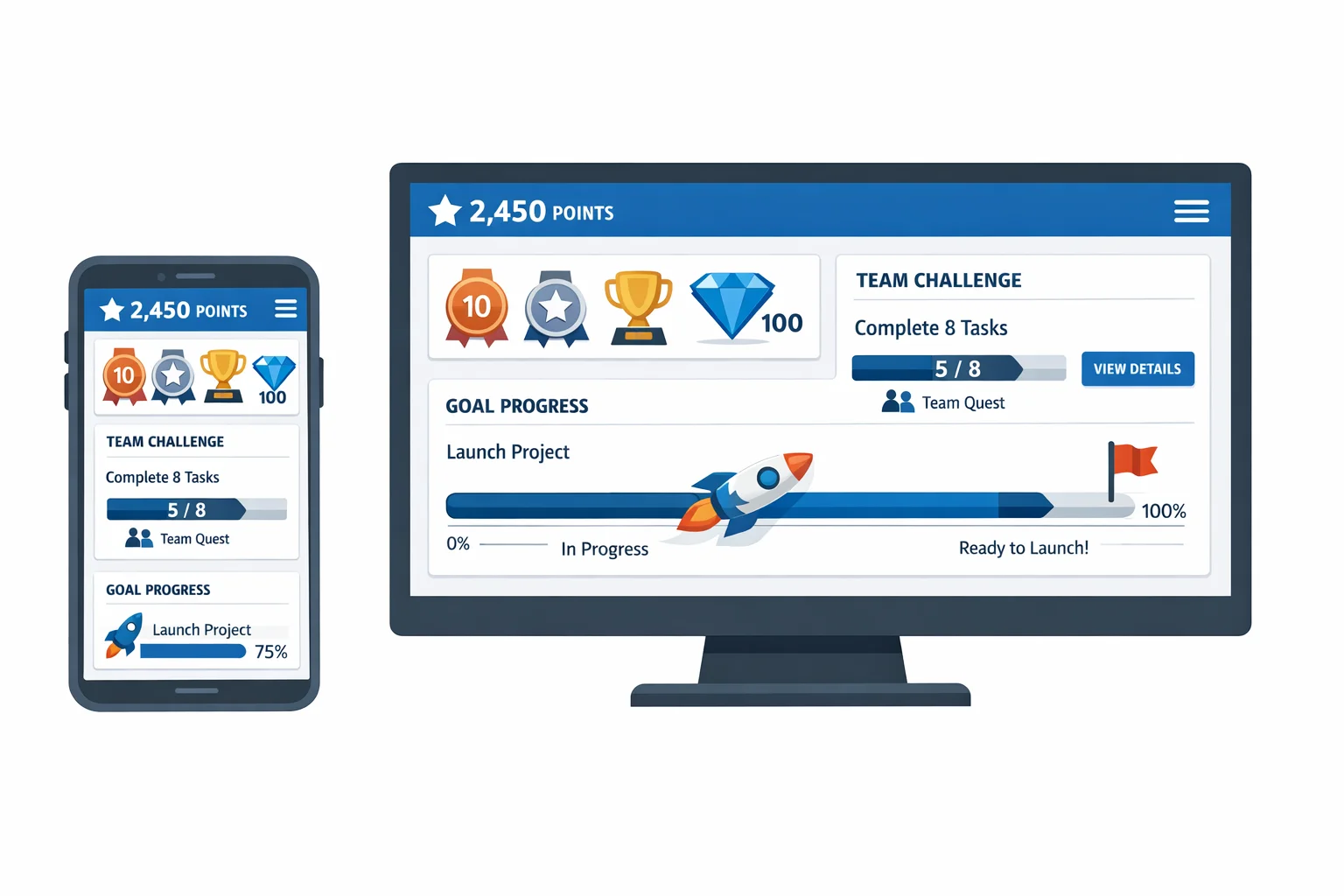
Scavify’s app is often used this way: you can push challenges to small teams, collect evidence, and automate scoring while keeping attention on the room, not the screen. Example challenge prompts that fit a murder mystery dinner:
Browser-only guests can still play; the experience works on phones without an app install. Scale flexibly from a table of eight to a ballroom of hundreds.
Spend where it will be noticed: a single focal prop or an atmospheric entrance usually beats ten small items scattered everywhere.
Plan for roughly two and a half to three hours, including arrival, three short investigation rounds, accusations, and the reveal. Shorter with a cocktail format, a bit longer with a seated multi-course dinner.
Smaller groups make participation easier, but the right structure lets large groups work too. Keep teams small, give each role an exclusive task, and duplicate critical clues to avoid bottlenecks.
Both work. Seated dinners benefit from short roaming windows between courses. Cocktail formats are ideal for free movement; just anchor the room with one or two focal stations so people naturally circulate.
Kits save time and ensure pacing. Write your own when you have strong inside references or a venue you want to showcase. A hybrid approach is common: use a kit’s spine and swap in custom clues and names.
Give every character a visible badge and a simple opening question to ask others. Announce when clues will drop and when accusations happen. Clear beats calm nerves.
Ensure clear paths, varied seating heights, readable font sizes, and optional participation modes that don’t require constant movement. If you’re in a public venue, align plans with the ADA Standards for Accessible Design. (ada.gov)
Script one undeniable “aha” moment and slow down the reveal. Close with a satisfying beat: a confession, a visual prop reveal, and quick awards. The peak-end research suggests these closing moments shape how the whole night is remembered. A readable evidence summary: peak-end effect in clinical studies. (pubmed.ncbi.nlm.nih.gov)
Yes. Use phones for timed clue drops, QR codes on props, and photo/video submissions as evidence. Keep screens down during conversations and reveals so the room stays alive.
Design your murder mystery dinner like a story with clear beats and generous on-ramps for participation. If you’re planning larger team events, orientations, or conference activations, the same mechanics scale: small teams, visible contributions, timed reveals, and a finale guests will talk about on the ride home. For a grounding primer on formats, skim the murder mystery game overview, borrow logistics from Eventbrite’s planning checklist, and, if you want help pushing clues and collecting evidence smoothly, bring in a light digital layer. One strong ending later, you’ll see why this format keeps spreading.