Solutions
Your first hunt, live this afternoon.
Free to start · No download for participants
Explore practical ideas, real examples, and simple tips to make your next group activity more engaging, useful, and fun.

Strong teams don’t wait for chemistry to show up. They create the conditions for it. The fastest path isn’t sentimental speeches or mandatory fun. It’s short, purposeful activities that nudge people to communicate, solve something together, share small risks, and feel seen.
Trust isn’t a vibe. It’s a set of repeatable conditions: people speak up, ask for help, take smart risks, and recover from mistakes without fear. Google’s multi-year Project Aristotle found that teams perform best when psychological safety leads the way. Their public guide lays it out plainly: safety first, then dependability, structure, meaning, and impact. See the full breakdown in Google’s Project Aristotle guide on team effectiveness.
In sport, the research is just as clear. A 2024 meta-analysis in Frontiers in Psychology found that structured team-building interventions reliably strengthen cohesion in sports teams, with especially strong effects on task-focused connection. The author also notes that programs running for more than a couple of weeks tend to deepen gains, which is a useful nudge to make these ideas a rhythm, not a one-off. Read the study summary here: team-building interventions increase team cohesion in sport.
One more pattern worth using: synchronized movement elevates cooperation. You don’t need a marching band. Even simple, shared rhythms prime connection. The classic finding is captured in Wiltermuth and Heath’s study showing that acting in synchrony increases cooperation by strengthening social attachment. A short overview is available on PubMed: synchrony and cooperation.
At the elite level, this is mainstream. The United States Olympic & Paralympic Committee treats mental performance and team connection as core to competitive success, not an add-on. Their public page captures the approach: USOPC mental health and performance.
Each idea is built for quick setup, high participation, and a fast debrief. Adapt freely.
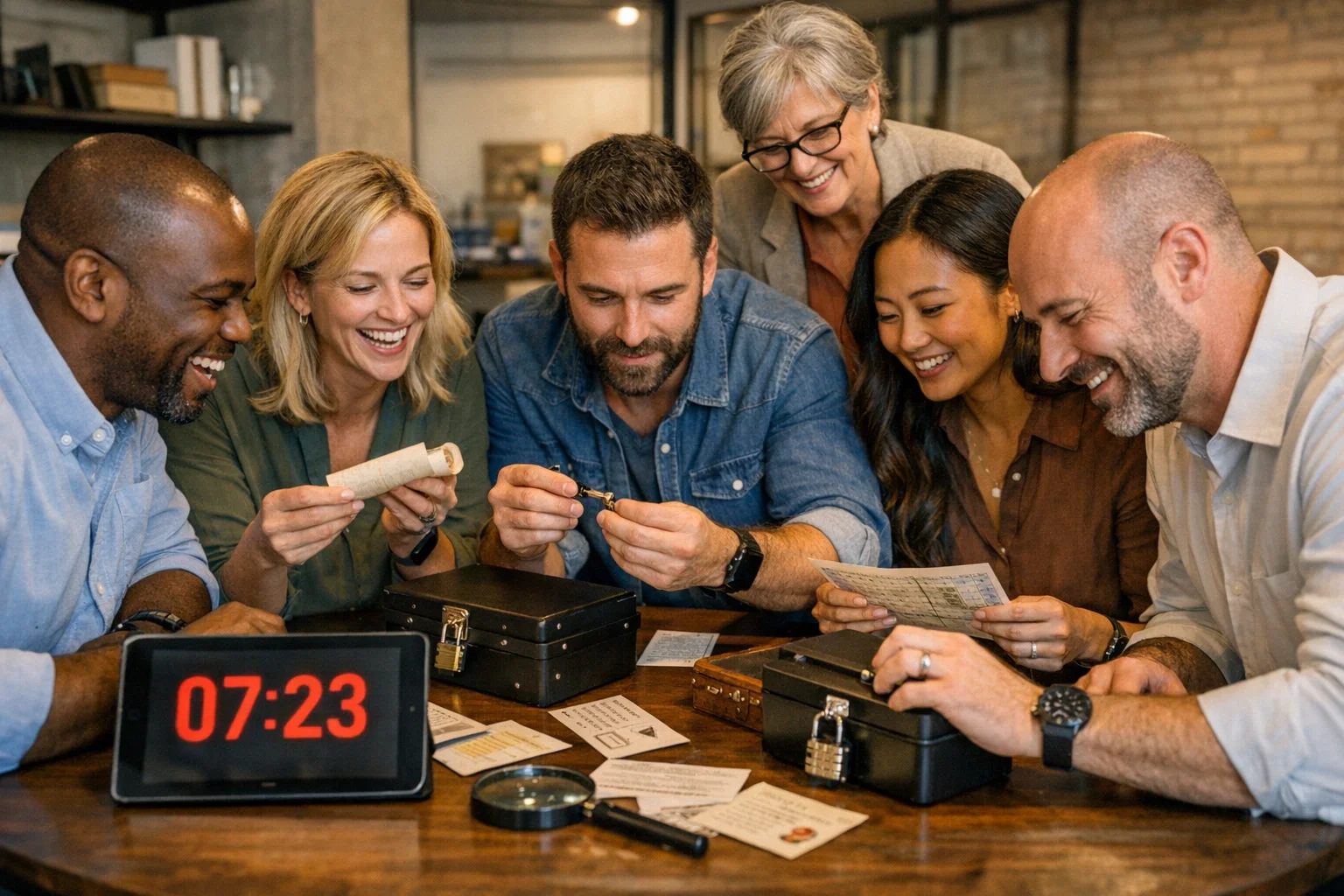
What it is: A burst of location, photo, and quiz challenges that move players through your facility or field while solving small tasks together.
How to run it: Form pods, set a tight window, and assign missions that touch team values, playbook knowledge, and campus/club history. Keep scoring visible to add light urgency.
Why it works: Short challenges trigger communication, shared problem solving, and a few wins in quick succession. That combo accelerates trust.
If you want to run this on phones without extra setup, Scavify’s app makes challenges, points, and live leaderboards simple to spin up, and it works in a browser if some players don’t want to download an app.
Sample mission ideas:
What it is: A quick circle where each athlete tells the short story behind their jersey number or nickname.
How to run it: Prompt with “What’s the story behind your number?” Keep it tight and move.
Why it works: Personal, low risk, and surprising. You’ll hear motivations you can coach to.
What it is: A scrimmage with one temporary rule that forces communication.
How to run it: Examples: two-touch limit, weak-hand only for the first sequence, or every call must be echoed by two teammates.
Why it works: Simple constraints surface lapses in talk and spacing. The fix becomes collective, not individual.
What it is: Rotating partner walks around the field or facility with one useful prompt.
How to run it: Pair up. Round one: “What’s one thing you do that helps the team?” Round two: “What’s one thing you need from teammates?” Rotate.
Why it works: Low eye contact, light movement, honest answers. The room relaxes and opens.
What it is: A playful warmup using claps, snaps, or steps in simple patterns.
How to run it: Teach a 10–20 second rhythm, then play a tag game where “safe” zones require the rhythm in sync.
Why it works: Shared rhythm builds connection fast. There’s good evidence that synchrony increases cooperation; prime the pump before you coach detail. For background, see the PubMed summary of synchrony and cooperation.
What it is: Bingo cards with tactical cues or habits you want to spot on film.
How to run it: Players watch together, mark instances, and call a quick freeze when they hit a row. Micro‑discussion, then roll.
Why it works: Keeps attention active and turns film into a treasure hunt for shared language.
What it is: A rapid-fire drill where every rep must include a verbal cue and an assist.
How to run it: In small groups, the ball (or puck) can only move after a clear, called cue. Celebrate the best audible of the day.
Why it works: Makes communication the visible win, not just the score.
What it is: Teammates briefly coach a skill they know well to someone in a different role.
How to run it: A defender teaches footwork to a striker, a libero explains back-row reads, a setter teaches hand shape to a middle. Quick teach-backs.
Why it works: Empathy plus mastery check. You’ll spot language gaps and fix them on the spot.
What it is: A team-defined, two-step reset after errors.
How to run it: Agree on a quick cue (tap, word, glance), then a next-action focus rule (e.g., “name the next job”). Practice it.
Why it works: Reduces fear, speeds recovery, and models safety. It aligns with what high-performing teams prioritize in the Project Aristotle guide around psychological safety and dependability.
What it is: Capture candid photos that show your values in practice.
How to run it: Assign each pod a value (effort, poise, unselfishness). They stage a single still image that represents it. Quick gallery walk; team votes for the most accurate.
Why it works: Forces a concrete definition. The picture becomes a coaching shorthand for the rest of the season.
What it is: Micro-huddles to call three actions in a row before a rep.
How to run it: Before a drill, groups quickly script call-cue-execute three times. After, they grade clarity, not outcome.
Why it works: Builds shared mental models under a little time pressure.
What it is: A campus or facility orientation game led by vets.
How to run it: Veterans build a “map” of must-know locations, stories, and unwritten rules. Rookies navigate with them, completing tiny tasks.
Why it works: Transfers culture fast and gives veterans a pro-social leadership role.
What it is: A short, local volunteer effort with a visible finish.
How to run it: Choose something close to the facility with a task you can complete in one session. End with a team reflection: what did we do well together here that belongs in games?
Why it works: Builds pride and perspective while exercising the same coordination muscles you need on the field.
What it is: Each player adds one song for pregame, one for recovery.
How to run it: Build a shared playlist and let a new person DJ warmup each time.
Why it works: Light, fast way to humanize everyone and create tiny rituals.
What it is: Captains discuss a live topic in the middle while teammates observe, then swap.
How to run it: Start with a prompt like “What does great bench energy look like for us?” Observers capture themes, then jump in with one suggestion each.
Why it works: Models transparent leadership and gives the whole team a common language.
What it is: In any complex drill, any call must be echoed by two voices before play resumes.
How to run it: Appoint a player to listen for silent calls and stop play if the echo doesn’t happen.
Why it works: Forces clarity and distributes responsibility for communication.
What it is: A simple board with 2–3 team behaviors you’re training this week and quick check-ins to keep them alive.
How to run it: Put the behaviors where people see them daily. After practice, do a 90‑second “which one showed up today and how?” The cadence matters more than the artifact.
Why it works: Clear structure, visible targets, and consistent reflection. It maps to the “structure and clarity” pillar from Google’s Project Aristotle guide.
In our experience, teams that treat connection like a skill session see the payoff show up in the hard moments: end-of-game huddles sound different, benches stay alive, and recoveries snap faster. It’s not magic. It’s design.
Short, high-participation activities with a single goal work best: constraint scrimmages, micro-mission scavenger hunts, walk-and-talk rotations, assist chains, and mistake recovery rituals. They create shared reps, not speeches.
Think “little and often.” One short, targeted activity folded into a normal practice each week reliably builds cohesion without stealing training time.
Both, if they target task behaviors. Research in sport shows team-building interventions strengthen cohesion, especially task cohesion, which supports execution under pressure. See this summary of team-building effects on cohesion.
Lower the social risk and move. Pair walks, small pods, and clear roles help. Protect voices: psychological safety is the base layer, as Google’s Project Aristotle guide shows.
Model the behavior you want: invite quieter voices, echo calls, admit small mistakes, and push the debrief. Captains who facilitate instead of dominate speed up trust.
Used lightly, yes. Shared rhythm can prime cooperation and connection. The PubMed overview of synchrony and cooperation captures why.
Pick one 3–5 minute activity per practice: call-and-echo, number stories, or a tiny scavenger hunt with handwritten clues. Keep instructions simple and end with one sentence: “What will we do differently next rep?”
Right alongside physical training. Elite programs treat it as core infrastructure. For a model of that mindset, skim the USOPC mental health and performance page.
If you want an easy on-ramp for the scavenger hunt format, Scavify can run the missions, points, and photos without adding work for coaches. It’s built for quick launches and scales from small clubs to large programs. Use it when the activity itself should just work, so you can focus on the debrief.