Solutions
Your first hunt, live this afternoon.
Free to start · No download for participants
Discover practical team building ideas, examples, and activities that boost morale, communication, and collaboration.
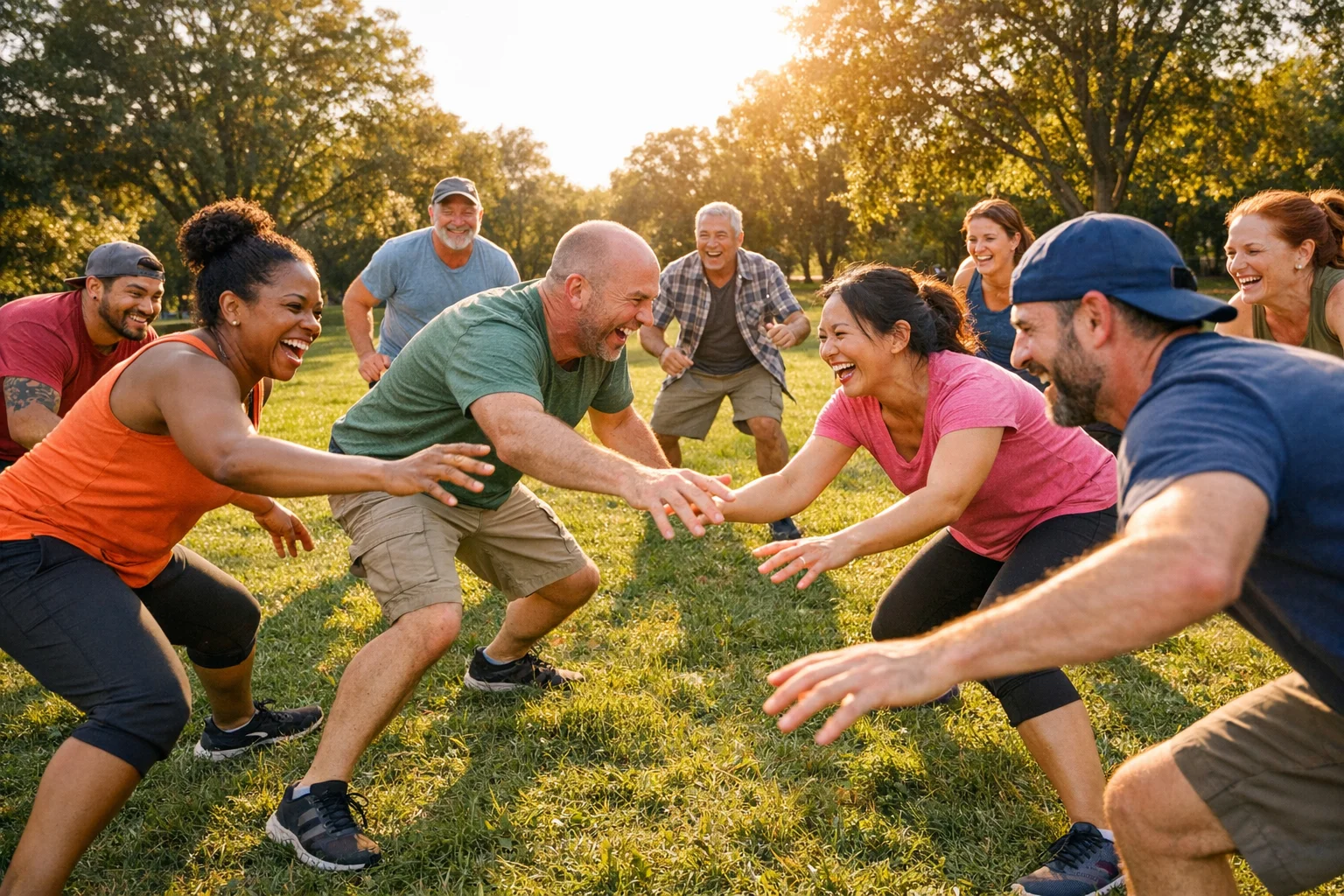
You’ve got people, a patch of outdoor space, and maybe an hour. Perfect. No props, no budget, no baggage. The right constraint forces creativity and participation.
The list below gives you 15 zero‑equipment outdoor team building games that reliably work with adults. Each one is quick to explain, scales to different group sizes, and quietly builds real collaboration skills. Bonus: being outdoors tends to improve mood and reduce stress, which helps participation feel natural instead of forced. See the research on the mental health benefits of time in nature for why that matters. Nurtured by nature overview. (apa.org)
In our experience, the games are the vehicle; the facilitation is the engine. A few patterns show up every time:
Each game below includes what it builds, how to play, smart variations, and a quick debrief prompt. Keep rounds short. Stop while energy is peaking.
Builds: Awareness, agility, quick decision‑making.
How to play: One tagger tries to step on others’ shadows. Sun angle changes the difficulty. Switch taggers often.
Variations: Play in pairs holding hands. Try “freeze on tag,” unfreeze by a teammate’s high‑five.
Debrief: What helped you track moving targets without colliding?
Builds: Listening, timing, shared attention.
How to play: The group counts aloud from 1 upward. Anyone can say the next number, but if two people speak at once you restart at 1. Don’t pre‑plan.
Variations: Close eyes. Add a gentle clap instead of speaking for odd numbers.
Debrief: What patterns did you notice as the group synced up? For more structure ideas, see the Playworks approach to simple no‑prop games. Playworks group count. (sparkplay.playworks.org)
Builds: Communication, patience, low‑stakes problem‑solving.
How to play: Everyone stands in a circle, reaches in, and grabs two different hands. Without letting go, untangle into a circle.
Variations: No talking for the first minute. Appoint an “observer coach” who can only ask questions.
Debrief: What changed when you switched from tugging to coordinating?
Builds: Reaction time, clear signaling, friendly competition.
How to play: Two lines face each other across a midline: Crows and Cranes. Facilitator calls “Crows” or “Cranes.” Called team chases; the other tries to reach a safety line.
Variations: Swap team names mid‑round to test listening.
Debrief: How did you avoid false starts and stay ready?
Builds: Quick rapport across the whole group.
How to play: Everyone pairs up and plays one RPS. Winners find winners; others cheer for their former opponent. Finish with one final match cheered by all.
Variations: Make the cheer specific like “Go Blue!” to build identity.
Debrief: What made losing still feel involved?
Builds: Clarity under pressure, shared vocabulary, following and leading.
How to play: Call commands like “Port, Starboard, Bow, Stern.” People run to the matching edge of the play area. Add actions like “Salute” or “Crew of three.”
Variations: Let participants invent safe new commands between rounds.
Debrief: Which commands caused the most confusion and why?
Builds: Connection, empathy, low‑risk self‑disclosure.
How to play: Call statements that might be true for some (“Has a pet,” “Prefers tea,” “Works early”). Those who agree jog to a marked side then reset.
Variations: Invite participants to suggest the next statement.
Debrief: Which prompts sparked the most conversation afterward?
Builds: Team coordination, spatial awareness.
How to play: Start with two taggers linked at the elbow. When they tag someone, the “blob” grows. Only the linked ends can tag. Keep pace moderate.
Variations: Add “rescuers” who can briefly unfreeze by tagging knees.
Debrief: What made the blob effective or clumsy?
Builds: Focus, chain‑of‑command timing, anticipation.
How to play: Teams form lines holding hands. A silent hand squeeze travels from front to back. Last person races to the front to start the next pulse. First team to cycle wins.
Variations: Add a decoy visual to test focus.
Debrief: How did you keep speed without breaking the chain?
Builds: Nonverbal communication, planning.
How to play: Without speaking, line up by birth month, shoe size, commuting distance, or length of first name. Time each attempt for progress, not pressure.
Variations: Eyes closed for the first attempt, then open.
Debrief: Which nonverbal signals worked best?
Builds: Strategy, role clarity.
How to play: Mark three zones by natural features. Taggers must be in Zone A to tag, defenders in B to block paths without contact, runners in C to score by entering A. Rotate roles.
Variations: Shrink or expand zones between rounds to force re‑planning.
Debrief: How did changing the field change your plan?
Builds: Attention, agility, trust.
How to play: Everyone stands in a wide circle. Call two names. Those two must switch places while the circle tries to gently block paths without contact.
Variations: Call roles instead of names like “Anyone who has siblings.”
Debrief: What helped you commit to a route quickly?
Builds: Collaboration between sub‑teams, clarity of cues.
How to play: Half the group forms static “obstacles” using body shapes (bridges, gates). The other half must travel the course over, under, or around. Swap roles.
Variations: Set a quiet rhythm count the movers must match.
Debrief: Where did movement bog down and why?
Builds: Creativity, baton‑style collaboration.
How to play: Two teams start a story one sentence at a time. Person 1 runs to a line and back, delivers a sentence, tags the next. Keep it coherent, not fast.
Variations: Genre prompts: thriller, travelogue, mock press release.
Debrief: What kept the story consistent as people changed?
Builds: Eye contact, reading cues, shared laughter.
How to play: Everyone in a circle looks down. On “3,” look up at a random person. If two people lock eyes, they both step out and share a fun fact while others reset.
Variations: Swap “fun fact” for a quick “high‑five and you’re back in.”
Debrief: How did randomness change who you interacted with?
If you want the science on why being outside helps, there’s plenty. Meta‑analyses show nature‑based activities link to improved well‑being, lower stress, and better mood. Systematic review on outdoor nature‑based interventions. (pmc.ncbi.nlm.nih.gov)
Some patterns we keep seeing in the field:
For more simple, no‑prop frameworks used in schools and camps, browse a proven game library and adapt for adults. Playworks game library. (playworks.org)
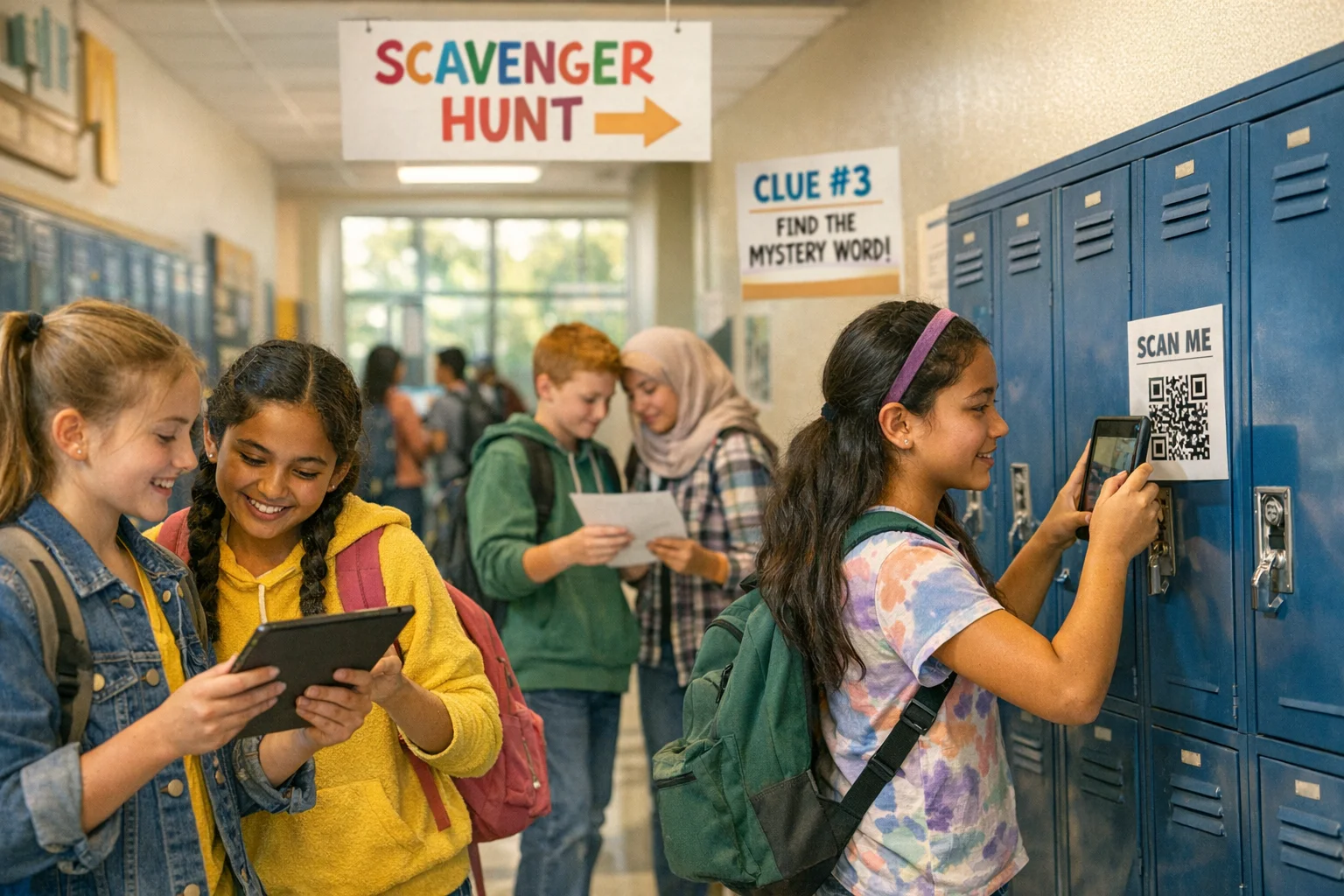
Sometimes you want the camaraderie of shared challenges without carrying supplies. App‑based hunts make that easy with photo, video, GPS check‑ins, and quick Q&A prompts you can run anywhere. That’s Scavify’s wheelhouse, and it works outdoors with nothing but phones.
Here are sample zero‑equipment prompts you can drop into a hunt today:
If you want to scale this, Scavify automates scoring, photo/video galleries, and leaderboards so you can focus on facilitation instead of tally marks.
Group Count, Human Knot, Captain’s Orders, Blob Tag, and Silent Line‑Up deliver consistently. They’re fast to teach, scale to big groups, and emphasize communication over athleticism.
Offer opt‑in roles (caller, observer coach) and run shorter rounds. Use games that rely on listening or quick decisions rather than sprinting. Let people self‑select intensity by adjusting field size and pacing.
There’s no hard cap. Most games scale as long as you keep instructions crisp, define boundaries, and create sub‑areas or parallel rounds when headcount climbs.
A minute or two. Ask one focused question about what shifted in strategy or communication, then move. The momentum between rounds is part of the engagement.
Flip the objective to cooperative for a round. For example, in Group Count, aim for a shared high score before a restart. Reset language and tone from the facilitator help immediately.
Hydration, shade, and pacing. Build in short breaks and rotate intensity, especially in heat. These are aligned with widely accepted outdoor work safety recommendations. NIOSH heat guidance. (cdc.gov)
Explain the point in one sentence, demo once, and start. Use a loud, neutral “pause” call to fix rules mid‑flow instead of front‑loading every detail.
Skip the speeches. Run one quick, clever round that rewards listening or timing, then ask a single debrief question. Adults recognize usefulness faster than they admit. Real safety and clarity help too. Psychological safety primer. (hbr.org)