Solutions
Your first hunt, live this afternoon.
Free to start · No download for participants
Explore standout local team building ideas with indoor, outdoor, and low-lift options for company events and offsites.
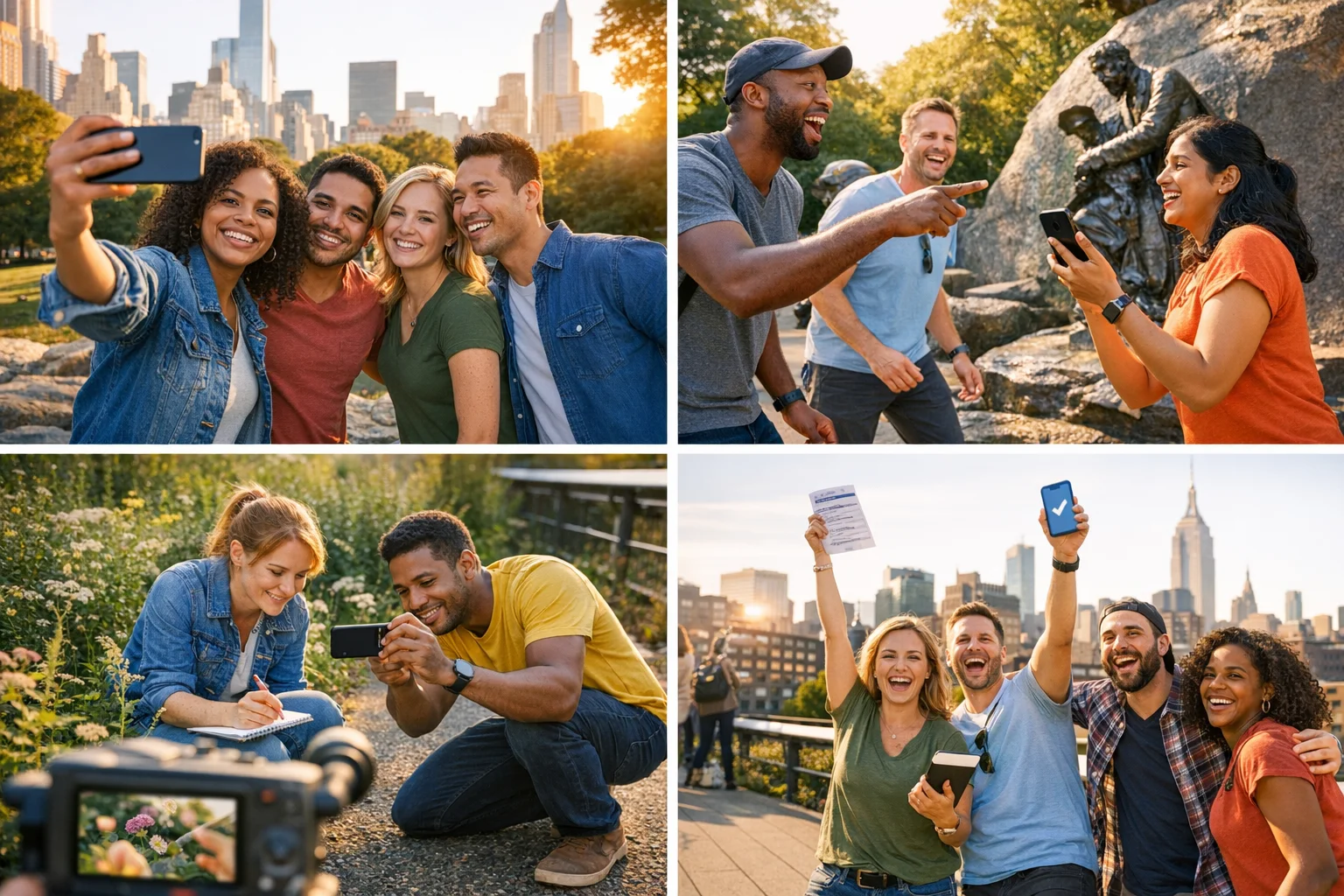
New York rewards teams that get out of the conference room and into the city. The trick is picking activities that create real interaction, not manufactured hype. Below are 25 proven, NYC‑specific options with setup notes, tradeoffs, and small tweaks that quietly make them work.
Pick for energy and logistics first, then theme. Proximity to a subway hub, a natural place to debrief, and something to look at or do every 90 seconds generally beats slick concepts.
Two more filters help: - Interaction density. How many meaningful 1:1s will this create per hour? - Friction. How much coordination, gear, or specialized skill does it demand?
If you want a research‑backed gut check, aim for formats that foster clear goals, light structure, and a shared mindset. That’s the backbone of effective collaboration outlined in this Harvard Business Review analysis of the conditions for great teamwork. (hbr.org)
Neighborhood photo quest (SoHo, West Village, or DUMBO). Split into small crews, follow simple prompts, and reconvene with a five‑shot highlight reel. Best for: cross‑team mingling. Pro tip: end near an easy debrief spot with standing room.
Museum highlights challenge at The Met. Pair people up to find 6–8 works tied to a theme, then share one-minute takes in the American Wing courtyard. Use The Met’s group visit options for simple scheduling. Rain‑proof and high‑signal. (metmuseum.org)
Harbor cruise debrief. A 1–2 hour sightseeing loop gives you skyline views and just enough time for a round of rapid retros. Book through Circle Line’s sightseeing cruises. Zero walking. High morale. (circleline.com)
High Line urban ecology walk. Start at Gansevoort, end at Hudson Yards, and assign each group a “pattern to spot” (native plants, adaptive reuse, public art). Low‑lift. Keep the talking light; let the city do the heavy lifting.
Central Park mini‑field day. Rotate teams through low‑impact stations: relay, ring toss, team trivia. For larger groups, review the NYC Parks Special Event Permit basics first. Great spring/fall play. (nyceventpermits.nyc.gov)
Chelsea gallery walk with three‑slide talks. Give each trio one gallery to interpret. Three slides, two minutes, one take. Keeps attention moving and conversations real.
Brooklyn Bridge walk‑and‑talk. Outbound with prompts, inbound with pairs swapped. End at a pizzeria with pre‑ordered pies. Simple, iconic, and weather‑sensitive.
Queens food crawl (Jackson Heights). Assign cuisine categories, set a time cap, and collect short clips of “best bite” arguments. Crowd favorite. Minimal prep.
Hudson River Park sunset picnic. One blanket per squad, one prompt per course. Quick gratitude round as the sun drops. Add hot chocolate in colder months.
Industry City maker sprint. Mix a quick tour of artisans with a 45‑minute build using basic materials. Outcome: laughs and a table full of weird prototypes.
Escape room showdown (Midtown or Flatiron). Stagger start times for multiple rooms and compare approaches after. Tip: keep the post‑mortem playful, not post‑game analysis.
Chinatown dumpling tour + folding demo. Rotate between tastings and a short folding lesson in a private nook. Hands busy, conversation easy.
Governors Island day. Bikes, art installations, and shade. Set a “five‑thing photo set” brief and regroup on the lawns. Summer gold.
Bryant Park seasonal circuit. In winter: curling or skating. In summer: pétanque, putting, or reading room “book speed‑dating.” Flexible, central, easy to scale.
Chelsea Piers sampler. Pick a small set: bouldering lite, bowling, or golf sims. Keep rotations tight to keep energy high. Works for mixed ability levels.
Street art study in Bushwick. Short guided look, then a sidewalk chalk reinterpretation challenge. Creative without the cringe.
Union Square Greenmarket cook‑off (no‑cook edition). Buy 6 ingredients in 20 minutes; make the best composed bites on a picnic table. Constraint sparks collaboration.
Prospect Park compass. Four check‑ins around the park; each team picks the route and records why. Reconvene with “what we noticed” instead of “what we did.” Reflective and active.
Harlem culture stroll. Apollo exterior, local eateries, neighborhood history stories. Pair people who don’t usually work together. Conversation‑first format.
Rooftop darts or mini‑golf. Light competition, lots of side chat. Noise can spike; pick off‑peak time slots.
Lower East Side “origin stories” walk. Teams collect three photos that represent invention, migration, and reinvention. Share why. Short, thoughtful, and mobile.
Staten Island Ferry thinking lap. Free ride, great views. Use a single prompt: “What should we stop doing?” Jot answers, debrief back in Battery Park. Cheap clarity.
Coney Island boardwalk micro‑games. Toss, trivia, and a 10‑item “joy hunt.” Cap it with sunset on the pier. Summer only, but memorable.
Volunteer power hour. Sort donations, pack kits, or tidy a community garden. Keep it specific and short, then talk about what made it work. Meaning without grandstanding.
Five‑borough photo relay. Each micro‑team covers one stop on a pre‑set line (e.g., 7 train). Merge a shared album into a five‑minute story. Distributed teams love this.
In our experience, most teams don’t need spectacle. They need a clear brief, a natural setting, and just enough structure to keep people moving and mixing.
Scavify built its reputation helping teams turn neighborhoods into interactive playgrounds in minutes. For NYC, that often looks like a browser‑or‑app‑based hunt that runs across the High Line, Chelsea Market, or the Village, with auto‑scoring, live leaderboards, and photo/video prompts teams love reviewing together afterward. It launches fast, scales cleanly, and keeps admins out of spreadsheet hell.
A handful of example prompts that play well in Manhattan:
The best hunts use short, clever prompts, light constraints, and a tidy debrief spot. The format is forgiving, and the city supplies the set pieces.
Sometimes all you have is an hour and a few DM threads. These work anyway:
Museums with built‑in conversation starters (The Met, Whitney, MoMA), bowling or darts, cooking classes, escape rooms, and art studio sprints all work. They’re walkable, easy to scale, and naturally push people to mingle. Keep sessions under 90 minutes, then debrief somewhere with snacks.
Often, yes for larger groups or when you want to reserve space. The city outlines how Special Event Permits reserve part of a park for your event and what the application involves. Start with the official NYC Parks Special Event Permit page. (nyceventpermits.nyc.gov)
A neighborhood photo quest, micro‑hunt in a museum, a structured stroll on the High Line, or a quick harbor loop all fit. The key is a crisp brief and one planned debrief location so you don’t lose time deciding where to land.
Pick venues with seating and shade, minimize stairs, and keep distances short. Pair walking formats with a parallel “base camp” option so no one feels sidelined. Museums, short cruises, and park picnics with lightweight games are safe bets.
Break into squads of 5–7 with their own brief and route, then reconvene for a gallery‑style share‑out. App‑based scavenger hunts excel here because they add light structure and give everyone something to contribute, whether they’re talkers or quiet operators.
For morale and conversation density, yes. The views do the social work, ambient noise keeps things casual, and the timeline is naturally contained. If you want a set‑it‑and‑forget‑it option, Circle Line’s sightseeing routes are dependable. (circleline.com)
A couple of weeks is common, and earlier is better for private or guided tours. Start with The Met’s group visit guidance to see what’s typical, then mirror that lead time at other institutions. (metmuseum.org)
Give people a simple, shared goal and a setting that rewards curiosity. That structure builds the kind of norms, clarity, and joint focus that research connects to better teamwork, not just better outings. See the HBR synthesis on great teamwork conditions for a useful mental model. (hbr.org)
A last pattern we keep seeing: the groups that plan the debrief with as much intention as the activity always leave with more than memories. They leave with a few decisions, a few laughs, and a little momentum for Monday.