Solutions
Your first hunt, live this afternoon.
Free to start · No download for participants
Explore student engagement ideas that increase participation, spark curiosity, and make learning more active.

If you’ve ever asked a question and watched the same three hands float up, this is for you. These 12 strategies are the ones we keep seeing lift participation, sharpen thinking, and make learning feel alive without theatrics.
Pick three strategies. Run them consistently for two weeks. Adjust the knobs (time windows, pairing rules, prompt types) rather than swapping tactics daily. Most engagement issues are systems issues, not student issues.
A pattern we keep seeing: TPS fizzles when prompts are vague, pairing is random chaos, or timing drifts.
Make it crisp:
Two upgrades that help:
For additional framing and variations, see a concise overview of TPS structures from the Harvard Bok Center’s teaching resource. (bokcenter.harvard.edu)
Cold call works when it’s predictable, not punitive. Script the culture: “We’ll all get 60 seconds to jot ideas, then I’ll invite a few names so everyone prepares.” Announce the pattern before the first use of the year. Keep your tone matter‑of‑fact; praise the thinking move, not the person.
If you want a simple primer and training materials, the “Cold Call” write‑up from Teach Like a Champion is straightforward and aligns with what we see in practice. (teachlikeachampion.org)
Short, no‑grade recall bursts beat re‑reading. Two minutes. Two to five items. Then an immediate pair‑check or quick reveal. The goal isn’t points; it’s pulling information from memory so it sticks.
The research case is strong. A landmark study showed that repeated testing (with no feedback) led to much better long‑term retention than repeated studying when the final assessment happened days later. That’s why these sprints pay off. See the original Psychological Science paper on test‑enhanced learning. (journals.sagepub.com)
Implementation nuance:
Most teachers wait under a second. Three quiet beats changes everything: more students speak, answers get longer, and the tone shifts from guessing to reasoning. The trick is to make the pause visible: ask, step to the side, look down at your notepad, then scan up slowly. Students learn the silence means “your turn.”
Common add‑on: after a student responds, delay your evaluation. “Let’s sit with that for a moment. Who can add or challenge?” That second pause invites peers in.
Vagueness kills participation. Post the target in student language and show a quick exemplar. A single‑point rubric works: one column of success criteria, with room for “evidence you met it” and “next step.” When students know what “good” looks like, more hands go up because the risk feels bounded.
Build a 60‑second wrapper around tasks: before, students write how they’ll approach the problem; mid‑way, they note one check; after, they capture what they’d do differently next time. It sounds small. It compounds.
For evidence‑informed guidance on teaching metacognition and self‑regulated learning, the Education Endowment Foundation’s summary and guidance materials are a practical starting point. See the EEF’s overview of metacognition and self‑regulation. (educationendowmentfoundation.org.uk)
Prompts that travel well:
Choice boosts buy‑in when it’s bounded. Offer two problem sets at different challenge levels, three prompt options, or let students pick the representation (diagram, paragraph, or audio note) for the same objective. You still own the success criteria. Students own the path.
Micro‑choice also helps classroom flow: fewer side debates about fairness, more time on task.
Most classes block practice by topic. Interleaving mixes related problem types so students must identify the strategy, not just execute it. Keep it simple: in math, mingle four types of problems in the weekly set; in history, blend primary‑source analysis with quick chronology items; in science, rotate representations.
Pair interleaving with brief retrieval sprints and you get durable learning. Classroom studies and reviews continue to find advantages for mixed practice over blocked practice, especially after a delay.
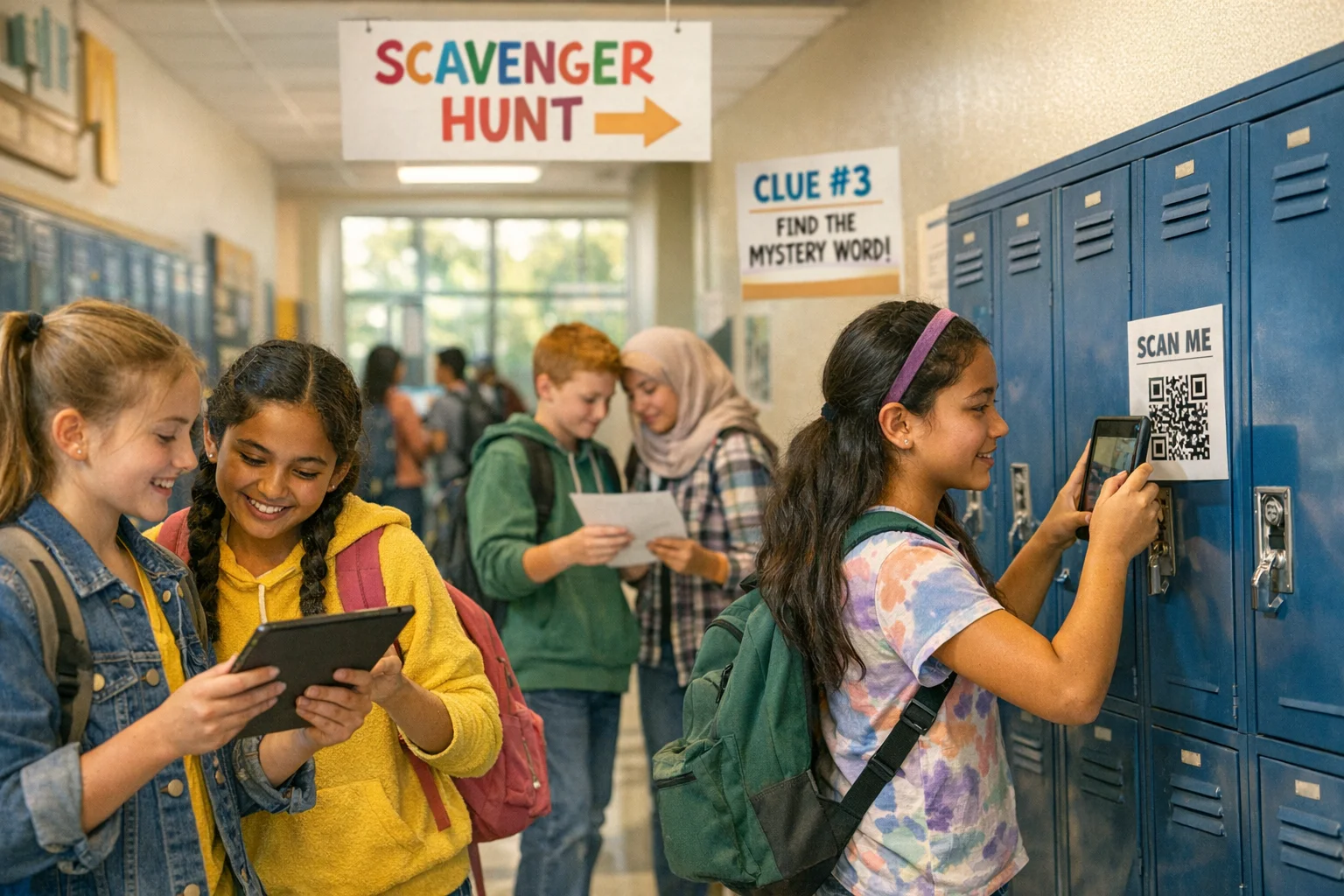
Attention drops when everything happens from the desk. Short tasks that require moving, noticing, or capturing evidence bring the room back to life. If you’re running orientation, onboarding, or a campus activation, a mobile challenge format makes this dead simple at scale. That’s the space Scavify builds for, but the principles work fine in a single classroom too.
Here are five class‑friendly challenges you can adapt today:
Keep the tone light, the bar clear, and the timebox tight.
When tasks are too easy, engagement turns into auto‑pilot. Too hard, and students check out. Aim for “I can do this with a nudge.” Provide scaffolds that fade: a partially worked example, a checklist, a bank of sentence starters. Then remove supports across the week.
Look for the posture change: eyes on notes less, eyes on the task more.
Pose a conceptual question with plausible distractors. Students vote individually, then discuss in pairs, then vote again. The point isn’t the clickers; it’s the social comparison and explanation. You’ll see the room lean in.
Keep the cadence brisk. Show the before/after vote split and ask, “What convinced you to change your mind?”
Good exit tickets are diagnostic, not decorative. Ask for a one‑minute summary in 12 words, a worked example with one deliberate mistake, or “the question you’d ask tomorrow’s class.”
Sort them into three piles after class: green (move on), yellow (reteach quickly), red (reteach fully). Close the loop the next day so students see their feedback steering the lesson.
Week 1
Day 1: Set norms for TPS, wait time, and warm call. Model each.
Day 2–4: Open with a 2‑minute retrieval sprint; run TPS once per class; close with an exit ticket.
Day 5: Spiral review set that interleaves 3–4 prior skills; celebrate process quality, not just correctness.
Week 2
Day 1–3: Add metacognition wrappers to one task per day; keep retrieval sprints.
Day 4: Run a micro‑mission (movement‑based) tied to this week’s objective.
Day 5: Student‑led share‑outs using posted success criteria; collect exit tickets to tune next week.
The strongest evidence cluster favors active learning routines (collaborative problem‑solving, frequent checks for understanding, retrieval practice) over passive exposure. Short, repeated activities that ask students to think, speak, and produce tend to outperform longer lectures on both achievement and attention. (pmc.ncbi.nlm.nih.gov)
Briefly and often. One to three prompts most days is enough to reinforce memory without hijacking class time. The learning benefit shows up especially after a delay of days, not minutes. (journals.sagepub.com)
It can be if it’s surprise, high‑stakes, or used as discipline. Make it predictable: silent write time first, then warm call with a calm tone. Praise the reasoning, invite additions, and move on. Predictability plus wait time tends to lower anxiety and raise participation.
Longer than feels comfortable. Around three quiet beats after a question, and another brief pause after a student answer, reliably improves the quality and quantity of responses. Build the pause into your body language so it doesn’t feel like dead air.
Pre‑assign partners or use quick proximity pairing. Constrain the prompt (“two causes, one implication”), post the timer, and choose a few pairs to report out. Keep it to a few minutes so energy stays up. For more structure ideas, skim the Harvard Bok Center’s overview. (bokcenter.harvard.edu)
Use UDL principles: offer multiple ways to engage with the same objective (text + diagram, discussion + quick write, worked example + transfer problem). Keep the success criteria identical even as the path flexes. The CAST guidelines are a helpful checklist. (udlguidelines.cast.org)
Use micro‑missions with clear learning targets, short timeboxes, and quick reflection. If you manage larger events or orientations, a mobile challenge platform like Scavify removes the manual admin so you can focus on designing meaningful prompts instead of herding logistics.