Solutions
Your first hunt, live this afternoon.
Free to start · No download for participants
Compare team building activities in Los Angeles by budget, group size, weather, and goal, with standout indoor, outdoor, and app-led options. Plan smarter.
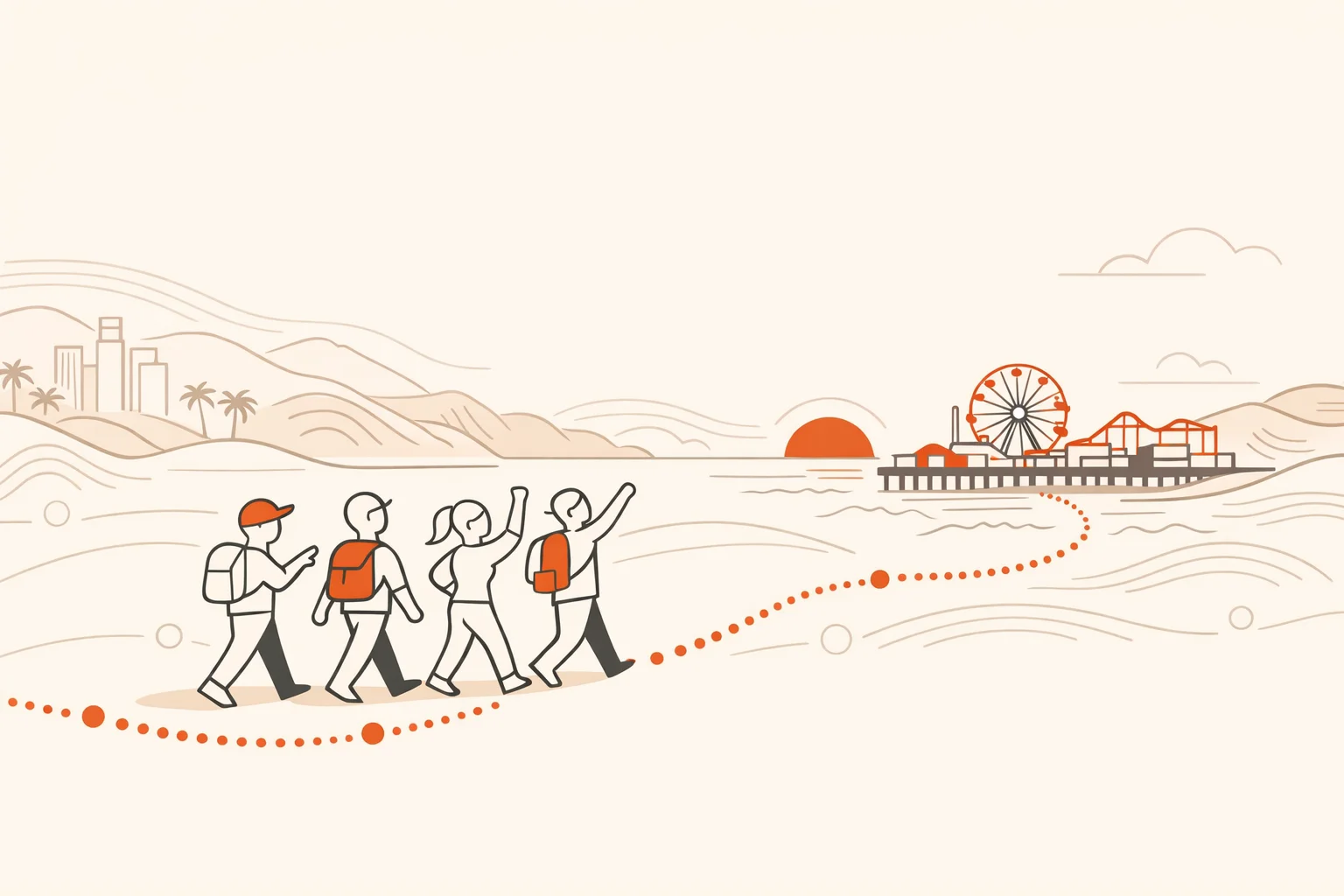
Los Angeles is rich with team experiences, but the city also punishes vague plans. Distances are deceptive, microclimates are real, and permits matter more than people expect. The groups that win here pick a neighborhood radius, match the energy to the time of day, and build for quick wins so participation spikes early and stays high.
This guide gives you the 35 best team building activities in Los Angeles, plus a simple way to choose by budget, group size, weather, and goal. You’ll find standouts indoors, outdoors, and app-led — with operator notes that keep you out of traffic, out of red tape, and in the sweet spot where people actually engage.
Budget. Treat costs as directional: free to modest for parks, beaches, walking quests, and community service; moderate for museums, boats, and classes; higher for private venues and studio experiences. Beach or film-style activations can require permits that add time and fees. The LA County Department of Beaches and Harbors outlines permit categories for events and beach cleanups. Special Event and Beach Cleanup pages are the place to start. (beaches.lacounty.gov)
Group size. Small groups can move nimbly through galleries and markets. Larger groups do better with open spaces (beaches, parks) or app-led games that shard the crowd into many small teams while keeping one shared scoreboard.
Weather. Expect cool mornings near the coast and warmer inland afternoons. Always have a shade or indoor pivot for midday in summer and a light layer for ocean breezes year-round.
Traffic radius. Pick one area and stay there. DTLA, Santa Monica, Culver City, or Griffith Park each work as self-contained zones. If you need to move, consider the LA Metro Trip Planner to shift a portion of the day onto rail for predictability. LA Metro’s Trip Planner is reliable for E Line runs between DTLA and Santa Monica. (metro.net)
Cluster your experience to one neighborhood or you’ll spend your budget sitting on the 10.
Still the most reliable way to get people moving, noticing, and actually talking. An app pulls photos, videos, GPS check-ins, and trivia into one live feed and scoreboard. Browser or app, indoors or outdoors, it scales from 15 to thousands and works in DTLA, Santa Monica, Venice, Culver City, or on campus.
In our experience, early “guaranteed win” prompts and a 10-minute highlight reel at the end create the kind of shared story people reference for months. If you want a platform purpose-built for this, Scavify’s scavenger hunt app runs smooth in-browser or via app and automates the mechanics so you can focus on your people.
Relay races, sandcastle sprints, frisbee accuracy, and casual volleyball in pods. Keep it to one beach zone so teams crisscross and cheer each other on. For larger groups or any structured competition, check permit needs with LA County Beaches & Harbors before you finalize times. Special Event Permit basics are straightforward and save day-of headaches. (beaches.lacounty.gov)
One of the country’s largest urban parks gives you options from gentle fire roads to short, punchy climbs ending at the Observatory for a group photo and quick debrief. Split by pace so everybody wins. The City’s Griffith Park page includes maps and context if you need official trailheads and facilities. City trail map is a helpful planning aid. (recreation.parks.lacity.gov)
Teams track down a set of vendor specialties, trade bites, capture a few chef selfies (with permission), and submit quick ratings. Wrap with a five-minute “best bite” vote. Timebox the wander so everyone lands together.
Give each team a short list of visual motifs to find across the Arts District. Focus on collaborative compositions rather than speed so creativity, not sprinting, decides the day. Respect property and artists: photos, not touching.
Book a timed group visit, mix in a handful of reflective prompts, and close with 1–2 brave shares about what surprised people. The Broad’s group visits page outlines policies and contacts. Keep groups small in the galleries, then reconvene outside for the debrief. (thebroad.org)
Pair a fast exhibit quest with a facilitated puzzle sprint and a short standup beneath Shuttle Endeavour for the team photo. The Science Center’s group info and accessibility notes help you pick a lower-crowd time. Weekdays after 2 p.m. are typically quieter. (californiasciencecenter.org)
Set a simple buoy loop and rotate paddlers. Use shore teams to track splits and cheer. Keep it playful and emphasize safety. If you scale up to a larger event, check marina rules and operator requirements.
Low-stakes, all-smiles movement. Equip boats with a short list of photo prompts and a friendly time target. Ideal for mixed fitness levels.
A classic “only in LA” backstage moment. Use the tour as shared inspiration, then run a short creativity challenge back at your office or event venue. Warner Bros. lists group options and contacts on their Special Events pages for larger parties. Group/VIP tour info is the right doorway. (wbspecialevents.com)
Improv trains fast listening and “yes, and” momentum. Keep sessions tight, rotate partners frequently, and end on a game that makes everyone feel like they’re winning.
Pick rooms with parallel tracks so multiple teams can play at once. Highlight behaviors you want to see back at work: quick roles, frequent status updates, and time checks.
A light competitive frame with built-in mingling. Seed a few surprise rules mid-round to jolt people out of autopilot and spark new pairings.
If you want purpose plus momentum, this format works reliably. Assign functional roles across teams, keep stations compact, and reveal the impact numbers at the end.
Give teams a three-stop route in the Arts District, one constraint (“pick one piece that reflects our product’s values”), and a closing show-and-tell over snacks.
Two or three trucks, a shaded lawn, and a few taste-test ballots. People self-organize in a way that formal seating plans can’t force.
Teams earn points for oddest item found, fastest filled bag, and gentlest handling of wildlife rules. It’s service that feels like play when structured well. Start with Heal the Bay’s cleanup programs page for dates and corporate options. Cleanup programs summarize Nothin’ But Sand, Adopt-A-Beach, and more. (healthebay.org)
From DTLA, teams take the E Line to Santa Monica, capture three required photos on the way, and regroup on the beach. It’s a clever way to turn the commute into the activity. Use the Trip Planner to time departures and cut uncertainty. (metro.net)
At the Original Farmers Market, build a “three-item plate” from different vendors that matches a theme (color, cuisine mashup, or ingredient). Quick huddles, quick decisions, and creative presentations.
VR makes unlikely pairings feel natural. Pick cooperative scenarios that reward communication and role clarity, then debrief what worked in two minutes flat.
Mix art, architecture, and views. Hand teams a short list of interpretive prompts and a single creative photo to stage. End with a quiet garden debrief and a group shot on the steps.
Sports venues energize even non-fans. Use the tour’s rhythm as an icebreaker, then end with a simple challenge: draft a 30-second fan chant for your team.
A restorative reset with ocean views. Pair breathwork, light stretching, and a gratitude prompt. Keep it inclusive and optional for the movement piece.
Short, guided runs turn into laughter quickly. Make it about observing the river’s recovery and teamwork on the water, not speed. Confirm seasonal windows with outfitters in advance.
Fast rounds, visible feedback, and endless side conversations. Rotate trios so people who never meet at the office end up on a tee box together.
Rent a gallery floor, design a light-hunt across exhibits, and build a ten-photo highlight reel you can play before the bus leaves. Keep speeches off the mic.
Teams iterate on a signature drink under light constraints. Provide a zero-proof base by default so inclusion is built in from the start.
Short pre-roll trivia rounds by team, then a crowd-pleaser film. Blankets, low chairs, and a snack bracket for fun.
Simple map navigation between shaded checkpoints with short decision sprints. Land at a picnic with lawn games. The City’s Griffith Park resources help you select areas and respect trail etiquette. Park info and map are useful for planning. (recreation.parks.lacity.gov)
A quiet, curious amble through one of LA’s most photogenic pockets. Keep prompts respectful and focus on observation challenges rather than speed.
Give teams one hour to shoot a 30–45 second short around a theme. Screen them together and hand out three low-stakes awards. If you’re filming on beaches for anything public-facing, review permit rules. The County’s film & photo permit page explains when a permit is needed. (beaches.lacounty.gov)
Short stair intervals, team count-ups, and cheering shifts. Keep it inclusive with parallel ground games nearby.
Light instruction, calm water, and a shared horizon change the mood. Use the cockpit time for small-group prompts you’ll never squeeze into a conference room.
Boyle Heights and surrounding neighborhoods pair vivid art with legendary food. Route three stops, apply a polite pace, and focus on conversation between bites.
For offsites pulling people in from everywhere, run a five-day light-touch app game with micro-challenges in their free windows and a one-hour finale together on day five. It keeps momentum humming without hijacking the workweek.
If budget is tight. Use parks, beaches, markets, and DIY prompts. Pair a simple prize with a leaderboard to keep stakes fun. Service projects like beach cleanups hit purpose and participation together; Heal the Bay lists public and group-friendly options. See program types. (healthebay.org)
If your group is 100+. Go modular. App-led hunts, beach game pods, and station-based builds prevent bottlenecks. Avoid single choke points like narrow galleries at peak times. For museums, consider timed entries or after-hours rentals; The Broad and the California Science Center both publish group logistics to help you plan calmer windows. The Broad groups and Science Center groups outline the basics. (thebroad.org)
If weather could shift. Have a hard pivot to indoor spaces within the same neighborhood: DTLA galleries near Grand Park, Culver City galleries, or museum wings next to open plazas. Coast evenings run cool; inland afternoons can spike. A light layer request on the invite prevents crankiness.
If your primary goal is connection. Design for inclusion more than intensity. Rotate partners, mix challenge types, and end with a two-question debrief so fun converts into Monday behavior. This aligns with research that ties psychological safety to learning and performance, and Google’s Project Aristotle highlighting it as a hallmark of effective teams. Google re:Work on team effectiveness and Amy Edmondson’s foundational study cover the mechanism. (rework.withgoogle.com)
| What you’ll get | App-led hunt | Outdoor classics |
|---|---|---|
| Works across any group size | Yes | Often, with pods |
| Weather-proof plan | Indoor or outdoor | Weather-dependent |
| Permit complexity | Low | Beaches & parks may require permits |
| Time control | Precise timeboxes | Can drift |
| Neighborhood flexibility | DTLA, Westside, campus, anywhere | Great in parks & beaches |
| Built-in artifact | Live feed + media gallery | Manual photos |
Set these in DTLA, Santa Monica, or Griffith Park. Keep prompts inclusive, 15–60 seconds per task.
Museums with structured mini-hunts, improv workshops, escape rooms, Topgolf El Segundo, VR missions, and venue-based mixology or cooking labs all work indoors with strong AC. The California Science Center and The Broad both publish group logistics that help you avoid peak crowds. Science Center groups and The Broad groups are good starting points. (californiasciencecenter.org)
Often, yes. LA County Beaches & Harbors requires permits for many organized activities, and they manage volleyball court reservations. For service projects, a Beach Cleanup Permit applies. Start with Special Event Permits, volleyball court guidance, and cleanup permits. (beaches.lacounty.gov)
Backlots and after-hours museum events book early. Start outreach 6–8 weeks ahead for standard group visits and earlier for private rentals. Warner Bros. Special Events and Discover LA’s venue resources outline options and contacts. Warner Bros. group info and Discover LA’s museum venues help scope possibilities. (wbspecialevents.com)
Go modular: split into teams across parallel stations or pods, use an app-led hunt to keep everyone on the same scoreboard, and avoid single narrow venues at peak times. Timebox each pod to 12–15 minutes and rotate.
Griffith Park hikes, Venice Canals observation walks, Grand Central Market tasting quests, and beach photo prompts all work well. The City’s Griffith Park resources provide free maps that make planning simple. City trail map is handy. (recreation.parks.lacity.gov)
Engineer micro-wins in the first five minutes, vary challenge types so different strengths matter, keep rounds short, and always close with a quick debrief. That cadence reliably increases participation and retention.
For certain routes, yes. The E Line connects DTLA and Santa Monica predictably, and using rail can turn travel into part of the experience. Coordinate timing with the LA Metro Trip Planner and keep walking distances short on each end. (metro.net)
That’s the core: build for interaction, control the radius, and let LA’s variety do the rest. When the plan respects the city, the city rewards the plan.