Solutions
Your first hunt, live this afternoon.
Free to start · No download for participants
Use team building activities for teens to create real participation, with instructions, timing, group-size guidance, low-prep options. Choose confidently.
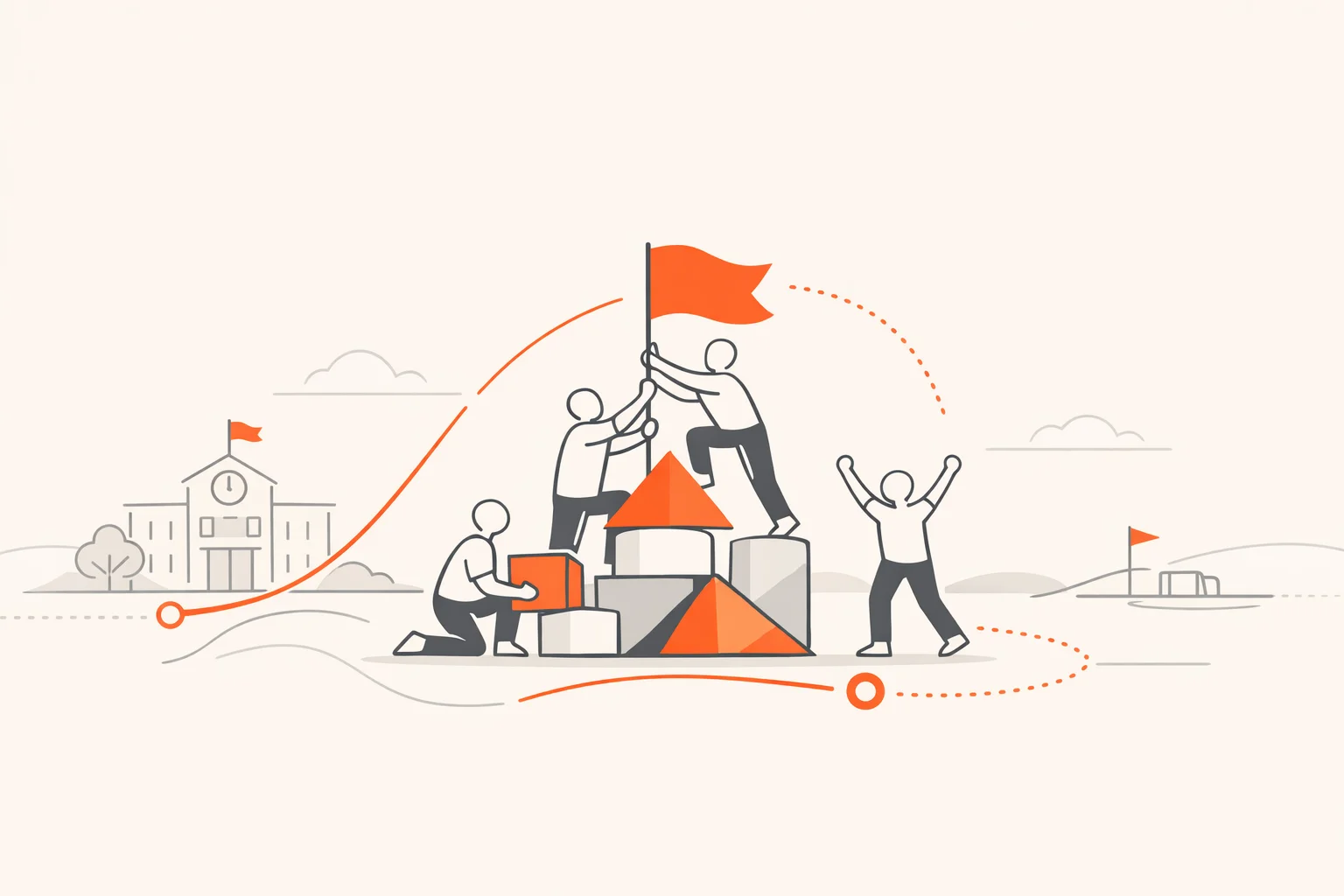
Teen team building succeeds when it respects how teenagers actually operate: socially alert, quick to disengage when something feels babyish, and far more motivated by peer credibility than adult cheerleading. The activities below were built in real classrooms, camps, orientations, and youth programs. They create visible wins fast, keep status stakes fair, and turn passive participants into active contributors.
This guide delivers 15 tested ideas with quick setup notes, run-of-show, variations for indoors, outdoors, and virtual, plus debrief prompts that convert activity energy into real skill-building. It also includes a facilitator playbook and troubleshooting section drawn from patterns we keep seeing across schools and programs.
If you only need one tool to make clue‑based play effortless, a purpose‑built scavenger hunt app can simplify setup, automate scoring, and keep teens engaged without micromanaging. Used well, it adds structure without stealing the spotlight.
Teen activities fall apart for predictable reasons: unclear instructions, uneven participation, and no way to recover momentum once the room cools. The fix is equally predictable: short rounds, visible progress, and clean role rotation. The sections ahead make that concrete.
Most teen groups are diverse in confidence, attention, and social risk tolerance. Any plan that assumes uniformity will feel unfair within minutes. A pattern we keep seeing is simple: the activity that looks the most “fun” on paper often collapses because the first step is too hard or too slow. What usually shifts the dynamic is a first task that is winnable by every team, followed by slightly harder rounds and chances to replay with better strategy.
Link the work to real skills, but keep the link light. If you use social‑emotional language, align it to the five core competencies in the widely used CASEL framework: self‑awareness, self‑management, social awareness, relationship skills, and responsible decision‑making. Tie each activity’s debrief to one or two of these, not all five at once. See the CASEL overview of the framework for shared language if you need it. CASEL’s SEL framework. (casel.org)
Active formats matter. School‑aged youth benefit from about an hour of moderate to vigorous daily movement, and short activity bursts help groups meet that without turning class into PE. Keep a few challenges kinetic and the rest cerebral to serve more students well. CDC physical activity guidance. (cdc.gov)
Also remember that teens spend a lot of time on screens outside class, so in‑person challenges that emphasize collaboration, movement, and real‑world problem solving are a welcome contrast when they feel authentic. Common Sense Media’s recent screen‑use findings. (commonsensemedia.org)
Pick with constraints in mind. Class period length, hallway access, device equity, noise tolerance, adult coverage, and weather all matter more than the novelty of the idea.
The activities below double as creative activities for students in school. They work in classrooms, gyms, cafeterias, quads, auditoriums, libraries, and city blocks around campus. For each one you will see what it builds, setup, how to run it, variations, and a 60‑second debrief to make the learning stick.
Nobody quits a game they are winning. Make the first win easy and obvious.
Builds: collaboration, observation, navigation, quick planning
Setup: Define a safe play zone. Prepare 8–12 clues with a mix of photos, trivia, and GPS or room‑based check‑ins. Decide on time limit and scoring. If you want automation, use a structured platform or a simple spreadsheet and printed clue cards. For full automation, an app can handle submissions, scoring, and the live feed.
How to run:
Variations: Indoors only, subject‑themed (science, history), or accessibility‑first where all clues are reachable without stairs. Virtual version uses photos, short videos, and location trivia.
Debrief in 60 seconds: Ask what changed after the first two clues and why. Name one decision the team would make differently next time and one they would repeat.
Tie this format to collaboration research if you want to connect the dots for colleagues. Classroom hunts are a practical way to build cooperation through structured interdependence. Edutopia’s outdoor collaboration example. (edutopia.org)
Builds: nonverbal communication, empathy, pattern recognition
Setup: Give teams a rule like “line up by birthday, earliest to latest” or “line up by distance from school.” No talking or writing. Allow gesture only.
How to run:
Variations: Use subject connections like “line up by atomic number of a drawn element” or “line up by years of a historical era.”
Debrief: What signals worked when words did not? Who adapted the process, and how did others follow it?
Builds: deduction, information sharing, leadership rotation
Setup: Create a short case file with 8–12 clue cards. Every student gets a unique clue. Teams can only solve if everyone contributes.
How to run:
Variations: Adapt to any subject. For biology, the “artifact” is a mislabelled specimen. For literature, the “culprit” is a theme intruder.
Debrief: How did the team prevent one voice from owning the outcome? What did you do when your first theory cracked?
Builds: creativity, rapid prototyping, problem framing
Setup: Pick a school‑life friction like slow dismissal, recycling contamination, or noisy hall transitions. Provide simple materials for rapid prototyping.
How to run:
Variations: Run it as a weekly series with rotating student‑chosen problems.
Debrief: What changed after a fast test with another team? What tiny version could you try tomorrow?
If you want a credible toolkit for creative problem solving, the d.school’s quick cards are handy for framing, prototyping, and testing. Stanford d.school Design Thinking Bootleg. (dschool.stanford.edu)
Builds: narrative thinking, teamwork, perspective taking
Setup: Each team gets a starting photo prompt. One student captions it, the next must shoot a photo that continues the story, and so on for 6–8 rounds.
How to run:
Variations: Use historical images, science phenomena, or artwork details.
Debrief: Where did the story shift, and why? Who noticed patterns others missed?
Builds: engineering mindset, iteration, resource allocation
Setup: Give each team an odd supply mix like index cards, tape, and pencils. The goal is to span a fixed gap and hold weight.
How to run:
Variations: Replace weight with wind from a fan, or require a single‑sheet design.
Debrief: What change produced the biggest gain? How did the team decide to trade strength for speed or precision?
Builds: precise communication, trust, role clarity
Setup: Place a simple structure behind a screen. One “viewer” sees it, “builders” cannot. Only verbal directions allowed.
How to run:
Variations: Use vocabulary constraints like “no size words” or “only questions.”
Debrief: Which instructions actually helped and which sounded helpful but did not change the outcome?
Builds: norms setting, perspective taking, shared ownership
Setup: Teams draft a short “how we work” contract in five minutes using three prompts: what we value, how we disagree, how we reset after mistakes.
How to run:
Variations: Revisit mid‑semester and update with one add, one cut.
Debrief: Which line will change behavior tomorrow, and how will we notice?
Builds: negotiation, systems thinking, ethical decision‑making
Setup: Teams start with different resource sets and secret win conditions. They must trade to meet goals under time pressure.
How to run:
Variations: Connect to economics, ecology, or history content.
Debrief: What did fairness look like to different teams? How did information asymmetry shape outcomes?
Builds: empathy, listening, cross‑group trust
Setup: Students volunteer short personal topics they are willing to “lend” as a conversation. Others “check out” a human book for five minutes and ask prepared, respectful questions.
How to run:
Variations: Theme it around identities in literature or viewpoints in current events.
Debrief: What surprised you respectfully? What question unlocked the best story?
Builds: peer coaching, strengths recognition, psychological safety
Setup: Each student nominates a small skill they want to practice: speaking a clear opener, presenting a diagram, or asking for help. Teams of four run quick cycles where one student takes the spotlight and others deliver a one‑minute assist.
How to run:
Variations: Use video for optional self‑review if devices are available to all.
Debrief: What felt helpful and repeatable? What assist would you ask for next time?
Builds: persistence, role rotation, flexible thinking
Setup: Create four stations: a logic puzzle, a physical dexterity task, a pattern hunt, and a word riddle. Teams must clear all stations, but anyone can sub out after one minute.
How to run:
Variations: Content‑align station themes to your unit.
Debrief: Where did you get stuck and what moved you forward? Who switched roles at the right moment?
Builds: energy, laughter, quick collaboration
Setup: Five one‑minute physical or tabletop tasks that require coordination, not athleticism. Think cup stacks, paper‑ring tosses, or marble mazes.
How to run:
Variations: Academic circuit where each station ties to a subject review.
Debrief: Which tasks rewarded planning over speed? What tiny adjustment paid off?
Builds: pattern recognition, teamwork, grit
Setup: Three to five puzzles total, each with a clear input and output. Avoid lock overkill. One puzzle should be winnable within 60 seconds to build momentum.
How to run:
Variations: Run a short “maker round” where teams design one puzzle for next week’s class.
Debrief: Which constraint became helpful rather than limiting? Where did communication fail and how did you fix it?
Builds: initiative, planning, community awareness
Setup: Identify a bite‑size school or neighborhood need, like welcoming signage for new students or a 10‑minute hallway cleanup before an event. Define done in one class period.
How to run:
Variations: Pair with a subject tie‑in, like data collection for a science project.
Debrief: What changed in your environment today? Who benefited and how do you know?
Use these copy‑ready prompts to launch a hunt in minutes. Mix types so no single skill decides the win.
A light structure turns good ideas into repeatable wins. Here is the scaffolding we rely on.
Link your debrief language to recognized competencies when it helps other adults see the value. CASEL’s five competencies are a practical shared map for that translation. CASEL on SEL and the CASEL 5. (casel.org)
You can harvest evidence without turning an activity into an assessment. Use light‑touch artifacts that double as celebration.
If you need research cover, adolescent development science supports active, collaborative, agency‑building experiences. It is a period rich with opportunity and unusually responsive to context and peers. National Academies interactive overview on adolescence. (nap.nationalacademies.org)
Play is not fluff. When developmentally tuned to teens, it can build social, cognitive, and self‑regulation skills in ways traditional talk cannot. American Academy of Pediatrics on play and development. (publications.aap.org)
What are the best quick team building activities for a 45‑minute class?
Short circuits work best: Silent line‑up remix, a 6‑clue classroom dash, and a two‑round blind build. Plan one easy opener, two medium challenges, and a visible finish.
How big should teams be for teen activities?
Use small teams that allow everyone to contribute without hiding. Rotating roles ensure quieter students have defined ways to add value.
How do I adapt these for mixed‑ability groups or multilingual classes?
Favor formats with parallel paths and mixed challenge types. Use visual instructions and role cards. Score improvement and teamwork as well as speed.
How do I connect these to SEL without making it corny?
Choose one or two CASEL competencies and ask a single debrief question that maps cleanly. Keep it short and specific to what happened in the activity.
What if I cannot leave the classroom today?
Run Classroom escape lite, Photographic story relay, or a mini scavenger hunt with room‑only clues. Keep energy up with a bonus window mid‑game.
How do I include students who dislike being on camera or moving around a lot?
Use roles that showcase different strengths. Let one student manage clues or timing while others film or move. Offer photo‑optional alternatives when documenting.
Can these double as creative activities for students in school tied to academics?
Yes. Use content‑aligned variations: history‑themed artifact mysteries, science bridges with constraints, or literature scavenger hunts with quote identification.
How do I sell this to colleagues or administrators who want evidence?
Save two artifacts per activity: the final scoreboard and one reflection snapshot. Connect outcomes to recognized frameworks or adolescent development research when useful. CDC activity guidance and CASEL’s framework pair well for that conversation. (cdc.gov)
Finally, remember the point. These are not performances for adults. They are structured chances for teenagers to practice the social, creative, and cognitive moves that help them do school and life better. Keep it human, keep it short, and keep the first win easy.