Solutions
Your first hunt, live this afternoon.
Free to start · No download for participants
Use team building activities for work to create real participation, with instructions, timing, group-size guidance, low-prep options. Choose confidently.
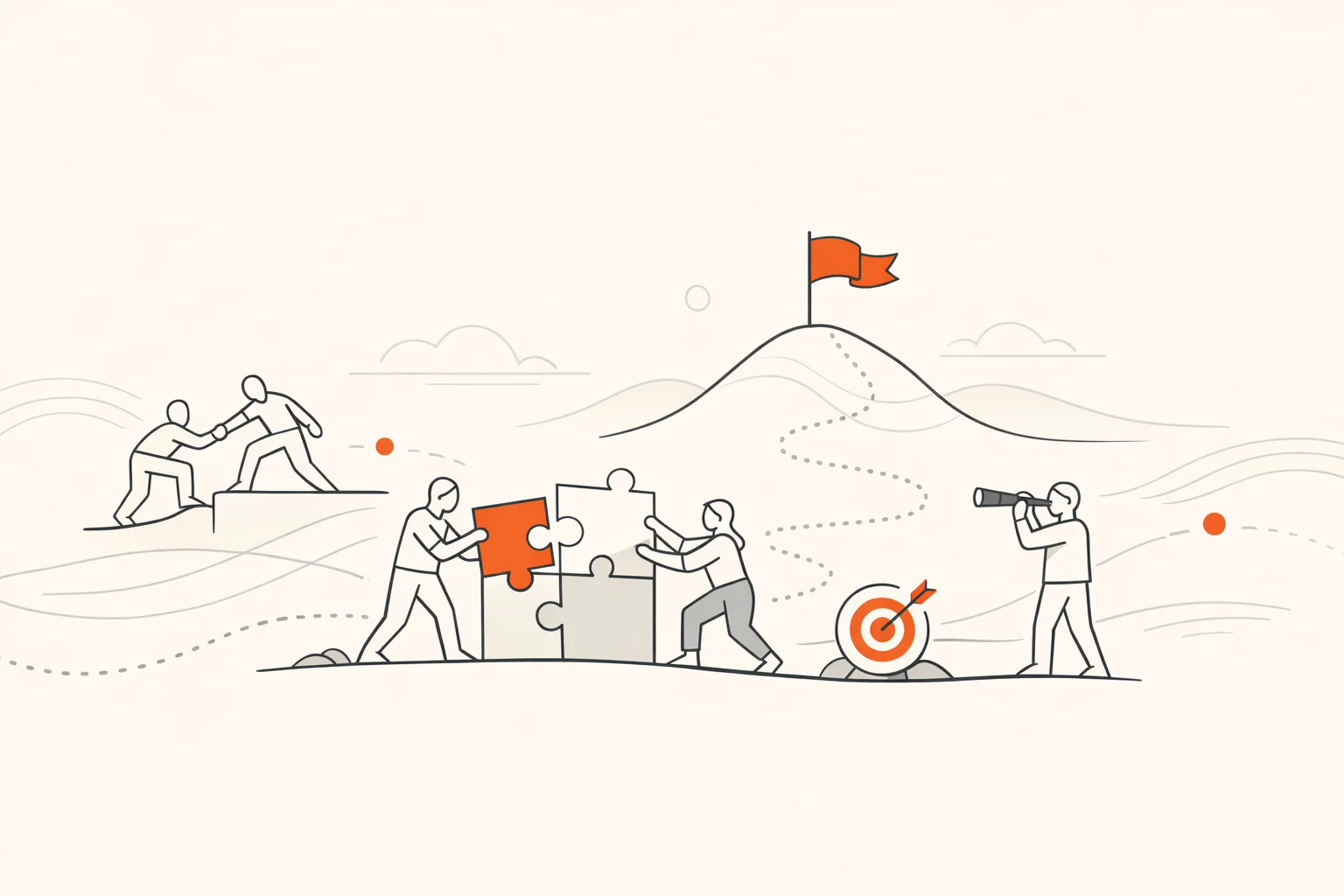
Most teams can smell a manufactured “bonding moment” from across the room. They don’t need icebreakers that pry. They need shared challenges that feel like real work in play-clothes: simple rules, visible progress, and space to contribute without performing. The activities below do that. They’re short, low on cringe, and high on collaboration.
In our experience, the difference between awkward and energizing is purpose. Tie the activity to how your team actually works, debrief briefly, and keep the focus on building confidence together. This isn’t about extroversion. It’s about designing situations where participation is obvious and safe. That’s the soil where teams learn and improve, a pattern echoed in Google’s guidance on psychological safety and team effectiveness in their re:Work guide and in Harvard Business Review’s overview of psychological safety.
Nobody quits a game they feel like they’re winning together.
Why it works: It turns collaboration into motion. Teams coordinate, divide tasks, and make quick decisions together. The format is playful but engineered for teamwork, not spectacle. Running it with a modern scavenger hunt app keeps logistics light and gives you an instant activity feed and leaderboard.
Best for: Hybrid or onsite groups; mixed personalities; new cross-functional teams.
How to run: Create 10 to 15 short, varied challenges that require different strengths: observation, creativity, local knowledge, and quick coordination. Keep each challenge achievable in a few minutes and award points for completion quality.
Debrief prompt: What decision or behavior helped your team move faster without stepping on each other?
Evidence cue: Structured team experiences that blend task and learning outperform generic morale events, a pattern backed by large-sample reviews of teamwork training and team-building interventions (systematic review and meta-analysis; team-building meta-analysis).
Why it works: Teams must negotiate, trade, and time-box collaboration to finish. Success depends on communication and fair exchanges, not speed alone.
Best for: Departments that rarely collaborate; groups that need practice asking and offering help.
How to run: Mix pieces from multiple small puzzles across tables. Teams complete theirs by trading. Add rules that encourage ethical trades and shared language for requests.
Debrief prompt: Which request styles led to faster trades? What will you copy in your next cross-team project?
Why it works: It spotlights clarity and feedback. One person describes, the other draws. The magic is the mid-round adjustment.
Best for: Product, engineering, design, and operations.
How to run: Partners sit back-to-back. Describer gets a simple diagram. Midway, allow a 30-second Q&A. Switch roles.
Debrief prompt: Which phrases created shared understanding quickly? Which added noise?
Why it works: Nonverbal coordination exposes how teams self-organize under constraints.
Best for: New teams and mixed language groups.
How to run: Without speaking, line up by a rule that isn’t obvious (distance from the office, tenure, number of pets). Add a second constraint for a round two remix.
Debrief prompt: What signals replaced words, and how did leadership emerge without titles?
Why it works: It makes prototyping habits visible. Give light materials and an iffy objective so iteration beats perfection.
Best for: Teams that overplan; teams that need faster feedback loops.
How to run: Build the tallest free-standing structure supporting a light object. Halfway, introduce a small change, like a weight cap or "must move locations."
Debrief prompt: When the variable changed, what kept momentum going?
Why it works: It compresses problem framing, idea generation, and simple prototyping into a tight window. Collaboration beats lone-wolf brilliance.
Best for: Cross-functional teams; strategy offsites.
How to run: Present one real customer or workflow problem. Groups define success criteria, sketch a simple solution, and share a one-slide prototype.
Debrief prompt: Which decision unlocked progress fastest? What will we test for real?
Why it works: Instead of pitching solutions, teams pitch the problem from the stakeholder’s view. Listening becomes the differentiator.
Best for: Product, customer success, and any team close to users.
How to run: Assign a persona. Teams build a 60-second problem pitch as that persona. Others ask clarifying questions only.
Debrief prompt: What changed about your solution thinking after sitting in the stakeholder’s chair?
Why it works: It channels the energy people already have about one annoying process into a constructive sprint.
Best for: Any team with recurring friction points.
How to run: Collect pet-peeve processes in advance. In small groups, map current steps, identify two waste points, and propose one lighter-weight path.
Debrief prompt: Which fix offers the highest impact for the least disruption this month?
Why it works: Time-bounded puzzles surface communication patterns fast. Everyone sees how the team handles ambiguity.
Best for: Remote groups and hybrid cohorts.
How to run: Use a simple puzzle room or a digital version. Mix logic, pattern, and search tasks so different brains matter.
Debrief prompt: What did teammates do that made your own thinking better?
Why it works: People learn the micro-geography where collaboration lives: who sits where, what tools exist, how to navigate fast.
Best for: New hires; post-move teams.
How to run: Send pairs on a short quest with clues that take them past key spaces and colleagues. Keep it brisk and social.
Debrief prompt: What location or person will you use next week that you didn’t know about before?
Why it works: A familiar format with a performance guardrail. Sharing one recent work “win” normalizes learning without forced vulnerability.
Best for: Mixed seniority groups.
How to run: In trios, each person shares two true statements and one believable falsehood, plus one short win and what enabled it.
Debrief prompt: What patterns showed up in wins that we can repeat on purpose?
Why it works: Networking games only help when they connect to real collaboration. This version uses skills and contexts that matter for work.
Best for: Large groups; cross-functional meetups.
How to run: Replace trivia squares with useful prompts like “has shipped a feature with X API,” “speaks with customers monthly,” or “can review legal language.”
Debrief prompt: Which new connection will you follow up with and why?
Why it works: Writing a short note to a real user about one improvement clarifies value and alignment.
Best for: Product, support, marketing, ops.
How to run: Teams pick a customer segment and write a short postcard-style note explaining a small improvement and how it helps. Share and compare for tone and clarity.
Debrief prompt: What wording made the benefit unmistakable without hype?
Why it works: Reps build reflexes. A short, structured debrief after real work is one of the highest-yield habits we see.
Best for: Any team on repeatable projects.
How to run: Use three questions: What did we intend? What actually happened? What will we change next time? Keep it tight and consistent.
Debrief prompt: Name one behavior tweak we’ll try immediately.
Evidence cue: Meta-analyses show that structured team training and reflective practices strengthen teamwork behaviors and performance over time (systematic review).
Why it works: Clear norms reduce friction. Teams that make expectations explicit create safer conditions to speak up and take thoughtful risks, which aligns with the practical guidance in Google’s re:Work guide and research summarized in HBR.
Best for: New teams and growing groups.
How to run: Draft 5 to 7 short, behavioral norms using real scenarios, not abstract values. Example: “We flag blockers in the daily stand-up, not in DMs.”
Debrief prompt: Which norm will remove the most friction next month?
Why it works: Shared purpose without posturing. Packing hygiene kits, school supplies, or care boxes creates fast coordination and visible progress.
Best for: Large groups or multi-team gatherings.
How to run: Give stations distinct roles. Add a quality check station and rotate. Close with one quick share-out on process tweaks.
Debrief prompt: What small change improved throughput the most?
Why it works: Being outside, moving, and navigating modest waypoints together changes the energy and reveals natural leadership.
Best for: Offsites and seasonal events.
How to run: Mark light checkpoints across a safe area (campus, park). Assign roles: navigator, timekeeper, observer. Swap roles at each point.
Debrief prompt: When did you slow down to go faster, and why did it help?
Why it works: Limited ingredients push creativity and role clarity. Food breaks down silos without requiring big talk.
Best for: Hybrid teams; culture-building days.
How to run: In small teams, assemble a simple dish from a short, shared pantry. Assign roles quickly: prep, plate, present. Judge on taste and story.
Debrief prompt: What clarity move made the work feel lighter?
Why it works: A short, movement-friendly challenge boosts energy and gives non-talkers a way to contribute.
Best for: Long meetings; remote fatigue days.
How to run: Choose a friendly target for steps, stretches, or standing minutes. Track as a team, celebrate completion, not top scores.
Debrief prompt: What cadence of breaks keeps our focus sharp without breaking flow?
Why it works: People engage more when the knowledge feels close to home. Co-created trivia mixes fun with useful institutional memory.
Best for: All-hands and milestone events.
How to run: Invite departments to submit two questions each: one fun, one work-relevant (product history, customer lore). Keep rounds short.
Debrief prompt: Which question sparked a useful conversation we should continue?
Why it works: Turning an abstract process into a physical model exposes dependencies and bottlenecks. It’s playful, not childish.
Best for: Operations, service, and any process-heavy team.
How to run: Give teams basic bricks and a process to model. Require labeled stations and simple visual cues for handoffs. Compare models.
Debrief prompt: Where did work pile up in your model, and what would relieve it?
Why the evidence matters: Decades of research connect well-run, learning-focused team practices with stronger outcomes. Large-scale analyses of engagement tie healthier team climates to better performance across business metrics (Gallup Q12 meta-analysis; engagement-performance brief). Psychological safety remains the keystone in the literature on effective teams, consistently linked to learning and results (Annual Reviews synthesis; HBR).
If you want one activity to anchor a whole quarter, build a recurring scavenger-style experience around real work themes. Keep each round short, rotate roles, and debrief briefly. The point isn’t a leaderboard. It’s the reflex your team builds together.
Activities feel awkward when they require performance over participation, pry for personal details, or reward one narrow skill. Design for many entry points and tie the challenge to real collaboration so people can contribute without posturing.
Short wins are best. Most groups respond well to a compact challenge plus a quick debrief that fits inside a regular meeting block, rather than an all-afternoon interruption.
State the purpose in a single sentence, outline the rules plainly, and say how you’ll close. Clarity calms nerves and encourages contribution.
Favor tasks with visible artifacts (photos, maps, shared docs) and rotate roles so attention doesn’t drift. Use simple tools and keep camera expectations realistic.
Track simple signals: participation rate, completion rate, and one norm or behavior adopted after each session. Over time, look for smoother handoffs, faster decisions, and fewer repeated mistakes.
Little and often beats rare and grand. A short, purposeful practice built into your operating rhythm has more impact than an annual spectacle.
Right at the end, while energy is high. Ask one or two questions, capture a decision, and stop. Momentum matters.
Reviews of team training and team-building interventions connect structured, learning-focused practices to stronger teamwork and performance, especially when they’re part of regular work, not a detached event (systematic review; meta-analysis). Gallup’s multi-decade findings also link healthier team climates to better business outcomes (Q12 meta-analysis).
If you’re planning a scavenger-style experience, our hands-on guide to designing challenges and scoring is a useful next step: 40 ideas and facilitation patterns live in our own write-up of scavenger hunts for teams.