Solutions
Your first hunt, live this afternoon.
Free to start · No download for participants
Use team building activities for thanksgiving to create real participation, with instructions, timing, group-size guidance, low-prep options. Plan smarter.
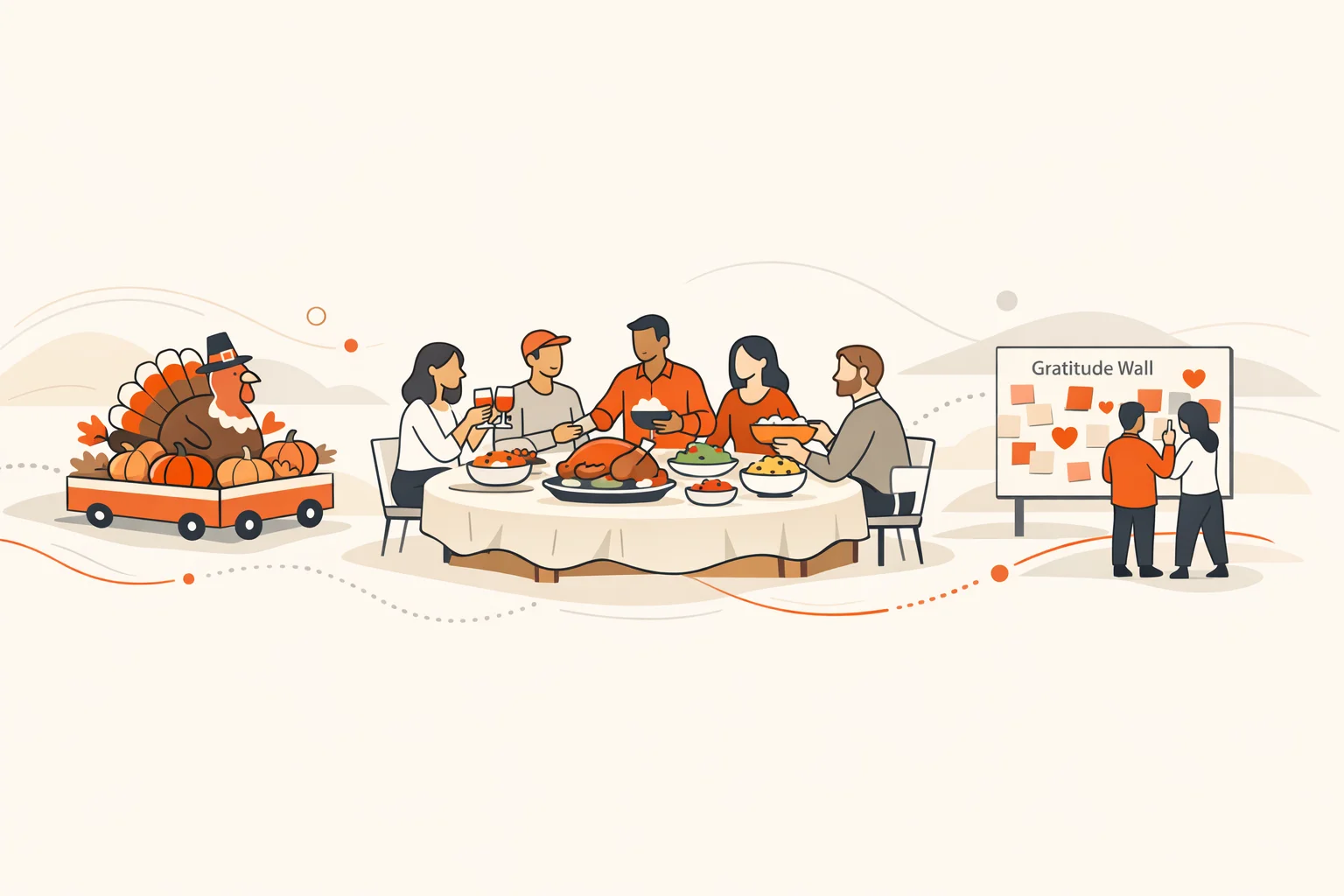
Thanksgiving is a gift to managers and event planners: a built‑in reason to gather and a theme that already carries meaning. With a clear format and a few nudges, it’s also the easiest time of year to run a team bonding activity that people actually enjoy. The trick is in the design. Short timeboxes. Visible progress. Inclusive roles. A closing beat that turns fun into connection.
We’ve run thousands of in‑person, hybrid, and virtual experiences across conferences, campuses, and companies. The patterns are consistent. Variety beats volume. Debriefs create value. And small moments of gratitude change a room’s tone faster than any icebreaker.
Pick two or three activities that match your time window and space. Most of these scale from small groups to larger orgs by running parallel heats. Where a skill might exclude someone, add an alternate role. If budget is tight, choose options that re‑use office supplies and participants’ phones.
A classic, but make it active. People post thank‑yous to peers with a concrete behavior and the impact it had. Then turn the wall into a quick ceremony by reading a handful out loud.
Goal: Surface specific, high‑signal appreciation.
Good for: Any size; hybrid‑friendly with a shared doc or board.
Timebox: About 15–20 minutes, plus a 5‑minute close.
Materials: Sticky notes or a shared whiteboard, markers, camera for a quick photo.
Debrief prompt: What kind of appreciation lands best for you, and how do you know?
A fast, mixed‑format hunt with gratitude‑flavored prompts. Keep it tight and visible with a live leaderboard. Browser or app is easiest at scale; this is where a purpose‑built scavenger hunt app helps with automation, scoring, and an activity feed people actually scroll.
Goal: Create movement, laughs, and shared focus in one quick burst.
Good for: 10–500+; works indoors, campus‑wide, or fully virtual.
Timebox: 15–30 minutes, plus a 5‑minute photo reel.
Materials: Phones; optional QR codes; one facilitator.
Debrief prompt: Where did we communicate well under time pressure, and what would we repeat Monday?
Nobody quits a game they are winning. Open with an easy win and the room leans in.
Turn your potluck into a lightly structured connection machine. Each dish arrives with a card: name, origin, and a short story. Teammates get a “passport” stamped as they ask dish owners a prompt.
Goal: Encourage cross‑team conversations without forced small talk.
Good for: In‑office teams of any size.
Timebox: Works over lunch; the game layer adds 20–30 minutes.
Materials: Dish cards, printed or digital passports, stamps or stickers.
Debrief prompt: What story stuck with you and why?
Blend service with team action. Run a fast, focused collection for your local food bank, or assemble kits with clear lists of what’s most needed.
Goal: Do something useful together in under an hour.
Good for: Hybrid and in‑person; departments can run parallel drives.
Timebox: 30–60 minutes to collect and sort.
Materials: Collection bins, supply lists from a local partner.
Debrief prompt: What made this feel meaningful, and how could we repeat it next quarter?
Give teams a small pile of supplies and a time limit to build a table centerpiece that signals gratitude or team identity.
Goal: Practice rapid prototyping and inclusive decision‑making.
Good for: 8–60 people, in groups of 4–6.
Timebox: 20 minutes build, 10 minutes gallery walk.
Materials: Paper, tape, markers, found objects; optional theme cards.
Debrief prompt: Which decision improved your build the most, and who sparked it?
Teams write, swap, and follow ultra‑short “recipes” for simple tasks. The fun is in how instructions travel.
Goal: Reveal how clarity (or lack of it) impacts outcomes.
Good for: Any size; pairs or trios.
Timebox: 20–30 minutes.
Materials: Index cards or a shared doc; everyday office items.
Debrief prompt: Which instruction created friction, and how would you reword it?
Honor the famous parade without blocking Main Street. Each group builds a shoe‑box “float” tied to a value or inside joke, then does a 20‑second runway show.
Goal: Build quick cohesion around a shared symbol.
Good for: 12–80, in small groups.
Timebox: 30–40 minutes total.
Materials: Craft supplies; optional soundtrack.
Debrief prompt: What did your float say about how your group works when the clock is ticking?
A plus/delta retrospective wrapped in a Thanksgiving metaphor. Teams write what to keep doing (left side), and what to change (right side), then “break the wishbone” by voting on one change to try.
Goal: Turn reflection into one specific next action.
Good for: Teams that ship work together.
Timebox: 25–35 minutes.
Materials: Whiteboard or digital board; sticky dots for voting.
Debrief prompt: What one change will we test before year‑end, and how will we know it helped?
A collaborative tale told one sentence at a time. Seed it with a prompt like, “It started when the pies ran out...” and steer toward teamwork moments.
Goal: Practice listening and building on others’ ideas.
Good for: 5–20; great as a warmup.
Timebox: 10–15 minutes.
Materials: None.
Debrief prompt: When did you feel most heard, and why?
A movement break that fits your space: stairs, hallway loops, campus green, or a virtual step challenge. Keep it inclusive and low‑pressure.
Goal: Inject physical energy and reset focus.
Good for: Any size; easy to hybridize.
Timebox: 10–20 minutes.
Materials: Timer; optional pedometer apps.
Debrief prompt: What kind of movement mid‑day actually helps you work better?
Create a bingo card of conversation starters and light dares: “Find someone whose first job involved food service,” “Trade your favorite side‑dish tip,” “Teach someone a 10‑second table trick.”
Goal: Nudge cross‑team mingling without awkwardness.
Good for: 20–200 at a social hour.
Timebox: 20–40 minutes woven into the event.
Materials: Printed or digital cards; small prizes.
Debrief prompt: Which square created the best new connection and why?
Like a tiny cooking show: teams get a few surprise ingredients to assemble a no‑bake dessert or impressive plating.
Goal: Collaborate under constraint and showcase creativity.
Good for: 8–40, in groups of 3–5.
Timebox: 25–35 minutes.
Materials: Mystery ingredients, disposable plates, napkins.
Debrief prompt: Which constraint sparked your best idea?
A quick, team‑based quiz spanning history, food origins, parade lore, sports, and contemporary perspectives.
Goal: Learn together and compete playfully.
Good for: Any size; works in person or on video.
Timebox: 15–25 minutes.
Materials: Slides, buzzer app or chat.
Debrief prompt: What did we learn that changes how we’ll talk about the holiday?
Leaders or volunteer hosts each take a small table with a simple prompt and commitment to include every voice.
Goal: Strengthen weak ties and psychological safety.
Good for: Mid‑to‑large orgs with cross‑functional teams.
Timebox: 45–60 minutes over lunch.
Materials: Table tents with questions.
Debrief prompt: What did you hear today that you didn’t know last week?
Perfect for dispersed teams or crowded calendars. Everyone writes one short, specific note to a teammate and schedules it to arrive before the holiday.
Goal: Close the season with visible appreciation.
Good for: Remote and hybrid; also works with contractors and interns.
Timebox: 10–15 minutes.
Materials: Digital cards or scheduled emails; optional mailer.
Debrief prompt: Which message will you keep, and why did it matter?
A short close is where a team bonding activity becomes team learning. Keep it quick and predictable.
If you like data with your anecdotes, decades of engagement research link participation and recognition to stronger performance and wellbeing (Gallup Q12 meta‑analysis; key 2024 insights in Gallup’s State of the Global Workplace).
Short wins. Aim for roughly 15–30 minutes of focused play, then a 4–6 minute debrief. In our experience, two short rounds beat one marathon session because attention stays high and more people participate fully.
Choose formats with clear remote roles and a shared surface (board, doc, hunt app). For in‑office events, add a camera on a rolling cart, pair remote folks with on‑site buddies, and keep scoring and artifacts visible to all.
Respect autonomy. Invite opt‑in roles, keep rounds short, and make the goal explicit beyond “fun.” Recognition, movement, and small service moments are reliable crowd‑pleasers when they’re voluntary and well‑run.
Large groups work fine when automation handles scoring and submissions and you run parallel paths so teams don’t clog the same spots. Keep prompts short, seed easy wins, and show a live leaderboard to sustain momentum.
Offer multiple lanes: walk, stretch, or contribute as photographer or timekeeper. Provide clear opt‑outs and alternatives. Match routes to your space and follow general activity guidance like the CDC’s adult activity overview.
Use one‑breath debriefs. Ask, “What helped us coordinate?” or “What would we repeat next week?” Capture three answers, thank contributors by name, and move on. The repetition builds culture faster than a lecture.
Skip anything that pressures personal sharing, assumes a single cultural story, or hinges on alcohol. Offer content that broadens context with reputable resources, such as the Smithsonian’s NMAI timeline and food‑history notes from the National Museum of Natural History (origins of common foods).
If you want more tactical ideas by goal, format, and energy level, our field guide to activities stays current throughout the year. And when a hunt is the right container, this is where Scavify quietly shines: mixed challenges, instant scoring, browser‑plus‑app flexibility, and scale from small teams to whole companies without extra admin.