Solutions
Your first hunt, live this afternoon.
Free to start · No download for participants
Use online team building games to create real participation, with instructions, timing, group-size guidance, low-prep options, and facilitator tips.
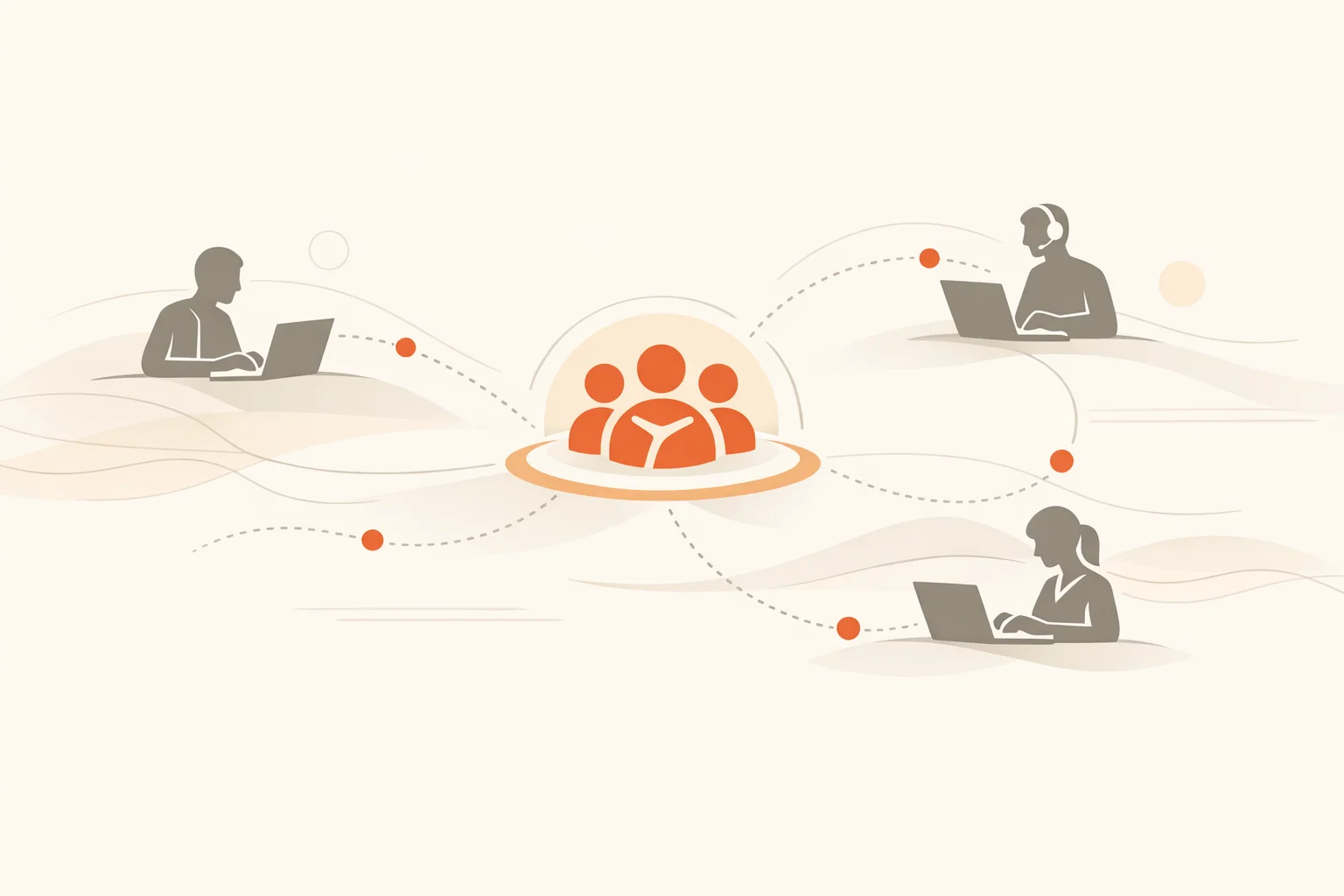
Online team building games work when they lower the social friction of video calls, give people something concrete to do together, and end with visible progress. The mechanics matter more than the novelty. Short rounds. Small groups. Clear wins. That’s how a 30‑minute slot becomes the most energizing part of the week.
In our experience, the best online formats create micro‑wins that stack into real connection. They mix competition with collaboration so more personalities show up, not just the extroverts. And they make the outcomes visible, whether that’s a scoreboard, a shared artifact, or a hilarious photo reel you’ll still be laughing about next quarter.
A pattern we keep seeing: teams engage more when the format reduces screen fatigue and increases agency. Research on video fatigue helps explain why. Long, face‑on calls with little movement or variety drain attention. Structuring play into short, varied tasks counteracts that drag. See the summary of Stanford research on Zoom fatigue for the underlying mechanisms and fixes, which align with time‑boxed, movement‑friendly games. (neuroscience.stanford.edu)
It’s also not just about fun. Teams that interact well, share attention, and see progress tend to perform better. Decades of analyses connect engagement to better outcomes across a range of business metrics. Gallup’s large meta‑analyses are a useful reference when you need to justify the hour on the calendar. (gallup.com)
Communication patterns themselves predict team effectiveness. That’s old news in some circles, but still underused in practice. The gist: energy, engagement, and exploration in interactions correlate with higher performance. If your game mechanics nudge those three, you’re on the right track. A readable overview is in MIT’s “New Science of Building Great Teams”. (hbr.org)
Simple, visible wins change how people show up in the next meeting.
If you need guaranteed lift with minimal prep, hosted is safer. If you have a capable facilitator and a willing crew, DIY stretches farther for less.
| Consideration | Hosted experience | DIY build |
|---|---|---|
| Setup time | Minutes with a pro run‑of‑show | Some prep and testing |
| Facilitation load | Handled for you | You or an internal MC |
| Scalability for large groups | Proven formats for hundreds | Requires tooling and support |
| Customization | Light to deep, depending on provider | Full control of content |
| Budget flexibility | Varies by vendor | Great for low‑ or no‑cost |
| Risk of tech hiccups | Lower with dedicated ops | Higher unless you rehearse |
Why it works: It flips passive video time into movement, discovery, and quick collaboration. It scales to any group size and plays equally well live or over a week.
Time: 30–60 minutes live, or 3–5 days async.
Group size: Pairs up to large groups using team breakouts.
How to run: Build a list of short, specific prompts that invite photos, quick videos, and light puzzles. Run it in a scavenger hunt app so submissions, scoring, and the live feed are automatic. Browser or app works for mixed device access.
Low‑prep option: Use an existing template and tweak a handful of prompts to your culture.
Facilitator tip: Front‑load the first two prompts as guaranteed wins to hook participation. Save a bolder, creative prompt for the midpoint when energy dips.
Why it works: Fast feedback, shared tension, and visible scores make even quiet teams lean in.
Time: 20–40 minutes.
Group size: Any; use teams of 3–6 for more voices.
How to run: Host a live game people join with a PIN using platforms like Kahoot’s live‑hosting workflow. Mix general knowledge with company culture questions, and keep rounds short. (support.kahoot.com)
Low‑prep option: Pull a prebuilt quiz, then add 5 company‑specific questions at the end.
Facilitator tip: Rotate who reads questions aloud so more voices get airtime.
Why it works: Shared problem‑solving under a clock fosters concise communication and clear roles.
Time: 25–45 minutes.
Group size: 4–6 per room.
How to run: Choose an online escape format or build a small puzzle chain in slides or an app. Keep instructions on one screen and puzzles on another to reduce confusion.
Low‑prep option: Use a vendor’s 30‑minute “mini room” when you only have a half hour.
Facilitator tip: Assign a scribe and a clue‑caller before the clock starts.
Why it works: It rewards shared mental models and careful clue‑giving, which mirrors real collaboration.
Time: 15–30 minutes.
Group size: 4–10, split into two teams.
How to run: Use any online Codenames board. Rotate spymasters to include more people.
Low‑prep option: Pre‑pick the first spymaster and start with a sample one‑word clue to model good play.
Facilitator tip: Encourage teams to talk through associations out loud. That’s the useful part.
Why it works: Forces clarity. If your clue is fuzzy, the drawing exposes it in seconds.
Time: 15–25 minutes.
Group size: 4–12.
How to run: Use a shared whiteboard. Pick categories relevant to your work or culture.
Low‑prep option: Use a random word generator and call it.
Facilitator tip: Add “no letters or numbers” and 60‑second caps to keep laughs and pace high.
Why it works: Alternating drawing and captioning creates delightful misinterpretations and fast bonding.
Time: 20–30 minutes.
Group size: 6–12.
How to run: People alternate between sketching a prompt and titling each other’s drawings. Reveal the chains at the end for a guaranteed highlight reel.
Low‑prep option: Run it with just slides and screen‑share if your whiteboard tools are locked down.
Facilitator tip: Seed the first prompts with workplace‑safe themes to avoid blank‑page stalls.
Why it works: Simple personal reveals create future conversation hooks.
Time: 10–20 minutes.
Group size: Any; best in groups under 10.
How to run: Collect statements async, then guess live in small groups.
Low‑prep option: Drop it into a weekly standup for three people each week.
Facilitator tip: Invite one follow‑up question after each reveal to deepen the moment.
Why it works: Shared discovery across homes and offices reveals personality without pressure.
Time: 15–30 minutes live, or run all week async.
Group size: Any.
How to run: Give each team a bingo card of lightweight photo prompts. Call a 10‑minute lightning round mid‑week for trading and show‑and‑tell.
Low‑prep option: Reuse the same card quarterly with two squares swapped.
Facilitator tip: Celebrate first bingo and most creative square to diversify winners.
Why it works: Hands move, brains loosen. Constraint fuels creativity.
Time: 15–25 minutes.
Group size: 3–8 per breakout.
How to run: Give a theme and a tiny timebox. Teams photograph their builds and submit a one‑line caption.
Low‑prep option: Use paper and tape if supplies are scarce.
Facilitator tip: Judge on story, not polish, so everyone feels competitive.
Why it works: Quiet focus with shared progress is restorative for many teams.
Time: 15–30 minutes.
Group size: 3–6 per table; run parallel rooms for larger groups.
How to run: Use an online jigsaw board and split groups into races. Screenshot the finished board for the recap.
Low‑prep option: Use the same puzzle across all rooms and award best time.
Facilitator tip: Appoint a piece sorter and an edge hunter to accelerate early momentum.
Why it works: Forces descriptive precision and active listening.
Time: 10–20 minutes.
Group size: Any; works great as a meeting opener.
How to run: Play short audio clips. Teams guess source and context.
Low‑prep option: Record 10‑second sounds from your own environment.
Facilitator tip: Award bonus points for the best question asked, not just correct guesses.
Why it works: Structured perspective‑taking without getting heavy.
Time: 15–25 minutes.
Group size: 6–12.
How to run: Pairs argue fun prompts for 60 seconds each, then switch sides. Observers vote for the most compelling argument, not the side.
Low‑prep option: Keep a deck of safe, silly topics ready.
Facilitator tip: Model generous listening and quick summaries.
Why it works: High‑pressure coordination tests clarity and calm like little else.
Time: 15–30 minutes per module.
Group size: 2–5.
How to run: One person sees the “device,” others hold the manual. Communication is the game.
Low‑prep option: Use a short module and swap roles once.
Facilitator tip: Debrief what language helped, then mirror it in daily work.
Why it works: Rapid novelty keeps dopamine and participation high.
Time: 30–60 minutes.
Group size: 6–20.
How to run: Rotate through three quick party games. Use chat for spectators to vote and comment.
Low‑prep option: Run just one title as a closer to a longer meeting.
Facilitator tip: Score across games to create an arc and a clean finish.
Why it works: Collaborative constraints plus visible progress equal surprising fun.
Time: 15–25 minutes.
Group size: 3–8.
How to run: Color cells in a shared sheet to recreate simple images. Award a creativity bonus for custom additions.
Low‑prep option: Provide a 10x10 template and two sample palettes.
Facilitator tip: Screen‑share a time‑lapse of edits in the recap.
Why it works: Turns talk into tiny shipped artifacts, which teams love.
Time: 45–60 minutes.
Group size: 3–6 per team.
How to run: Define a small prompt like “improve a first‑day experience.” Teams sketch, prototype, and record a 60‑second demo. Vote on “most likely to use Monday.”
Low‑prep option: Offer three prompts and let teams self‑select.
Facilitator tip: Provide a demo structure: problem, sketch, tiny test.
Why it works: Shared curiosity plus a light challenge makes learning social.
Time: 30–45 minutes.
Group size: Any, in squads of 3–5.
How to run: Pick a museum or map location set. Teams capture screenshots and facts, then submit a three‑slide debrief.
Low‑prep option: Use one site and three focused questions.
Facilitator tip: Celebrate the best “one surprising thing we didn’t know.”
Why it works: Participation without scheduling pain. Great for cross‑time‑zone teams.
Time: 3–5 days, with a 15‑minute kickoff and a 15‑minute finale.
Group size: Any.
How to run: Post 10 micro‑challenges for the week. Use an app to handle submissions, scoring, and a live feed people can browse on their schedule.
Low‑prep option: Run it quarterly with seasonal twists.
Facilitator tip: Mid‑week bonus points re‑spark lagging participation.
Work in sprints. Two to five minutes per prompt is a sweet spot for attention and inclusion. It maps to what we know about video‑call fatigue and time perception. Stanford’s work on Zoom fatigue offers practical levers like less self‑view and more movement that pair well with game mechanics. (news.stanford.edu)
Make outcomes visible. Leaderboards, shared artifacts, and quick demos create closure. That visible progress correlates with the interaction patterns seen in high‑performing teams: energy in exchanges, engagement within teams, and exploration across teams. MIT’s research on communication patterns remains a useful north star. (hbr.org)
Mix cooperation and competition. Cooperative goals lift trust. Light competition sharpens focus. The blend matters more than the brand of game.
Use adaptive groups. Let people move between small groups across rounds. Adaptive networks tend to make better decisions and raise collective intelligence, especially with feedback. See MIT Sloan’s summary on adaptive networks for why rotating groups helps. (mitsloan.mit.edu)
Tie it to work. Close with one insight or behavior to try this week. Engagement isn’t fluffy; it’s connected to outcomes across retention, safety, and productivity in the literature. Gallup’s engagement briefs are a pragmatic reference. (gallup.com)
A reliable video platform with breakout rooms, a shared document or whiteboard, and permission to use a browser‑based game or app. Headsets help. For trivia, platforms such as Kahoot generate a join PIN for participants when you start a live game. (kahoot.com)
Smaller groups drive participation. Trios to five tends to be a sweet spot for talk time and psychological safety. If you’re over eight in a room, add structure or split.
Often enough to build rhythm, not so often it becomes obligatory. Many teams rotate a 20–30 minute format monthly and layer short 5–10 minute icebreakers into existing meetings.
Choose formats that don’t require faces on screen to contribute: trivia, jigsaws, spreadsheet art, and scavenger hunts with photo or text submissions. Design the first round as a guaranteed win to reduce anxiety.
Favor asynchronous formats every few cycles, like a week‑long hunt with a short kickoff and finale. Keep mobile‑friendly participation in mind so field teams can join between tasks.
Keep it simple. Track participation, submissions, and one behavior change you’re testing. A short debrief and one follow‑up question a week later will tell you more than a 20‑question survey.
Not always. For mixed or very large groups, a hosted run reduces risk and setup. For small, tight‑knit teams, a capable internal MC does great. If you want low‑prep scale, an app that automates scoring, submissions, and the live feed makes a visible difference.
Anything with clear tasks and a shared artifact: scavenger hunts, trivia, mini hackathons, and story chains. If some people are in a room, appoint a “remote advocate” to watch for equity and voice distribution.
Well‑designed interactive experiences create measurable behavioral outcomes. Build for short, visible wins and the rest follows. If you want the format that tends to light up even skeptical groups, a virtual scavenger hunt is still the most reliable. Browser, app, or both, it turns passive participation into action in minutes.