Solutions
Your first hunt, live this afternoon.
Free to start · No download for participants
Try leadership activities that build communication, delegation, and decision-making so managers can practice leading instead of just talking about it.
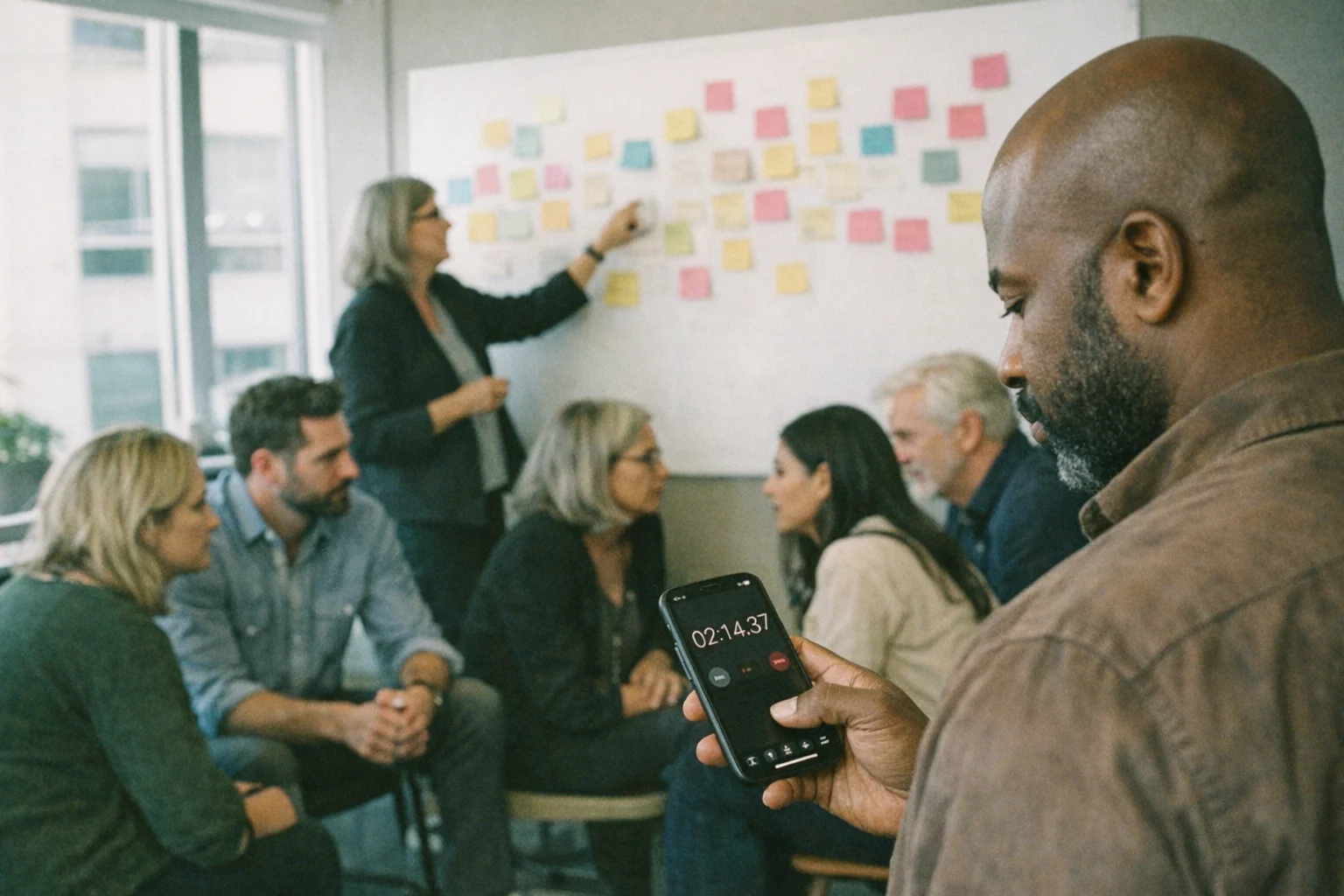
Most “leadership activities” are icebreakers with a fresh coat of paint. Managers don’t need more icebreakers. They need reps that build communication, delegation, decision quality, and trust in conditions that look like real work.
The activities below are built for that. Short, practical, and rooted in what actually shifts behavior on teams.
A quick grounding. People learn leadership mostly by doing, with reflection and feedback closing the loop. That’s the spirit behind the well-known 70-20-10 pattern for development and the experiential learning cycle that turns an experience into insight you can use. Center for Creative Leadership’s overview of 70-20-10 and University of Florida’s explainer on Kolb’s learning cycle are concise primers. (ccl.org)
Also worth keeping in mind: a manager shapes most of the engagement signal on a team, and learning sticks best when it’s embedded in the flow of work. That isn’t opinion. It’s shown in Gallup’s analysis of manager impact and in Deloitte’s research on learning in the flow of work. (gallup.com)
Above all, none of this works without psychological safety. Leaders who normalize candor and fallibility get better learning and better performance. For a quick synthesis, see Harvard’s Working Knowledge summary of Amy Edmondson’s research. (library.hbs.edu)
Leadership is situational. You don’t build it with lecture slides. You build it by putting managers in decision, delegation, and conflict moments with enough psychological safety to try, miss, and adjust.
Two patterns make these activities effective:
Keep the choreography simple so the energy stays on the skill, not the setup.
If you want a mental model, the above mirrors the do–reflect–conceptualize–try loop from experiential learning that accelerates skill formation. UF’s overview of Kolb is a solid reference. (citt.ufl.edu)
Each activity below includes a tight purpose, when to use it, how to run it, and what to watch for. Adjust for in-person, hybrid, or fully remote without fuss.
Purpose: Improve decision quality by stress-testing plans before committing.
Use when: A team is excited about a plan and moving fast.
How to run: State the decision. Imagine it failed spectacularly in six months. In silence, everyone lists reasons why. Share, cluster, and pick the top risks to mitigate. Credit for this approach goes to Gary Klein’s premortem method, summarized well in Psychology Today and operationalized in McKinsey’s bias-busters piece. (psychologytoday.com)
Debrief: Which risks changed our approach today? What bias did we catch early?
Remote tweak: Use a silent board for idea generation, then voice only for top risks.
Watch out: Don’t let senior voices open the share-out. Go last.
Purpose: Practice matching outcomes to ownership with clear guardrails.
Use when: Work is bottlenecking at the manager.
How to run: Post real upcoming outcomes. Team members “bid” for ownership by stating why they’re a fit and what support they’ll need. Manager sets constraints and accepts bids. Update RACI or owner notes on the spot.
Debrief: What made a bid strong? What support terms were unclear?
Remote tweak: Use a shared doc. Emoji bids keep it lively.
Watch out: If the manager keeps the hardest outcomes “for now,” the lesson dies.
Purpose: Build active listening and question discipline.
Use when: Meetings drift or answers come before understanding.
How to run: In triads, one person speaks on a real challenge. Second only asks clarifying questions. Third observes listening behaviors. Rotate.
Debrief: Which questions unlocked new info? What habits got in the way?
Remote tweak: Cameras optional. Listening improves when people aren’t performing.
Watch out: Advice disguised as a question counts as advice.
Purpose: Make reflection routine and fast.
Use when: Projects end without learning, or learning lives in a doc nobody reads.
How to run: At the end of a sprint or meeting, run one tight round: “Keep, change, try.” Everyone gives a single sentence for each.
Debrief: Pick one “try” with an owner and date. Done.
Remote tweak: Chat thread works well. Pin it.
Watch out: Don’t let it become a vent session. Short is your friend.
Purpose: Teach managers to set clear guardrails and let the team design inside them.
Use when: You see “how” micromanagement.
How to run: Manager frames an outcome with three constraints that matter. Team proposes at least two viable approaches inside those bounds. Compare, choose, and assign.
Debrief: Did the constraints clarify quality, risk, and timing? What was missing?
Remote tweak: Pre-share the constraints. Use breakout debate.
Watch out: Constraints should be real, not fake choices.
Purpose: Build empathy for peers and cross-functional partners.
Use when: Handoffs are messy or “they don’t get us” energy is rising.
How to run: For the retro, each person argues from a partner team’s perspective. Name frictions and suggests fixes that help both sides.
Debrief: What did we learn from arguing the other side?
Remote tweak: Assign partners and share notes ahead of time.
Watch out: Don’t caricature the other team. Stay generous and specific.
Purpose: Improve idea quality by reducing anchoring and airtime bias early.
Use when: The first loud idea keeps winning.
How to run: Share the prompt. Everyone writes ideas in silence for a few minutes. Then group, label, and discuss. The quality jump is immediate.
Debrief: Which ideas would we have missed without the silent phase?
Remote tweak: Use a board where everyone types at once.
Watch out: Keep the silence real. No “quick clarifying question.”
Purpose: Normalize frequent, specific feedback.
Use when: Feedback shows up twice a year and lands like a surprise.
How to run: For two weeks, pair up. Each day, exchange one micro note: “One thing you did that worked,” “One nudge for tomorrow.” Tie it to observable behavior.
Debrief: Which phrases made it easier to hear? Which formats felt natural?
Remote tweak: Use DM voice notes. Faster and warmer.
Watch out: Vague praise and personality labels. Stick to behavior.
Purpose: Practice when and how to escalate without drama.
Use when: Escalations either never happen or always happen too late.
How to run: Bring a current thorny issue. In pairs, write a crisp escalation note: the decision, the risk, tradeoffs considered, and the ask. Share and refine.
Debrief: Which notes respected the recipient’s attention? What context was missing?
Remote tweak: Give a simple template. Collect examples in a shared folder.
Watch out: Long backstory. Lead with the decision needed.
Purpose: Expose real priorities under constraints.
Use when: Everything is “top priority.”
How to run: Give each manager a fixed “budget.” Auction off competing values (speed, quality, scope, team health, compliance). Force tradeoffs and discuss outcomes.
Debrief: Where did we overpay? Underinvest? What tradeoffs match our reality?
Remote tweak: Polling tools work well.
Watch out: Treat it as play-acting and you’ll miss the point.
Purpose: Build constructive dissent and better strategy.
Use when: Plans feel polished but untested.
How to run: For one hour, a small “red team” attacks a live plan using agreed rules. The “blue team” can only ask clarifying questions, not defend. Swap and repeat if time allows.
Debrief: What vulnerabilities matter now? What do we change this week?
Remote tweak: Record it so absent stakeholders hear the substance, not the tone.
Watch out: Keep it about ideas, not identities.
Purpose: Turn the office, campus, or event space into a live leadership lab.
Use when: You want an energetic, hands-on session that practices multiple skills at once.
How to run: Set up an app-based scavenger hunt where managers complete short missions tied to listening, decision speed, stakeholder mapping, and clear delegation. With Scavify, you can mix photos, videos, GPS check-ins, and Q&A, automate scoring, and run it in person or hybrid without babysitting the logistics.
Debrief: Pull top submissions on screen. Call out crisp decisions, clear guardrails, and strong stakeholder instincts.
Remote tweak: Use browser access so distributed teams can play side-by-side.
Watch out: Don’t bury insight under theatrics. Keep missions tight and work-adjacent.
Example missions:
Purpose: Push decisions down one level with clarity.
Use when: The manager is the default decider.
How to run: Pick a real upcoming decision. The manager defines outcome, constraints, and acceptable risk. A direct report makes the call. Manager observes and supports.
Debrief: What was hard to let go of? What clarity accelerated the decision?
Remote tweak: Write the constraints. It reduces later second-guessing.
Watch out: Shadow control. If you overrule, the ladder collapses.
Purpose: Improve influence by mapping people, power, and intent clearly.
Use when: Initiatives stall in the mushy middle.
How to run: In pairs, sketch the stakeholders for a live initiative. Mark influence, interest, and likely concerns. Script two outreach moves per quadrant.
Debrief: Who did we overlook? Where will trust break first?
Remote tweak: Use a template board so maps are comparable.
Watch out: Confusing titles with influence. Follow the work, not the org chart.
Purpose: Make decision quality visible and improvable.
Use when: You want fewer debates about outcomes and more focus on process.
How to run: After key decisions, rate the process on a short scorecard: problem clarity, options considered, tradeoffs named, dissent invited, premortem done, owner named. Track trends over a quarter.
Debrief: Which habit, if improved, would upgrade most decisions?
Remote tweak: Simple form. Auto-graph the results.
Watch out: Weaponizing the scorecard. It’s for learning, not punishment.
Make it feel safe. Managers copy what you do, not what you say. Admit a miss. Ask a sincere question you don’t know the answer to. That’s how safety shows up. For the research backbone, see Harvard’s summary of psychological safety. (library.hbs.edu)
Tie to real work. Use live backlog items whenever possible. Activities gel when the outcome matters tomorrow morning. That aligns with the idea of learning in the flow of work. (deloitte.com)
Ritualize the debrief. The activity gets attention. The debrief drives learning. Map your debrief questions to the experiential loop so insight becomes habit. A quick look at Kolb’s model helps facilitators stick the landing. (citt.ufl.edu)
Coach the managers, not just the team. The single biggest lever on engagement is the person leading the work. That’s a great reason to invest in their reps, not just their reports. See Gallup’s data on manager impact. (gallup.com)
Use light structure to beat bias. Techniques like premortems, red teams, and silent starts aren’t theater. They’re evidence-backed nudges that reduce predictable errors. If you want a deeper cut on structured decisions, this MIT Sloan piece on strategic decision structure is useful. (sloanreview.mit.edu)
Start with activities that normalize listening and delegation: Listening Trios, Delegation Market, and One-Round Debrief. They build core habits quickly without heavy setup. Add Decision Premortem once they’re making calls with real stakes.
Short is better. Most of the options here fit comfortably into a team meeting block or a working session. The goal is repetition over time, not a single marathon workshop.
Favor silent ideation, short turns, and shared boards so people can contribute without jockeying for airtime. Use simple templates and keep cameras optional when listening is the skill.
Tie every activity to a live piece of work and a clear behavior. Explain the “why,” run it tight, and debrief to one next step that shows up in the team’s calendar, backlog, or board.
Track one visible behavior per manager for a quarter. Examples: number of decisions delegated with constraints, premortems run on material decisions, or stakeholder maps updated monthly. Look for fewer surprises and faster, clearer decisions.
They’re not magic, but they reliably surface threats and reduce overconfidence when used well. For an accessible overview, see Gary Klein’s premortem method write-up and McKinsey’s practical guide. (psychologytoday.com)
They shine when you want to practice multiple skills at once in a live environment. With a platform like Scavify, you can automate scoring, mix challenge types, and run hybrid-friendly missions that map to real leadership moves without a big facilitation load.
Not for most. A manager with basic facilitation chops and the discipline to debrief can run them. Use an outside partner when the stakes are high, the team is stuck, or you want a bigger activation across locations.
Good activities make passive participation active. Keep them short, close to real work, and relentlessly debriefed. If you want to turn your campus, office, or event into a leadership lab with built-in scoring and hybrid support, Scavify makes the logistics light so you can focus on the learning.