Solutions
Your first hunt, live this afternoon.
Free to start · No download for participants
Explore mall scavenger hunt ideas with clever prompts, ready-to-use examples, setup steps, group variations, scoring ideas, and planning tips.
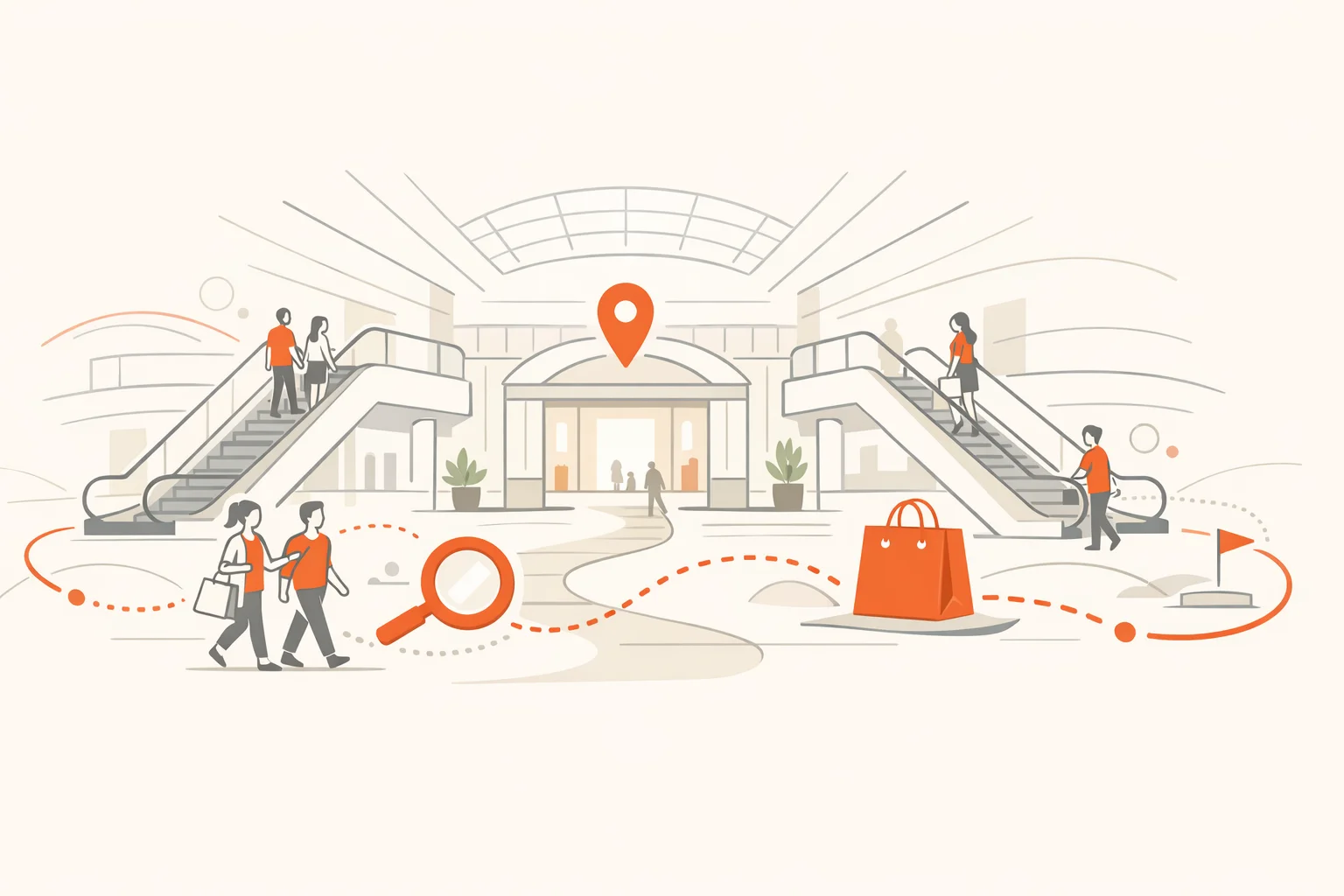
Malls are built for movement and discovery. Clear wayfinding. Clusters of micro-environments. Food, light, sound, and a steady pulse of people. That mix turns a mall into an ideal game board for teams, students, families, and brand activations when parks are rained out or downtown routes are spread too thin.
A well-run mall hunt isn’t a free-for-all with phones up and security on alert. It’s structured. It flows. It respects the space and still creates real moments of playful competition. The ideas and templates below come from formats we’ve seen work repeatedly — the kind that keep energy high without asking stores to become sets in your production.
You’ll get ready-to-use challenge lists, riddle-style prompts, scoring options, and the subtle decisions that make the whole thing feel effortless on event day.
Malls compress variety into a walkable footprint. That means fast cycles between challenge, win, and move. You get indoor comfort, predictable lighting for photos, accessible facilities, and natural gathering points like atriums and food courts.
They also come with rules. Respect them. Most centers publish a code of conduct and may restrict filming or photography without permission. For example, Simon centers outline guest conduct and monitoring practices in their policy, and many Westfield properties state that photography requires advance approval. Link your planning email to the relevant pages for your venue: see the Simon code of conduct and Westfield’s Valley Fair code of conduct or US terms and conditions.
A mall scavenger hunt is a timed, team-based game where players complete challenges — photos, videos, GPS check-ins, QR scans, and trivia — that can only be solved inside or around a mall.
Good hunts feel quick and obvious to start, then cleverly varied. The space stays a character in the story, not a prop. That’s the line between organic fun and “please stop filming in my store.”
Here’s the structure we keep coming back to for smooth mall hunts.
If your event has more operational complexity — conference crowds, brand street teams, or holiday traffic — borrow simple crowd guidance from public event playbooks. The CDC’s event guidance is a helpful lens for basics like flow, access, and clear exits even in non-health contexts: see CDC’s large events guidance.
Points, badges, and leaderboards work when they spotlight progress, not just winning. Studies across education and behavior change show gamification can increase short-term motivation and participation, particularly with clear goals and social feedback. See meta-analyses in Behavioral Change & Education and Educational Psychology Review.
Keep it simple:
Nobody quits a game they’re scoring in. Make progress visible early and often.
Each list mixes the five core challenge types: Photo (250 pts), Video (300 pts), QR (200 pts), GPS (200 pts), and Trivia (150 pts). They’re written store-agnostic so your hunt survives tenant shuffles.
These lean on observation and light creativity. They warm up a group fast.
Anchor movement with clues tied to mall directories, icons, and landmarks in common areas.
Keep these playful and non-branded where possible to avoid approvals. Think wordplay, not endorsements.
Great for students and thrifty teams. No purchases required.
Gentle tasks with clear targets and no store entry required. Ideal with chaperones.
Corporate teams. Add collaboration twists: synchronized videos, role-based tasks (navigator, reporter, strategist), and a “debrief photo” that ties back to a value or theme. Rotate leadership across challenges to spread participation.
Orientation and onboarding. Tie clues to campus services if your mall connects to transit or student housing. Use GPS check-ins for essential wayfinding and end at a basecamp where intros and quick wins happen face to face.
Conferences and events. Design around session breaks. Keep challenges within a one- to two-minute radius of the expo hall and use a timed “happy hour bonus” to pull people to sponsor zones without bottlenecks.
Youth groups and birthday parties. Shorter timeline, bigger celebration at the end. Give chaperones the authority to skip any challenge that draws a crowd. NCMEC’s family “going out” checklist is a good pre-brief tool for parents and guardians: NCMEC KidSmartz going-out checklist.
Tourism activations and brand experiences. Think “choose your path” cards so visitors write their own story. Keep all prompts store-agnostic unless you’ve partnered with tenants.
Most friction in malls isn’t about fun, it’s about flow. Protect it.
A little upstream work saves the day-of scramble.
If you’d rather not duct-tape forms, spreadsheets, and chat apps, run the whole thing in a purpose-built platform. Scavify’s scavenger hunt app handles challenge variety, automated scoring, live leaderboards, and plays in a browser or the mobile app, which is helpful when not every participant wants to download something.
Shorter than you think. Most groups stay engaged for a compact window with fast wins and a visible finish. Set a clear deadline, keep challenges tight, and give just enough time pressure to make decisions without running.
If you’re a small group and you keep activities to common areas with store-agnostic prompts, you usually won’t need a formal permit. Still, read the venue’s code of conduct and photo rules, and send a courtesy note to management if you expect bigger crowds or staging.
Only with permission. Many centers restrict photography or filming beyond casual personal use, and individual tenants may have their own policies. Link your team brief to the property’s conduct and terms pages so nobody is surprised.
Use clear visual prompts, avoid timed sprints, and choose quieter checkpoints. Provide written instructions and a map with optional routes. Build a couple of challenges around calm spaces like reading corners or plant areas.
Small, visible wins. Think bragging rights, digital badges, or themed trophies rather than high-dollar items. Focus your incentives on participation and creativity awards so a single sprint doesn’t decide everything.
Use chaperones and set physical boundaries. Keep cameras on your team and public features, share a meet-up plan, and run a quick personal-safety talk. The NCMEC’s concise outing checklist is solid pre-brief material for guardians.
If you reuse anything from this guide, reuse the rhythm: short, varied prompts, clear wayfinding, and a finish that feels like a reunion rather than a scoreboard reveal. That’s how a mall turns into a game board people will happily walk again.