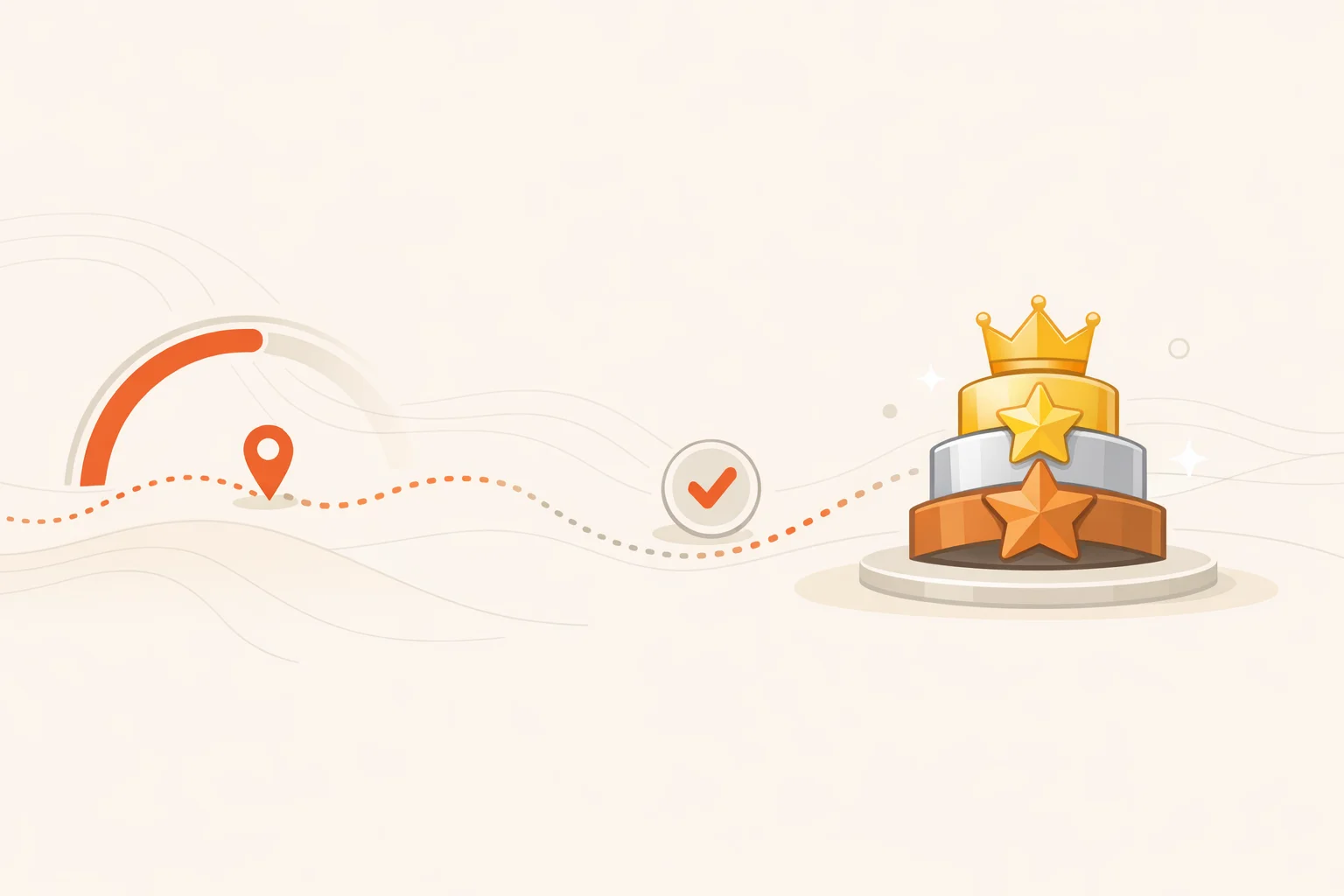
Loyalty programs work when they make progress feel tangible, rewards feel worth it, and participation feel natural. Gamification is how you turn those levers on with intent. Not gimmicks. Clear mechanics that nudge real behavior: one more visit, a bigger basket, a new product tried, a friend referred.
A pattern we keep seeing: programs that make progress visible and wins frequent outperform those that bury rewards behind vague thresholds. People engage when they can see how today’s action moves them closer to tomorrow’s benefit. The psychology is not new. The application is often the miss.
If you’re refreshing an existing program or building one from scratch, this guide cuts to what actually works: the mechanics to use, where they fit, how to implement them without turning your team into full‑time game ops, and how to measure the lift with credibility.
- Design for behaviors, not badges; connect mechanics to one concrete action you want more of.
- Make progress visible early; the goal‑gradient effect accelerates participation near rewards.
- Tiered status drives spend, but demotion mishandled creates churn; plan guardrails.
- Measure ROI on incremental behaviors: frequency, AOV, and first‑to‑second purchase conversion.
- Launch in seasons: test one mechanic per quarter and retire what doesn’t move numbers.
What gamification really adds to loyalty programs
At its best, gamification is a toolkit for shaping participation. Think points, levels, progress bars, streaks, quests, surprise rewards, and public recognition. Used well, these mechanics make the next action obvious and emotionally rewarding. Used poorly, they make a simple program feel like homework.
Two evidence‑backed ideas sit under most effective loyalty gamification:
- Progress accelerates behavior. The classic research on the goal‑gradient and endowed‑progress effects shows that people work harder as they get closer to a reward, and that giving them a small head start accelerates them further. See the original findings in a café punch‑card study and related experiments on endowed progress in loyalty contexts in Journal of Marketing Research and Journal of Consumer Research.
- Well‑designed mechanics lift engagement. A large literature review found positive effects for gamification when mechanics match the context and are measured properly. The nuance matters; copy‑pasting badges rarely works. See the synthesis in Hamari, Koivisto, & Sarsa (2014).
That’s the science. The job is translating it into a program members actually use.
Pro tip
Make progress literal. Use a progress bar, punch‑card, or tier meter on every member screen. A small head start on day one is the cheapest acceleration you can buy.

The mechanics that move behavior now
Not every mechanic fits every brand. Pick what maps cleanly to one or two behaviors you want more of in the next quarter. Keep the first version simple; add depth after you’ve proven lift.
- Points with anchored value. Points work when members know what they’re worth. Tie points to clear redemptions (e.g., “500 points = any drink up to $6”). Avoid fuzzy catalogs. McKinsey’s analysis of loyalty programs reinforces the value of straightforward, member‑visible economics and personalized offers; make the tradeoffs obvious and fair (McKinsey).
- Status tiers with real privileges. Tiers help when higher status changes the experience, not just the badge. Early access, priority support, better earn rates, partner perks. Research on multi‑tier programs shows status can increase share of wallet, but design and communication quality determine the impact (Industrial Marketing Management).
- Endowed progress. Start new members with visible progress (e.g., “2 of 10 punches completed”). Expect faster time‑to‑first‑reward and early repeat visits (Journal of Consumer Research).
- Quests and streaks. Time‑bound “do X by Y” challenges can spike frequency or product trial. Streaks build habit, but don’t make them brittle; allow forgiveness days so a missed Tuesday doesn’t erase a month.
- Surprise and delight. Variable rewards (not constant payouts) keep attention when used sparingly. Random bonus points, mystery gifts, or “golden hour” multipliers tap anticipation. Use with care and transparency; the point is energy, not manipulation.
- Referrals as co‑op play. Give members a reason to bring a friend and let both benefit. Simple is best: share link, friend makes first purchase, both unlock the same meaningful reward.
- Collections and badges. Make them scarce and meaningful. Badges tied to exploration or mastery (“try 5 origins,” “complete the sustainability tour”) beat badges for routine transactions.
- Public recognition. Lightweight leaderboards or “top contributor” highlights can spark friendly competition when it suits the brand. Keep it opt‑in and reset cycles frequently so newcomers feel in play.
People don’t quit a game they feel like they’re winning.

Examples and use cases across industries
- Coffee and QSR: Progress bars and short‑window challenges tied to dayparts (“Breakfast streak: 3 days for a bonus”) keep frequency up. Some brands have layered journeys and interactive challenges into their rewards ecosystems to deepen engagement, as seen in Starbucks’ public experiments blending rewards with interactive tasks (Axios).
- Grocery and retail: Weekly quests to try new categories plus “shop the list” bonuses can nudge basket mix. Emerging research in online grocery suggests gamified elements can strengthen engagement and lift purchasing when aligned to real shopper goals (Journal of Retailing and Consumer Services).
- Travel and hospitality: Tiered status is the backbone; make benefits felt on the ground. Thoughtful treatment of demotion matters, as mishandled downgrades can trigger negative emotions and avoidance intentions (Journal of Retailing and Consumer Services).
- Subscription and DTC: Streaks for product usage, seasonal collections, and “anniversary quests” that renew the story each cycle tend to outperform evergreen points‑only setups.
- Experiential and in‑person activations: When your program needs to move people through places or exhibits, a flexible scavenger hunt app can deliver location‑based check‑ins, quizzes, and photo quests that roll up into your loyalty narrative.

A practical blueprint to design and launch
Most teams try to ship everything at once. That’s how complexity sneaks in. Treat your program like a product with seasonal releases.
1) Frame the behavior. Write the one sentence that names the behavior you need more of in the next 90 days. Examples: “Increase second purchase within 30 days,” “Drive one add‑on item in 40 percent of baskets,” “Lift weekday visits 10–2.”
2) Map one mechanic per behavior. Pick the mechanic that makes that behavior feel rewarding now. If it’s second purchase, endowed progress plus a short quest works. If it’s AOV, bundle bonuses or “complete the set” collections fit. For more systematic mapping, the Octalysis framework is a useful lens to align mechanics with motivational drives.
3) Make value explicit. Don’t hide the exchange. If 500 points equals a free $6 drink, say that everywhere. Members do mental math fast; you want that to work in your favor (McKinsey).
4) Instrument for answers. Before launch, decide how you’ll answer: Did frequency move? Did AOV move? Did new product trial move? Set up events for enroll, activate, quest start, quest complete, earn, redeem, lapse, and reactivation.
5) Launch small, then season. Start with a tight mechanic and a single story arc. At the 4–6 week mark, look at deltas vs. a matched cohort or prior period. Keep what worked. Retire what didn’t. Ship the next seasonal layer.
6) Design for forgiveness. Streaks, tiers, and quests need resets and safety valves. A missed day shouldn’t erase a month. A demotion shouldn’t feel like punishment. More on that below.
7) Close the loop with personalization. Loyalty should not live alone. Use signals from the program to tailor offers and content. Large‑scale surveys and practitioner research consistently find personalization a defining driver of perceived program value when done transparently and with clear benefit to the member (Deloitte).

Measuring ROI with the right metrics
Vanity metrics make slides look good. Operator metrics get budget next quarter. Start there.
Anchor metrics
- Activation rate: enrolled members who earn or redeem within 14–30 days.
- Frequency lift: change in visits per active member vs. matched non‑members.
- AOV lift: change in average order value for members when challenges are live.
- Product trial rate: percentage of members trying target categories during quests.
- First‑to‑second purchase conversion: percent of first‑timers returning within 30 days.
- Redemption rate and liability: percent of points redeemed and trend in outstanding liabilities.
- Churn and reactivation: member churn during/after demotions; percent reactivated via quests.
How to attribute sanely
- Use matched cohorts. Compare activated members to look‑alike non‑members for the same period. Imperfect but honest.
- Time‑boxed experiments. Run a quest in half your footprint or a subset of the list. Ship learnings, then scale.
- Beware self‑selection. Your best customers join first. Look at incremental lift after enrollment, not just level differences.
A simple ROI frame
- Estimate incremental gross margin from frequency lift, AOV lift, and new product trial during the test window.
- Subtract the cost of rewards, discounts, and operations attributable to the mechanic.
- Track reactivation tail. Some quests pay off in later periods; don’t cut too early.
For evidence that mechanics like progress bars and endowed starts can accelerate real behavior (and why), see the original goal‑gradient and endowed‑progress work in Journal of Marketing Research and Journal of Consumer Research. For a broader scan of what tends to work (and when), see the literature review by Hamari et al.
Common pitfalls and how to avoid them
- Badge spam. If a badge doesn’t change the experience or unlock value, cut it.
- Opaque economics. Members smell funny math. Anchor point value to real items and publish earn/redeem rules in plain language.
- One‑speed programs. Newcomers need quick wins; veterans need depth. Design different arcs.
- Brittle streaks. Perfection or reset mechanics usually backfire. Add grace days and catch‑up boosts.
- Punishing demotion. Downgrades can feel unfair and trigger avoidance or revenge intentions if handled poorly. Research across services shows demotion effects can be asymmetric and emotionally charged; mitigate with transparent rules, soft‑landings, and make‑goods where warranted (Journal of Retailing and Consumer Services; Journal of Marketing).
- Set‑and‑forget. Mechanics decay. Plan seasonal refreshes with clear retirement criteria.
Watch out
Status tiers can drive outsized spend, but mishandled downgrades carry outsized downside. Publish criteria, give warning windows, and design soft‑landing paths before you launch tiers.
Platform options and build‑vs‑buy notes
You don’t need an enterprise rebuild to test the first mechanic. Directionally, teams choose from a few paths:
- Enterprise suites for end‑to‑end loyalty and pricing integration. Great when you need tight POS/CRM ties and a mature benefit catalog. Look for transparent point economics and campaign‑level testing.
- Modular loyalty tools that add points, tiers, and quests without a full replatforming. Useful for mid‑market brands layering in challenges seasonally.
- Low‑code overlays to run time‑boxed quests or pop‑up experiences without changing your core program.
- Experiential layers for activations in venues, campuses, or cities. Here, a browser‑plus‑app platform that can run quizzes, photo prompts, GPS check‑ins, and instant rewards keeps operations sane at scale. That’s where Scavify shows up in practice.

Quick‑start playbooks by context
Use these as starting points. Trim aggressively.
Retail & ecommerce (frequency + basket mix)
- Launch a 4‑week “Complete the set” collection tied to under‑penetrated categories. Show a progress bar with an endowed start.
- Run a mid‑week “golden hour” multiplier once per week. Keep the window short; publish times upfront.
- Trigger a referral quest after members redeem their first reward. Same benefit for both sides.
Coffee & QSR (daypart frequency)
- Breakfast streak with grace days. Bonus unlocks at 3 and 7 days. Show the meter on every receipt and screen.
- “Try something new” quest with three rotating items per week. Use a low‑friction booster (double points) for one SKU.
Travel & hospitality (status you can feel)
- Tie tier benefits to friction reducers members actually feel: earlier check‑in windows, preferred seating, complimentary upgrades when inventory allows.
- Communicate downgrades with a 60‑day warning window and offer an earn‑back path with a capped challenge.
Subscription & DTC (renewal + product engagement)
- Anniversary quests that reward trying features or add‑ons tied to retention drivers.
- Seasonal collections for limited‑time lines. Retire badges quickly to preserve meaning.
FAQs
What does “good” gamification look like in a loyalty program
Good programs make the next action obvious, visible, and rewarding. That means clear point economics, progress you can see, early wins for newcomers, and deeper perks for veterans. If a mechanic doesn’t move a target behavior or improve the experience, it’s clutter.
How many tiers should a program have
As few as you can get away with. Research shows tiers can motivate, but only when higher status changes the experience. If benefits are thin or demotion is frequent, fewer tiers with stronger perks usually win (Industrial Marketing Management).
Are streaks worth the risk of frustration
Yes, with forgiveness. Streaks build routine, but brittle streaks cause drop‑off. Add grace days, offer catch‑up boosts, and avoid “all or nothing” resets that wipe a month of progress.
How do I avoid rewarding only discounts
Anchor some rewards in status (priority access, experience upgrades), some in discovery (collections, partner perks), and keep discounts for targeted lifts. Clear value doesn’t have to mean margin erosion when the mix is balanced (McKinsey).
What’s the simplest experiment to run first
Endow progress on day one and ship a 14‑day quest for a second purchase. Measure first‑to‑second conversion, time‑to‑redeem, and frequency vs. a matched cohort. Keep the reward meaningful and the story simple.
How do I handle demotions without blowback
Publish criteria at join. Give advance warning. Offer a one‑time soft‑landing challenge to re‑earn status. Studies show unfair or abrupt demotion triggers strong negative reactions; design to reduce perceived unfairness (Journal of Retailing and Consumer Services).
Is there a framework to choose mechanics
Octalysis is a practical lens to map mechanics to motivation (ownership, accomplishment, unpredictability, social influence, and more). It’s not dogma, but it helps teams avoid “points everywhere” thinking (Octalysis).
Where does content fit in all this
Great mechanics need a story. Name quests, theme seasons, spotlight member achievements, and rotate the narrative every few weeks. The structure stays; the wrapper moves. That’s how programs avoid staleness without rebuilding.
If you strip the buzzwords, this is operational craft. Design one behavior. Pick one mechanic. Make value visible. Measure like an operator. Then, season by season, keep what works and quietly retire what doesn’t. That’s how loyalty programs stay alive in the wild.