Solutions
Your first hunt, live this afternoon.
Free to start · No download for participants
Use employee engagement best practices to strengthen participation, trust, and retention with practical examples, rollout tips, and measurable next steps.
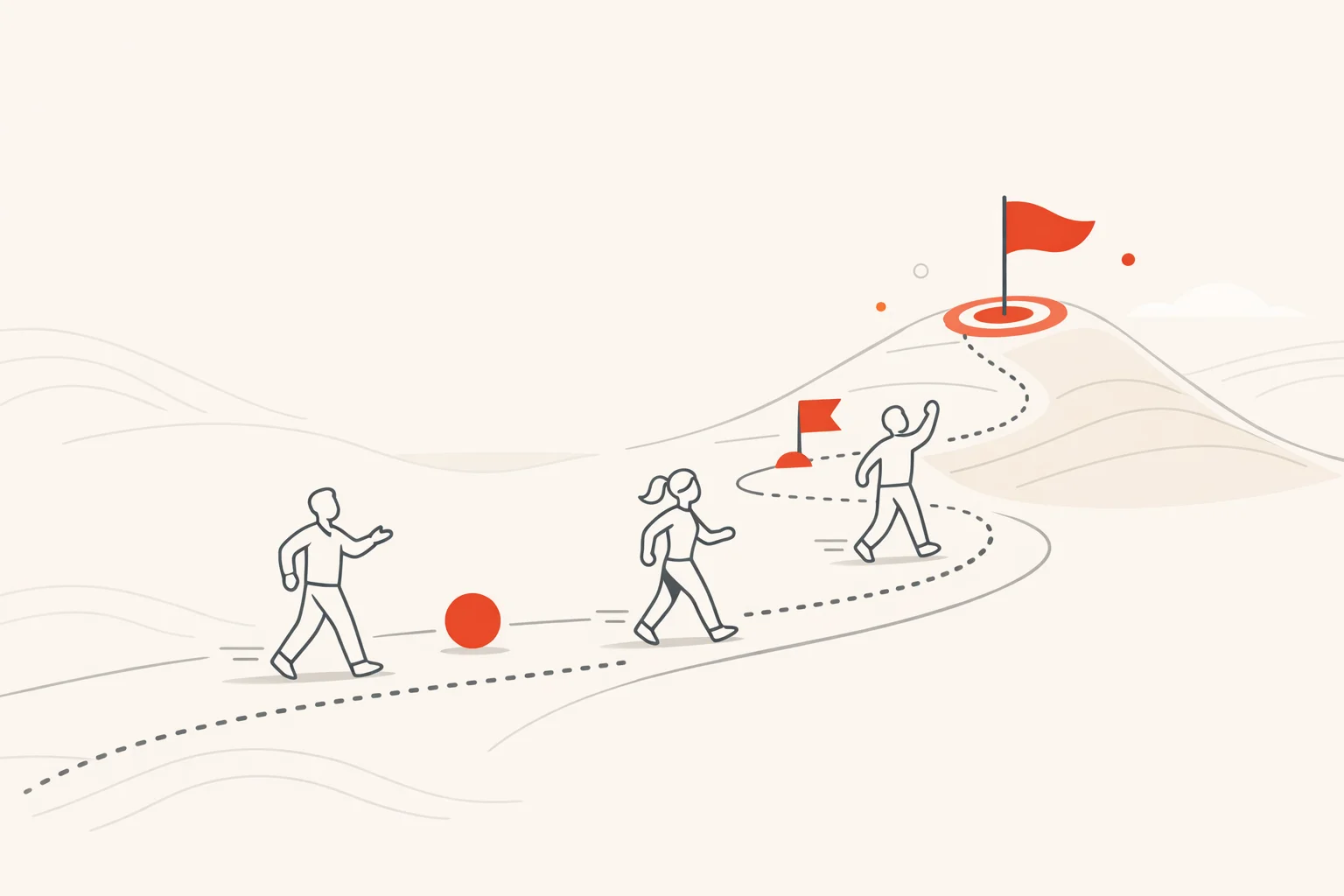
Employee engagement isn’t a pep talk. It’s the sum of daily conditions that make people decide whether to give you their best or just their minimum. The companies that get this right don’t “launch a program” and wait for the survey to move. They run a system. Clear expectations. Useful feedback. Visible growth. Regular recognition. And small moments of participation that make people feel part of something, not managed by it.
The patterns below are the ones that keep working. They’re practical, measurable, and durable across industries. They don’t require a cultural rebrand or a year of workshops. They do require consistency.
A pattern we keep seeing: engagement climbs when daily operating practices shift, not when slogans do. Companies that treat engagement like a continuous operating system (cadences, rituals, dashboards) outperform those that treat it like an annual initiative. Deloitte captured this years ago with a simple truth: organizations need real‑time listening and local adjustment, not a once‑a‑year pulse. (deloitte.com)
Global engagement slipped again in 2025 and sat around one in five employees worldwide, a reminder that the default workplace still drains more energy than it returns. That’s a headwind and an opportunity if you’re willing to run a tighter system. (prnewswire.com)
Trust is your force multiplier. Across markets, “my employer” remains among the most trusted institutions. When leaders use that trust well, they earn more voice, faster adoption, and easier change. When they waste it, the slump deepens. (edelman.com)
Mental health isn’t a side program. WHO estimates depression and anxiety alone cost the global economy roughly 1 trillion dollars each year in lost productivity. Work conditions either worsen that bill or reduce it. (who.int)
Most teams tend to over‑index on one big event or a flashy platform and under‑invest in the weekly mechanics that make people feel connected. Shift your frame from “program” to “OS.”
In our experience, the OS mindset works because it forces you to define behaviors, time boxes, and owners. It also lines up with the research on continuous listening and local adjustment. (deloitte.com)
A pattern we keep seeing: engagement is largely a manager effect. The quickest lift happens when managers change weekly behaviors, not when HR changes messaging. Train for three moves:
What usually shifts the dynamic is not charisma. It’s consistency: setting goals, giving fast feedback, and removing roadblocks. Teach it. Observe it. Reward it.
Nobody quits a game they are winning. Your job is to make “winning” visible every week.
Trust rises when leaders show their work. Share context before decisions, not after. Bring employees into tradeoffs. Close the loop on every survey item you keep hearing about, even when the answer is “not now and here’s why.”
Why this matters: people still trust their employer more than most institutions. Use that to your advantage by making your company the most reliable source of accurate, timely information employees receive all week. (edelman.com)
Simple, durable practices:
Most engagement slumps show up first as calendar chaos, chat pings, and after‑hours creep. Set and enforce team norms that return focus time to people’s days.
Research on modern work patterns shows the cost of blurred boundaries and communication overload. Build safeguards in the system, not just advice in a handbook. (blogs.microsoft.com)
Career development isn’t a slide deck. It’s a set of real moves employees can see and take.
When growth is visible, people engage. When it’s foggy or political, they leave.
The most effective recognition has three traits: it’s quick, tied to behaviors you want repeated, and visible to peers.
Sustain it by making recognition part of your operating cadence, not an add‑on.
Engagement jumps when you swap passive content for active missions. Small, time‑boxed challenges turn “we value X” into “we did X today.”
If you want an easy on‑ramp, an app‑based challenge format is built for this. A modern scavenger hunt app lets you deploy photo, video, QR, GPS, and trivia missions that reinforce behaviors and culture across on‑site, hybrid, and remote teams with minimal setup.
The result: less telling, more doing. And a feed full of proof that your values exist in the wild, not just on posters.
You don’t need 40 metrics. You need a handful that managers can influence and employees can feel.
Empirical work in both public and private sectors keeps linking engagement (and nearby constructs like commitment and motivation) to performance, innovation, and trust. Keep the scorecard tight and actionable so line leaders own it. (oecd.org)
Month 1: Baseline and commitments
Month 2: Rituals and tools
Month 3: Feedback and visible adjustment
Rinse and repeat quarterly. That’s how culture turns into operations.
| Approach | One‑off events | Ongoing engagement system |
|---|---|---|
| Effect on day‑to‑day work | Short spike, little carryover | Weekly behaviors reinforced |
| Manager involvement | Optional | Built into 1:1s & rituals |
| Measurement | Activity counts | Outcome metrics tied to OS |
| Equity of participation | Extrovert‑skewed | Multiple ways to contribute |
| Trust impact | Neutral unless follow‑through | Compounds via closed loops |
| Cost to maintain | High peaks | Predictable, lighter lift |
Use these to activate values and generate evidence of progress.
Change manager behaviors weekly: expectation clarity, real 1:1s, and frequent specific recognition. Tie each to simple team rituals so they survive busy weeks.
Quarterly is a useful rhythm when paired with monthly manager 1:1s and visible follow‑through notes. Deloitte’s guidance on continuous listening supports local, real‑time adjustment over annual cycles. (deloitte.com)
Yes, but policy alone won’t do it. SHRM’s recent benefits research shows flexibility remains a differentiator even as some employers pull back. Pair policy with team‑level norms that protect focus and reduce after‑hours creep. (shrm.org)
A big one. WHO estimates depression and anxiety cost about 1 trillion dollars annually in lost productivity. Manager training to recognize distress and respond early is part of the solution. (who.int)
Across sectors, research links engagement and related constructs to outcomes like innovation, efficiency, and trust. Keep measures close to manager‑influenced behaviors so you can see the connection inside your own teams. (oecd.org)
Cut default durations, end with decisions, and reserve protected focus blocks. Microsoft’s work trend research highlights the cost of blurred boundaries and communication overload, so design norms that restore energy. (blogs.microsoft.com)
They’re the activation layer. Use them to translate values into action, generate stories worth sharing, and keep participation warm between big milestones.
If you’re building engagement into onboarding, training, or company‑wide culture moments, the same operating principles apply. Design for action, make progress visible, and keep the loop tight between input and change. That’s where participation turns into commitment.