Blog » Why Escape Rooms Are Good For Team Building At Work

Why Escape Rooms Are Good for Team Building at Work

Updated: June 11, 2026

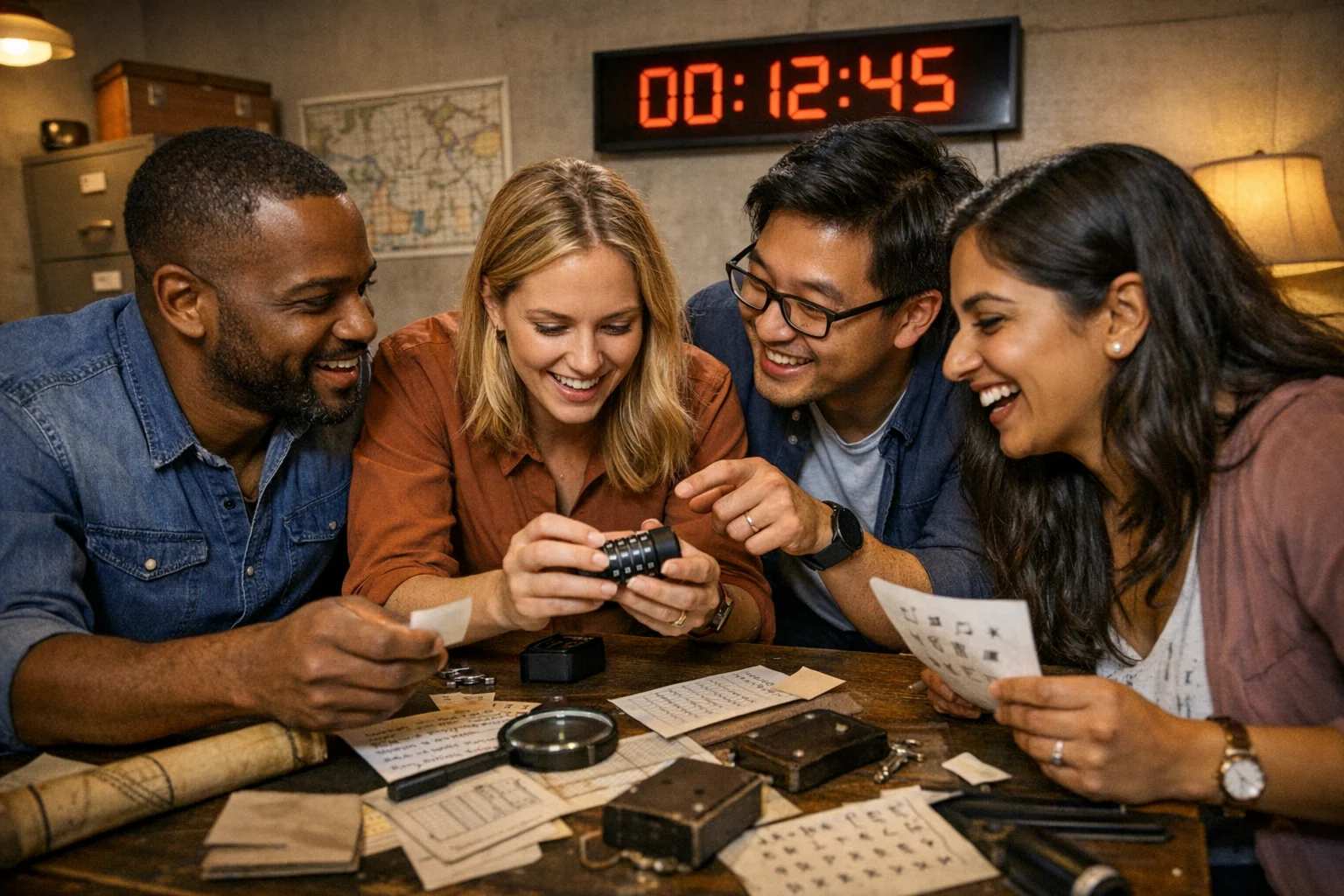
If you strip out the hype and the lock-picking bravado, escape rooms are simply compact collaboration labs. A clear goal. Real constraints. Shared information that no one person holds. And a ticking clock that forces decisions instead of endless discussion. In other words, the same ingredients your team wrestles with at work — minus the spreadsheets.

At a Glance

  • Why they work: They compress real teamwork behaviors (communication, role clarity, problem framing) into a vivid, low-risk setting.
  • What to focus on: The debrief. The learning lives there, not just in the puzzles.
  • Where the research points: Psychological safety, experiential learning, and team-building meta-analyses all support the core mechanics.
  • How to use them: Tie a short pre-brief to clear working norms, then debrief to one or two on-the-job commitments.

The short answer: why escape rooms work for teams

Because they create the conditions most teams rarely get in regular meetings: a single outcome that actually matters to everyone in the room, time pressure that forces prioritization, and information that only becomes useful once it’s shared. That mix quickly reveals how the team communicates, decides, and adjusts.

In our experience, the best outcomes happen when you don’t treat the room as the event. The room is the lab. The event is everything around it: pre-brief, observation, and debrief.

What escape rooms actually train (that shows up at work)

  • Shared problem framing. Good teams agree on “what game we’re playing” before sprinting at puzzles. That habit transfers directly to messy projects.
  • Clear roles and flexible handoffs. Someone scans. Someone organizes clues. Someone tries solutions. Rotating lightly prevents the loudest voice from owning the room and mirrors healthy role fluidity on real work.
  • Communication under a clock. You learn fast whether people narrate what they’re seeing, ask for help, or go silent when uncertain.
  • Psychological safety in practice. Solving puzzles rewards quick, imperfect ideas. It’s a safe place to say, “This may be wrong, but...” and be heard. Research on high-performing teams points to psychological safety as a critical enabler of learning and performance. (hbr.org)
  • Feedback loops. You try something, you see what happens, you adapt. That tight loop is exactly what projects need and so rarely get.

The evidence in plain English

A large meta-analysis of team-building interventions found meaningful, positive effects on team performance and affective outcomes. Translation: well-designed team building isn’t fluff; it moves the needle when it targets real teamwork processes. (journals.sagepub.com)

Escape-room-style activities align with experiential learning: do a thing, reflect on it, extract principles, try again. Teaching centers often describe this as a four-part cycle (concrete experience, reflective observation, abstract conceptualization, active experimentation). Use the room for the experience; use the debrief to work the other three steps. (cte.siu.edu)

There’s also growing research on educational escape rooms that require participants to integrate knowledge while communicating and coordinating in real time — the same collaboration muscles workplaces care about. Systematic reviews in healthcare education, for example, report gains in teamwork, communication, and satisfaction compared to traditional formats. (pmc.ncbi.nlm.nih.gov)

And when you ask why certain rooms feel more productive than others, the answer often comes back to norms that enable people to speak up, make small bets, and correct course. That’s psychological safety in action — a well-documented driver of team learning and performance. (hbr.org)

When escape rooms work best — and when they don’t

Best fits

  • Cross-functional groups that need to coordinate quickly.
  • New teams that haven’t built working norms yet.
  • Teams coming out of a tough stretch who need a shared win and a reset on communication.
  • Offsites where you can actually spend time debriefing, not sprinting to the next agenda block.

Use caution

  • High interpersonal conflict. A room can amplify existing friction. If you’re mid-escalation, fix that first.
  • Accessibility or sensory concerns. Tight spaces, dim lighting, and audio cues aren’t for everyone. Ask vendors detailed questions and plan alternatives.
  • One-and-done mindsets. If there’s no debrief or follow-through, you bought 60 minutes of entertainment, not development.

How to run an escape room event that actually builds skills

Think in three moves.

1) Pre-brief with purpose

  • Name the target behaviors. Pick two you want to practice (e.g., “narrate out loud” and “ask for help early”).
  • Set two lightweight norms. Examples: “Narrate what you see” and “Trade roles after 10 minutes.”
  • Assign an observer. One person watches patterns instead of playing. They’ll pay you back in the debrief.

2) Select the right room

  • Puzzle variety. Look for logic, spatial, pattern, and collaborative tasks so different thinkers contribute.
  • Difficulty you can scale. Ask vendors about hint systems and how they handle stuck teams.
  • Capacity and flow. Big teams should split across rooms with similar difficulty so no one is spectating for 40 minutes.
  • Accessibility and content. Confirm mobility needs, lighting, noise levels, and any themes that may be sensitive for your group.
  • Facilitation support. Some venues offer corporate packages with structured debriefs. Quality varies; preview their outline.

3) Play with intention

  • Rotate roles. Scanner, organizer, tester, timekeeper — pass the baton when energy stalls.
  • Narrate and label. “I’m trying this code on the red lock.” That simple habit cuts duplicate work.
  • Use the wall. Externalize clues so the group has a shared memory.

A simple debrief that translates fun into performance

What usually shifts the dynamic isn’t the final lock click. It’s 15–30 minutes of structured reflection while the experience is still vivid. Decades of simulation literature are clear: debriefing is where the learning crystallizes. (pubmed.ncbi.nlm.nih.gov)

Try this flow:

  • Facts first. What happened, in order? Keep it descriptive; no judgments yet.
  • Teamwork lens. Where did communication help or hurt? When did roles clarify or blur?
  • Transfer. What’s the one behavior from today we’ll use on our next project sprint?
  • Commitment. Capture one concrete team norm and one personal commitment. Post them somewhere you’ll actually see them next week.

If you want extra structure, pair advocacy with inquiry: state your observation, share the impact, ask a genuine question. It keeps the tone open and specific.

Remote or large teams? Run an escape‑room‑style challenge

You don’t always have space, time, or budget for a venue. The fix is to borrow the mechanics: puzzles that require shared information, time-boxed problem solving, and visible progress.

This is where Scavify naturally shows up. Teams complete app-based challenges that mimic escape-room collaboration without four walls or props. It scales to hybrid groups, drops in fast, and automates scoring so you can focus on facilitation.

Sample escape-room-inspired challenges you can run in Scavify:

  • [Photo | 40 pts]: Assemble three objects whose initials match our team name.
  • [Q&A | 30 pts]: Two clues, one code: 13-L, 1-A. What four-letter word unlocks it?
  • [Multiple Choice | 20 pts]: Which cipher swaps letters 13 places down the alphabet?
  • [Video | 60 pts]: Demonstrate a silent handoff system for passing clues under 10 seconds.
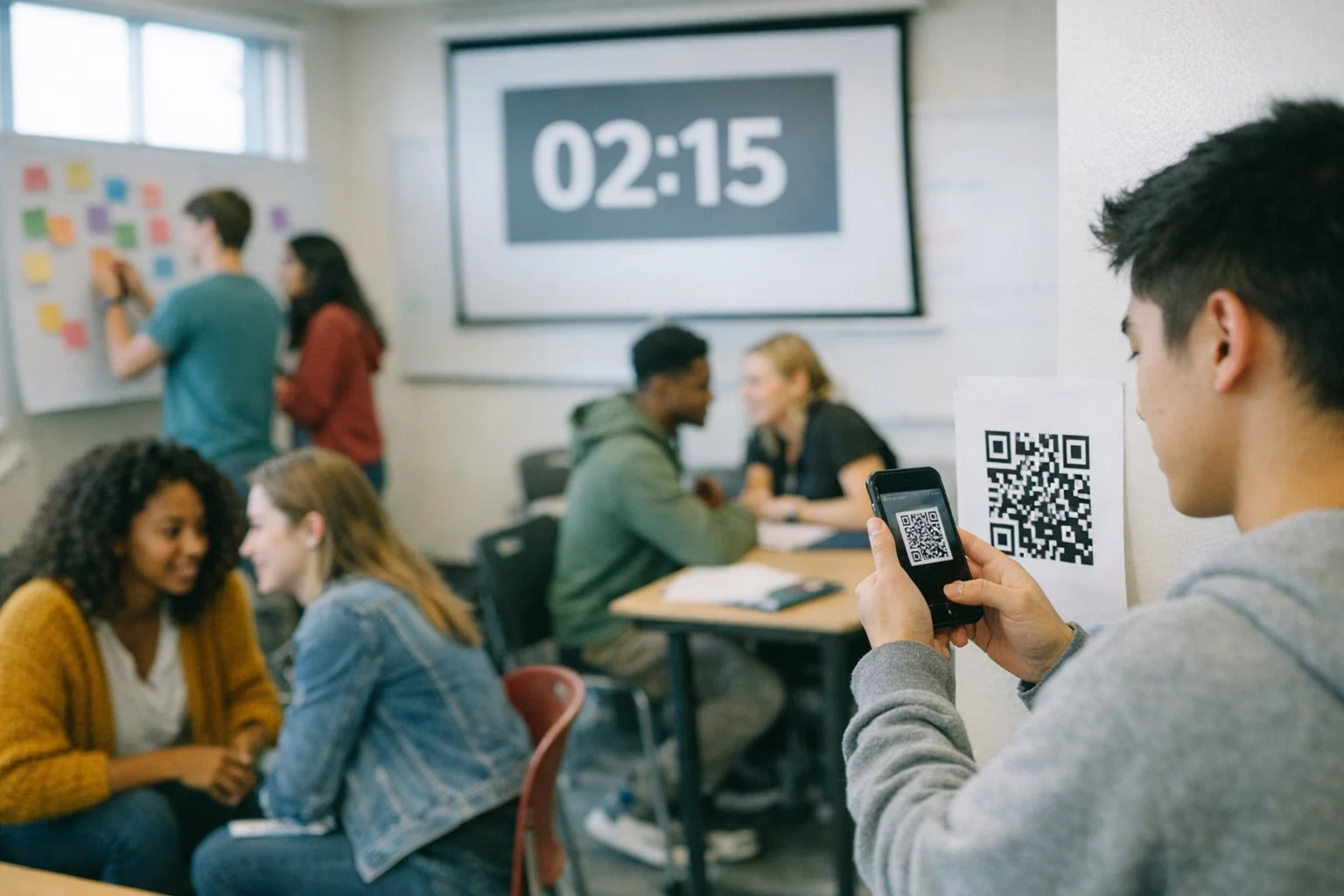
  • [QR Code | 50 pts]: Decode the location hint to find and scan the right code in your office.
  • [GPS Check-in | 70 pts]: Reach the “control room” waypoint and upload the team’s working map.

Logistics that keep energy high

  • Group composition. Mix functions and seniority, but avoid seating a single junior person with three executives unless the leader has strong facilitation chops.
  • Brief the vendor. Share your two target behaviors so the game master can time hints and watch for moments to surface later.
  • Timeguard the schedule. Protect the debrief window with the same intensity as the booking time.
  • Snacks and water. People think worse when thirsty. It shows.

How to measure real impact (not just smiles)

You don’t need a lab. You need a baseline, an observation, and a follow-up.

  • Pre-event pulse. Two questions the week before: “On this team, it’s easy to ask for help” and “We narrate our work so others can jump in.”
  • Observer notes. Capture three moments where behaviors helped or hurt.
  • Post-event pulse. Repeat the two questions and add “What one behavior should we keep?”
  • Project transfer. In the next sprint, flag when the agreed behavior actually shows up. That breadcrumb trail is your ROI.

Common mistakes (we see these a lot)

  • Treating the room as the lesson. The learning lives in the debrief. No debrief, no transfer.
  • Going too hard on difficulty. Struggle teaches until it stalls. Use hints before energy tanks.
  • Packing the room. Spectators don’t learn. Split large groups.
  • Skipping accessibility checks. Build an equivalent path to participate for everyone.
  • Letting leaders dominate. Ask managers to facilitate space, not solutions.

FAQs

Why are escape rooms effective for team building?

They compress real teamwork behaviors into a vivid, low-risk environment and force teams to communicate, decide, and adapt under a shared goal and time constraint. When paired with a short debrief, those behaviors transfer back to work.

Isn’t this just “fun” without business value?

Fun helps, but it’s not the point. A well-run escape room plus debrief targets specific teamwork processes (communication, role clarity, decision-making). Meta-analytic research shows team-building that focuses on these processes improves performance. (journals.sagepub.com)

What should we look for in an escape room provider for corporate groups?

Puzzle variety, adjustable difficulty with a thoughtful hint system, clear capacity guidance, accessibility accommodations, and facilitators who can support a structured debrief. Ask to see their debrief outline before you book.

How many people should be in each room?

Keep it small enough that no one is spectating and large enough to cover different puzzle types. If you have a big group, run multiple rooms in parallel with similar difficulty so teams have comparable experiences.

How do we make sure learning sticks after the event?

Name two target behaviors up front, assign an observer, and run a simple debrief that ends with one team norm and one personal commitment. Revisit both in your next standup or sprint review.

Does research really back this up?

Yes. Studies on psychological safety link open, low-risk idea sharing to team performance; escape rooms create that micro-environment and let you practice it. Reviews of educational escape rooms also report gains in teamwork and communication. (hbr.org)

What if our team is remote?

Run a digital, escape-room-inspired challenge. You can mirror the same mechanics — shared clues, time-boxed puzzles, visible progress — with browser and app-based tools. Scavify was built for exactly this kind of interactive, scalable experience.

How much time should we allocate to debriefing?

Enough to walk the experience, examine teamwork moments, and commit to one behavior to carry forward. Think in terms of “unrushed and specific” rather than hitting a rigid time box. The key is to do it while the experience is still vivid.

Bringing it home

Escape rooms aren’t magic. They’re structured practice in the parts of teamwork that matter most: how we share information, make decisions, and adjust together when the clock is loud. Tie the experience to a clear pre-brief, protect the debrief, and carry one behavior into your next project. That’s how an hour of puzzles turns into better sprints, calmer handoffs, and fewer dropped balls at work.

If you want to run the same mechanics without the props, build an escape-room-style challenge in Scavify. It’s quick to launch, scales to any team size, and keeps the focus where it should be: creating experiences that turn passive participation into active, measurable engagement.

Building a Scavenger Hunt?

Scavify is the world's most interactive and trusted scavenger hunt app. Contact us today for a demo, free trial, and pricing.

YOU MAY ALSO LIKE

18 Student Engagement Activities That Wake Up the Room

27 Summer Team Building Activities People Actually Enjoy