Solutions
Your first hunt, live this afternoon.
Free to start · No download for participants
Discover practical team building ideas, examples, and activities that boost morale, communication, and collaboration.
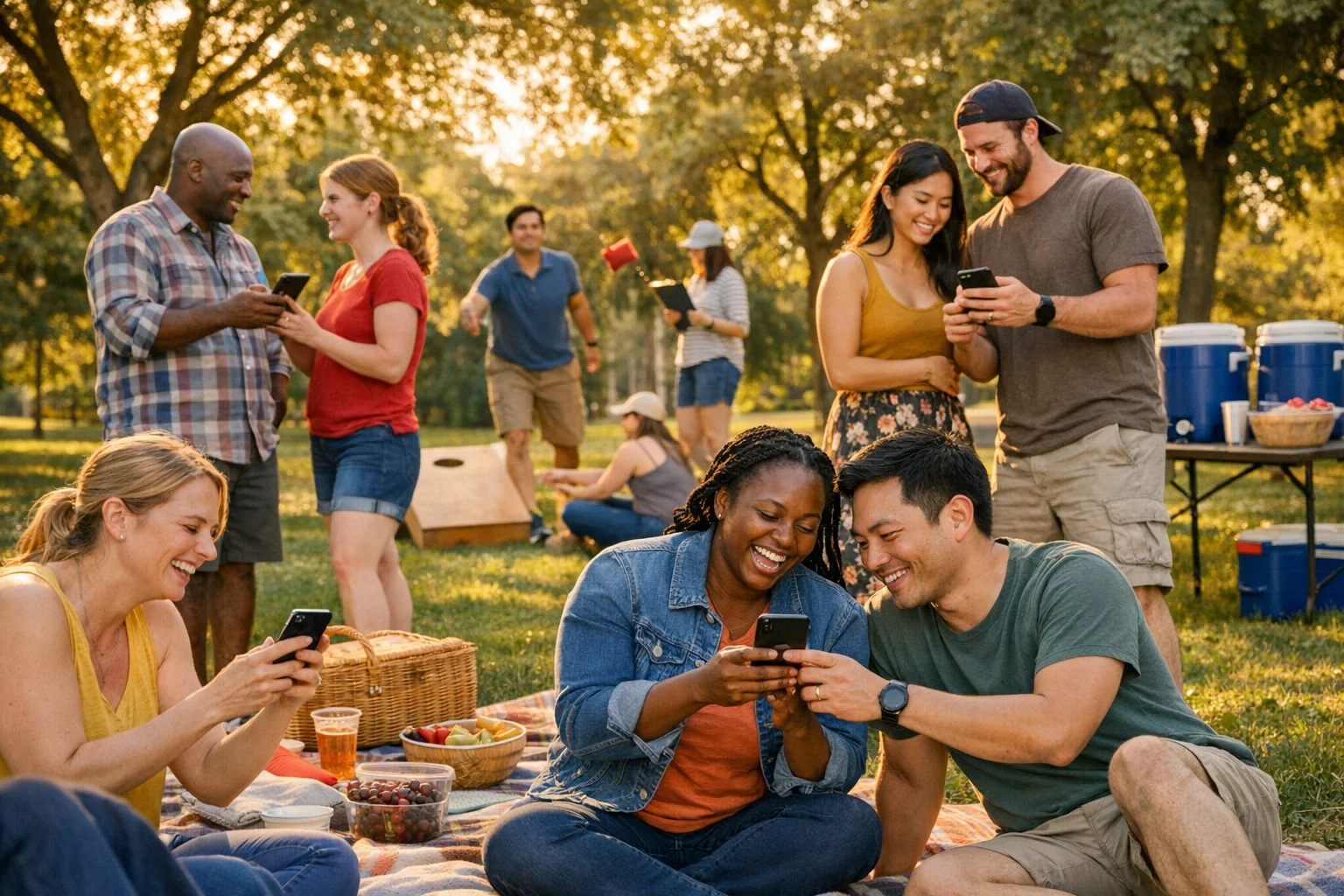
Summer is the easiest season to get people moving, talking, and actually enjoying time together. Keep it simple, keep it social, and let the weather do half the work. Short, active, low‑pressure activities consistently beat long, over‑scripted ones. Research on group dynamics even shows that brief, informal social time tracks with better team outcomes. That isn’t fluff. It is how humans work together when the setting reduces friction and invites conversation, not performance. See the HBR summary on team communication patterns if you want the receipts. research on team communication patterns
A pattern we keep seeing: outdoors plus a light prompt gets people talking faster than any icebreaker in a conference room. The stakes are lower. People self‑organize. The awkwardness drops a level.
Short, casual interactions are not wasted time. They are conditions for better work. Teams improve when conversational energy and equal participation go up, which is why unscripted social time correlates with performance. See the HBR breakdown of how these signals show up in high performing teams. research on team communication patterns
Also, nature helps. Even brief time outside is linked to lower stress and better mood, which shows up as more generous, curious conversation. You don’t need a mountain. A shaded park works. forest therapy overview
Start with the outcome. Pick one primary goal: connection across departments, new‑hire mixing, celebrating a win, or kicking off a project. Let that decide the format.
Design for easy participation. Activities with low skill floors and optional intensity invite more people in. If someone can opt to observe, photograph, or do light roles without feeling sidelined, you’ll see higher engagement.
Favor many short interactions over one big moment. Rotations, stations, and micro‑teams create more handshakes per hour than a single tournament.
Let people choose their level. Offer a relaxed path and a spirited path. Both count. Competitive by choice, never by default.
Keep logistics light. Close to the office, 90 to 150 minutes total, and food nearby. The farther you go and the longer you run, the more drop‑off you get.
Plan around heat. Avoid midday peaks. Build in water, rest, and shade as non‑negotiables. The CDC’s heat guidance is clear on limiting intensity during the hottest parts of the day. CDC heat safety guidance
Sun protection matters. Provide sunscreen and remind people to reapply every 2 hours while outdoors, more often if sweating or swimming. Hats and light long sleeves help. how to apply sunscreen
Hydration is a system, not a suggestion. Place water where people naturally pause. Add shade at the same spots. If you need to tell people where to find water, you hid it.
Accessibility and inclusion. Offer seated roles, photography or judging roles, quieter zones, and clear paths. List the activity steps in advance so people can opt into the roles that fit them.
Duration and pace. In summer, the sweet spot is usually 75 to 120 minutes of activity. Add social time before or after rather than stretching the gameplay itself.
1) Park photo safari Short teams get themed prompts and a time cap. Simple, creative, and surprisingly connective. Rotate a new theme halfway through to reset energy.
2) City scavenger hunt Fast‑moving, collaborative, and naturally social. If you use an app like Scavify, you can automate challenges, photos, GPS check‑ins, and real‑time scoring, which removes the clipboard chaos and lets people play.
Sample challenges to keep it lively: - [Photo | 30 pts]: Recreate a statue’s pose with at least three teammates. - [GPS Check‑in | 40 pts]: Reach the oldest tree within a three block radius. - [Q&A | 20 pts]: What year was the fountain dedicated? - [Video | 50 pts]: Teach a 10 second city history lesson in front of a landmark. - [Multiple Choice | 20 pts]: Which building is taller right now, A or B?
3) Sunrise or sunset walk with micro‑prompts Break into trios. Hand each trio two prompt cards. Swap partners at each bench or viewpoint. Most teams open up when the questions are small and the view is good.
4) Farmers’ market ingredient challenge Pairs get a budget and must bring back one item that fits a theme like “crunch” or “heritage.” Assemble a snack board together. Low prep and everyone contributes.
5) Water relay remix Not a splash war. Think small, clever constraints that require coordination. Example: move water with sponges while answering light trivia. Keep it playful, not punishing.
6) Lawn games circuit, cooperative edition Bocce, ladder toss, Kubb, and co‑op cornhole. Score team collaboration, not points alone. Add a rotating “coach” role so more voices guide strategy.
7) Kayak or paddleboard checkpoints Short course on flat water with optional check‑ins. Offer a beach crew role for non‑paddlers to track times, cheer, and award style points.
8) Pop‑up picnic with conversation cards Curate three short rounds. Round 1 is easy prompts, Round 2 is work‑adjacent curiosities, Round 3 is future bets. It feels like a party that just happens to build trust.
9) Volunteer park or beach cleanup + picnic Do one measurable hour, then relax together. Give people visible roles like sorter, tally, and photographer so more personalities feel useful.
10) Sandcastle systems challenge Teams build small, stable structures that survive one controlled “wave.” It becomes communication practice disguised as play.
11) Outdoor escape trail Puzzle stations around a greenway or campus with QR codes for hints. Keep puzzles collaborative, not cryptic.
12) Photo bingo with tiny dares Each square is a safe, social micro‑action. First line wins, then keep going for a blackout. Works well across big groups.
13) Garden build or pollinator hotel Simple kits, clear roles, and a visible outcome the team can visit later. The outside time helps mood. forest therapy overview
14) Food truck taste‑off Rotate through two or three trucks, then present team awards like “most surprising flavor.” Light judging criteria turn lunch into an activity without heavy planning.
15) Micro‑orienteering A tiny intro to map and compass basics on a short loop. Add optional bonus points for identifying landmarks. Offer a walker’s version.
16) Street art stroll + recreate Walk a mural district, then give teams chalk tiles to recreate small color blocks as a mosaic. Everybody contributes a square.
17) Rooftop mini‑festival Small stations: quick trivia, ring toss, photo booth. People wander, mingle, and choose their own pace. Music low enough for conversation.
18) Bike‑to‑brunch roll Short, slow city loop ending at an easy patio. Helmet and safety first, always. Offer a walking group that meets for the same brunch.
19) Outdoor film night with pre‑show trivia Keep the pre‑show to 15 minutes. Mix company fun facts with pop culture questions to get cross‑team chatter started.
20) Museum or zoo micro‑hunt Small prompts that encourage noticing, not speed. Works well for mixed‑ability groups and gives natural room for conversation.
21) Boardwalk arcade decathlon Teams choose five games and record combined tickets. The strategy chat is half the fun. Cap with a small team prize swap.
22) Café crawl with conversation swaps Three stops, three new small groups. Give each stop one guiding question. People will remember who they met more than what they drank.
23) Mystery bus to a hidden local gem One clue at a time on the ride. End at a park, viewpoint, or quirky spot. The reveal creates a shared story without elaborate production.
24) Make‑your‑own ice cream social Teams design a flavor with a name and a 30 second pitch. Silly sells. Low‑stakes creativity tends to unstick quiet groups.
25) Beach or park “mini‑olympics” with opt‑in roles Keep events friendly and short. Include officiating, photography, and playlist DJ roles so more people engage on their terms.
26) Art in the park: collaborative canvas Pre‑tape a grid on canvas. Teams paint adjacent squares that must blend. It turns into a gentle lesson in negotiation and shared standards.
27) Citywide story hunt Teams collect micro‑stories from locals or colleagues at designated stops. With an app like Scavify, capture short videos, award points for curiosity, and showcase the best clips on a live leaderboard.
Sample story‑centric prompts: - [Video | 40 pts]: Ask a teammate about their first summer job. Capture a 20 second clip. - [Photo | 20 pts]: Find a place two coworkers both enjoy for different reasons. - [Q&A | 20 pts]: What year did our city host its first summer festival? - [QR Code | 30 pts]: Scan the code at the pop‑up station to unlock a twist. - [Multiple Choice | 20 pts]: Which of these is a true local legend?
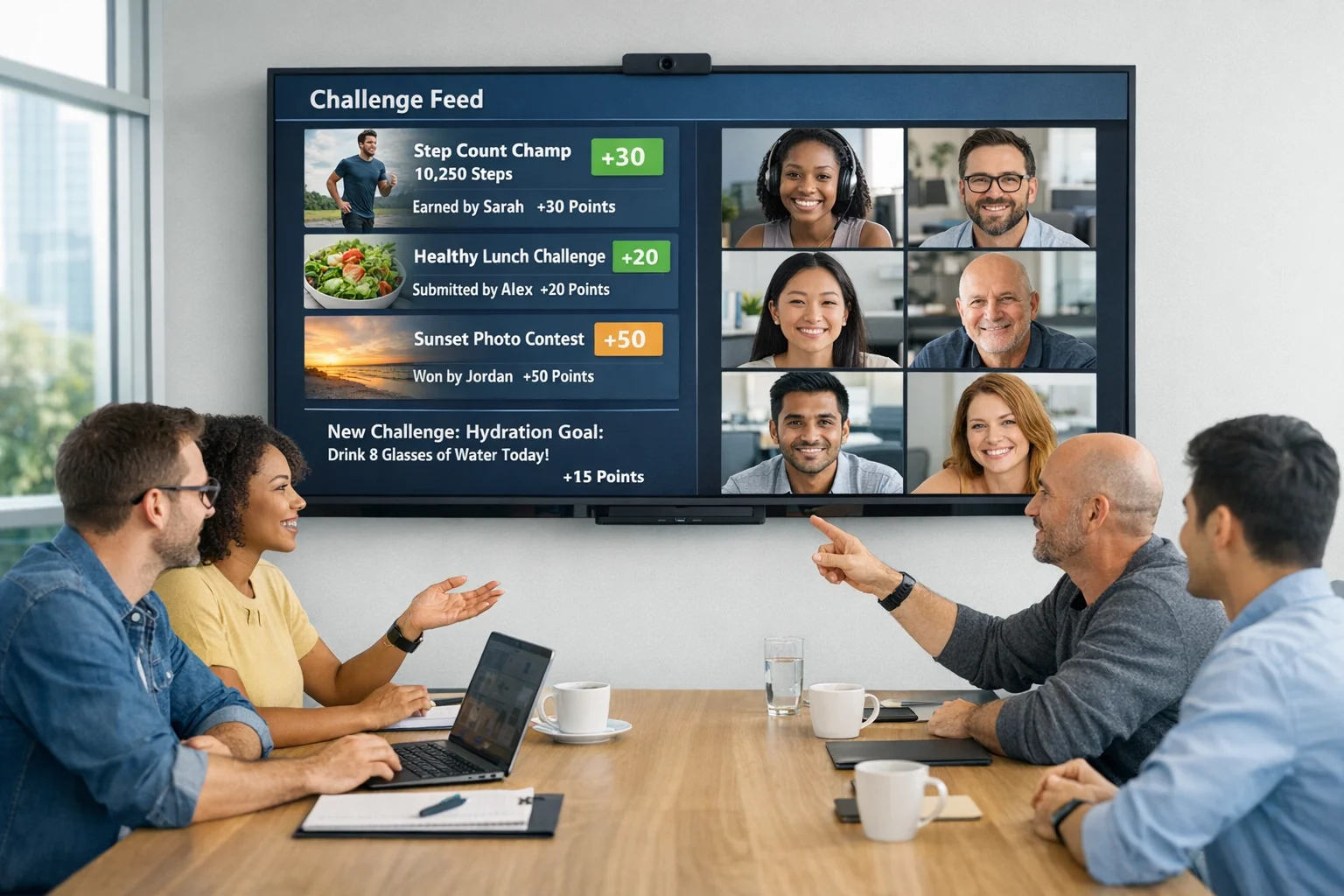
Most of the list goes hybrid with light tweaks. Pair on‑site players with remote partners who score, judge, or prompt. Use short video prompts and real‑time photo feeds so remote teammates see the same story develop. Keep total runtime tight so time zones align. Small mixed teams across locations consistently talk more and default to clearer communication.
Skip vanity metrics. Look for signals that correlate with better team dynamics: - Cross‑team interactions. Did people meet new colleagues or just hang with their usual crew? - Follow‑on behavior. Are there more casual pings, quicker replies, or easier handoffs after the event? - Psychological ease. Do meetings feel less stiff for a while? Fewer awkward silences is a real outcome.
If you used an app like Scavify, you already have completion rates, photo counts, and heat maps of activity. Pair those with a two question pulse the next day: “Met someone new?” and “Would you do a similar format again?” You will know if the format earned another slot.
Favor station‑based formats that split people into many small teams and rotate every 10 to 15 minutes. Photo safaris, scavenger hunts, and lawn game circuits scale cleanly without long lines.
Most teams stay engaged for 75 to 120 minutes of activity plus optional social time. Shorter, sharper segments tend to produce more total interaction than one long block.
Offer visible non‑athletic roles, keep walking routes short with shaded breaks, and allow people to opt into observing or judging without feeling sidelined. Choice and predictable routes make participation feel safe.
Design it into the flow. Start earlier or later, set up shade where people naturally pause, and place water at every checkpoint. Use a quiet group reminder for sunscreen reapplication every 2 hours. how to apply sunscreen
Pair on‑site players with remote partners who score, judge, or issue photo prompts. Keep the run of show tight and visible. A scavenger hunt platform simplifies this by automating prompts, media capture, and scoring so everyone participates in one shared feed.
Fun is the delivery mechanism. The useful outcomes are more cross‑team contact, easier conversation, and small shared wins. Those are the conditions that support better collaboration. HBR’s research on group interaction signals backs this up. research on team communication patterns
Enough to give people a goal and a reason to talk, not so much that it feels like school. One clear objective, a few constraints, and a visible finish line usually do the trick.
If you want one thing that makes nearly any of these easier, an app‑based challenge format like Scavify removes friction. It automates prompts, scoring, and media galleries so organizers can watch the energy instead of running paperwork. That tends to keep participation active without forcing it.