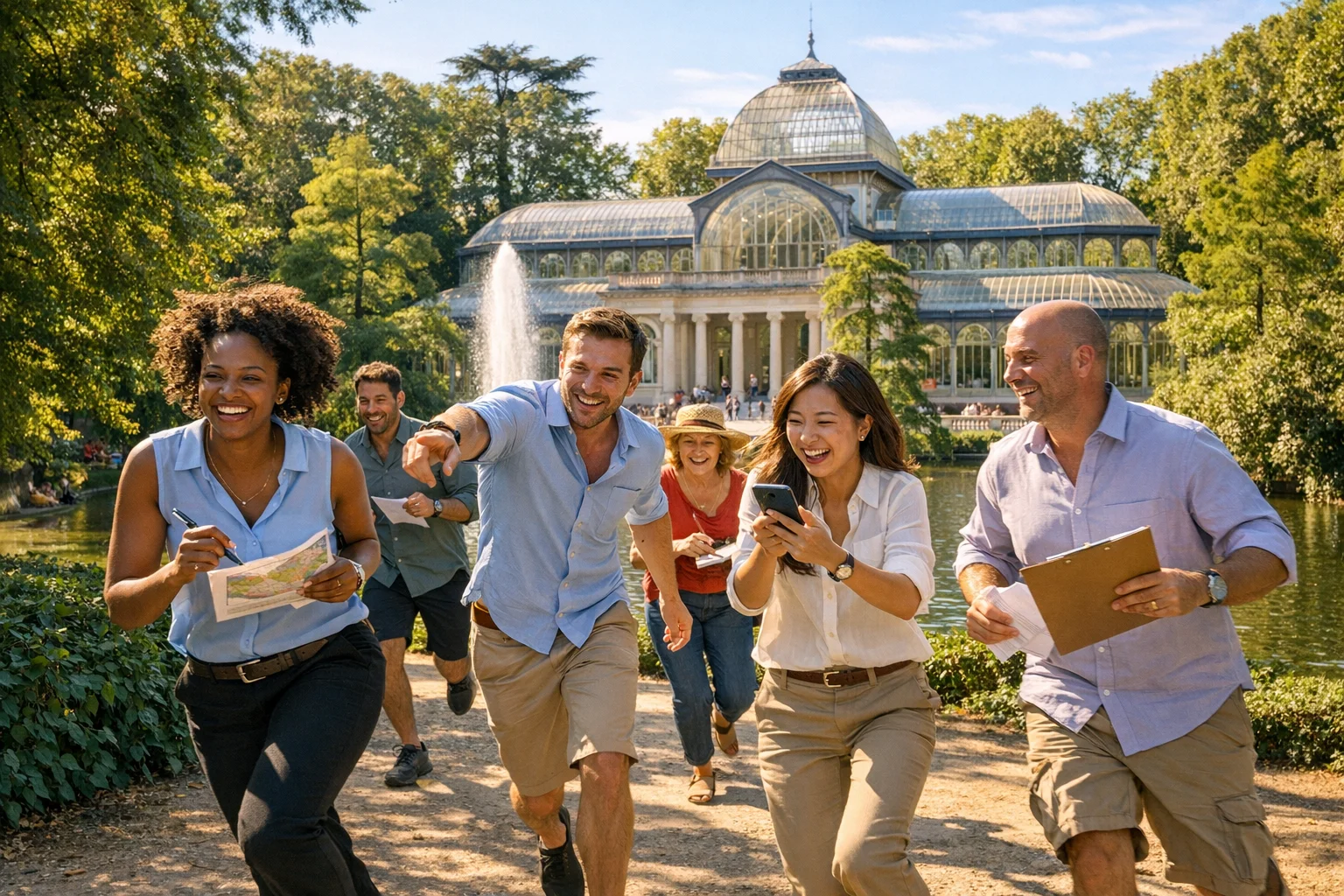
Madrid is a gift for team building: compact, walkable, full of green spaces, and dense with culture. You can move from parks to plazas to galleries without burning the day in transit.
This guide curates the best indoor, outdoor, and low‑lift team experiences that actually work for company offsites. It’s built from on‑the‑ground patterns we see when groups try things that energize people vs. activities that only look good in photos.
If you’re targeting “team building Madrid,” here’s the field guide you wanted, minus the fluff.
At a Glance
- Madrid is made for movement. Parks, plazas, and river paths keep groups active without logistics bloat.
- Mix environments. Outdoor flow plus one cultural anchor tends to land best.
- Keep it local. Neighborhood textures beat generic activity centers every time.
- Control friction. Choose formats that scale, run bilingually, and don’t collapse if weather shifts.
Why Madrid works for team building
Madrid rewards groups that stay mobile. Short moves, clear landmarks, and abundant public spaces make it easy to keep momentum.
Patterns we see repeatedly:
- Variety fuels attention. Rotating between a park, a local market, and a cultural stop keeps energy steady.
- Cultural anchors help. One meaningful stop adds narrative weight to the day.
- Low‑lift wins. Activities that start quickly and adapt to group size beat tightly choreographed productions.
Quick planner: best neighborhoods and venues by vibe
- Retiro & Jerónimos. Green, elegant, cultural triangle nearby. Great for outdoors plus museums.
- La Latina. Tapas lanes, lively plazas. Ideal for tasting challenges and social finales.
- Malasaña & Chueca. Street art, indie spirit. Strong fit for creative prompts and photo hunts.
- Madrid Río. Long, car‑free river park for movement‑heavy tasks and big groups.
- Casa de Campo. Vast woodland and lake. Quiet routes for reflection and nature‑leaning teams.
- AZCA & Castellana. Corporate core near Bernabéu. Convenient starts/finishes for offsite days.
Outdoor team building in Madrid: parks, plazas, and riversides
Start outside. It sets the tone, spreads the group, and reduces the “are we there yet” shuffle. Two locations consistently over‑deliver.
El Retiro Park. Central, scenic, and full of distinct zones that naturally segment challenges. The Crystal Palace, lake, rose garden, and shaded promenades make it easy to build a narrative route. For park context and current visitor information, see the city’s official tourism page for El Retiro Park. (esmadrid.com)
Sample hunt prompts that land here:
- [Photo | 30 pts]: Find the glass palace born for art, mirror its angles.
- [Video | 50 pts]: Stage a “rowing crew” on dry land near the lake.
- [GPS Check‑in | 40 pts]: The statue garden that watches over roses. Arrive together.
- [Q&A | 20 pts]: Which monarch gifted the park back to the people?
- [Multiple Choice | 25 pts]: Crystal Palace material: iron, glass, both, or neither?
Madrid Río. Eleven kilometers of riverside paths, bridges, and play zones with wide sightlines for coordinators. You can move hundreds without clogging sidewalks. For official park details and maps, consult the Ayuntamiento’s Madrid Río page. (madrid.es)
Prompts that fit Madrid Río’s long, linear flow:
- [Photo | 25 pts]: Cross the “bones” bridge and frame the river’s curve.
- [GPS Check‑in | 35 pts]: Touch the oldest stone span you meet downstream.
- [Video | 40 pts]: Rehearse a 5‑second synchronized step under a bridge shadow.
- [QR Code | 30 pts]: Scan a code hidden near water misters. Stay dry.
- [Q&A | 20 pts]: What buried road made this park possible?
Operational notes we’ve learned outdoors:
- Heat is real. Start early or late in peak summer; build in shade stops.
- Traffic awareness. Use plazas and parks as anchors, then thread short urban moments.
- Clear regroup points. Wide features like a lake edge or bridge plaza reduce “Where are you?” calls.
Indoor and low‑lift options near the center
Indoor anchors balance the day and give extroverts a breather. Two high‑confidence picks:
Prado gallery quest. Swap “guided tour fatigue” for team discovery with time‑boxed art prompts. It suits mixed interests, runs well bilingually, and delivers a shared cultural memory without forcing reverence. Preview exhibitions and visitor guidance on the Museo Nacional del Prado website. (museodelprado.es)
Art‑hunt prompts that stay respectful and work:
- [Q&A | 20 pts]: Find a painting with a hidden mirror. Name the object.
- [Photo | 25 pts]: Recreate a courtly pose without touching anything.
- [Multiple Choice | 25 pts]: Which painter favored light over line in this room?
- [Q&A | 20 pts]: Spot a myth with flight. Who’s escaping, and how?
- [Photo | 30 pts]: Compose silhouettes that echo a nearby frame.
Bernabéu behind‑the‑scenes. For sports‑leaning teams, the stadium tour pairs well with light competitive prompts and quick reflection moments about pressure, preparation, and crowd energy. Check the official Tour Bernabéu information from Real Madrid for route and timing variations on event days. (realmadrid.com)
Low‑lift indoor alternatives that also travel well:
- Market tasting trails. Small‑group tastings across a municipal market with light scoring. Keep it local and cap alcohol.
- Hands‑on workshops. Short-format cooking, ceramics, or lettering sessions where output is visible and quick to share.
- Micro‑talks with prompts. Five‑minute talks by teammates, each ending with a scavenger‑style question others must answer.
Half‑day offsite itineraries that actually work
These flows balance movement, discovery, and conversation. They avoid long idle time and keep transitions short.
Park to gallery, Jerónimos loop.
- Retiro hunt warm‑up near the lake.
- Coffee regroup under shade; quick debrief with funniest photo.
- Prado gallery quest in pairs; finish in the sculpture hall.
Riverside momentum, then tapas.
- Madrid Río linear hunt with bridge checkpoints.
- Group photo at a designated bridge plaza.
- Short metro or ride to a classic tapas lane for a tasting finale.
Stadium story, creative finish.
- Bernabéu tour with reflection prompts on preparation and pressure.
- Photo challenge on Castellana’s architectural lines.
- Casual snacks nearby; prize for “best under‑pressure solution.”
How to pick the right activity
When teams stall, it’s usually mis‑matching format to constraints. A quick decision frame helps.
- Time window. Under two hours favors linear hunts or single‑venue anchors. Longer windows can mix locations.
- Group size. Larger groups need obvious landmarks and wide spaces. Think Retiro and Madrid Río.
- Physicality. Set a “comfortable walking” baseline and offer a low‑movement role on every team.
- Language. Default to bilingual prompts. Keep instructions ultra‑concise.
- Psychological safety. Design points for quiet roles: clue‑solving, navigation, or judging.
Budget, timing, and logistics that matter
- Permits and park etiquette. Madrid’s major parks are public, popular, and occasionally close sections for maintenance or weather alerts. Always have a back‑up route and keep groupings small at pinch points. Use the official pages for park‑status checks.
- Weather buffers. Spring and autumn are forgiving. In peak summer, shift to mornings, add shade breaks, and shorten distances.
- Transit simplicity. Plan start and finish within a short walk of a metro stop. Reduce coach usage; it slows the day.
- Food pacing. Tasting flights > full meals during play. Celebrate after gameplay, not during.
- Accessibility. Choose routes with ramps and wide paths. Madrid Río is particularly workable for mixed mobility. See the city’s official page when confirming details. (madrid.es)
Scavify: when an app‑based hunt is the right move
There are moments when paper clues and verbal instructions collapse under real‑world chaos. That’s where an app format quietly makes the organizer’s life easier.
- Challenge variety. Photo, video, GPS check‑ins, QR scans, Q&A, and multiple choice keep different brains engaged.
- Automation. Live scoring, approvals, and leaderboards eliminate manual tallying.
- Ease of launch. Load prompts, set a start code, and go. No print runs, no prop bags.
- Browser + app. Everyone can join quickly, even without prior installs.
- Scales cleanly. Ten people or thousands. Madrid’s parks and plazas accommodate both.
If you’re anchoring an offsite in the city and want high‑participation without high drama, this is the moment to consider Scavify.
FAQs
What are the best months for outdoor team building in Madrid?
Spring and autumn. Temperatures are milder, shade is usable, and footfall is manageable. In peak summer, run early or late and shorten walking segments.
Can we legally run a scavenger hunt in Retiro or Madrid Río?
Yes, when you behave like a respectful guest: small pods, no blocking paths, no amplified sound, and zero litter. Check official park pages for any temporary closures before you go. For Madrid Río details, use the Ayuntamiento’s page; for Retiro context, see the city tourism page. (madrid.es)
Are indoor cultural activities actually engaging for mixed teams?
They can be. Gallery quests and creative prompts at the Prado work because people collaborate around discovery, not lecture content. The key is time‑boxing and clear, simple tasks. See the museum site for current routes and guidance. (museodelprado.es)
Any good central finish lines for a celebratory moment?
Yes. Plazas near La Latina’s tapas corridors, the lake edge at Retiro, or terraces along Castellana after a Bernabéu visit all work. Pick a spot with obvious wayfinding and room to breathe. If using the stadium tour, confirm route variations on event days. (realmadrid.com)
How big can our group be before the format breaks?
Large groups can still work if you widen spaces, stagger starts, and design obvious regroup points. Retiro and Madrid Río handle scale better than tight old‑town alleys.
How do we handle bilingual teams?
Write dual‑language prompts, keep instructions under two sentences, and let teams choose their working language. Visual challenges reduce translation overhead.
What’s a realistic time block for a high‑energy experience without burnout?
Ninety minutes to two hours of active play, plus a 20‑minute debrief and celebration. Longer is possible if you change environments and add a cultural anchor.
Do we need prizes for winners?
Not strictly. Recognition during the debrief, a highlight reel of top submissions, or a rotating trophy object keeps it fun without turning the day into a contest.