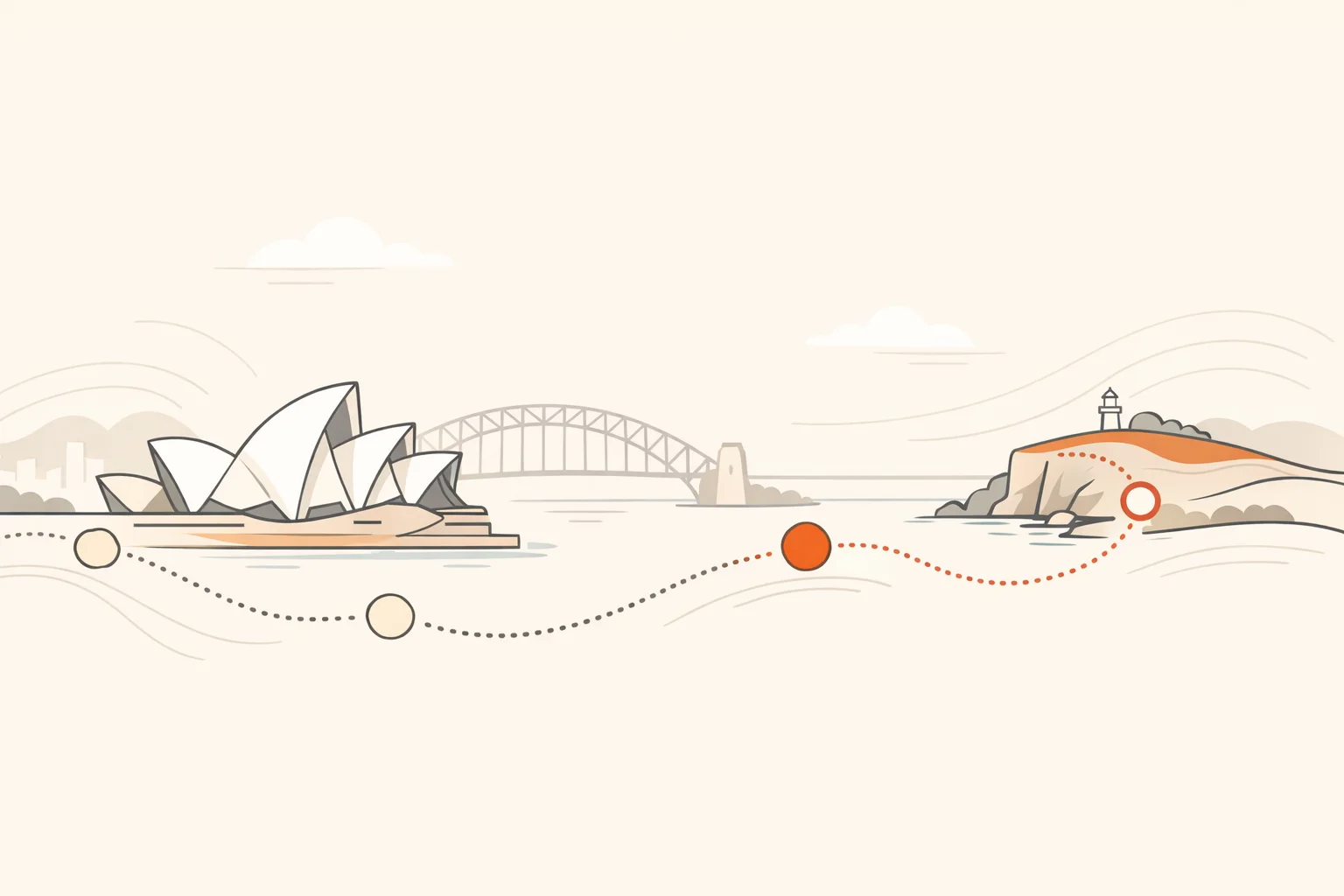
Sydney is built for movement. Water, boardwalks, lanes, and wide lawns connect the landmarks everyone wants to see with the lesser‑known corners locals love. That’s perfect terrain for a scavenger hunt: clustered points of interest, natural route variety, and a city that keeps rewarding curiosity.
What follows is the practical playbook: five proven route concepts, a copy‑paste clue list, team formats, scoring models, and the small logistical moves that keep the experience light and high‑energy rather than chaotic. Use it to build a hunt you can run confidently in Sydney this month or six months from now.
You’ll also find links to official resources for must‑see stops like the Opera House, Royal Botanic Garden, Barangaroo, and the Bondi to Coogee walk, so you can verify details and add texture for your group.
- Anchor hunts where sights cluster: Circular Quay, The Rocks, Barangaroo, Darling Harbour, and Bondi work best.
- Mix clue types so no single skill decides the game; reward momentum over perfection.
- Plan around tides, crowds, and ferries; Sydney’s waterfront adds both magic and variables.
- Use short “checkpoints” every 8–12 minutes to keep teams moving and morale high.
- Route length is a dial; most groups thrive in the 60–120 minute range with a clear finish.

Why Sydney works for scavenger hunts
Sydney compresses icons into walkable pockets. You can stand at Circular Quay and spot three routes at once: the Opera House, The Rocks laneways, and ferries fanning out across the harbour. Add parks, beaches, public art, and café culture and you get a city that supports both fast, competitive hunts and slower, discovery‑first formats.
If you want light historical flavor, the Opera House, a UNESCO‑listed site and one of the world’s busiest performing arts centers, offers both backdrop and story. The official pages are excellent for quick facts and visitor details: see the Opera House’s about page and visit information for context you can turn into clues.
The best hunts don’t lecture; they give people a reason to notice what they’d normally walk past.
1. Circular Quay + Opera House + Royal Botanic Garden loop
Start at Customs House or the Circular Quay concourse. Swing to the Opera House forecourt, then flow along the waterfront into the Royal Botanic Garden. This loop blends skyline views, Indigenous and colonial history touchpoints, and open space for creative photos.
- Suggested stops: Opera House forecourt, First Fleet Park, Mrs Macquaries Point overlook, Calyx exterior.
- Pacing: With frequent photo and GPS check‑ins, teams hit a rhythm quickly.
- Useful reference: Plan details and hours via the Royal Botanic Garden’s plan your visit page.
2. The Rocks lanes + Harbour Bridge stairs circuit
Base near George Street, then thread teams through Argyle Cut, Foundation Park, and Observatory Hill before the Harbour Bridge stairs. It feels like a time capsule in motion, with sandstone, markets, and sudden harbour vistas.
- Suggested stops: The Rocks Discovery Museum, Argyle Cut, Foundation Park terraces, Observatory Hill rotunda.
- Pacing: Short, dense checkpoints keep momentum high even with crowds.
- Useful reference: The Rocks’ official “our story” overview is handy for clues and context on place names and heritage via The Rocks, and the NSW Government’s visitor guide maps notable sites.

3. Barangaroo boardwalk + Darling Harbour arc
This is your modern‑waterfront route. Start at Barangaroo Reserve’s foreshore, skirt the boardwalk, then arc into Darling Harbour for kinetic spaces, public art, and plenty of food options at the finish.
- Suggested stops: Nawi Cove, the sandstone foreshore, Cockle Bay, Tumbalong Park.
- Pacing: Long sight lines and wide paths reduce bottlenecks for larger groups.
- Useful reference: See the City of Sydney page for Barangaroo Reserve and the official guidance for getting there via Barangaroo.
4. Bondi to Bronte coastal highlights
You don’t need the full Bondi to Coogee distance to get the payoff. A Bondi to Bronte segment delivers cliff views, ocean pools, and bright street art that play beautifully in photos.
- Suggested stops: Bondi Icebergs exterior, Marks Park lookout, Tamarama steps, Bronte pool railings.
- Pacing: Allow a little buffer for views and stairs; it’s photogenic territory.
- Useful reference: The NSW Government’s Bondi to Coogee coastal walk page covers route highlights and seasonal notes like Sculpture by the Sea.

5. Surry Hills coffee crawl micro‑hunt
When time is tight, a neighborhood hunt through Surry Hills delivers quick wins: murals, narrow lanes, and serious coffee culture. Keep challenges short and stack them close.
- Suggested stops: Paramount Coffee Project exterior, Shannon Reserve, Crown Street murals, a laneway pattern tile.
- Pacing: Perfect for 45–60 minutes before a team lunch.
Copy‑paste‑ready Sydney clue list
Use these as‑is or tweak the phrasing to match your group. Keep the first two easy to guarantee early wins.
- Opera sails in frame, one teammate strikes a conductor pose.
- Check in from the top of the Harbour Bridge south‑pylon stairs.
- What year did the Opera House open to the public?
- Teach a 10‑second wave to camera on the Circular Quay promenade.
- Scan the code hidden near a sandstone arch in The Rocks.
- Find a fig tree in the Garden and recreate its branch shape.
- Name the ocean pool visible from Bondi’s southern headland.
- Check in at Barangaroo Reserve’s foreshore edge.
- Film a five‑second “harbour panorama” spin without wobbling.
- Team silhouette jump with surf or skyline clearly visible.
Pro tip
Front‑load one guaranteed win in the first minute. Confidence early is the single biggest lever on total completions.
Group formats that actually work
- Corporate team building: Keep teams small enough that everyone moves and speaks. Four to six is the sweet spot for most groups. Use frequent low‑effort checkpoints so no one feels stuck.
- Conference breakouts: A 60–75 minute loop from a central venue keeps logistics sane. Build one checkpoint that requires the event’s sponsor or theme to show up in the photo.
- Campus orientation or onboarding: Use location‑verification tasks near must‑know resources. People remember places they’ve had to use rather than places they were told about.
- Families and mixed ages: Swap speed bonuses for creative bonuses. Award extra points for the most joyful or surprising submission.
- Tourism and visitor programs: Cluster around high‑density icons. Circular Quay to The Rocks delivers story per minute without long transfers.
Scoring models that keep play fair
- Set a base point value by task type and keep it consistent.
- Add small speed bonuses that taper, not winner‑take‑all sprints.
- Offer a single “creativity” award to balance pure efficiency.
- Cap any one challenge at a modest share of total points to prevent camping.
- Give a comeback lever: one optional high‑value task that’s difficult but doable.
Logistics that quietly make or break the day
- Crowds: Start early or end late in tourist zones. At midday, give teams a route variant to spread load.
- Movement: Sydney’s public transport uses Opal. If you’re crossing the harbour or hopping light rail, align timing and payment ahead of time via Transport for NSW’s Opal information.
- Weather: Coastal wind and glare make sunglasses and hair ties more valuable than you’d think. Stash ponchos if clouds threaten.
- Permissions: For parks and private venues, always check site‑specific guidance. The Royal Botanic Garden’s “plan your visit” page links to current conditions and event information.
- Finish line: Pick a backdrop worth celebrating in the photos. Tumbalong Park, Barangaroo lawn, or a beach overlook all work.
A simple run of show you can adapt
- 0–10 minutes: Gather, form teams, explain scoring, and run a 60‑second practice challenge.
- 10–45 minutes: Route section one. Stack two fast wins before a slightly harder puzzle.
- 45–75 minutes: Route section two. Drop a limited‑time bonus to re‑energize the pack.
- 75–90 minutes: Converge on the finish. Post the top three teams live and leave judging open for last‑minute creativity awards.

Where app‑based play helps
Paper lists can work for tiny groups, but real‑time verification, leaderboards, and mixed media tasks raise the energy in larger hunts. If you prefer to run everything in a scavenger hunt app, you’ll gain automated scoring, GPS and QR verification, and an instant gallery of the best moments without wrangling files afterward. Browser play is great when participants can’t or don’t want to download an app; native apps shine when you want push notifications and offline resiliency along coastal stretches.
FAQs: Sydney scavenger hunts
Is a permit required to run a scavenger hunt in Sydney’s parks or gardens
Rules vary by venue and group size. As a baseline, keep group clusters small, don’t block paths, and avoid placing anything permanent. For garden and domain specifics, start with the Royal Botanic Garden’s plan your visit page and follow links to current guidelines.
What’s the best time of day to run a CBD waterfront hunt
Mornings and late afternoons avoid the heaviest foot traffic and sun glare. Midday works if you split teams across two route variants and reconverge later.
Can we include ferries as a checkpoint
Yes, if you budget the variability. Ferries add joy and photos, but schedules and queues can stack. If time‑tight, make the wharf a photo checkpoint rather than a ride requirement.
How long should a Sydney scavenger hunt last
Most groups thrive with 60–120 minutes of play plus a short kickoff and awards. Shorter than 45 minutes feels rushed in the CBD; longer than 2 hours needs a food or water stop.
How big should teams be
Four to six people per team usually balances momentum and participation. Larger teams risk spectators; smaller teams sometimes stall.
What accessibility considerations matter on these routes
Waterfront boardwalks and the Royal Botanic Garden paths are generally friendly to wheels, while The Rocks and coastal paths add gradients and stairs. Offer an alternate checkpoint whenever stairs are involved and state that clearly at kickoff.
How do we keep competitive teams from clustering and spoiling puzzles
Stagger release times, reverse the route for half the teams, and gate any longer puzzle with a micro‑task to avoid queues.
Are these routes safe after dark
Stick to well‑lit, high‑traffic promenades and avoid isolated stairways. If you want evening city lights, keep the hunt compact around Circular Quay, Barangaroo, and Darling Harbour.