Solutions
Your first hunt, live this afternoon.
Free to start · No download for participants
Explore event passport ideas with standout examples, selection guidance, setup steps, mistakes to avoid, and ideas you can adapt quickly. Choose confidently.
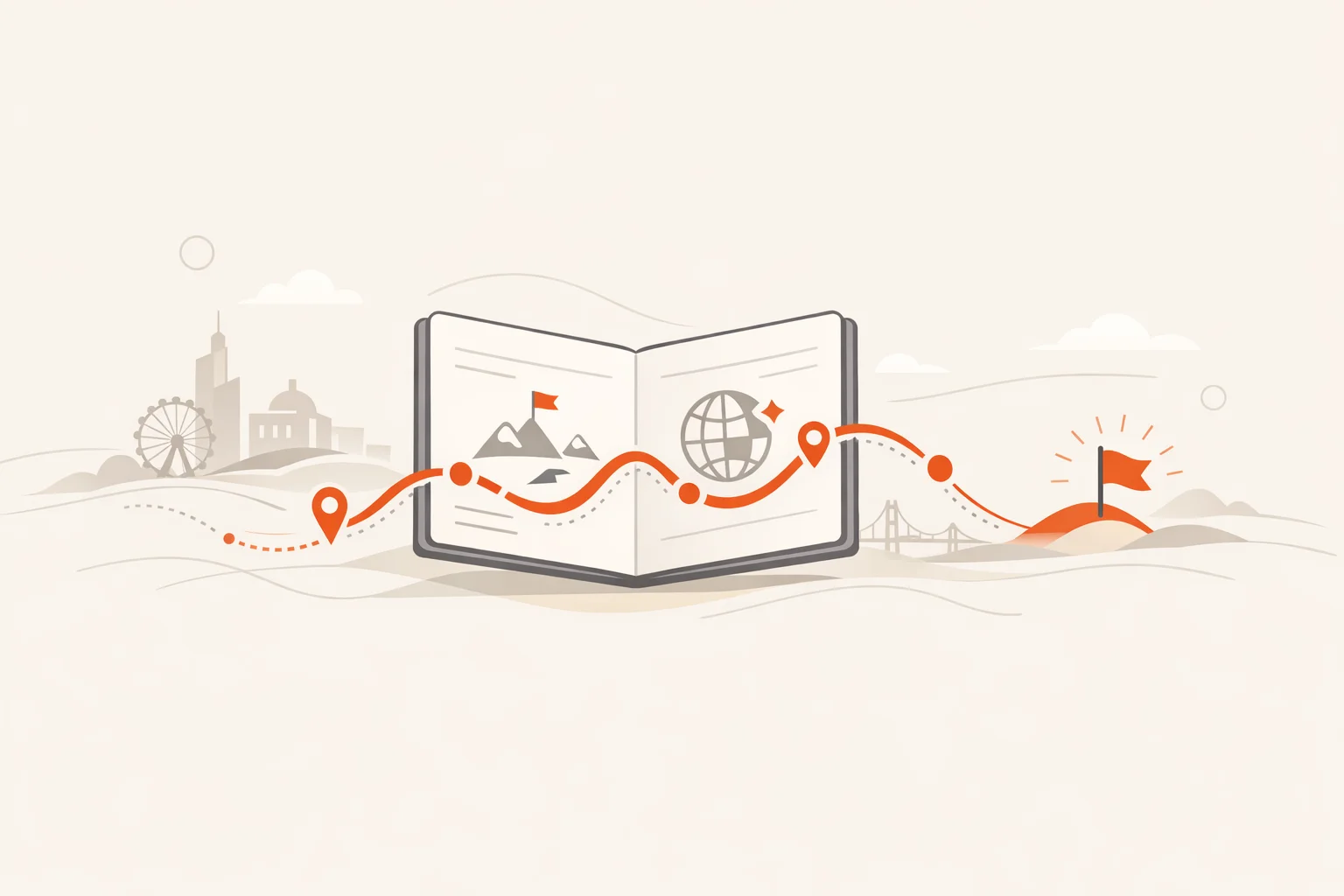
Event passports turn wandering into intention. They nudge people to explore, meet, try, and return with proof. Done well, they’re not swag; they’re structure. They quietly reroute behavior across a venue, a city block, or a multi‑day program.
This guide shows exactly how to pick the right format, set it up, and run 21 proven passport experiences with copyable prompts. It’s written from the operator’s side: what creates motion, what stalls lines, and what keeps energy high after lunch when the floor usually sags.
Event passports are simple: a list of purposeful micro‑actions, a way to verify each one, and a set of rewards that feel worth chasing. Paper or digital, the mechanism is the same. The craft is in shaping the actions.
Design passports for behavior, not for pages. The Fogg Behavior Model is a useful lens: motivation, ability, and prompt must converge for action. If any one is weak, the task dies. Shrink the action, make the prompt obvious, and put a reason to act right now. That’s the play. See the model overview from Stanford’s Behavior Design Lab for a quick refresher. Fogg Behavior Model. (behaviordesign.stanford.edu)
A second footing comes from choice architecture research. Small design decisions shape participation: proximity, defaults, first wins, social proof. A large meta‑analysis on nudges found consistent, real‑world effects across domains, which maps neatly to how we route attendees across an event. Meta‑analysis of choice architecture interventions. (doi.org)
On the ground, the industry context favors this format. Planners report a sharper focus on intentional design and measurable engagement. MPI’s Meetings Outlook shows elevated emphasis on experience design through 2026. Meetings Outlook 2026. (mpi.org) And survey work from PCMA EMEA captures the current paradox: events are going both high‑tech and high‑touch, with analog participation layered on top of digital scaffolding. PCMA EMEA engagement survey. (pcma.org)
Paper passports are tactile and visible. People copy what they see, and a stamp is satisfying. Digital passports collapse admin: automated verification (QR, GPS, photo), live leaderboards, fewer queues, and clean reporting. QR adoption is now mainstream, which removes a classic friction point. Monthly mobile QR usage among internet users rose significantly through 2024–2025, making code‑based stamps intuitive for most attendees. QR code usage trend. (statista.com)
| Factor | Digital passport | Paper passport |
|---|---|---|
| Verification options | QR, GPS, photo, trivia | Stamp or signature only |
| Real‑time data & reporting | Live dashboard | Manual tally |
| Setup changes on the fly | Instant edits | Reprint or improvise |
| Vibe and visibility | Less visible in‑hand | Highly visible, social proof |
| Accessibility | Browser + app; no install path possible | Works without devices |
| Sponsor activation options | Targeted prompts, scan goals, content unlocks | Logo placement, booth stamps |
Nobody quits a game they’re winning. Your first stamp decides the rest of your curve.
Gamification research continues to show positive effects when mechanics are matched to context, especially through social and immediate feedback. Recent meta‑analyses across education and mobile contexts find meaningful gains, with engagement effects moderate but reliable when tasks are small and feedback is fast. Higher‑ed gamification meta‑analysis (2026) and a mobile gamification meta‑analysis are useful reference points. (journals.sagepub.com)
To design the right prompts, borrow from the nudge literature: defaults, salience, and immediate rewards. The 2022 PNAS meta‑analysis is a fast synthesis worth a skim when choosing mechanics. Nudging meta‑analysis. (doi.org)
Each idea includes the why, the setup, and an optional twist you can run without a committee meeting.
Why it works: Turns browsing into purposeful stops and gives sponsors a fair shot at conversations.
How to run: Place 8–12 QR stamps at anchor booths and two lounges. Require one short interaction at each stop: a 10‑second demo, a one‑question poll, or a codeword.
Twist: Add a roaming “wildcard” staffer with a mobile QR who appears during power hours only.
Networking and sponsor value are top reasons people return, so make the stops meaningful. Freeman’s 2025 trends work found that successful networking strongly correlates with repeat attendance. Freeman trends report (networking). (staging.freeman.com)
Why it works: Newcomers often don’t know where to start. A tailored route prevents drift and accelerates connection.
How to run: 7 stamps: help desk, orientation huddle, two core sessions, a sponsor welcome, lounge host, and a buddy check‑in.
Twist: Pair each first‑timer with a “local” who can unlock a bonus stamp.
Why it works: Curates a theme without forcing a schedule.
How to run: Build a path of 5 sessions and 2 on‑floor activations. Stamps come from scanning session screens and completing one reflection prompt per session.
Twist: Offer “collect 4 of 7” to avoid punishing life and lines.
Why it works: Makes your green policy visible and interactive.
How to run: Stamps for refill stations, compost drop, local vendor row, transit pass, and a speaker’s sustainability tip.
Twist: Unlock a tree‑planting pledge once 1,000 collective scans hit.
Why it works: Pushes foot traffic to partners and helps out‑of‑towners explore confidently.
How to run: 10 neighborhood stops with GPS or merchant QR codes. Require a small action (taste, tour, or trivia) for the stamp.
Twist: Publish a 90‑minute “lunch loop” that starts and ends at the venue.
Why it works: Icebreakers that don’t feel like icebreakers.
How to run: Replace “find someone who…” squares with scannable badges. Each match stamps both people.
Twist: Add a “mentor row” that pairs senior folks with three quick connections.
Why it works: Captures stories you can use post‑event.
How to run: Stations for a 30‑second booth pitch, a 2‑question testimonial, and a peer tip. Each completed clip stamps the passport.
Twist: Turn the best clips into a daily highlight reel for a bonus stamp.
Why it works: Energy is a resource. Protect it on purpose.
How to run: Breathing station, stretch corner, quiet zone, hydration bar, steps challenge. Short prompts keep dwell time down.
Twist: Secret “fresh air lap” GPS check‑in behind the venue.
Why it works: Accessibility improves the day for everyone.
How to run: Stamps for sensory maps, closed‑caption settings, quiet seating, pronoun pin pickup, and a staffed feedback point.
Twist: A “spot and suggest” stamp for attendee‑identified improvements.
Why it works: Moves beyond logo‑collecting toward value.
How to run: Each sponsor hosts a 60‑second story: a failure, a fix, a number. Attendees answer a one‑question quiz for the stamp.
Twist: Sponsors hide an easter‑egg stamp that unlocks a joint raffle.
Why it works: Ties visitor spend to discovery.
How to run: 8–10 local businesses with a small tasting, try‑on, or photo prompt.
Twist: “Golden hour” bonus at 4–6 PM to spread traffic.
Why it works: Multi‑venue nights thrive on exploration.
How to run: Stamps at exhibits with a “notice this detail” prompt. Offer a 3‑stop tier and a 6‑stop tier.
Twist: A curator “ask me anything” pop‑up for a limited bonus stamp.
Why it works: A structured nudge to visit people and places that matter.
How to run: Department hub, archives, favorite haunt, student project fair, and a giving station.
Twist: An inter‑class challenge that tallies points per grad year.
Why it works: Replaces information firehose with action.
How to run: HR, IT, security, benefits, mentor intro, and a culture stop. Each requires a tiny action, not just a stamp.
Twist: A “my first week win” video for a feel‑good finish.
Why it works: Builds capability via reps, not lectures.
How to run: 6 mini‑labs: one tool, one task, one proof photo each.
Twist: A “teach‑back” station where attendees earn a coach stamp by helping someone else.
Why it works: Food moves people.
How to run: 8 tastings across vendors with rotating “chef’s pick” bonus hours.
Twist: A “non‑alcoholic path” with equal rewards.
Why it works: Turns good intentions into completed actions.
How to run: Litter sweep, donation drop, repair café, and a community partner booth with a sign‑up stamp.
Twist: Publish collective progress: items repaired, pounds diverted.
Why it works: Creates a social feed you’ll actually want to use.
How to run: 6 photo prompts that celebrate people, details, and place. Auto‑approve with simple guardrails.
Twist: A rotating “theme of the hour” announced in‑app for a multiplier.
Why it works: Keeps energy alive when content ends.
How to run: GPS check‑ins at safe, walkable late‑night spots with quick photo confirmations.
Twist: A calm alternative: tea bar, board‑game corner, night‑owl library.
Why it works: Aligns real attendee goals with exhibitor needs.
How to run: Stamps for portfolio review, recruiter intro, and a skills‑match quiz.
Twist: A “reverse pitch” where candidates record a 30‑second intro for bonus points.
Why it works: The last hour sets the memory.
How to run: Three fast prompts that send people to under‑visited spots, plus a gratitude wall.
Twist: A “nearly there” reward for anyone within one stamp of the next tier.
Scoring
Rewards
Reporting
If you need a platform to run this with QR, GPS, photo verification, live feeds, and instant reporting, a purpose‑built scavenger hunt app does the heavy lifting while keeping the play lightweight.
Skift Meetings has been tracking the pivot from “more content” to “more connection,” a shift you’ll feel the day you reallocate budget from another speaker to better networking structure. Skift Meetings Megatrends. (meetings.skift.com)
A structured set of micro‑actions tied to places, people, or content, verified by a stamp (physical or digital), with rewards for progress. It’s a behavioral routing tool dressed up as a game.
If you need automation, flexible changes, and reporting, go digital. If you want a highly visible social prop, add a small paper booklet. Hybrid setups often perform best because they combine visibility with clean ops. QR usage familiarity supports frictionless scanning for most audiences. QR code usage trend. (statista.com)
Eight to fifteen core tasks is a healthy range for most one‑ to two‑day events. Add optional bonuses for keeners and late‑day energy without making completion feel impossible.
Tiered rewards: useful merch at tier one, experience upgrades at tier two, and a small number of premium experiences at the top. The point is momentum, not jackpot envy.
Favor self‑serve verification (QR, GPS, photo, single‑question trivia). For staffed stamps, split stations, add roving verifiers, or run time‑boxed windows that distribute demand.
Clear foot traffic, faster conversations, and opt‑in leads tied to specific actions. Freeman’s trends work connects strong networking and structured experiences with higher return intent, which sponsors can feel in quality conversations. Freeman: commerce & networking insights. (freeman.com)
Report the directional outcomes that matter to stakeholders: how many meaningful connections were made, what content or stories were captured, what partner destinations were visited, and how traffic spread across the footprint. MPI’s 2026 Outlook underscores the industry’s focus on intentional design with measurable business outcomes. Meetings Outlook 2026. (mpi.org)
Yes. Learning passports that require short reflections, teach‑backs, or micro‑labs tend to stick. Meta‑analyses find stronger effects when tasks are small and feedback is immediate. Higher‑ed gamification meta‑analysis (2026). (journals.sagepub.com)
If you’ve read this far, you know the pattern: start with a clear outcome, make the first win easy, keep tasks small, and use time windows to move crowds. Tooling helps, but design does the work. That’s how a passport stops being a booklet and becomes the engine of your event.