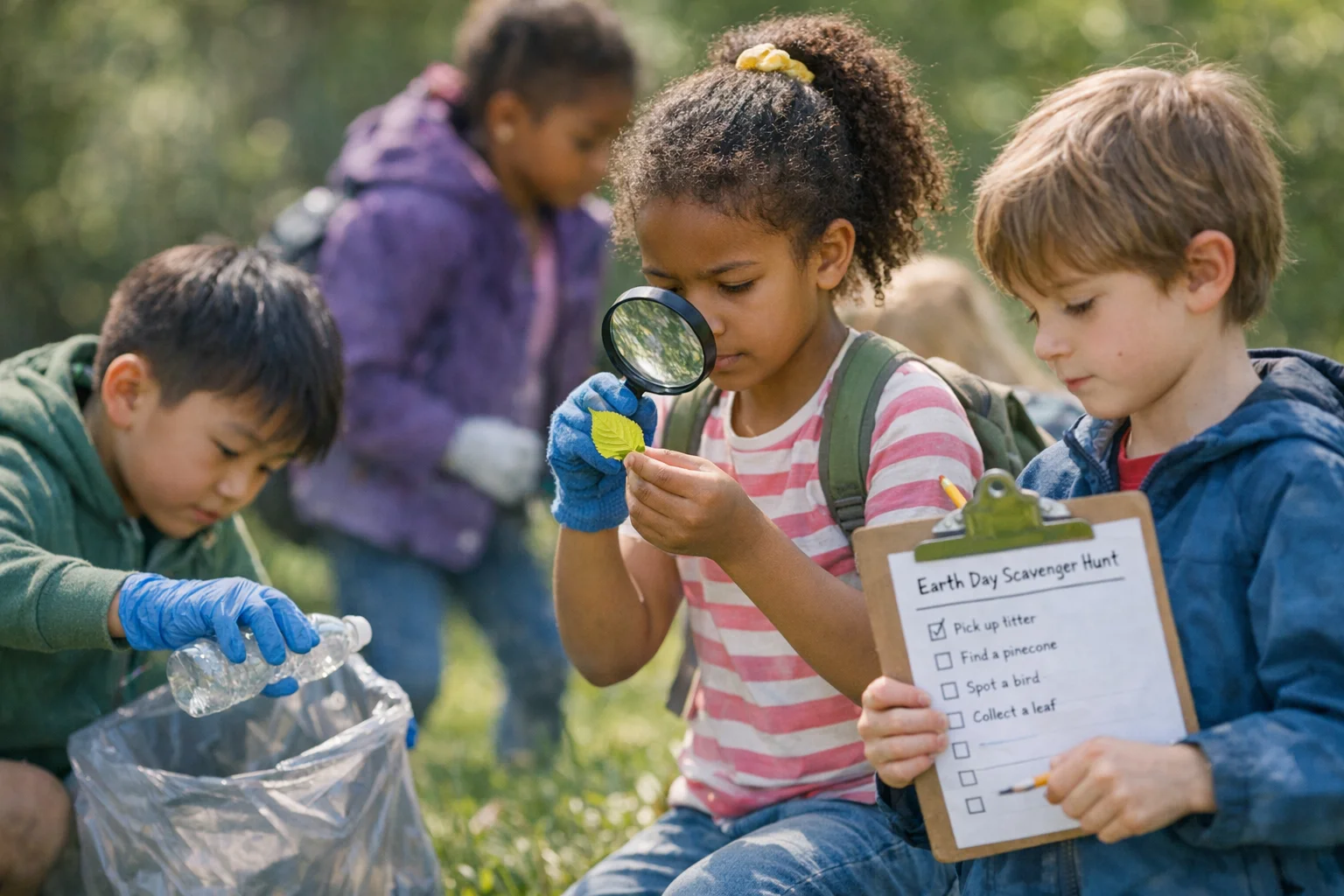
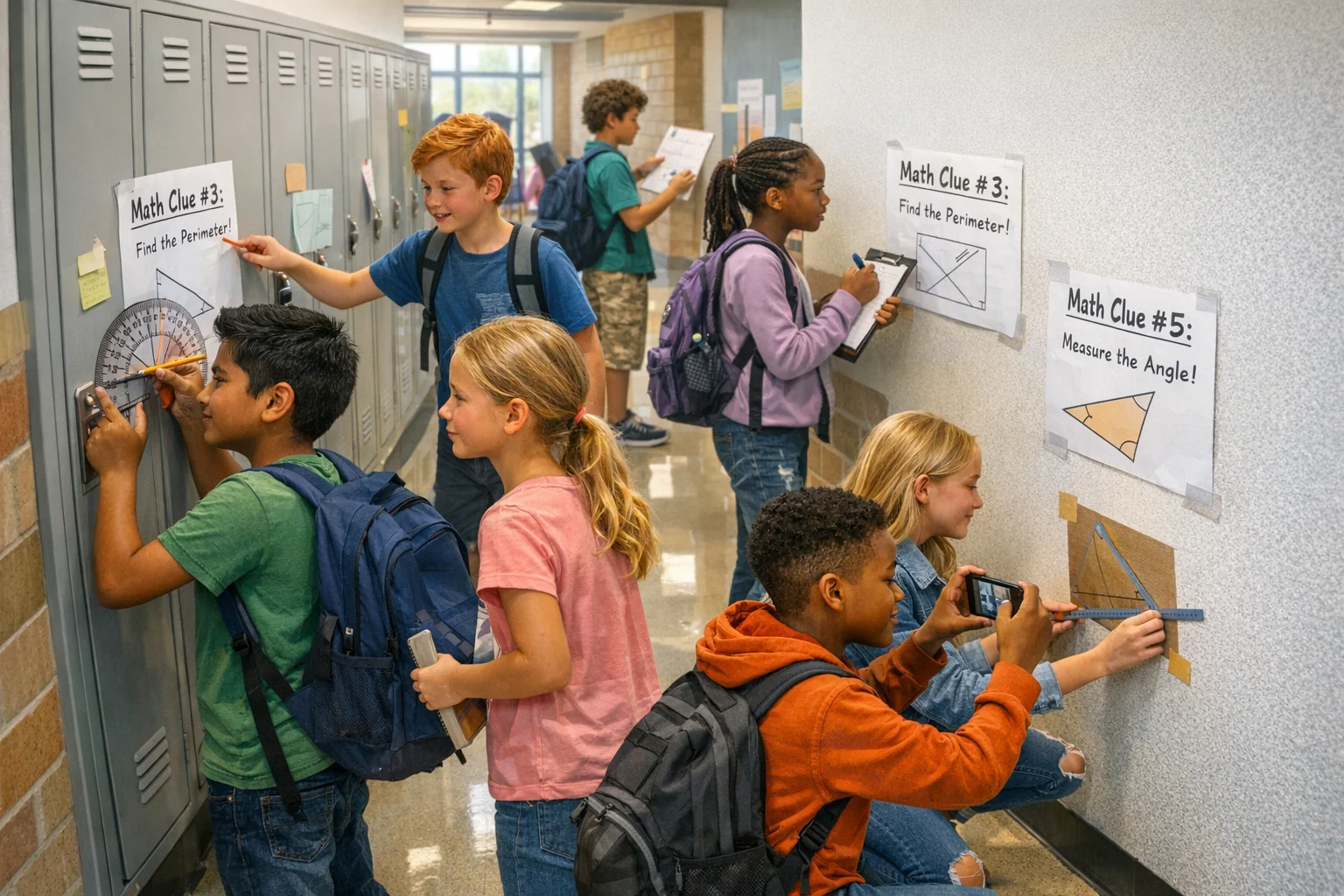
A well-designed Earth Day scavenger hunt turns “learn about the planet” into “notice, act, and remember.” The trick isn’t louder instructions. It’s sharper prompts, small wins, and a simple flow that keeps kids moving, noticing, and doing.
At a Glance
- Design around three verbs: notice nature, collect simple data, do one small action.
- Mix challenge types: quick photos, Q&A, GPS check-ins, short videos, and QR clues.
- Right-size the route: one tight area beats a sprawling map every time.
- Build in impact: track bags collected, observations made, or pledges kept.
- Keep ethics visible: teach and reward Leave No Trace behaviors.
A quick-start Earth Day scavenger hunt plan
You can set up a solid hunt in under an hour. Here’s the flow we use when a school, camp, or neighborhood group asks for something tomorrow.
- Pick a compact zone. One park loop, a schoolyard, a cul-de-sac circuit. Tight zones keep supervision and momentum easy.
- Choose 12–18 challenges across three buckets.
- Notice: observe, identify, compare, sketch.
- Collect data: count, categorize, tally.
- Do: pick up litter, post a sign, share a tip.
- Decide proof format. Snap a photo/video, answer a Q&A, scan a QR by a station sign, or check in at a GPS point. Variety keeps energy up.
- Prep quick materials. Reusable gloves and a few buckets for cleanup, pencils, a shared timer, and a simple map if needed. If devices are allowed, mix in QR codes and GPS check-ins.
- Score lightly. Most points for actions that matter; smaller points for observations. Offer a team bonus for Leave No Trace.
- Close with a 5‑minute huddle. Share a favorite find, log totals (bags, species, pledges), and snap a group photo next to what you improved.
If you want a cleanup angle, the official Great Global Cleanup resources from EARTHDAY.ORG help you align with broader efforts and even add your event to their map.
Ideas by setting: park, schoolyard, neighborhood, indoors, backyard
Different settings invite different prompts. The lists below balance curiosity with action. Keep each clue short and specific so kids move, not debate wording.
Park or nature center
- [Photo | 20 pts]: Find three leaf shapes; line them up smallest to largest.
- [Q&A | 15 pts]: Which trail sign shows habitat protection? Write three words.
- [GPS Check-in | 30 pts]: Reach the pond overlook without stepping off trail.
- [Video | 25 pts]: Record 5 seconds of “quiet listening” to natural sounds.
- [Photo | 40 pts]: Before-and-after: remove litter from a safe, dry spot.
Schoolyard or campus
- [Photo | 20 pts]: Shadow longer than your arm next to a living plant.
- [Q&A | 15 pts]: Name one native tree on campus and one benefit.
- [QR Code | 25 pts]: Scan the “water-saving tip” poster near a faucet.
- [Photo | 30 pts]: Compost, recycle, or trash? Show correct bin for snack.
- [Video | 30 pts]: Teach a friend a two-step Leave No Trace habit.
Neighborhood or urban block
- [Photo | 20 pts]: Smallest green thing growing through concrete.
- [Q&A | 15 pts]: Count storm drains on your block; why keep them clean?
- [Photo | 25 pts]: Street tree with mulch done right: describe what you see.
- [GPS Check-in | 25 pts]: Local mural or sign with an environmental message.
- [Video | 40 pts]: One-minute sidewalk sweep with your crew, bag visible.
Indoors or rainy-day alternative
- [Q&A | 20 pts]: List three home items that can be reused before recycling.
- [Photo | 25 pts]: Pack a waste‑smart snack using reusables from home.
- [QR Code | 20 pts]: Scan a station to learn a recycling fact; summarize it.
- [Video | 30 pts]: Explain “turn off, unplug, or dim” in one room at home.
- [Q&A | 30 pts]: Plan a family mini‑cleanup: where, when, and one safety rule.
Backyard or apartment courtyard
- [Photo | 20 pts]: Five colors found in living things within 10 steps.
- [Q&A | 20 pts]: Name a pollinator you can support and one way to help.
- [Photo | 25 pts]: Bird, insect, or fungus: capture one respectfully from distance.
- [Video | 30 pts]: Quietly observe for 20 seconds; share what changed.
- [Photo | 40 pts]: Fix a micro‑litter spot: before and after, bag closed.
Ideas by age: PreK–K, Grades 1–3, Grades 4–5, Middle–High School
Development stages matter. Shorter attention spans need motion and simple visuals. Older groups can handle layered tasks, classification, and quick peer teaching.
PreK–K
- [Photo | 15 pts]: Something soft in nature; gentle touch, then hands off.
- [Photo | 15 pts]: Green circle, square, and triangle you spot outdoors.
- [Q&A | 15 pts]: Name one animal home we should not disturb.
- [Video | 20 pts]: Whisper “thank you” to a tree; share one reason.
- [Photo | 25 pts]: Your team lined up on the path, toes behind the edge.
Grades 1–3
- [Photo | 20 pts]: Three textures: rough bark, smooth leaf, bumpy rock.
- [Q&A | 20 pts]: Why keep water bottles out of the trash? One reason.
- [Photo | 25 pts]: A plant and an animal sharing the same small space.
- [Video | 30 pts]: Teach the “pack in, pack out” rule to the camera.
- [Photo | 30 pts]: Before-and-after: tiny litter spot you safely improved.
Grades 4–5
- [Q&A | 20 pts]: Identify a native species using a kid‑friendly field tool.
- [Photo | 25 pts]: Evidence of erosion; suggest one fix in your caption.
- [Video | 30 pts]: Thirty‑second recycling PSA for your school community.
- [Photo | 30 pts]: Pollinator‑friendly flower; note color and visitor type.
- [Q&A | 35 pts]: Explain one Leave No Trace principle in your own words.
Middle–High School
- [Photo | 25 pts]: Invasive species example; explain why it spreads well.
- [Video | 35 pts]: One‑minute micro‑teach on stormwater and neighborhood drains.
- [Q&A | 30 pts]: Estimate waste avoided with reusables at one lunch.
- [Photo | 35 pts]: Human impact you can mitigate today; show the fix.
- [GPS Check-in | 40 pts]: Reach three restoration hotspots; add a brief status note.
Tip for species ID tasks: for families and younger groups, the kid‑safe Seek by iNaturalist app gives instant, account‑free identifications and keeps location private by default. Older students can handle deeper uploads and community verification.
Classroom and group formats that actually work
Patterns we keep seeing in schools, rec centers, and camps:
- Stations beat wandering. Four to six cones or QR posters around a field with varied tasks keep lines short and adults focused.
- Two‑beat challenges land. Observe something interesting, then do a tiny action. Example: identify a native plant, then place a small “protect our roots” sign.
- Role cards reduce chaos. Photographer, safety spotter, recorder, and timekeeper. Rotate halfway through.
- Visible scoreboard nudges effort. Whether on a whiteboard or inside an app, progress makes kids chase one more task.
If you’re tying into school content, the EPA’s ready‑to‑teach resources help you pull vocabulary and quick facts. Browse the Reduce, Reuse, Recycle resources for students and educators for handouts and classroom activities you can turn into QR‑linked stations.
Build real impact into the game
The most satisfying hunts produce something tangible.
- Cleanup totals. Track bags or buckets filled. Snap a final “lined‑up bags” photo at the finish. If you want to align with broader efforts, register with the Great Global Cleanup and add your event to their map.
- Observation counts. Count species, pollinators spotted, or new native plants identified. Keep the number visible where kids can watch it climb.
- Behavior pledges. Short, specific, and measurable. Example: “Turn off my bedroom lights at night,” “Refill my bottle for a week,” “Pack one trash‑free lunch.”
- Student‑made signage. Quick posters by sinks, fountains, and classroom bins. Photograph and post them where they’ll actually be seen.
- Teach‑it‑forward. Film 30‑second tips for younger grades. Post in morning announcements.
For recycling facts or classroom‑ready definitions, link a station to the EPA’s Recycling basics and benefits page so students can cite a credible source in their answers.
Safety, accessibility, and Leave No Trace
Earth Day shouldn’t come with a footprint of its own. Bake outdoor ethics and inclusion into scoring.
- Leave No Trace. Reward teams that demonstrate principles like planning ahead, staying on durable surfaces, and disposing of waste properly. A clear, youth‑friendly overview lives on the Leave No Trace seven principles page; consider turning each principle into a quick station.
- Accessibility by design.
- Keep routes on smooth, wide paths. Offer seated tasks and sensory‑friendly alternatives.
- Provide a non‑phone path: printed clue cards with checkboxes; adults can take photos if documentation is required.
- Language options help. Use simple icons on signs; pair readers with readers.
- Cleanup common sense. Gloves for litter pickup, skip anything sharp or suspicious, and photograph from a distance rather than handling.
Running it in an app (when it helps)
For classes, camps, or neighborhood groups with lots of moving parts, an app can quietly remove friction. Scavify exists for exactly this kind of experience: challenge variety, automation, and easy launch without printing stacks of paper. What usually shifts the dynamic is simple:
- Challenge variety without chaos. Mix Photos, Videos, Q&A, GPS Check‑ins, and QR Codes in one place.
- Automation. Auto‑award points on scans and check‑ins; review flagged photos later.
- Ease of launch. Publish once; everyone sees the same map, rules, and timer in the app or browser.
- Scale flexibility. Works for one classroom, a whole grade, or a city block party.
If you’re doing one event a year, paper might be fine. If you’re coordinating stations, volunteers, and lots of kids, the live scoreboard alone earns its keep.
Ready-to-copy checklists and clue banks
Use these banks as is or adapt them to your place and age group.
Observation bank (notice)
- [Photo | 20 pts]: A leaf with visible veins; sketch its pattern beside photo.
- [Photo | 20 pts]: Something moving and something still in one frame.
- [Q&A | 15 pts]: Find three textures in nature; describe each briefly.
- [Photo | 25 pts]: Evidence of animal life without the animal present.
- [Q&A | 20 pts]: Where do roots live here? Explain why that matters.
Data bank (collect)
- [Q&A | 20 pts]: Count bins: recycling, compost, landfill. Which is missing?
- [Photo | 25 pts]: Five pieces of micro‑litter captured in a closed container.
- [Q&A | 25 pts]: Tally storm drains on your route; note one nearby waterway.
- [Photo | 25 pts]: Three native plant IDs with names visible in captions.
- [Q&A | 20 pts]: Estimate minutes lights are on in an empty room daily.
Action bank (do)
- [Video | 30 pts]: Teach a younger student a recycling fact with a prop.
- [Photo | 30 pts]: Fix a bin sign so correct items are obvious.
- [GPS Check-in | 30 pts]: Reach the posted “cleanup zone” and document results.
- [QR Code | 25 pts]: Scan a water‑saving tip; write one habit you’ll try.
- [Video | 35 pts]: Thirty‑second “pick it up” montage; team visible in frame.
If you want deeper classroom ties, the EPA’s educator pages include lesson prompts that convert neatly into stations. Start with Reduce, Reuse, Recycle for definitions and examples you can adapt.
FAQs
How long should an Earth Day scavenger hunt last?
Plan for 30–60 minutes of active play plus 10 minutes to launch and close. Younger groups skew shorter; older students can handle a full period with stations.
What supplies do we actually need?
Reusables first: gloves, a few buckets or bags, clipboards or a small stack of laminated clue cards, and a simple map or app. Avoid single‑use swag. Keep a small first‑aid kit nearby.
What’s a good prize that isn’t more plastic?
Extra credit or service minutes, a class picnic spot choice, garden time, or a “choose the next challenge” voucher. Recognition boards beat trinkets.
How do we include preschoolers without chaos?
Shrink the hunt area, use picture‑based clues, and assign roles like “nature spotter” and “line leader.” Keep tasks short and tactile, with adults close by.
Can we run this indoors if the weather turns?
Yes. Shift to home‑energy tips, bin‑sorting, water‑saving posters, and quick PSAs. Use QR codes to point at a credible source like the EPA’s Recycling basics and benefits page.
How do we teach outdoor ethics quickly?
Introduce one or two Leave No Trace principles and reward teams that demonstrate them. The seven principles overview is a concise, youth‑friendly reference.
What about species identification for kids without accounts?
Use the family‑safe Seek by iNaturalist app. It identifies plants and animals on‑device without requiring sign‑ups, making it ideal for classrooms and family events.
Do we have to host on April 22?
No. Any week in April works for schools; weekends suit neighborhoods. If you’re focusing on cleanup, you can plug into the year‑round Great Global Cleanup to keep momentum going.