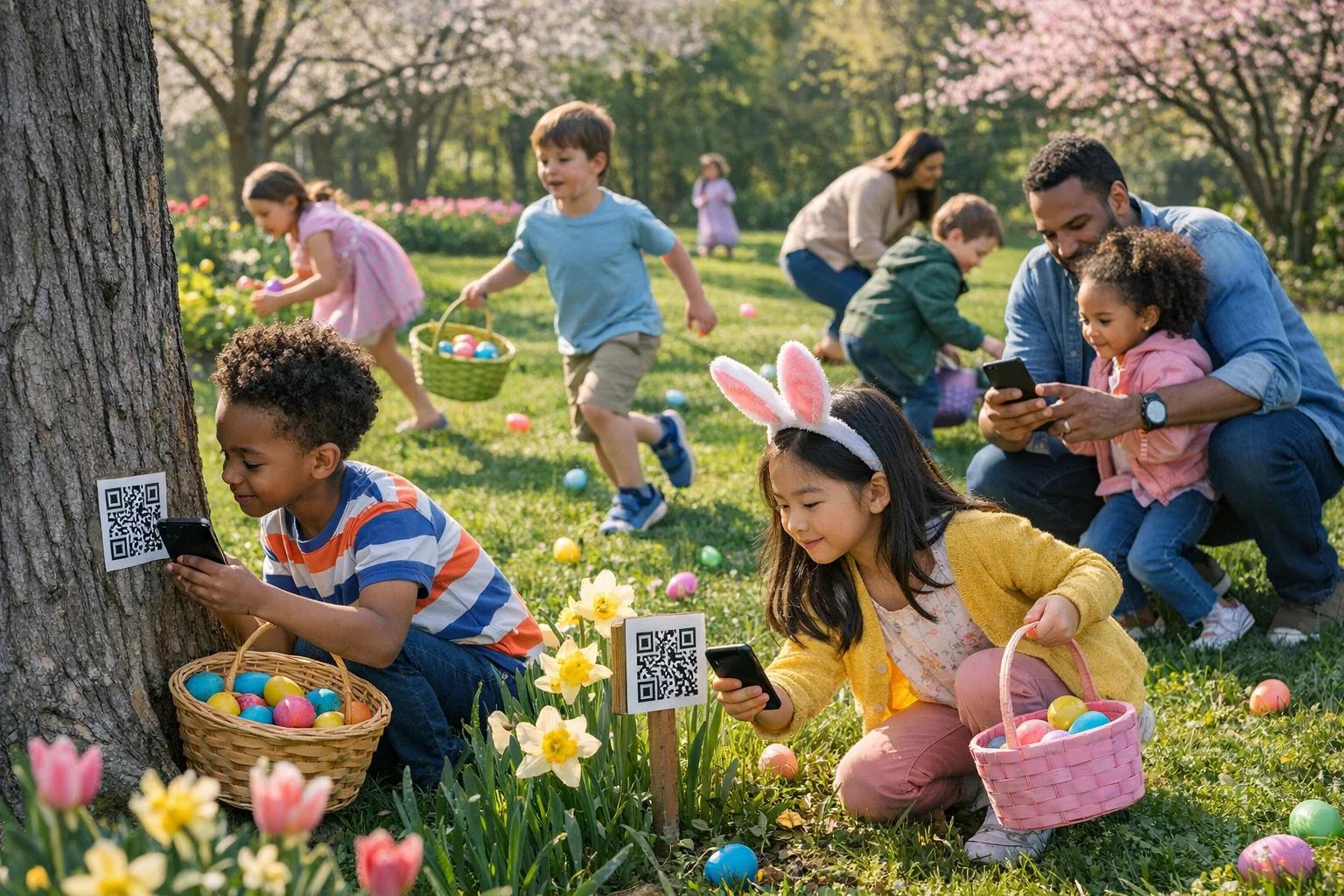
Easter scavenger hunts turn a good spring day into a memory. Kids move. Grownups play. Photos prove it actually happened. Below is a complete guide with ready-to-run ideas for homes, classrooms, neighborhoods, and community events. Use it as a plug-and-play plan or as a toolbox for your own twist.
At a Glance
- Design for movement and discovery. Keep teams active with short, varied tasks that build small wins fast.
- Mix clue types. Blend photos, riddles, QR codes, and GPS check-ins to match age and setting.
- Plan for inclusion. Offer non-food rewards and adapt for reading levels, mobility, and sensory needs.
- Keep it tidy outdoors. Follow simple low-impact practices and pack out everything you bring.
- Make it repeatable. Save clues and reskin the theme next spring instead of rebuilding from scratch.
What an Easter scavenger hunt is and why it works
An Easter scavenger hunt is a themed set of small challenges that guide participants from clue to clue. Classic egg hunts are pure collection. A scavenger hunt adds mystery, movement, and choices that make the experience feel earned.
In our experience, the best hunts create a rhythm: find, solve, move, celebrate, repeat. That pattern holds attention longer than a single dash for eggs, especially with mixed ages. Movement isn’t just fun; it supports health and learning. Kids benefit from regular active time, and 60 minutes of daily activity is a widely cited guideline for school-aged children. A hunt helps you chip away at that total while keeping focus positive. CDC guidance on daily activity for children explains the 60-minutes-a-day recommendation in plain terms.
Play also strengthens problem-solving and social skills. When adults set clear goals but let kids lead the choices, engagement jumps. That’s the sweet spot for hunts. The American Academy of Pediatrics highlights how guided play supports development without draining the joy from it. See the AAP’s overview of the role of play in learning in its clinical perspective on the power of play.
If you like connecting activities to tradition, eggs and rabbits have long been part of Easter folk customs that celebrate spring, color, and renewal. You can tap those symbols without getting stuck in cliches. A brief overview from Britannica summarizes the holiday’s mix of religious and folk elements. See the Britannica entry on Easter traditions for context.
Quick-start: run a simple Easter hunt this weekend
If you want a fast, reliable format that works for most families and small groups, start here.
- Pick your map. Home, yard, school, park, or neighborhood loop. Choose an area with at least 6 to 10 distinct spots.
- Set a theme accent. Color, animals, spring, storybook, or local landmarks. A thin layer of theme is enough.
- Decide clue styles. Aim for 50 percent quick-win photo tasks, 30 percent location clues, 20 percent puzzles.
- Prep lightweight props. Plastic eggs for hiding codes, painter’s tape arrows, chalk marks, QR stickers, a couple of ribbons for waypoints.
- Plan the finish. A team photo, a final riddle, or a shared “treasure” table. End on a moment worth a picture.
- Score simply. 10–100 points per task based on effort. Ties break with a creative bonus challenge.
Easter scavenger hunt ideas by setting and age
Below are ready-to-use challenge sets. Mix and match. Each list blends clue types and difficulty. Keep the tone playful and let teams make choices.
Indoors (rainy-day friendly)
- [Photo | 20 pts]: Build a bunny shadow on the wall using two hands.
- [Q&A | 30 pts]: Count pastel items in the room that are not eggs.
- [QR Code | 40 pts]: Scan the egg sticker hiding under something that opens.
- [Multiple Choice | 30 pts]: Which room smells most like spring right now?
- [Video | 50 pts]: Hop like a rabbit past three doors without touching them.
Backyard or park
- [GPS Check-in | 50 pts]: Check in by the oldest tree in sight.
- [Photo | 30 pts]: Capture three different flower colors in one shot.
- [Q&A | 20 pts]: How many steps from the gate to the birdbath?
- [QR Code | 40 pts]: Scan the code inside an egg tied to a branch.
- [Video | 60 pts]: Do a bunny conga line across the lawn.
Neighborhood walk or bike hunt
- [GPS Check-in | 60 pts]: Check in where the sidewalk chalk rabbit points.
- [Photo | 40 pts]: Find a mailbox with a spring-themed flag.
- [Q&A | 30 pts]: Which house shows the most pastel colors?
- [QR Code | 50 pts]: Scan the code taped near a community notice board.
- [Multiple Choice | 30 pts]: Which street has the friendliest front-yard gnome?
Classroom or school
- [Q&A | 30 pts]: What number is hidden under the librarian’s favorite chair?
- [Photo | 20 pts]: Snap the class mascot wearing a paper bunny ear.
- [Multiple Choice | 40 pts]: Which hallway poster uses the most green?
- [QR Code | 50 pts]: Scan the egg code taped inside a locker row.
- [Video | 60 pts]: Perform a 10-second silent bunny charade.
Church or community event
- [Photo | 30 pts]: Recreate a stained-glass color pattern with craft paper.
- [Q&A | 20 pts]: Count the steps from the door to the donation box.
- [QR Code | 50 pts]: Scan the code under a chair in the fellowship hall.
- [Multiple Choice | 40 pts]: Which banner shows the brightest yellow?
- [Video | 60 pts]: Record a 5-second “Happy Easter” in three languages.
Teens and mixed-age family teams
- [Q&A | 40 pts]: Crack a simple cipher to reveal the next location.
- [Photo | 30 pts]: Stage a forced-perspective shot “holding a giant egg.”
- [QR Code | 60 pts]: Scan the code hidden in a riddle on social media.
- [GPS Check-in | 70 pts]: Check in at the highest safe point on-site.
- [Video | 80 pts]: Shoot a 10-second one-take “bunny heist” scene.
Clues that land: formats that keep momentum high
Variety wins. Most teams start strong and fade when every clue feels the same. Rotate formats to keep the brain and body switching gears.
- Rhyming riddles. Short couplets that point to a specific object. Keep them concrete: textures, colors, positions.
- Picture fragments. Snap close-ups of locations and make teams match them to real spots.
- Color trails. Hide colored dots or yarn that lead to a final cache.
- Codes with training wheels. Simple substitution, acrostics, or word jumbles that resolve to a place name.
- Maplets. Hand-drawn mini-maps with two or three landmarks. No true scale needed; just recognizable anchors.
- Tech touchpoints. QR stickers for instant feedback, GPS check-ins for movement, and timed clue releases to avoid crowding.
What usually shifts the dynamic is the first clever success. Place an early “aha” that looks harder than it is. Confidence climbs and participation follows.
Make it inclusive, safe, and low-waste
A few small choices widen the circle and protect your space.
- Non-food wins. Stickers, pencils, seed packets, temporary tattoos, or a team photo booth at the finish. Food can appear as optional, individually wrapped treats at the end.
- Allergy-aware planning. Avoid shared snack bowls. Label any treats clearly. Offer equal-value non-food options.
- Mobility and sensory options. Provide alternate routes without stairs, and at least one low-stimulation space indoors. Offer a visual checklist for non-readers.
- Privacy-smart media. Set expectations on photos and sharing before you start. Use team shots, not individual close-ups, if you’re unsure.
- Outdoor care. No confetti, glitter, or plastic bits left behind. Pack out tape and eggs. If you’re in a natural area, follow simple low-impact practices. The Leave No Trace seven principles offer a practical, widely used framework.
Run it with or without an app
You can run a strong hunt with paper checklists and a clipboard. You can also run it on an app. The difference shows up in coordination, verification, and energy.
- Paper works for small spaces and short hunts. It’s tactile and easy, but scoring and clue release can bottleneck.
- Apps help when you want live scoring, automatic photo/video capture, timed releases, GPS/QR tasks, or multiple teams across a bigger area.
Scavify fits when you want challenge variety, automation, and a quick launch. It supports photo, video, GPS check-ins, QR codes, multiple choice, and Q&A in one place. It also works in a browser or the mobile app, so families and classrooms can join without fuss. Use it if those pieces make your life easier; stick with paper if they don’t.
Templates you can reuse next year
A pattern we keep seeing: the second year is always smoother. Build once, then reskin.
- Swap the skin, keep the spine. Replace “bunny” with “spring garden” or “storybook characters,” but keep the same locations and challenge types.
- Modular clue bank. Save 10 evergreen riddles, 10 photo prompts, and 6 QR locations you can rotate.
- Flexible finish. End with a team photo wall one year, a collaborative mosaic the next.
Troubleshooting: common snags and simple fixes
- Crowding at the same clue. Stagger starts and use parallel versions of key tasks.
- Reading-level gaps. Offer picture-only alternates or read-aloud cards.
- Weather turns. Mark 30 percent of your tasks as indoor-ready and switch on the fly.
- Score confusion. Post a simple “How points work” card and stick to it.
- Energy dip halfway. Place a quick-win, high-laugh challenge at the midpoint.
- Too much candy pressure. Make points redeemable for time in a craft corner, stickers, or small non-food prizes.
Ready-to-use clue banks by theme
Use these as plug-and-play fillers when you need one more clue that fits the moment.
Color and pattern
- [Photo | 30 pts]: Find three stripes and two dots in one picture.
- [Q&A | 20 pts]: How many pastel green items can you spot near here?
- [Multiple Choice | 40 pts]: Which door shows the brightest color right now?
- [QR Code | 50 pts]: Scan the code hidden where colors overlap.
- [Video | 60 pts]: Film a “color wave” with teammates wearing different hues.
Nature and spring
- [Photo | 30 pts]: Capture a leaf, a petal, and a shadow together.
- [GPS Check-in | 50 pts]: Check in at the sunniest safe open spot.
- [Q&A | 20 pts]: How many bird sounds can you hear in 10 seconds?
- [QR Code | 40 pts]: Scan the egg taped near something that hums.
- [Video | 60 pts]: Record a 5-second “seed-to-sprout” mime.
Storybook twist
- [Q&A | 30 pts]: Unscramble a character’s name to find your next stop.
- [Photo | 20 pts]: Pose as your favorite hero discovering a hidden egg.
- [Multiple Choice | 40 pts]: Which book spine hides the secret sticker?
- [QR Code | 50 pts]: Scan the code tucked behind a fairy-tale scene.
- [Video | 60 pts]: Reenact a 10-second “happily ever after” ending.
Why hunts feel better than a sprint for eggs
Most teams tend to pace themselves when there are choices and small wins. That keeps energy up and conflict down. You still get the joy of eggs, just wrapped in a design that balances speed with discovery.
If you want simple language to share with other adults or organizers, you can cite two ideas: daily movement targets for kids (the CDC’s child activity overview) and the learning value of guided play (AAP’s power of play perspective). They’re practical anchors when you need buy-in.
FAQs
How long should an Easter scavenger hunt last?
Keep it tight. Most groups stay engaged when the experience fits comfortably within an hour, with short tasks and a clear finish. Focus less on the clock and more on variety and momentum.
What ages can participate together?
Mixed-age teams work well when each clue type has an accessible version. Pair a picture-only clue with a simple riddle. Teens can handle GPS or cipher steps; younger kids can lead photos and color finds.
Do I need prizes for every participant?
Not necessarily. Many hosts use a shared “treasure table” at the end so every team chooses one small non-food reward. Recognition boards and team photos are satisfying, low-cost finishers.
How many clues do I need?
For small spaces, 8 to 12 varied tasks feel full but not overwhelming. In larger areas, aim for 12 to 20 with optional side quests so faster teams don’t lap slower ones.
How do I prevent kids from just following other teams?
Spread parallel versions of key clues and stagger start points. Release some tasks on a timer so teams can’t camp the same location.
What’s the best way to hide QR codes and eggs outdoors without leaving a mess?
Use painter’s tape or biodegradable twine and remove everything during teardown. Avoid confetti or glitter. In parks and natural areas, plan with the Leave No Trace principles in mind to protect the space.
Are Easter scavenger hunts appropriate for school?
Yes. Keep clues curriculum-adjacent if helpful (colors, counting, simple ciphers, nature observation) and set clear photo rules. Active learning like this pairs well with guided play, which the AAP notes supports development and engagement.
What if the weather turns?
Pre-label a third of your tasks as indoor-capable and switch on cue. Keep QR stickers and picture clues that move easily indoors. A tight finish line helps everyone know when the hunt is really done.
Wrap up
A good Easter scavenger hunt is lightweight to run and rich to experience. If you want scoring, photo verification, GPS/QR tasks, and timed clue drops without juggling paper, Scavify can run the whole thing in a browser or app. If you prefer a clipboard and chalk arrows, you’ve got everything you need above to make it work.
One last note if you share parks or trails: model the behavior you want to see next year too. Clean sites and respectful routes mean you’ll be welcomed back. The National Park Service’s overview of the Leave No Trace seven principles is a clear, practical refresher when you need it.