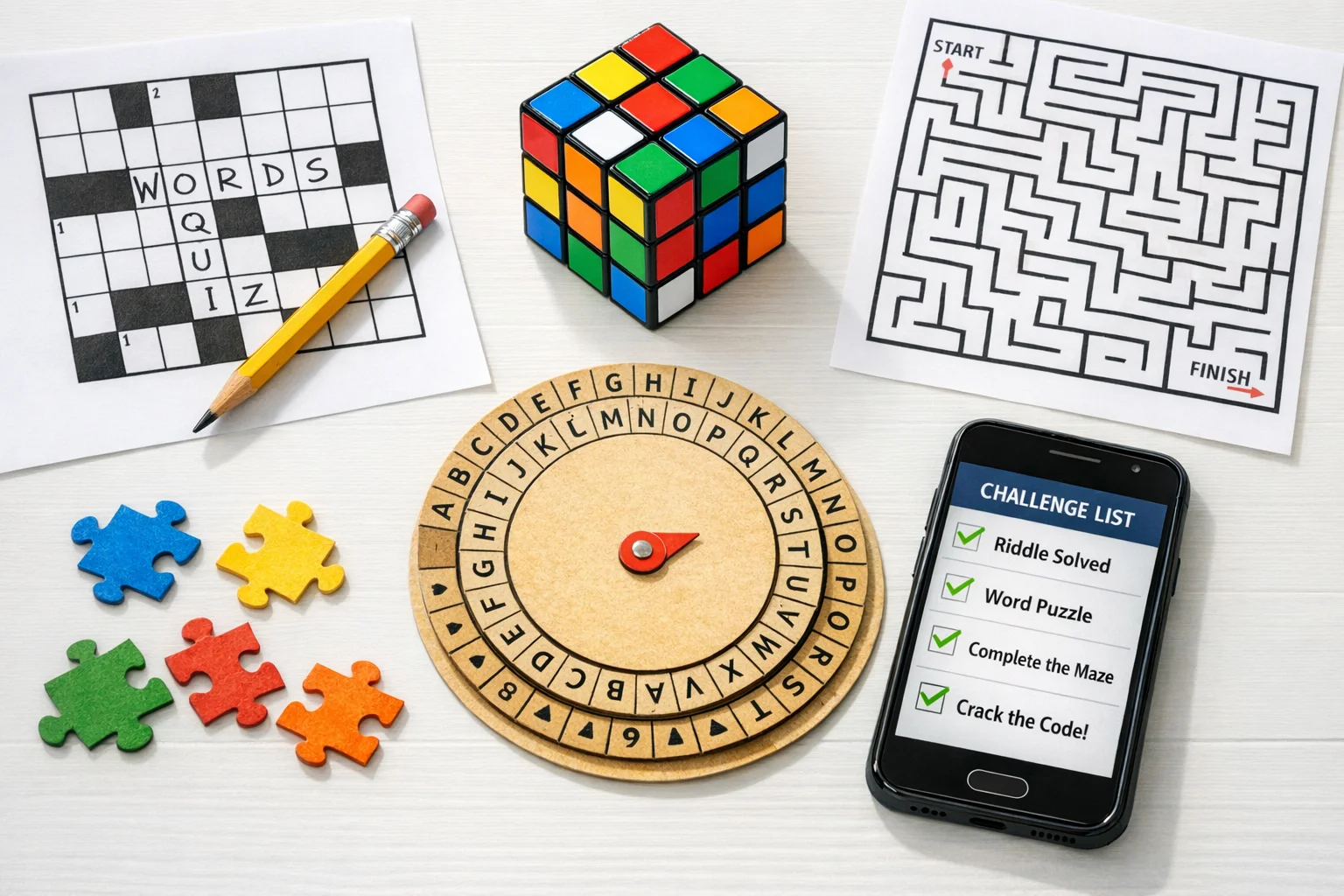
Most team building lists read like party games wearing a polo. This one isn’t. These 31 activities come from running actual corporate events, offsites, orientations, and ongoing engagement programs where participation is optional and outcomes matter.
Use this as a practical menu. Pick for the goal you care about, the time you actually have, and the environment you’re in.
The Bottom Line
- Design for outcomes, not optics. Tie the activity to a real behavior you want to strengthen.
- Short, frequent beats long, rare. Ten minutes weekly outperforms one big day annually.
- Rituals compound. Repeat simple practices that create voice, trust, and momentum.
- Make participation easy. Hybrid-friendly formats keep energy (and equity) up.
How to choose the right activity for your team
A pattern we keep seeing: the best activities remove friction, create equal airtime, and give teams a small win they can feel. That’s it.
Anchor on three questions:
- What outcome do we actually want? Connection, clarity, feedback, problem-solving, recognition.
- How much time do we really have? Five minutes? Thirty? A half day? Choose accordingly.
- What’s our context today? Remote, hybrid, in-person, mixed time zones, new joiners, cross-functional, etc.
Two quick evidence notes that shape this list:
- Rituals reduce anxiety and improve performance when teams repeat simple, shared behaviors before work that matters. Keep them small, consistent, and owned by the team, not HR. (hbs.edu)
- Engagement links to business outcomes across thousands of teams. Activities that raise voice, recognition, and clarity are not fluff — they’re operational. (gallup.com)
31 team building activities for work employees actually enjoy
Format you’ll see for each: what it is, why it works, time, group size, setting, and a facilitation tip.
1) “One Word, One Why” Check-in
A fast round where each person shares one word for how they’re arriving and one sentence on why.
- Why it works: Equal airtime builds psychological safety and surfaces context that would otherwise derail later. (dash.harvard.edu)
- Time: 5–8 minutes. Group: Up to 12 (split larger groups). Setting: Any.
- Tip: Go last as the facilitator. Let the team set the tone first.
2) Wins & WIPs
Each person shares one recent win and one “work in progress” they want light help on.
- Why it works: Balances recognition with practical support; normalizes asking for help.
- Time: 10–15 minutes. Group: 6–10. Setting: Any.
- Tip: Capture WIPs in a shared doc with one follow-up owner per item.
3) Two-Minute Debrief
After a meeting or sprint, run a quick “Stop/Start/Keep” lightning round.
- Why it works: Information sharing correlates with team performance; short debriefs keep that loop alive. (pubmed.ncbi.nlm.nih.gov)
- Time: 2–5 minutes. Group: Any. Setting: Any.
- Tip: Timebox contributions to 15 seconds each; decide one change to test next time.
4) Micro-mentoring Roulette
Pairs rotate every 7 minutes to trade one resource or technique that helped them recently.
- Why it works: Cross-pollinates tacit knowledge; energizing without small-talk fatigue.
- Time: 25–35 minutes. Group: 8–20. Setting: Any.
- Tip: Provide three prompt cards to keep conversations practical.
5) Silent Brainwriting
Everyone writes ideas quietly for 5 minutes, then passes papers (or boards) to build.
- Why it works: Equalizes voices; reduces anchoring and extrovert bias.
- Time: 15–25 minutes. Group: 4–12. Setting: Any.
- Tip: Use “build, don’t judge” as the only rule for round one.
6) Problem Postcards
People anonymously write one blocker on a card; the group sorts and suggests fixes.
- Why it works: Safer disclosure creates real improvement opportunities. (dash.harvard.edu)
- Time: 20 minutes. Group: 6–15. Setting: Any.
- Tip: Close with owners and dates on the top two themes.
7) User Safari
Teams pair up to observe a real customer or internal user task, then report one friction and one delight.
- Why it works: Shared context beats debate; team learns together.
- Time: 45–90 minutes. Group: 4–12. Setting: Any.
- Tip: Agree on a single observation template beforehand.
8) Five-Frame Story
Small teams create a 5-slide or 5-image story about a project milestone.
- Why it works: Converts complex work into memorable narratives; boosts alignment.
- Time: 30–45 minutes. Group: 4–16. Setting: Any.
- Tip: Enforce five frames only; constraint drives clarity.
9) “Teach Me a Trick” Show & Tell
Each person demos a 3-minute workflow trick or shortcut.
- Why it works: Immediate, pragmatic value; dopamine from “I can use this today.”
- Time: 20–30 minutes. Group: 6–12. Setting: Any.
- Tip: Record the session; create a living wiki of clips.
10) Decision Jam (Lite)
Rapidly move a decision from options to criteria to tradeoffs.
- Why it works: Focuses group energy on “how we’ll decide,” not who’s right.
- Time: 25–40 minutes. Group: 4–10. Setting: Any.
- Tip: Score against 3–5 criteria; pick, pilot, and timebox a revisit.
11) Ritual Builder
The team designs a tiny recurring ritual (opening, closing, or handoff) to adopt for 30 days.
- Why it works: Shared rituals reduce anxiety and improve performance when repeated. (hbs.edu)
- Time: 20–30 minutes. Group: Any. Setting: Any.
- Tip: Start absurdly small: a 30-second close to meetings beats a 10-minute ceremony you’ll skip.
12) “Bad Ideas First” Brainstorm
Open with two minutes of intentionally terrible ideas to lower the bar.
- Why it works: Loosens evaluation anxiety; often leads to genuinely original angles.
- Time: 10–20 minutes. Group: 4–12. Setting: Any.
- Tip: Capture the “bad” ones; they seed later combinations.
13) Feedback Speed Circles
Two rings of chairs. Outer ring gives 90 seconds of specific appreciation; inner ring rotates.
- Why it works: Builds recognition muscles that drive engagement. (gallup.com)
- Time: 20–30 minutes. Group: 8–20. Setting: In person or breakout rooms.
- Tip: Ban generic praise. Require “because” and impact.
14) Meeting Makeover
Run a ruthless audit: purpose, people, process. Kill or redesign one recurring meeting.
- Why it works: Shared norms change faster when the team authors them.
- Time: 25–35 minutes. Group: 4–10. Setting: Any.
- Tip: Replace status with async; keep collaboration live.
15) Cross-Functional AMA
Invite a neighboring team for an “ask me anything” on tools, handoffs, and expectations.
- Why it works: Reduces friction at the seams where work actually stalls.
- Time: 30–45 minutes. Group: 8–25. Setting: Any.
- Tip: Seed three spicy-but-respectful questions in advance.
16) Micro-volunteering Sprint
An hour to complete 2–3 small-impact tasks for a local nonprofit or internal ERG.
- Why it works: Shared prosocial action bonds teams without forced fun.
- Time: 60 minutes. Group: Any. Setting: Any.
- Tip: Pre-stage tasks and links; momentum matters.
17) The 5% Upgrade
Each person commits to one tiny change that would make their week 5% better.
- Why it works: Builds agency, reveals easy systemic fixes.
- Time: 10–15 minutes. Group: Any. Setting: Any.
- Tip: Revisit next week. Celebrate attempts, not perfection.
18) Office (or Remote) Field Trip
Visit another team’s space or tool stack; do a mini demo and Q&A.
- Why it works: Shared understanding prevents the classic “why do they…?” spiral.
- Time: 30–60 minutes. Group: 6–20. Setting: Any.
- Tip: Give visitors a scavenger-style checklist to keep attention focused.
19) Lightning Talks
Three team members give 5-minute talks on non-obvious skills or hobbies.
- Why it works: Surfaces hidden talents and creates human connection without trust falls.
- Time: 20 minutes. Group: Any. Setting: Any.
- Tip: Keep it snappy and visual. No decks longer than five slides.
20) Assumption Auction
Teams list assumptions about a project, then “bid” on which to test first with $100 in fake budget.
- Why it works: Turns vague risk into prioritized experiments.
- Time: 25–40 minutes. Group: 4–12. Setting: Any.
- Tip: End with owners and test-by dates.
21) Peer Playtesting
Share a work artifact (mock, draft, doc) and ask for two types of feedback only: “I’m confused by…” and “I’m curious about…”.
- Why it works: Safer, more useful critique; more voices participate. (dash.harvard.edu)
- Time: 20–30 minutes. Group: 4–10. Setting: Any.
- Tip: No solutions in round one; reflection first.
22) Walk & Talk
Pairs walk (or virtual-walk) for a focused prompt: “What’s one thing we should stop doing?”
Why it works: Movement changes energy; side-by-side reduces defensiveness.
Time: 15–20 minutes. Group: Any. Setting: In person or phone.
Tip: Capture one agreed action before you sit back down.
23) “Pitch Your Colleague”
In pairs, you have 3 minutes to pitch your partner’s superpower to the group.
- Why it works: Recognition plus perspective-taking; boosts trust.
- Time: 15–25 minutes. Group: 6–16. Setting: Any.
- Tip: Provide cue cards (impact story, strength, how to engage them).
24) Role Swap Retro
Run a sprint retro where each person argues from a different stakeholder’s perspective.
- Why it works: Expands empathy and improves handoffs.
- Time: 25–35 minutes. Group: 4–12. Setting: Any.
- Tip: Rotate roles mid-way to avoid caricature.
25) Shared Playbook Sampler
Adopt one proven “Play” from a reputable source, test it for 2 weeks, and keep what works.
- Why it works: Saves you from reinventing the wheel; practices are field-tested. See the free Atlassian Team Playbook for step-by-step formats. (atlassian.com)
- Time: 30 minutes to pick; 2 weeks to run. Group: Any. Setting: Any.
- Tip: Start with the Team Health Monitor and one icebreaker Play. (atlassian.com)
26) Photo Quest (Scavenger Mini)
A short, app-based scavenger hunt with playful prompts tied to culture or space.
- Why it works: Fast movement, laughter, and light creativity without awkwardness.
- Time: 20–40 minutes. Group: Any. Setting: In person or hybrid.
- Tip: Keep prompts specific to your culture to avoid “stock” feel. If you want this fully automated with scoring, challenges, and mobile capture, Scavify makes it easy to spin up and scale without extra wrangling.
Example challenge prompts:
- [Photo | 30 pts]: Recreate a famous album cover using only office supplies.
- [Video | 50 pts]: Teach the team a 10-second handshake unique to your group.
- [GPS Check-in | 40 pts]: Check in where the best impromptu 1:1s happen.
- [Q&A | 20 pts]: What phrase do we overuse in meetings? Capture the top offender.
- [Multiple Choice | 25 pts]: Which teammate has been here the longest?
27) “Show the Work” Gallery Walk
Pin up work-in-progress around the room (or in a digital board) and tour silently first, then discuss.
- Why it works: Visuals turbocharge shared understanding; silence prevents early anchoring.
- Time: 30–45 minutes. Group: 6–20. Setting: Any.
- Tip: Set two question types only: clarity and consequence.
28) First Principles Teardown
Pick a clunky process and challenge the team to rebuild it from zero constraints.
- Why it works: Clears stale assumptions; high participation if you pick a pain everyone feels.
- Time: 30–60 minutes. Group: 4–12. Setting: Any.
- Tip: End with the smallest shippable improvement.
29) Skill Swap Market
Create a marketplace of “I can teach” and “I want to learn” cards; schedule 20-minute sessions.
- Why it works: Reciprocity, learning, and cross-team bridges in one move.
- Time: 45–60 minutes. Group: Any. Setting: Any.
- Tip: Cap sessions; abundance beats marathon.
30) Customer Service Rodeo
Role-play a tough customer conversation with timeboxed rounds and debrief.
- Why it works: Psychological safety grows when practice happens before the real moment. (dash.harvard.edu)
- Time: 25–40 minutes. Group: 4–12. Setting: Any.
- Tip: Debrief the behavior, not the person.
31) Team Charter Refresh
Revisit purpose, principles, and working agreements; prune what’s stale and add one new norm.
- Why it works: Clear structure and clarity are part of high-performing team dynamics; keeping them current beats a dusty doc. (gallup.com)
- Time: 30–45 minutes. Group: Any. Setting: Any.
- Tip: Run it quarterly; attach to a real project kickoff.
Mistakes that quietly ruin team building
- Forcing vulnerability. Start with low-risk sharing and skill exchange. Depth follows safety. (dash.harvard.edu)
- Overweighting novelty. One-off spectacles fade. Small rituals compound. (hbs.edu)
- Ignoring airtime. Activities that let a few people dominate aren’t team building.
- No follow-through. A 10-minute debrief and one owner create real change. (pubmed.ncbi.nlm.nih.gov)
- Treating it as entertainment. Tie activities to engagement drivers like recognition, clarity, and voice. (gallup.com)
Remote and hybrid tweaks that keep things inclusive
Most teams today are mixed-mode. A few simple adjustments preserve energy and equity.
- Equalize the interface. If one person is remote, make everyone join from their own screen. It levels voice and turn-taking. (dash.harvard.edu)
- Shorten the segments. Online, 7–12 minute cycles keep attention up.
- Use visual shared spaces. Digital whiteboards and async boards extend participation windows.
- Protect small rituals. Open/close check-ins are even more valuable remotely. They calm pace and keep humans visible. (hbs.edu)
- Rotate facilitation. Ownership spreads; skills grow; activities feel less “corporate.”
If you’d like lightweight, automated ways to keep challenges fresh across offices and time zones, this is where Scavify naturally fits. Browser or app, quick challenge creation, auto-scoring, and photo/video capture make weekly engagement simple without adding project overhead.
FAQs
What are the best quick team building activities for busy teams?
Go with fast rituals that create equal airtime and a small win: One Word, One Why; Two-Minute Debrief; or Wins & WIPs. Ten minutes weekly beats a quarterly half-day in impact and adoption. (pubmed.ncbi.nlm.nih.gov)
Do team building activities actually improve performance?
Yes, when they target real drivers (communication, clarity, trust) and are part of ongoing practice. Meta-analyses show positive effects for team building and team training on team effectiveness. (journals.sagepub.com)
How do I avoid awkward or performative activities?
Lower the stakes, keep it useful, and design for equal voice. Silent Brainwriting, Teach Me a Trick, and Decision Jam work because they’re about the work, not forced fun. Psychological safety grows from small, repeated interactions, not big confessions. (dash.harvard.edu)
What should I do after an activity to lock in value?
Always end with a 2–5 minute debrief and one concrete change, owner, and date. Information sharing and quick feedback loops correlate with better team outcomes. (pubmed.ncbi.nlm.nih.gov)
How often should we do team building?
Short and frequent. A 5–15 minute ritual weekly plus an occasional deeper session beats rare offsites. Rituals compound; novelty decays. (hbs.edu)
Any credible, ready-made formats we can borrow?
Yes. The free Atlassian Team Playbook offers step-by-step activities, health checks, and facilitation tips that you can run as-is. Start with the Health Monitor and one Play that addresses your immediate need. (atlassian.com)
How do we keep hybrid activities fair for remote teammates?
Default to one-person-per-screen, use shared digital spaces, and rotate facilitation. Prioritize formats that equalize turn-taking and voice. These choices reinforce psychological safety and consistent engagement. (dash.harvard.edu)
In our experience, teams that treat engagement as an operating discipline — not an event — see the quiet stuff shift first: faster handoffs, cleaner decisions, fewer side-slack debates. That’s when the bigger metrics finally move, too. (gallup.com)