Solutions
Your first hunt, live this afternoon.
Free to start · No download for participants
Explore workplace scavenger hunt ideas with clever prompts, ready-to-use examples, setup steps, group variations, scoring ideas, and planning tips.
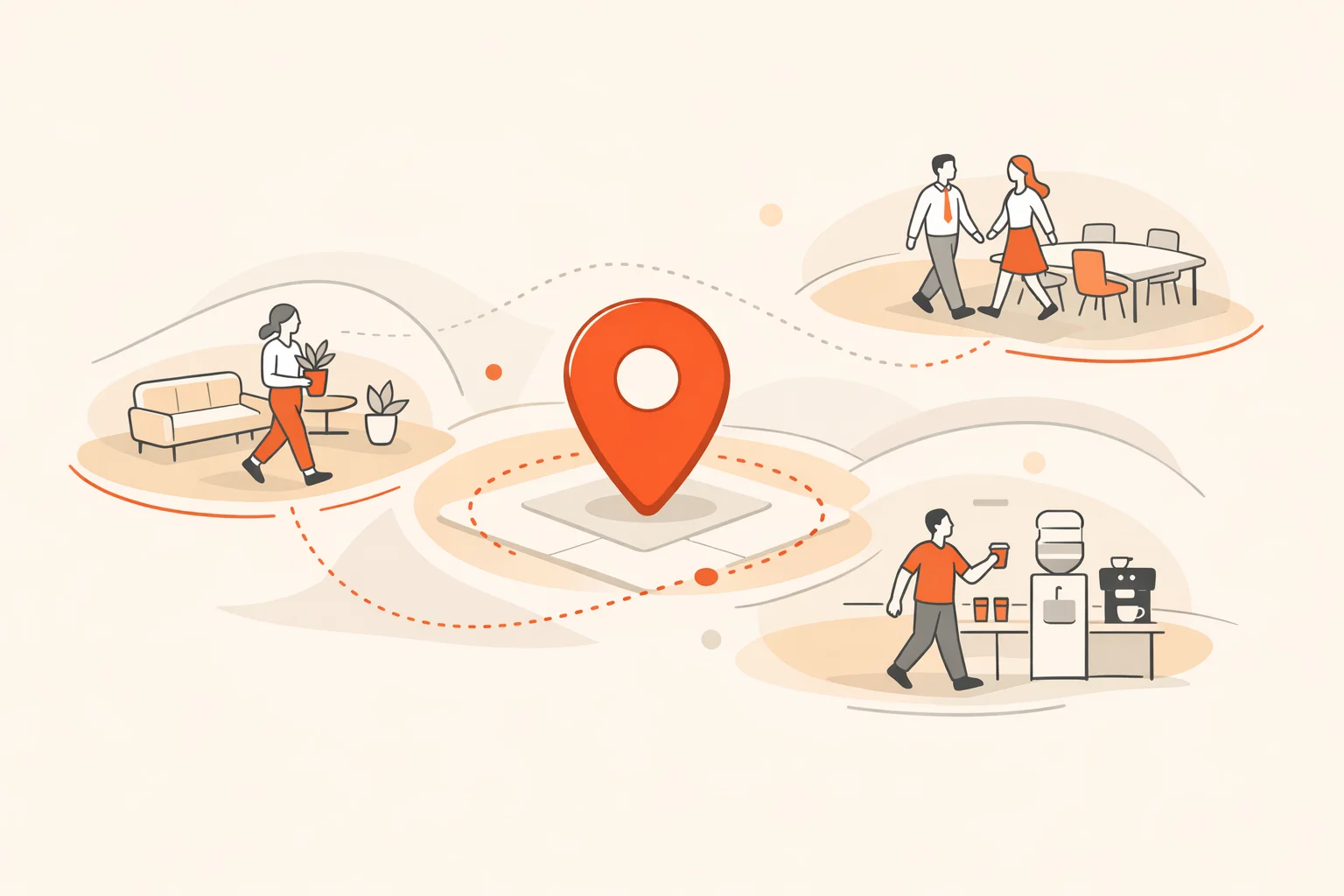
You don’t need another forced “fun” day. You need something that gets people moving, talking, and noticing the details that actually matter in your workplace. A well-built scavenger hunt does that. It turns a passive crowd into active participants without making anyone perform at a talent show.
What follows is a field-tested set of workplace scavenger hunt ideas that work across departments and comfort levels. The prompts are short by design so teams can read, act, and move. You’ll also find tips for scoring, setup, and remote-friendly variations so you can run one hunt format across different offices without reinventing it every time.
One note before we get tactical: tools matter. A modern scavenger hunt app makes setup faster, automates scoring, and keeps the vibe competitive without you standing at the front of the room with a clipboard.
The list below is grouped by what each set of prompts tends to unlock: new connections, cultural fluency, creative spark, and movement. Use one group for a quick team tune-up or combine all four for a full-office activation.

People remember what they do, not what they’re told. Fast-moving, low-stakes challenges create shared reference points and make it easier to speak up later. That’s the engine you want to build.
Research on psychological safety shows that environments where people can try, talk, and even miss without penalty produce better learning and collaboration. That’s the ground a good hunt prepares. See the framing in Harvard Business Review’s overview of psychological safety and the meta-analysis on team building’s impact across goal setting, roles, and problem solving in Small Group Research. Gallup’s ongoing work also reminds us that engagement remains stubbornly scarce worldwide, which is exactly why short, intentional connection moments matter; see Gallup’s global workplace insights.
Each idea is a mini-mystery: short, vivid, and specific enough to act on. Prompts are tagged by challenge type and pre-assigned point values so you can drop them into any platform without manual rebalancing.
Variety matters here. Most teams need a few easy social wins early to unlock momentum, then a couple of stretch challenges that require quick collaboration.
What usually shifts the dynamic is a fast first win. If the first minute feels like progress, completion rates jump.
Use these to surface useful facts and rituals people actually need: where things live, how decisions get made, and the stories that make the place feel like a place.
Pattern we keep seeing: when prompts reinforce actual navigation and norms, onboarding speeds up quietly for months afterward.
Keep these short and visual. You’re after surprise, not production value.
Make creativity cheap to try and safe to show. The energy follows.
These are built to get people out of their chairs and into useful spaces nearby. If you’re running indoors only, swap GPS items for QR or Trivia alternatives.
If you’re downtown, set a tight boundary. Constraints create focus and keep the game fair for different walking speeds.
Not every team is in the same room. These swaps keep the mechanics identical while changing how teams complete them.

Keep the rules obvious and the mission flow steady. Clarity creates momentum; momentum creates connection.
In our experience, small teams beat big ones for participation. Big groups breed passengers. Tight groups share the work and move faster.
Points aren’t just prizes. They’re pacing tools. Use them to create sprints and resets.
If you want structure for why this works, see how goal clarity and role definition correlate with better outcomes in the team-building meta-analysis and why visible progress fuels motivation in research summarized by HBR’s coverage of psychological safety and team learning (Teamwork on the Fly is a solid primer).
Yes. Keep the boundary tight, the list short, and the clock visible. Most teams can complete a focused hunt within a single meeting block when missions are clear and scoring is automated via an app.
Use fewer than you think. A strong 18–24 mission list with variety will feel full. It also leaves you with backups for future hunts or onboarding days.
Swap GPS for QR or Trivia prompts. The dynamic stays the same: quick movement, quick wins, and proof of completion that doesn’t rely on maps.
Mirror the list. For every on-site mission, include an equivalent webcam or intranet version. Same points, same time window, and one shared leaderboard so the story is collective.
Frame it as an activation, not an icebreaker. You’re building fast familiarity with people, space, and norms, which supports psychological safety and learning (HBR on psychological safety) and addresses persistently low global engagement (Gallup’s global insights).
Design missions that reveal useful truths: who does what, where things live, how to get unstuck. If a challenge would be embarrassing to complete in front of a client, cut it.
Keep them small and plural. More teams finishing strong beats one team winning big. Offer choice: coffee credits, lunch with a leader, or “meeting-free hour” tokens work better than generic swag.
Use the lists above straight or as a template. If you want less manual lift, a purpose-built platform like Scavify handles prompts, proof, scoring, and accessibility in the browser or app so you can focus on designing an experience people actually remember.