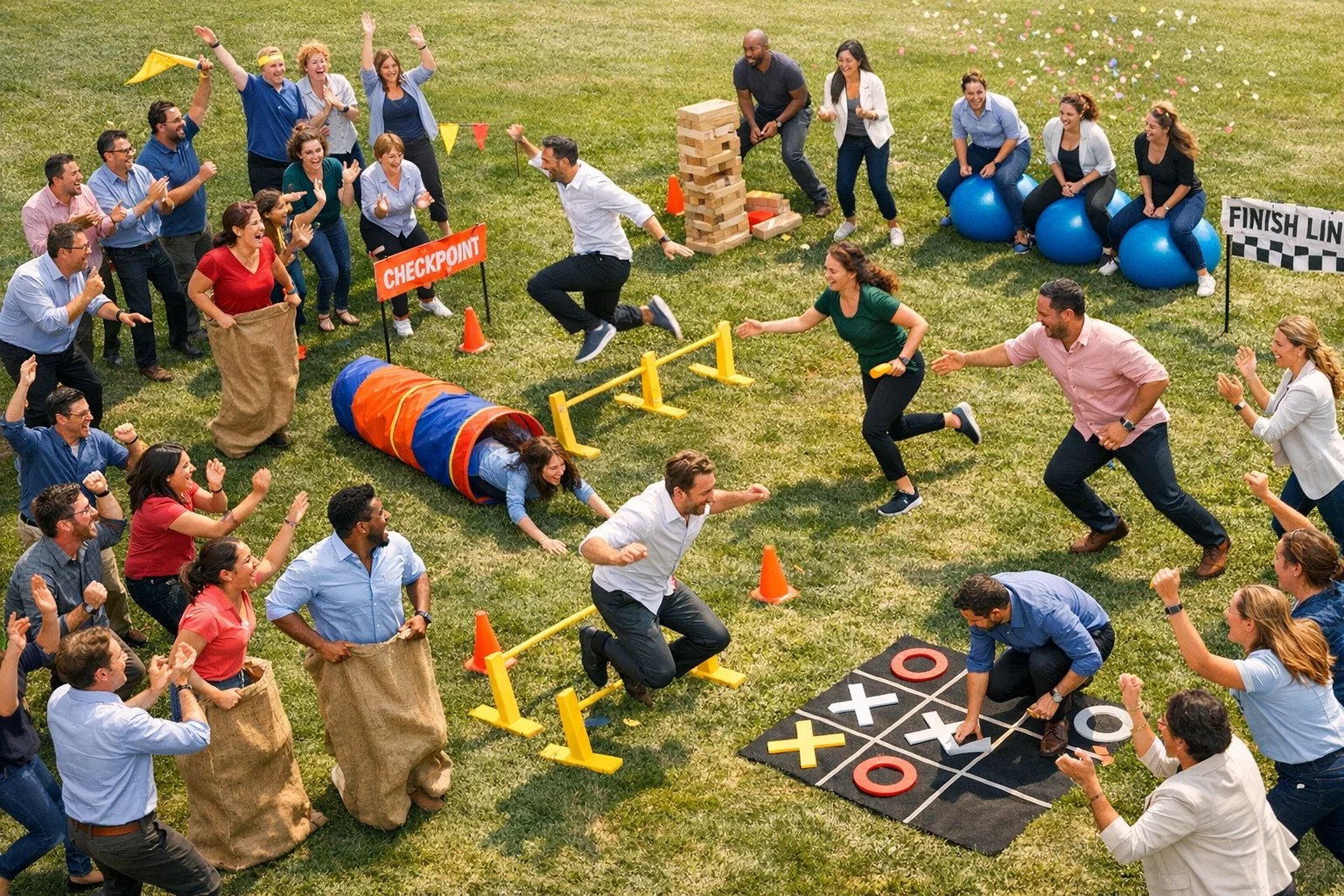
Large groups can feel impossible to energize. Too many people, not enough time, and attention splinters fast. The right formats fix that. Below are 25 high‑energy activities designed specifically for big headcounts with simple setup, clear flow, and built‑in excitement.
At a Glance
- Use parallel play. Run many mini‑stations so hundreds move at once, not wait in lines.
- Protect psychological safety. High energy without embarrassment creates real participation.
- Engineer fast feedback. Visible scoring and short rounds keep momentum.
- Mix brains and bodies. Rotate physical, creative, and problem‑solving tasks to include everyone.
- Debrief in minutes. Short closes lock in learning without slowing the room.
Why high‑energy large‑group team building works
A pattern we keep seeing: energy rises when people make quick, face‑to‑face connections in short cycles. Research on interaction quality and team performance backs this up. High‑performing groups show strong communication loops and frequent, brief exchanges, not long speeches. See Harvard Business Review’s analysis of high‑performing groups.
What usually shifts the dynamic is psychological safety. People participate more when risks are socialized and small. Google’s multi‑year study on team effectiveness emphasized this. An archived guide to team effectiveness from re:Work highlights the five keys, with psychological safety on top.
For scale, use proven micro‑structures. Short, repeatable patterns like 1‑2‑4‑All and Impromptu Networking include everyone at once. The menu of patterns on the Liberating Structures website is a reliable toolkit.
How to design activities that scale without chaos
- Clear, short cycles. 5–12 minute rounds with visible timers. Reset fast.
- Parallel participation. Many stations or pods working simultaneously. No single bottleneck.
- Simple roles. Captain, scorer, runner, builder. Clarity beats charisma in large rooms.
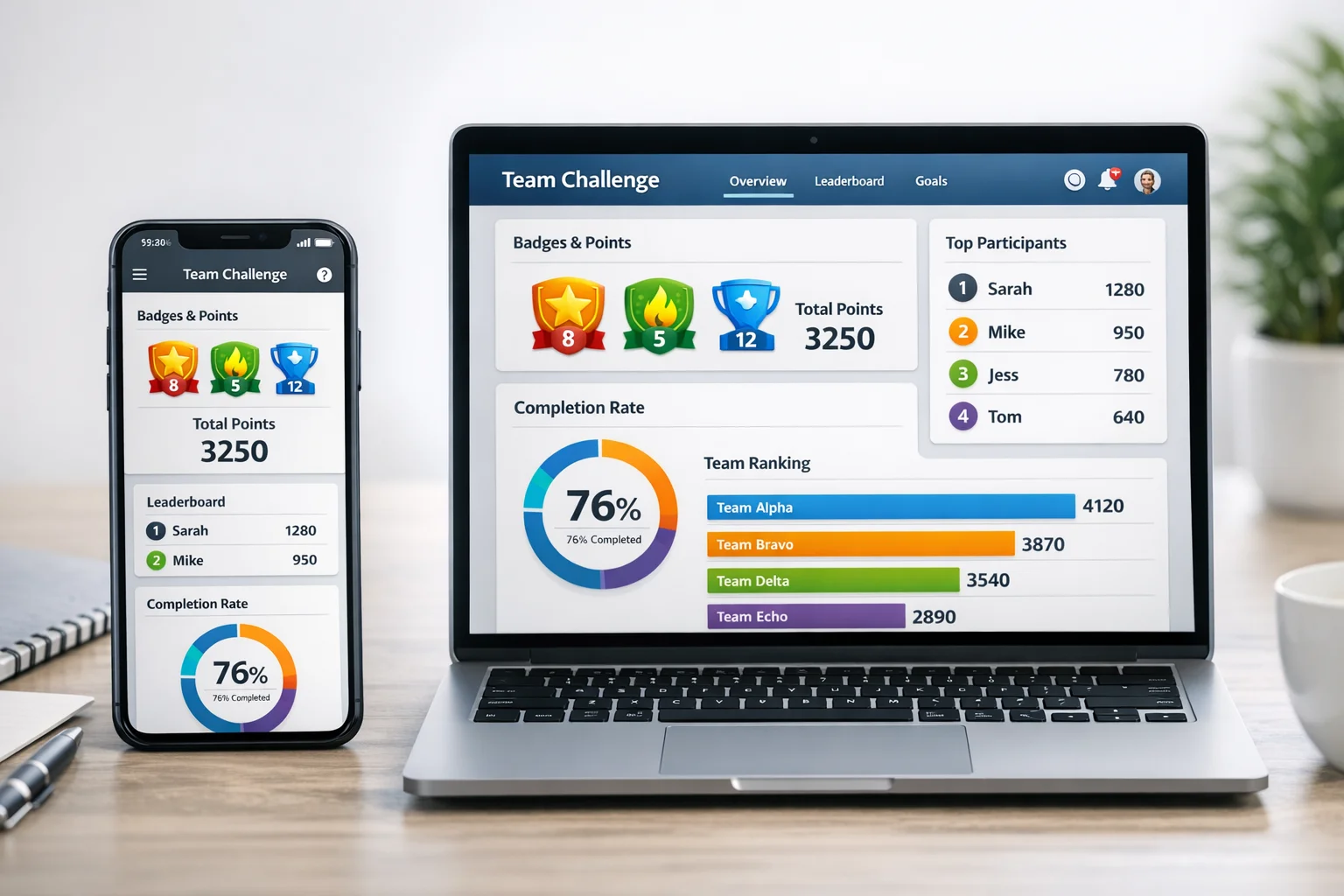
- Visible scoring. Big screens, flip charts, or app‑based leaderboards.
- Inclusive defaults. Offer physical and non‑physical paths to contribute.
- Noise plan. Handheld mics, whistles, or light cues for transitions.
- Space zoning. Mark lanes and zones with tape or cones so flow is obvious.
25 high‑energy team building activities for large groups
Each activity includes quick specs and how to run it at scale. Adjust times to fit your agenda.
1) Citywide Scavenger Sprint (app‑enabled)
- Good for: 40 to 1,000+, 60–120 minutes, indoor/outdoor
- You’ll need: Phones, QR codes or GPS tags, score dashboard
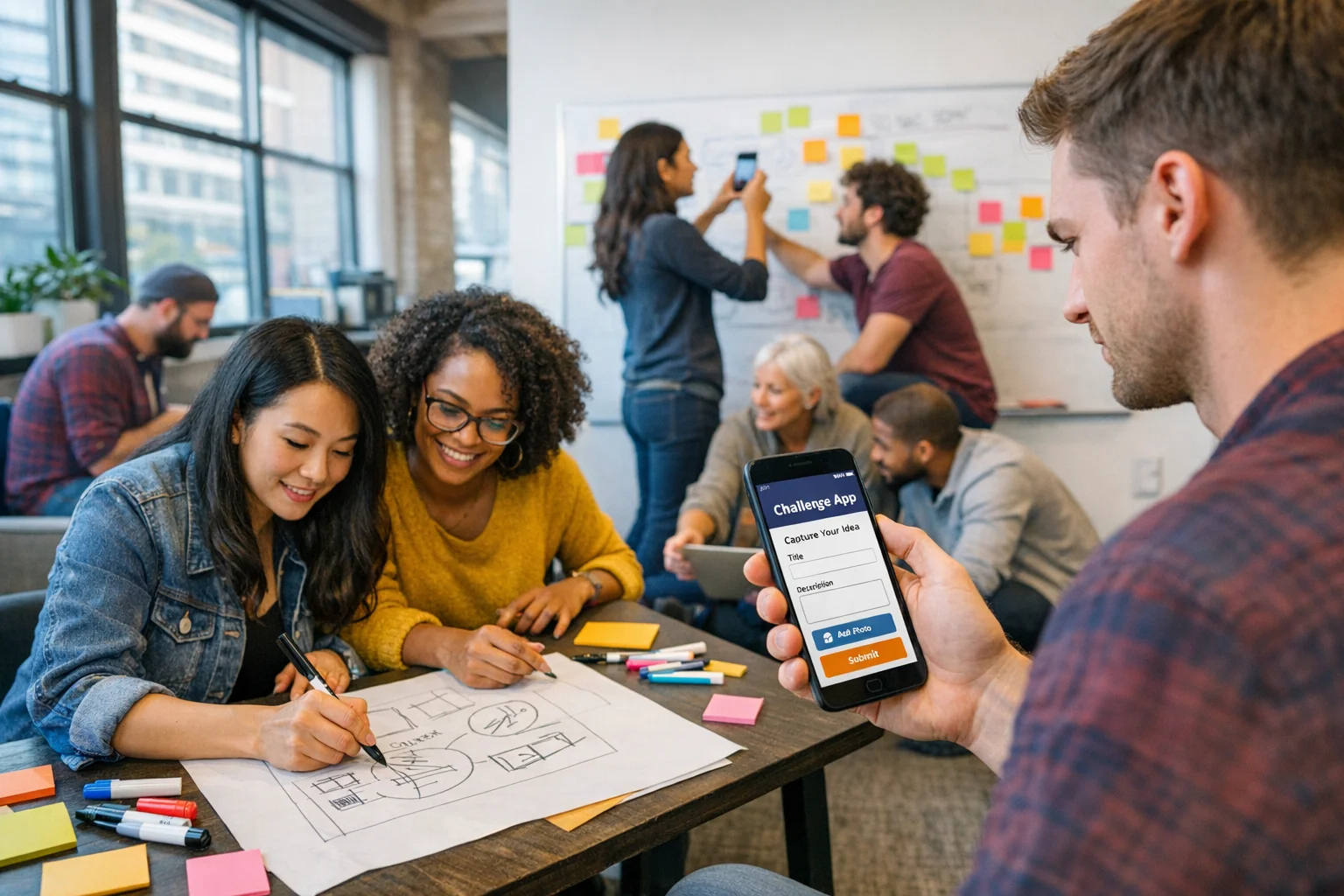
- How it works: Teams complete creative photo, video, and location challenges across zones. Points auto‑update on a live leaderboard. Ideal with a browser + app platform so instructions, proof, and scoring are automated. Scavify fits naturally here without fuss.
- Why it works: Parallel play, fast feedback, movement, and choice.
Sample challenge set to spark ideas:
- [Photo | 30 pts]: Capture a teammate forming a “bridge” with found objects.
- [Video | 50 pts]: Re‑create a famous scene using only office supplies.
- [GPS Check‑in | 40 pts]: Reach the spot where the city first got electricity.
- [QR Code | 20 pts]: Find the hidden code under something blue that spins.
- [Q&A | 25 pts]: Which local landmark contains a time capsule from 1976?
2) Rock‑Paper‑Scissors Royale
- Good for: 60 to 600, 15–25 minutes
- You’ll need: Music, stage area
- How it works: Everyone pairs up. Winners advance and losers become the winner’s cheering section. Repeat until one champion remains surrounded by a roaring crowd.
- Why it works: Explosive energy, zero setup, rapid social mixing.
3) Pipeline Express
- Good for: 40 to 400, 25–35 minutes
- You’ll need: Half‑pipe gutters or cut pool noodles, balls
- How it works: Teams move balls from start to finish using personal gutter pieces without dropping or touching the ball directly. Add obstacles and turns.
- Why it works: Coordination under time pressure with constant roles.
4) Giant Trivia Stadium
- Good for: 40 to 1,000+, 30–45 minutes
- You’ll need: Screen, projector, QR or paddles for answers
- How it works: Pods submit answers simultaneously. Mix general knowledge, company lore, and light puzzles. Add lightning rounds and double‑points.
- Why it works: Mass participation with instant reveals.
5) Photo Mosaic Mission
- Good for: 60 to 800, 45–75 minutes
- You’ll need: Photo brief, upload link, mosaic generator
- How it works: Teams capture themed images that assemble into a surprise mosaic revealed at the end. Award creativity, variety, and coverage.
- Why it works: Creative hunt with a shared finale.
6) Bridge the Gap
- Good for: 40 to 300, 35–50 minutes
- You’ll need: Cardstock, tape, string, dowels
- How it works: Pods build sections of a bridge that must connect across tables, then support an object. Late twist: connect all pods’ spans into one super bridge.
- Why it works: Local autonomy plus a global integration challenge.
7) The Marketplace
- Good for: 60 to 300, 40–60 minutes
- You’ll need: Challenge menu, currency tokens
- How it works: Teams buy challenges that fit their strengths, complete them, earn more currency, and trade. Dynamic pricing keeps it lively.
- Why it works: Strategy, negotiation, and self‑direction.
8) Mission Grid 100
- Good for: 80 to 600, 45–75 minutes
- You’ll need: 10x10 grid of posted micro‑challenges
- How it works: Fill rows and columns by completing fast tasks. Some require cross‑team collaboration. Bonus for completing patterns.
- Why it works: Movement, choice, and visible progress.
9) Flash‑Mob Choreo
- Good for: 40 to 400, 30–45 minutes
- You’ll need: Facilitator, music
- How it works: Teach a 30‑second routine in chunks. Record a group take. Optional: groups add a signature move.
- Why it works: Shared accomplishment, low stakes, high smiles.
10) Story Relay: Yes‑And Lines
- Good for: 40 to 300, 15–25 minutes
- You’ll need: Prompts on cards
- How it works: Lines of 10 build a story one sentence at a time, passing it down the line. Final person performs it. Rotate prompts.
- Why it works: Listening, spontaneity, and laughter.
11) Marshmallow Towers XL
- Good for: 40 to 200, 25–35 minutes
- You’ll need: Spaghetti, tape, string, marshmallows
- How it works: Classic tower challenge in pods. Add a final round where neighboring pods must merge designs.
- Why it works: Rapid prototyping plus integration.
12) Paper Airfield Defense
- Good for: 60 to 400, 30–40 minutes
- You’ll need: Paper, tape, target zones
- How it works: Half the teams design airplanes. Half build passive “defenses” with paper and tape to block landings. Switch roles and compare.
- Why it works: Iteration and playful competition.
13) Egg Drop City
- Good for: 60 to 300, 35–50 minutes
- You’ll need: Eggs, packing materials, drop zone
- How it works: Pods design protection, then link solutions into a single “city” that must protect multiple eggs at once.
- Why it works: Local design with systemic consequences.
14) 1‑2‑4‑All Problem Sprint
- Good for: 40 to 1,000, 20–30 minutes
- You’ll need: Prompts, timers
- How it works: Individuals jot ideas for 1 minute, pairs share for 2, foursomes converge for 4, then fast plenary share. Drawn from Liberating Structures’ patterns.
- Why it works: Everyone contributes without long plenary speeches.
15) Passport Adventure
- Good for: 80 to 600, 45–75 minutes
- You’ll need: Station stamps, maps
- How it works: Stations host micro‑tasks. Teams choose routes to collect stamps and unlock a final puzzle.
- Why it works: Movement, autonomy, and discovery.
16) Lineup Lightning
- Good for: 60 to 600, 10–15 minutes
- You’ll need: Space markers
- How it works: Silent lineups by birthday, distance from HQ, or years of service, then quick debrief. Repeat with new criteria.
- Why it works: Fast, funny, and revealing.
17) Impromptu Networking Burst
- Good for: 60 to 1,000, 12–18 minutes
- You’ll need: Prompts, timers
- How it works: Two or three rapid rounds meeting new partners to answer a focused question, then swap. From the Liberating Structures menu.
- Why it works: Purposeful mingling without awkwardness.
18) Great Puzzle Exchange
- Good for: 60 to 200, 30–45 minutes
- You’ll need: Jigsaw puzzles with swapped pieces
- How it works: Each team gets a puzzle missing critical pieces that are held by other teams. Trading and collaboration required.
- Why it works: Interdependence is non‑negotiable.
19) Circuit Games Arena
- Good for: 80 to 600, 45–75 minutes
- You’ll need: 6–10 mini‑games, whistles, scorecards
- How it works: Teams rotate through physical, creative, and mental stations. Short rounds with cumulative scoring.
- Why it works: Variety keeps energy constant.
20) Balloon Ribbon Rumble
- Good for: 60 to 300, 15–20 minutes
- You’ll need: Balloons on ribbons tied to ankles or waists
- How it works: Teams try to step on opponents’ balloons while protecting their own. Safer variant: pop by tagging ribbons, not stomping feet.
- Why it works: Quick chaos with clear win condition.
21) GPS Photo Safari
- Good for: 40 to 400, 45–90 minutes
- You’ll need: Phones, geo prompts
- How it works: Teams capture photos at specific coordinates and answer location‑based questions.
- Why it works: Exploration plus storytelling.
22) The Big Build: Cardboard City
- Good for: 80 to 400, 45–90 minutes
- You’ll need: Cardboard, box cutters, tape, markers
- How it works: Pods build city districts with a shared theme. Late twist: connect power, transport, or signage across districts.
- Why it works: Creativity with systems thinking.
23) Packathon for Good
- Good for: 60 to 600, 30–60 minutes
- You’ll need: Assembly items, checklist, quality station
- How it works: Race to assemble care kits with quality checks. Track throughput on a central board.
- Why it works: Purpose, pace, and visible impact.
24) Silent Auction Strategy Game
- Good for: 60 to 300, 30–45 minutes
- You’ll need: Bid sheets, token budgets, prize items worth different points
- How it works: Teams place blind bids on items that unlock bonus points or hints for later puzzles. Meta‑game of risk and collaboration emerges.
- Why it works: Negotiation and probability under time.
25) Debrief Dash: What, So What, Now What
- Good for: 40 to 1,000, 12–18 minutes
- You’ll need: Three wall zones
- How it works: Rotate through three prompts: observations, meaning, actions. This fast structure closes any event with focus. Popularized in Liberating Structures.
- Why it works: Closes the loop without slowing momentum.
Logistics that make large‑group experiences run smoothly
- Sound and sightlines. A small PA solves 80 percent of coordination issues. Put time and scores on a big screen.
- Staff the edges. Floaters solve problems before lines form.
- Clear signage. Station titles visible from 30 feet. Color‑coded routes.
- Heat and hydration outdoors. Plan shade, water, and shorter rounds. Use commonsense precautions aligned to NIOSH heat‑stress recommendations for workplaces.
- Short debriefs. Two or three crisp questions beat long speeches.
- Psych safety by design. Focus on tasks, not personal spotlights. This aligns with Project Aristotle’s emphasis on psychological safety.
- Rotate intensity. Alternate physical, creative, and cerebral tasks. Everyone gets a way to shine.
FAQs
What activities work best for 100+ people with minimal setup?
Rock‑Paper‑Scissors Royale, Lineup Lightning, Impromptu Networking, and Giant Trivia Stadium get hundreds moving with almost no materials. Use visible timers and a mic for crisp transitions.
How long should a large‑group session run?
Ninety minutes is a sweet spot for variety without fatigue. If you have half a day, cluster activities into two or three blocks with a clear midpoint reveal or leaderboard update.
How do we avoid long lines and dead time?
Design for parallel play. Run many stations at once, cap station dwell time, and route teams in different sequences. Visible timers and a whistle or chime keep things moving.
How do we ensure people feel safe participating?
Keep tasks focused on doing, not judging people. Favor team‑level wins, optional roles, and quick retries. This aligns with Google’s team research highlighting psychological safety as a predictor of effectiveness, as summarized in the re:Work guide archive.
What if our space is tight or noisy?
Use pod‑based activities that fit on tables and rely on visual cues over voice instruction. Trivia via QR codes, Mission Grid 100, and Puzzle Exchange work well in compact spaces.
How do we keep energy up without exhausting people?
Short rounds, clear wins, and variety. Mix physical moments with creative or strategic ones. Research on interaction quality suggests engagement rises with frequent, brief exchanges, not long monologues. See this HBR overview of group interaction patterns.
Can we make this hybrid for in‑person and remote participants?
Yes. Use app‑based submissions for hunts, add QR clues that remote teammates can decode, and synchronize trivia or story relays over a shared screen. Award “assist” points for remote‑to‑room collaborations.
What frameworks help with large‑group facilitation?
Liberating Structures offer field‑tested patterns like 1‑2‑4‑All and What‑So What‑Now What that scale beautifully. Browse the official LS site for formats you can drop into any agenda.
In our experience, the best large‑group events feel like organized mischief with purpose. Clear roles, fast cycles, obvious scoring, and light‑touch facilitation create the conditions where people actually engage. If you want the scavenger‑hunt format handled without spreadsheets, an app like Scavify keeps challenges, proof, and scoring tidy so you can focus on the energy in the room.