Orlando has no shortage of spectacle. But teams don’t need ride queues and wristbands to bond. The city is loaded with neighborhoods, parks, makers, and venues that turn a regular offsite into something people actually remember. Here’s a field-tested list of indoor, outdoor, and low‑lift options that outperform theme parks on connection, participation, and cost control.
The Bottom Line
- Mix locations: Downtown, I‑Drive, Winter Park, and the springs cover most team styles and budgets.
- Prioritize formats with shared problem‑solving over passive spectating.
- Plan around Orlando’s afternoon storms. Build an indoor Plan B within 10 minutes.
- Use app‑based mechanics to keep scores, photos, and pace without extra staff.
17 Orlando team building activities that actually work
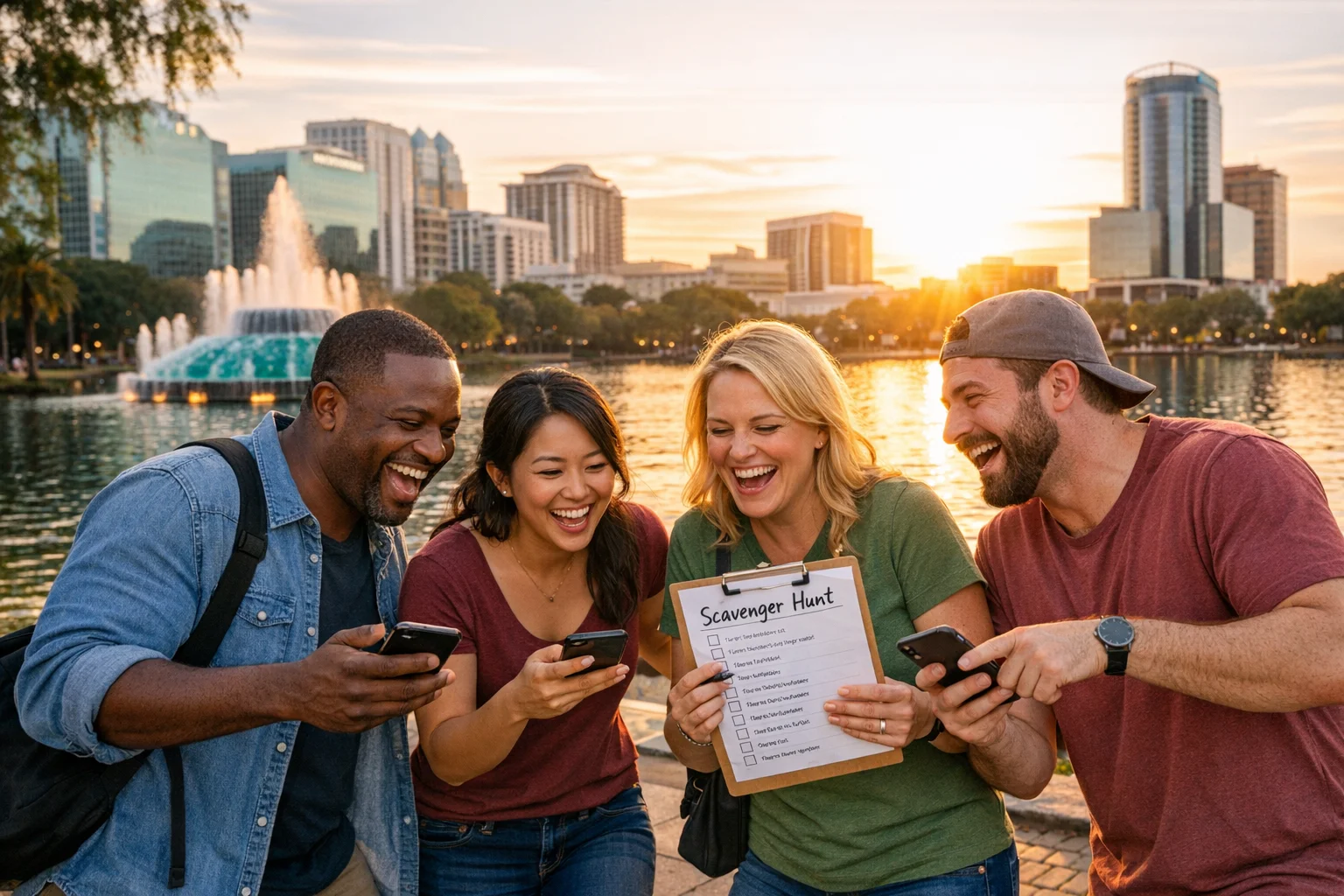
1) App‑powered Downtown Orlando scavenger hunt
A fast way to unlock Lake Eola, Church Street, and Thornton Park without buses or scripts. Micro‑teams compete through photo, video, GPS, and QR challenges that surface local landmarks and inside jokes.
- Why it works: Short, varied challenges mean everyone participates, not just the loudest person.
- How to run it: Start at Lake Eola’s east lawn, finish near Church Street for snacks. Keep missions 60–90 minutes.
- Local tip: Early evenings are gold for cooler temps and skyline light.
- Low‑lift variation: Keep it inside your office or hotel using QR and trivia missions.
If you’re using Scavify, you can automate prompts, live scoring, and a shared photo feed without extra facilitators.
- Sample Orlando challenges:
- [Photo | 40 pts]: Catch a swan boat cameo behind your team’s reflection.
- [GPS Check‑in | 50 pts]: Pin the spot where the fountain steals the skyline.
- [Video | 60 pts]: Recreate a silent movie scene on historic brick.
- [Q&A | 30 pts]: What color is the bandshell by the lake tonight?
- [QR Code | 20 pts]: Scan a code hidden near a shady oak bench.
2) Wekiwa Springs paddle relay and eco‑missions
Head 25–35 minutes north to spring‑fed water that stays cool year‑round. Rotate pairs through short kayak legs with observation prompts and leave‑no‑trace micro‑tasks. See access details on the Wekiwa Springs State Park official page. (floridastateparks.org)
- Why it works: Novel environment plus clear roles. People relax and talk between tasks.
- How to run it: Stagger small groups to avoid clogging the launch. Sunscreen and water are non‑negotiable.
- Local tip: Morning slots dodge storms and crowds.
- Low‑lift variation: Bankside biodiversity photo hunt for non‑paddlers.
3) Ropes course at Orlando Tree Trek
Get the adrenaline without the park chaos. Work through progressive aerial obstacles and zip lines. The Visit Orlando listing for Orlando Tree Trek is a reliable snapshot for corporate groups. (visitorlando.com)
- Why it works: Shared challenge creates instant cheer sections and small wins.
- How to run it: Rotate teams through color‑coded courses; score teamwork over speed.
- Local tip: Gloves help grip in summer humidity.
- Low‑lift variation: Ground‑level problem‑solving stations for mixed comfort levels.
4) High‑stakes escape rooms on I‑Drive
Short, high‑energy puzzles under time pressure with built‑in debriefs. Book side‑by‑side rooms and swap stories after. Start with The Escape Game Orlando for polished gameplay and corporate‑friendly scheduling. (theescapegame.com)
- Why it works: Tight collaboration, fast feedback, no one sits out.
- How to run it: Mix departments across teams; assign one observer per group to capture tactics.
- Local tip: Beat traffic with late‑afternoon slots and dine nearby.
- Low‑lift variation: Portable puzzle kits back at the office.
5) ICON Park photo safari missions
Turn the entertainment complex into a visual storytelling course: patterns, reflections, and human moments. Reward creativity over perfection.
- Why it works: Uncovers hidden detail in a familiar place; great for hybrid teams meeting IRL.
- How to run it: Give prompt cards and a 45‑minute clock. End with a “five best shots” gallery.
- Local tip: Blue hour gives the wheel and neon extra punch.
- Low‑lift variation: Do it during a walk break at your conference.
6) Winter Park progressive tasting + conversation cards
Park Avenue and Hannibal Square make a walkable line of small bites. At each stop, a new prompt: decisions under constraints, product tradeoffs, rapid feedback.
- Why it works: Movement plus micro‑conversations build real rapport.
- How to run it: Three stops, 25 minutes each, one discussion card per table.
- Local tip: Advance a simple headcount, not individual orders; settle per‑stop.
- Low‑lift variation: One venue with a rotating flight and lightning rounds.
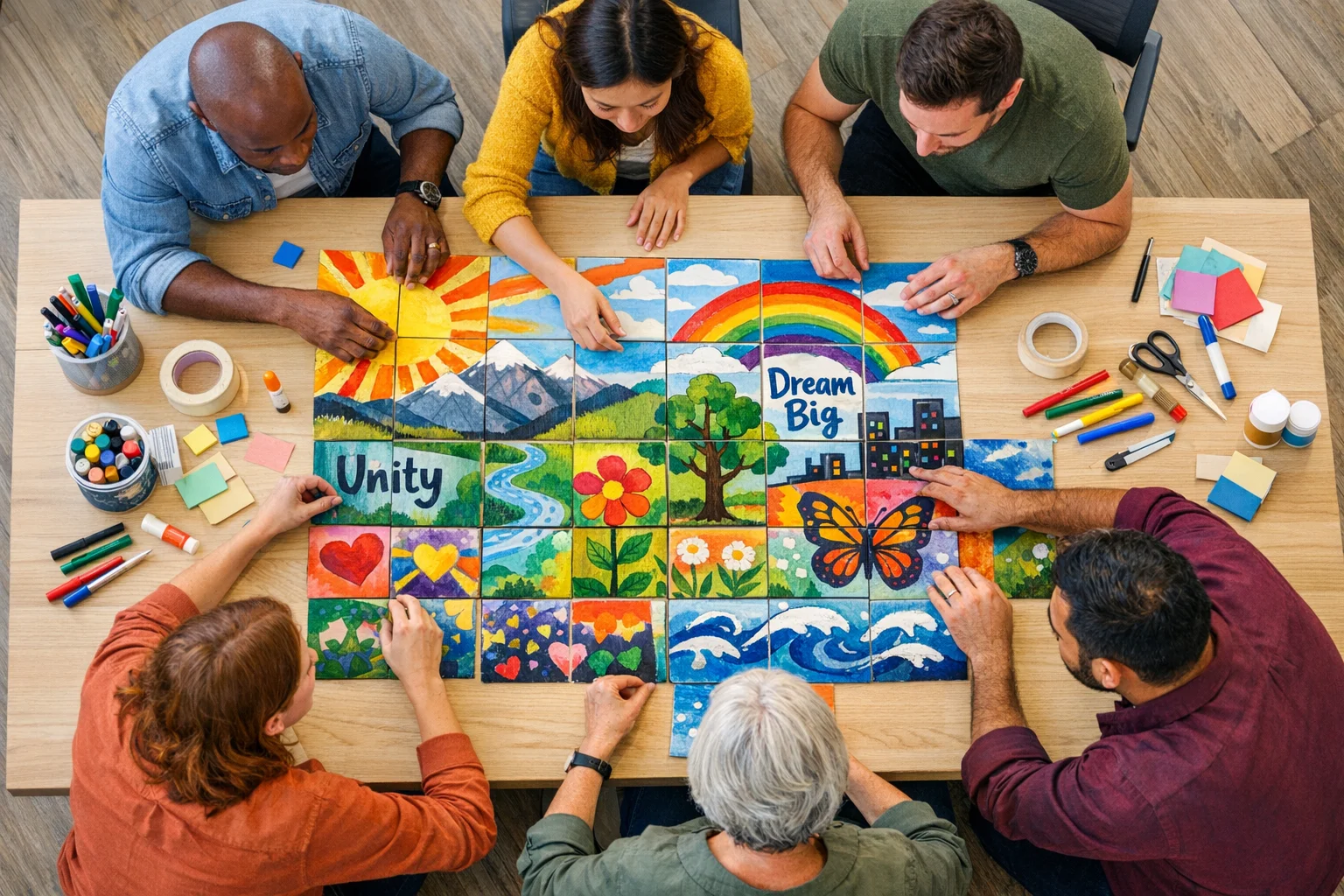
7) Maker sprint at a local workshop
Give teams a materials bin and a brief: build, test, iterate. Fast cycles beat perfect plans.
- Why it works: Hands teach alignment better than slides.
- How to run it: 20‑minute build windows with demo breaks. Judge on utility and story.
- Local tip: Keep tasks table‑top sized for easy cleanup.
- Low‑lift variation: Paper‑and‑tape prototypes in a conference room.
8) Cooking class throwdown
Pair a local chef with a mystery‑basket format. Judges award points for plating, taste, and teamwork roles.
- Why it works: Clear roles for planners and improvisers.
- How to run it: Rotate head chef each course; timebox plating.
- Local tip: Choose menus that tolerate late arrivals.
- Low‑lift variation: Cold‑prep tapas assembly with no burners.
9) Pack and sort at Second Harvest Food Bank
A couple of focused hours that matter. Sort donations, assemble meal kits, and track impact in real time. See group shift options on Second Harvest Food Bank of Central Florida’s volunteer page. (feedhopenow.org)
- Why it works: Purpose plus visible progress bonds teams fast.
- How to run it: Split into roles, rotate halfway, debrief on throughput improvements.
- Local tip: Weekday mid‑mornings are easier to book for groups.
- Low‑lift variation: Onsite hygiene‑kit build with local delivery.
10) Lake Eola swan‑boat checkpoint rally
Mix short paddles with on‑shore clue solving. Teams swap captains at each lap.
- Why it works: Light cardio, lots of laughs, easy to spectate.
- How to run it: Use a single timing station on shore; bonus points for puzzle accuracy.
- Local tip: Keep hydration at the dock.
- Low‑lift variation: Lakeside brainteasers and photo prompts without boats.
11) Topgolf team ladder
Create mini‑leagues across bays with rotating formats: accuracy, distance, co‑op shots.
- Why it works: Visible scoreboard and constant turns.
- How to run it: Seed teams evenly; cap talk time; celebrate “personal bests.”
- Local tip: Shade and fans help in the afternoon; evenings feel social.
- Low‑lift variation: Office putting course with tape fairways.
12) Andretti Indoor Karting team GP
Short heats, pit‑style role swaps, and a podium photo. Non‑drivers run data and strategy.
- Why it works: Clear stakes and fast cycles make instant stories.
- How to run it: Qualifying, final, then a two‑minute retro on decisions.
- Local tip: Book mid‑week to avoid long waits between heats.
- Low‑lift variation: Remote racing sims in meeting rooms.
13) Gallery game night
Give teams a prompt list to decode themes, spot techniques, and build a micro‑tour they present to another group.
- Why it works: Observation plus narrative builds shared language.
- How to run it: 30 minutes to explore, 5 per team to present; score clarity and insight.
- Local tip: Call ahead for group guidelines.
- Low‑lift variation: Bring printed art cards to the office.
14) Campus amazing race
Universities around town offer varied backdrops, plazas, and public art. Map checkpoints so each leg is under 8 minutes.
- Why it works: Quick navigation plus role switching keeps energy up.
- How to run it: Assign a clue runner, navigator, and recorder; rotate roles.
- Local tip: Avoid class‑change windows.
- Low‑lift variation: Two‑building loop with indoor clues only.
15) Neighborhood brewery circuit with design prompts
Walkable clusters let you run short design sprints between tastings. Each stop: new constraint, new customer story.
- Why it works: Light, frequent resets prevent energy dips.
- How to run it: 15‑minute briefs, 5‑minute shares; keep the clock tight.
- Local tip: Reserve corner spaces; bring timers and sticky notes.
- Low‑lift variation: One venue, three rounds, water pitchers on every table.
16) Improv for collaboration
A facilitator runs low‑risk games that flex listening, status, and offers. No one is forced to perform solo.
- Why it works: Psychological safety through rules and brevity.
- How to run it: Warm‑ups, three core games, guided debrief with “when this helps at work.”
- Local tip: Rooms with open floor space beat stages.
- Low‑lift variation: Card‑based prompts seated in a circle.
17) Onsite micro‑challenge arcade (10 quests in 60 minutes)
Convert a ballroom or large meeting room into stations: logic, memory, observation, and mini‑builds. A facilitator app keeps score and routes teams.
- Why it works: Zero transit, all action.
- How to run it: 5‑ to 6‑minute stations, clean handoffs, leaderboard reveal.
- Local tip: Music at conversation level; no mic needed.
- Low‑lift variation: Run it over lunch with rolling starts.
Orlando logistics that quietly make or break events
- Heat and storms: Orlando’s classic pattern is sunny mornings, steamy midday, and a quick afternoon downpour. Put outdoor blocks before 2 p.m. and pair them with an indoor backup within a 10‑minute walk or drive.
- Transit reality: I‑Drive is dense and walkable once you arrive, but crossing neighborhoods eats time. Cluster activities to minimize van shuttles.
- Group flow: The best rhythm is two high‑focus blocks with a long, real break. Avoid packing four activities into a single afternoon.
- Hydration and shade: Provide water at every checkpoint, not just the start. Shade beats swag ten times out of ten.
- Clear roles: For competitive formats, assign roles (navigator, recorder, timekeeper). Role rotation keeps quieter teammates engaged.
Where Scavify fits naturally in Orlando
Scavify works best when you want structured play without heavy staffing. Downtown hunts, ICON Park safaris, campus races, and onsite micro‑arcades all run smoother when prompts, proof, points, and leaderboards live in one place. It’s the simplest way to turn “let’s take a walk” into real engagement and measurable outcomes.
FAQs
What are the best indoor team building activities in Orlando if it’s too hot or raining?
Escape rooms on I‑Drive, a Topgolf bay tournament, Andretti kart heats, improv workshops, or an onsite micro‑challenge arcade all keep energy high without weather risk. For zero‑transit days, run a Scavify‑powered indoor hunt in your office or hotel.
We’re near the Orange County Convention Center. What’s walkable and group‑friendly?
Andretti Indoor Karting, Topgolf, and a range of eateries are a short hop from OCCC. You can also stage a photo mission circuit around your hotel cluster to avoid buses entirely.
What’s a good low‑cost option that still feels meaningful?
A CSR pack‑and‑sort block at Second Harvest, a downtown photo safari with reflection prompts, or a campus‑style amazing race using existing public art. Purpose or problem‑solving beats paid spectacle for cohesion.
How long should each activity run?
Most formats land best in 60–90 minutes. If you stack two blocks, separate them with an unstructured break so conversation can breathe.
How big can these activities scale?
App‑based hunts and onsite micro‑arcades scale cleanly to very large groups because you can add missions and duplicate stations. CSR shifts and escape rooms scale in waves with staggered start times.
Do we need permits for parks or public spaces?
For small groups doing non‑commercial, low‑impact activities, you’re usually fine. For larger setups, amplified sound, or rentals, contact the venue or city parks team in advance to confirm.
How do we handle photos and privacy?
Set norms up front: team photos OK, no posting personal shots without consent. Use an app feed that keeps content in one secure place and export only what you plan to share.
Any tips to keep competition friendly across mixed departments?
Score teamwork behaviors (clear roles, inclusive decisions) alongside task outcomes. Celebrate personal bests, not just podiums, and end with a five‑minute gratitude round.