Solutions
Your first hunt, live this afternoon.
Free to start · No download for participants
Discover practical team building ideas, examples, and activities that boost morale, communication, and collaboration.

Most wellness team building ideas feel like homework. This list doesn’t. It’s built from what consistently lifts energy, creates real connection, and fits into the day without breaking flow. You’ll find activities you can run this week, plus the nuance that makes them actually work.
Wellness activities that improve mood and focus tend to be brief, social, and physical. The pattern: add small bouts of movement, a clear social task, and a light cognitive load. The research backs this: short recovery breaks increase vigor and reduce fatigue; walking spikes creative ideation; and regular physical activity is linked to better mental health, sleep, and overall well-being. See the micro-breaks meta-analysis, Stanford’s walking-and-creativity paper, and the WHO fact sheet on physical activity.
There’s a second pillar: connection. The U.S. Surgeon General’s 2023 advisory on social connection frames belonging as a health imperative, not a perk. Translate that to teams and you get a simple rule: design more moments where people do small, meaningful things together.
One useful caution: don’t oversell cost savings. Large randomized trials of broad wellness programs show mixed results on medical spend. Focus on experience quality and near-term signals like energy, engagement, and collaboration. For background, see the JAMA trial summary in the Illinois Workplace Wellness Study.
Below are field-tested formats you can run in an office, hybrid, or fully remote. Each includes purpose, setup, and pro tips.
What it does: Increases ideas and candor while adding light movement.
How to run: Pair up for 15 minutes. First 7 minutes: walk and answer one prompt (for example: “What did you learn last sprint?”). Switch roles. If remote, both participants walk their own route on audio.
Pro tip: Seed one focused prompt and one playful prompt. Walking dilutes hierarchy; use it to tackle sticky topics.
What it does: Quick physiological downshift. Perfect before a hard meeting.
How to run: Lead a 90–120 second slow-breathing reset: inhale through nose 4 counts, exhale 6–8 counts, three rounds of shoulder rolls. End with a single question: “What would make this meeting feel worthwhile?”
Evidence note: Slow, paced breathing improves autonomic balance and reduces stress markers in controlled studies. Keep it light; no need to overexplain.
What it does: Prompts short, varied resets across a week.
How to run: Create a 3x3 BINGO card of 60–120 second breaks (stretch, look far to rest eyes, refill water, share a thank-you). Award a small recognition for any line completed.
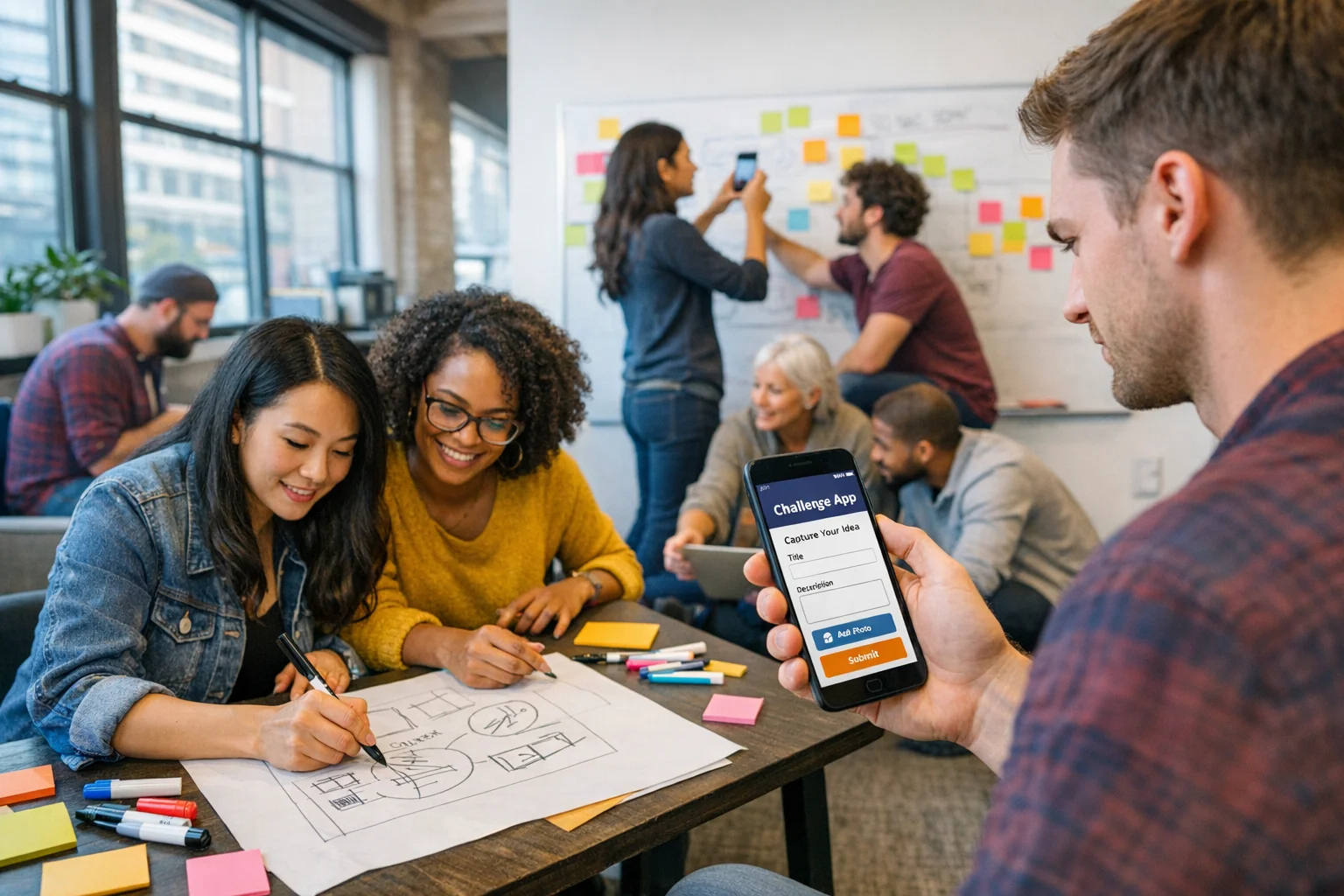
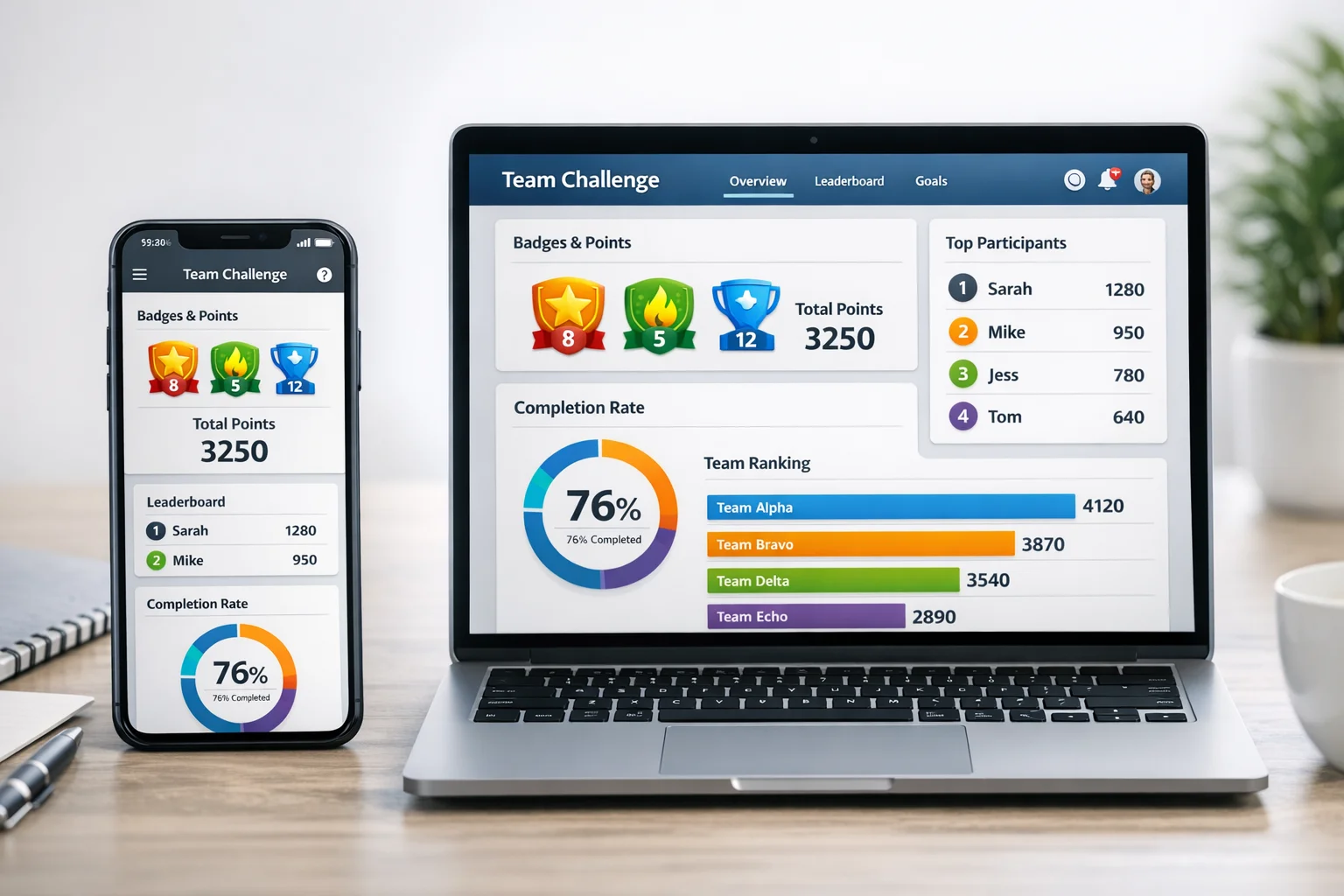
Make it active with app-based challenges:
What it does: Eases desk tension and builds light rapport.
How to run: Five teammates each lead a 1-minute stretch plus a 30-second “what’s keeping me curious” share. Rotate weekly. Remote-friendly on camera.
Pro tip: Keep intensity low and ranges optional. Offer seated alternatives.
What it does: Pairs movement with low-stakes creativity.
How to run: Small groups walk 8–10 minutes, then stop to sketch one idea on paper or a whiteboard. Return and do 30-second gallery shares.
Evidence note: Divergent thinking increases while walking in controlled experiments. Use it for idea generation, not final decisions.
What it does: Boosts mood and visibility of helpful behaviors.
How to run: One person starts by tagging a teammate with a 20-second specific thank-you, then passes the turn. Keep to 5 minutes. Works live or async in chat.
Pro tip: Ban generic praise. Specific, recent, and observable wins only.
What it does: Adds a playful nudge toward healthier default habits.
How to run: For one day, trios earn a point for each water refill, capped at three points per person to avoid excess. Share a single quirky team photo at day’s end.
Pro tip: Announce the cut-off and the “max points” rule up front. We’re nudging, not competing hard.
What it does: Reduces low-grade friction that quietly drains energy.
How to run: In pairs, list three annoyances. Each pair picks one and spends 15 minutes making it 10% easier. Report back with a before/after screenshot or short video.
Why it works: Small operational wins are wellness. People feel lighter when the workflow is smoother.
What it does: Accelerates getting-to-know-you across functions.
How to run: Everyone gets the same two questions (for example: “What’s a non-obvious skill you use at work?” and “What energizes you outside of work?”). Rotate partners every 4–5 minutes while walking loops or hopping between breakout rooms.
Pro tip: Cap at 20 minutes to keep it lively.
What it does: Trains attention toward the positive and shares perspective.
How to run: Give five prompts the team can complete over 48 hours.
Pro tip: Share a collage in the next all-hands to close the loop.
What it does: Bite-sized peer learning with movement baked in.
How to run: Three 8-minute “walkshops.” Each host picks a micro-topic (for example: keyboard shortcuts, effective 1:1s, email-to-doc conversion). Groups rotate after each circuit. Remote teams can “walk” on treadmills or outdoors with audio.
Why it works: People love learning from peers. The short walking interval keeps energy high.
What it does: Gives everyone a personal, 3-minute reset they can use anytime.
How to run: Teach a simple sequence: 5 slow breaths, 20-second neck/shoulder combo, 30-second eye-distance drill, 30-second posture reset. Provide a one-page card or short video.
Pro tip: Normalize using it before high-stakes calls.
What it does: Fast mood lift via brief nature exposure.
How to run: Encourage a 5–10 minute outdoor loop with a single sensory prompt: “Notice three shades of green.” Remote teams can use balcony/window views.
Why it works: Even short nature exposure can help attention and mood. Keep it simple and voluntary.
What it does: Clears blockers while creating a small confidence boost.
How to run: In a 10-minute stand-up, each person shares one win and one hurdle. Teammates offer one-liners only. Capture hurdles in a visible queue.
Pro tip: Cut side-discussion. Route help to follow-ups.
What it does: Ends the week with reflection and a head start on Monday.
How to run: 12 minutes total. Two minutes of quiet breathing, four minutes to jot next week’s three priorities, six minutes of pair sharing while walking the floor or on phone.
Why it works: People sign off clearer and calmer, which is the whole point.
Pick two or three lightweight signals for four weeks, then decide what to keep.
Team building includes a shared task or interaction. A solo meditation app is wellness. A 10-minute pair walk with a single prompt is wellness team building.
Most land best in 5–20 minutes. The evidence on recovery shows that brief breaks can lift vigor and reduce fatigue without derailing work. See the micro-breaks review.
They help for idea generation. Controlled experiments found walking boosts divergent thinking. Use walking for brainstorming, not decisions. Details: the Stanford walking-and-creativity study.
Yes. Even short bouts contribute to well-being and better sleep. The WHO’s overview of physical activity benefits covers this clearly.
Design for inclusion: seated options, camera-off participation, and non-movement alternatives (gratitude tag, small-wins sprint). Avoid one-size-fits-all.
Give choice, keep it brief, and tie activities to work outcomes (energy before a hard meeting, focus resets between sprints). Voluntary opt-in with visible recognition works better than prizes.
Sometimes, but don’t promise it. Large randomized trials find mixed effects. Focus on near-term outcomes you can feel and see, and let benefits compound over time. For context, see the JAMA trial from Illinois.
When you want to turn these into lightweight, trackable challenges across locations. Photo prompts, quick Q&A, and GPS check-ins make participation visible without meetings. It’s optional; the principle is the same: short, social, and simple.
Want a single place to run photo prompts, quick check-ins, and mini-challenges across offices and time zones? Scavify was built for exactly this: turning passive participation into active engagement without a heavy lift.