Solutions
Your first hunt, live this afternoon.
Free to start · No download for participants
Find high-energy team building ideas with easy instructions and options for different ages, goals, and group sizes.

Most intern team building ideas fall into two buckets: icebreakers that make people cringe or big productions that eat your week. The sweet spot is structured, purpose-filled activities that create quick wins, spark real conversation, and build context for the work ahead.
We’ve run enough orientations, internship programs, and early-career activations to see what actually gets interns talking and collaborating. Below are 15 intern-friendly activities with clear steps, zero fluff, and practical twists for remote and hybrid programs.
Most interns arrive scanning for signals: Is it safe to ask questions? How do people here actually work together? That’s why activities that build trust, context, and agency outperform “share your fun fact” circles.
Four principles guide this list:
Before you pick activities, decide what you’re actually trying to build in the first 30 to 60 days: backstage context, cross-cohort connections, manager touchpoints, or confidence with core tools.
A pattern we keep seeing:
Each activity includes why it works, how to run it, and quick tweaks for hybrid or remote.
Goal: Quick connections while surfacing real people, places, and processes.
Why it works: It mixes motion, micro-wins, and discovery. Done right, it feels like play but maps directly to your culture and workflows.
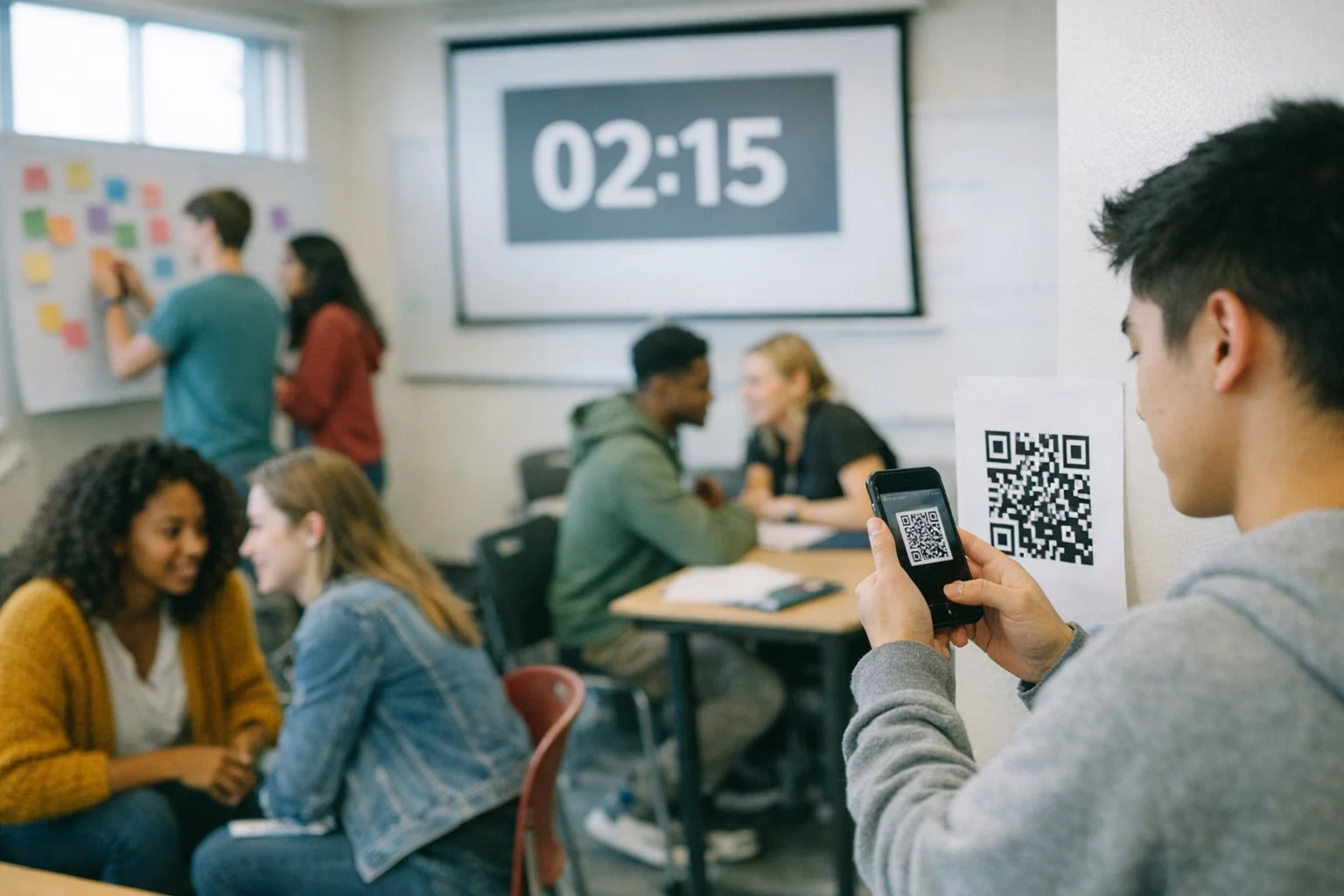
Run it: Launch a 30–60 minute scavenger sprint across your office, campus, or digital workspace. Blend photo, video, GPS, QR, and Q&A challenges tied to real touchpoints.
If you use an app-based platform like Scavify, you can prebuild challenges, automate scoring, and run it on phones or browsers without a pile of logistics. The result is high-energy movement with proof-of-participation.
Example challenge prompts:
Time: 30–60 minutes.
Remote tweak: Switch GPS/QR to screenshots, links, or channel check-ins; scatter challenges across chat, docs, and wikis.
Goal: Fast rapport across the cohort without forced oversharing.
Why it works: Specific prompts create just enough structure to cut small talk.
Run it: Set three concrete prompts tied to work and curiosity, not biographies. Rotate pairs every 4–5 minutes. Examples: “What’s a tool you hope to master here?” “Where do you go first when you’re stuck?” “What makes feedback useful to you?”
Time: 20–25 minutes.
Remote tweak: Use breakout rooms with timed rotations.
Goal: Replace the org chart with faces, spaces, and rituals.
Why it works: Interns collect “stamps” by visiting departments, meeting hosts, and answering one practical question per stop.
Run it: Create a physical or digital passport with 6–8 stops. At each stop, interns get a stamp after completing a bite-size task like identifying the team’s top metric or finding the snack stash rule. Light rewards for full passports.
Time: 45–90 minutes, or drip across a week.
Remote tweak: Convert stamps into channel reactions or form submissions with a photo or short answer.
Goal: Build product intuition together.
Why it works: Teams analyze a product or feature from different angles in quick sprints.
Run it: Small groups rotate through three stations: user experience, business model, and risks. Each station adds notes to a shared canvas. Close with a 2-minute pitch per team on one improvement.
Time: 45–60 minutes.
Remote tweak: Use collaborative whiteboards and timebox stations.
Goal: See the workplace through fresh eyes and meet humans along the way.
Why it works: A camera invites curiosity. Prompts point interns to spaces and people they’ll use later.
Run it: Provide a shot list like “the quietest workspace after 2 p.m.” or “someone who ships nightly.” Build a quick gallery wall and let teams narrate one favorite photo.
Time: 30–45 minutes.
Remote tweak: Swap physical spaces for digital equivalents: “the wiki page you’ll bookmark forever.”
Goal: Normalize asking for help and giving it.
Why it works: Small, real problems spark immediate collaboration without posturing.
Run it: Everyone writes a 1-sentence problem. Shuffle, read, and pair up for 7-minute co-thinking. Rotate twice. End by sharing one useful tactic learned.
Time: 30 minutes.
Remote tweak: Use a shared doc for pitches and auto-assign pairs.
Goal: Help interns navigate your digital maze.
Why it works: It’s a scavenger hunt inside your actual tools.
Run it: Post a threaded set of micro-tasks: find the release calendar, react to the style guide emoji, locate the PTO policy. Score with screenshots or quick confirmations.
Time: 15–25 minutes.
Remote tweak: Already remote-friendly.
Goal: Build a culture of tiny, visible generosity.
Why it works: Quick favors compound trust. The constraint keeps it light.
Run it: Everyone writes a simple ask that could be done in five minutes: share a template, intro to a Slack channel, one code tip. Shuffle and fulfill in rounds.
Time: 25–30 minutes.
Remote tweak: Run asynchronously over a day in chat.
Goal: Let interns teach, managers learn.
Why it works: Flips the status dynamic and surfaces fresh tools or trends.
Run it: Volunteers host 5-minute micro-classes on topics they know cold: keyboard shortcuts, a niche data tool, campus club tactics that scale. Q&A lightning round.
Time: 30–40 minutes.
Remote tweak: Record short clips for an internal playlist.
Goal: Reveal how work actually flows.
Why it works: Teams co-create a “how things really get done” map faster than any handbook.
Run it: On a wall or whiteboard, place sticky anchors for Products, People, Processes, and Pitfalls. Interns add nodes and lines based on what they’ve heard or seen. Invite a few veterans to correct and annotate.
Time: 40–50 minutes.
Remote tweak: Use a digital whiteboard with templates.
Goal: Spread useful tactics without performative slides.
Why it works: Short, constraint-driven demos surface the good stuff.
Run it: 3-minute, no-slides demos of a tip, macro, or workaround. One minute for questions. Curate highlights in a shared doc.
Time: 25–35 minutes.
Remote tweak: Screen share in rapid fire; record clips.
Goal: Make near-peer wisdom accessible.
Why it works: Recent alumni know what matters most in month one.
Run it: Set up an inner circle of alumni answering curated questions while interns observe, then rotate seats so interns can jump in. Keep questions concrete: “What got your first PR approved?” Not “What advice do you have?”
Time: 35–45 minutes.
Remote tweak: Rotate panelists into spotlight; gather questions in chat.
Goal: Humanize roles interns don’t see up close.
Why it works: Bite-size shadowing reduces scheduling overhead and maximizes exposure.
Run it: Two 15-minute shadows with different functions. Provide a checklist of what to notice. End with a 2-minute debrief.
Time: 40–45 minutes.
Remote tweak: Observe a meeting segment or async workflow review.
Goal: Connect values to behaviors you can actually observe.
Why it works: Hunting for evidence reframes values as choices, not wall art.
Run it: Assign pairs to find one story where a value showed up in action this week. Collect evidence: a decision log, a code comment, a customer note. Share lightning stories.
Time: 25–30 minutes.
Remote tweak: Capture examples in a shared channel.
Goal: Ship confidence early.
Why it works: Small stakes, visible outcomes, and applause build momentum.
Run it: Each team presents a 60-second update or micro-win from the week. Use a simple rubric: what we tried, what happened, what’s next. Keep it tight and upbeat.
Time: 15–25 minutes.
Remote tweak: Record async clips; compile into a reel.
In our experience, the facilitator tone matters more than the activity design. Curious, concise, and calm wins every time.
If you want much of this to run itself, platforms like Scavify let you package recurring missions, rotate prompts, automate scoring, and support both phone and browser participation. It quietly handles logistics so you can focus on design and debriefs.
Brief, recurring sessions beat sporadic big events. Many programs see traction with a weekly 20–40 minute slot plus occasional longer explorations. The rhythm matters more than the size.
Split into small groups and rotate activities. Run the same mission in parallel, then bring everyone back for a shared highlight reel or gallery wall.
Design for action over confession. Use concrete prompts, small wins, and purpose tags. Activities like Photo Safari or Three-Question Rotations create motion and curiosity without forcing personal disclosure.
Yes. Most activities here include a remote tweak. Emphasize artifact creation, asynchronous options, and brief live touchpoints. A light scaffolding of app-based challenges keeps participation visible without meetings.
Track simple, behavior-level signals: participation rates, repeat participation, completion of specific tasks (like finishing a Department Passport), and short pulse questions after sessions. Look for faster time-to-first-PR or quicker tool adoption as secondary indicators.
Selectively. Managers can join as co-learners or hosts, especially for Department Passport stops or Demo Day. Keep some peer-only spaces so interns practice voice without hierarchy in the room.
Used thoughtfully, yes. When people use their strengths, engagement and performance can rise. See the Gallup findings on strengths-based approaches for context and impact ranges. (gallup.com)
Bias toward participation. Evidence from education shows active formats outperform passive ones, and the same pattern applies when adults are learning new systems and norms. The PNAS meta-analysis on active learning is a useful signal. (pmc.ncbi.nlm.nih.gov)
If you’re designing an internship program or campus orientation, Scavify’s flexible challenge formats, automation, and browser-plus-app setup make it easy to keep the energy high across different locations and schedules. When participation turns active, interns don’t just meet people. They start acting like teammates.