Solutions
Your first hunt, live this afternoon.
Free to start · No download for participants
Explore practical ideas, real examples, and simple tips to make your next group activity more engaging, useful, and fun.
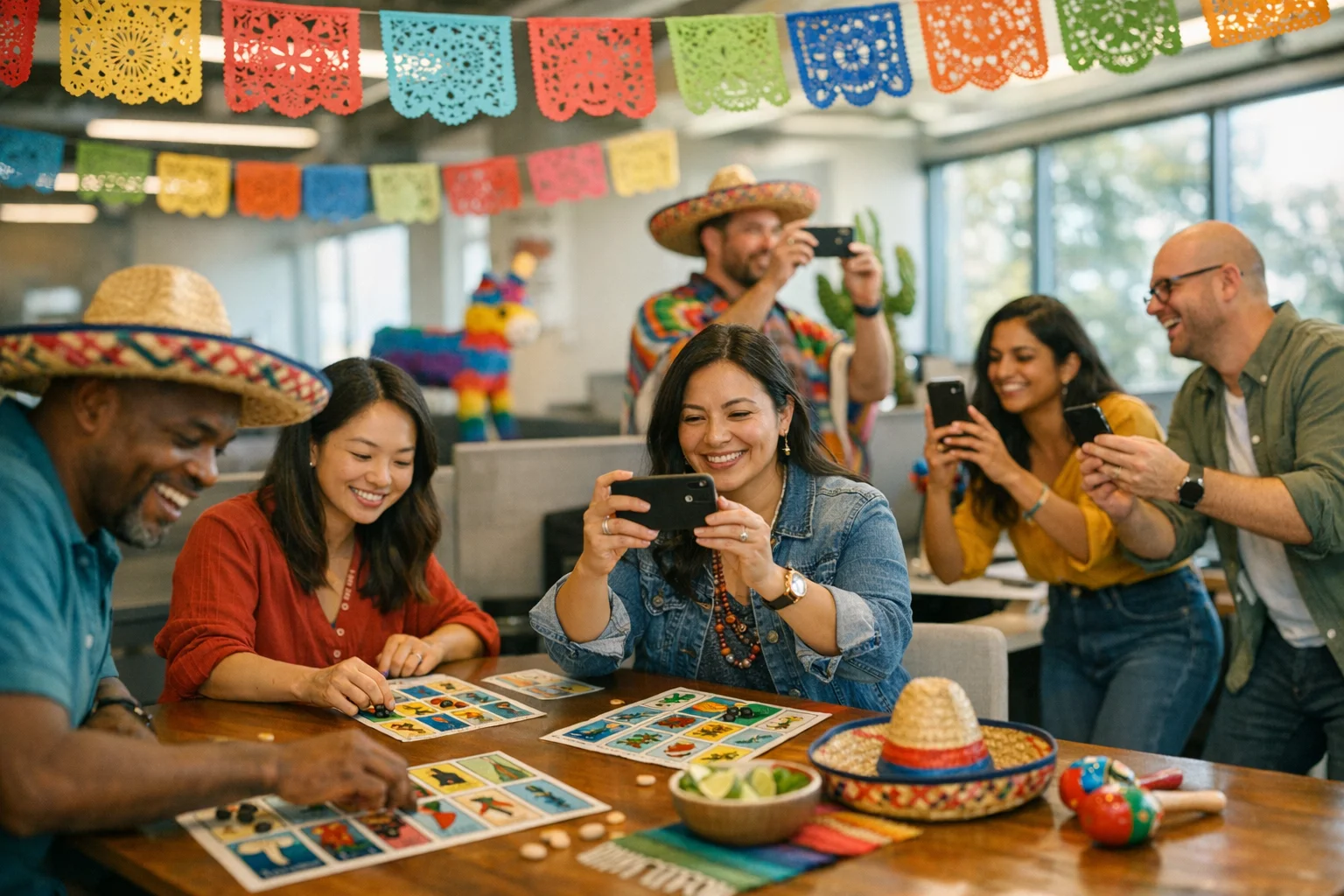
Cinco de Mayo can bring real energy to an office when it’s handled with care. The day commemorates Mexico’s 1862 victory at the Battle of Puebla, not Mexican Independence Day. That’s September 16, and yes, someone in your building will mix them up. A quick note in your invite with a link to the actual story keeps things on track and respectful.
If you want the short, accurate version, point people to the Smithsonian’s clear explainer in The Real History of Cinco de Mayo and Britannica’s concise overview. Those two links save you five minutes of awkward correction later.
Cinco de Mayo marks Mexico’s victory over French forces at the Battle of Puebla in 1862. It is not Mexican Independence Day. The distinction matters at work because accuracy signals respect. If you need a crisp reference, the Smithsonian’s The Real History of Cinco de Mayo covers what the holiday is and isn’t, while Britannica’s entry on Cinco de Mayo gives fast facts you can cite in your kickoff message.
A pattern we keep seeing: when organizers frame the day as a celebration of Mexican and Mexican American culture rather than a costume party, participation climbs and side-eye disappears. Keep the focus on music, art, history, food traditions, and community contributions. If you want a gut-check on stereotypes to avoid, the Anti-Defamation League’s guidance on celebrating Cinco de Mayo without stereotypes is a useful backstop.
Strong events share a few simple traits.
In our experience, one person owning flow and one person watching time is enough for most teams. For scoring and photo/video submissions, an app removes manual tallying and keeps energy on the floor instead of in a spreadsheet.
Below are field-tested games that work in offices, offsites, and hybrid groups. Most run in under 10 minutes. Rotate three to five based on your schedule.
1) Lotería Lightning Round
Lotería, a traditional Mexican game with illustrated cards, plays fast and feels familiar to bingo fans. Print decks or use a digital board. Run three rapid-fire rounds. Add 30 seconds between rounds to spotlight a card’s cultural meaning. That’s the difference between “cute” and “thoughtful.”
2) Battle of Puebla Team Trivia
Create a 12–15 question set about the Battle of Puebla, Mexican geography, music, and notable Mexican and Mexican American figures. Rotate who answers so everyone contributes at least once. Keep questions tight, answers immediate, and scores visible.
3) Papel Picado Sprint
Teams cut simple papel picado designs from tissue paper. Give templates for beginners and a freeform option for ambitious crafters. Judge on creativity, stability, and how fast they cleaned up. Yes, tidy teams get a bonus point.
4) Photo Scavenger Dash
Turn your space into a mini hunt. Hide QR codes that reveal cultural nuggets or riddles pointing to displays, artworks, or facts posted around the office. Track photos, check-ins, and points in one place. Scavify automates this: dynamic challenges, real-time scoring, QR and GPS options, and a clean app-or-browser flow that launches fast without IT help.
5) Music Match: Norteño, Mariachi, or Rock en Español
Play 10-second song clips. Teams guess the genre or artist. Keep it respectful by curating a balanced playlist across eras and regions. Hand out a one-page “who’s who” afterward to turn guesses into learning.
6) Spanish Word Pair-Up
Post 12 common office phrases in Spanish and English on opposite walls. Teams race to pair them correctly. Use everyday phrases (Felices de verlos, Reunión a las 2) so it’s accessible, not performative.
7) Design-a-Taquería Menu
Give teams constraints: a neighborhood, three ingredients they must use, and a customer persona. In five minutes, they name the spot and draft a tight five-item menu. Quick pitches follow. This one gets surprising laughs without drifting into parody.
8) Arte Rápido: Icon Card Flip
Show a card with an artist, author, or inventor from Mexican or Mexican American history. Teams have 45 seconds to jot three facts or connections. Flip to reveal context and award points for accuracy and specificity.
9) Piñata Build, Don’t Break
Provide cardstock, tape, and string. Teams build a small piñata around a surprise object in 8 minutes. Points for structure, artistry, and the reveal. Focus on craft, not swinging sticks in open-plan offices.
10) Candy Clues
Blind-bag three Mexican candies. Teams read clue cards and guess which is which by description alone. Avoid allergy landmines by keeping tasting optional and listing ingredients. Reward deductive reasoning, not risk tolerance.
11) Poster Pitch: Mini Cultural Festival
Teams design and pitch a one-day cultural festival for your city block. They must include music, food, community partners, and one educational element. Judges look for thoughtfulness, not the loudest color palette.
12) Timeline Scramble
You supply 8–10 events tied to Mexico and Mexican American history on separate cards. Teams arrange them in order. Bonus points for adding one sentence of context to two events.
13) Emoji Storytelling
Display five emoji that hint at a story rooted in travel, family, music, or food. Teams write a three-sentence micro-story incorporating at least two cultural touchpoints. Quick read-outs, faster scoring.
14) Photobooth, No Costumes
Create a backdrop with papel picado and neutral props (signs with trivia answers, speech bubbles with Spanish phrases, city skyline cutouts). Skip the fake mustaches and sombreros. That choice alone sets a respectful tone.
15) Lotería x Hunt Mashup
Each Lotería square triggers a micro-challenge: a photo find, a one-line fact, a short riddle answer. First team to complete a row wins. It’s part chance, part hustle, fully active.
Most games above translate cleanly to distributed teams.
What usually shifts the dynamic is visible momentum. Live leaderboards keep hybrid groups engaged because everyone sees progress instantly, not five minutes later in a chat scroll.
Treat this as scaffolding. Swap in any games that fit your group, space, and time.
A pattern we keep seeing: when you measure more than attendance, you actually learn. Useful signals include:
Tools like Scavify make those signals easy to collect without extra hands. Automated scoring, photo/video collection, and real-time leaderboards give organizers insight while players stay in the moment.
Yes, if you ground activities in accurate history and design them to celebrate Mexican and Mexican American culture respectfully. Keep it opt-in, low-pressure, and free of costumes or caricatures.
Open with a single sentence and a link: Cinco de Mayo commemorates Mexico’s 1862 victory at the Battle of Puebla. For those who want more, share the Smithsonian’s explainer or Britannica’s overview in the invite.
Gift cards to local Mexican or Mexican American–owned eateries, donations to community organizations, paid volunteer time, or simple team trophies. Aim for meaning over merch.
Forty-five to seventy-five minutes covers three quick games, one creative activity, and a light awards moment. Shorter segments tend to produce higher participation.
Digital Lotería, app-based photo and quiz hunts, music genre matching, timeline scrambles on a shared whiteboard, and poster pitches presented over video. Keep rounds tight and leaderboards visible.
Share a two-sentence context up front, choose activities rooted in culture, and skip stereotypes. The ADL’s advice on avoiding stereotypes translates well to work settings.
No. Include approachable language elements like simple phrases or signage with phonetic guides. The goal is appreciation, not fluency tests.
If your policy allows it, provide alcohol-free options, make drinking optional, and keep the focus on games and connection. Many organizations now default to dry or mixed events to be more inclusive, a practice supported by inclusive celebration guidance from SHRM.
For quick, modern facilitation, Scavify can run your hunt, automate points, collect photos and videos, and show a live leaderboard in-app or in any browser. If you’d rather keep it analog this time, use the game ideas above as your checklist and you’ll still see the difference: more people moving, more people smiling, and fewer awkward pauses.
References woven into the text: